This honey citrus salmon is a quick and flavorful dinner option perfect for busy weeknights. The glaze combines sweet honey with bright citrus notes for a balanced taste profile.
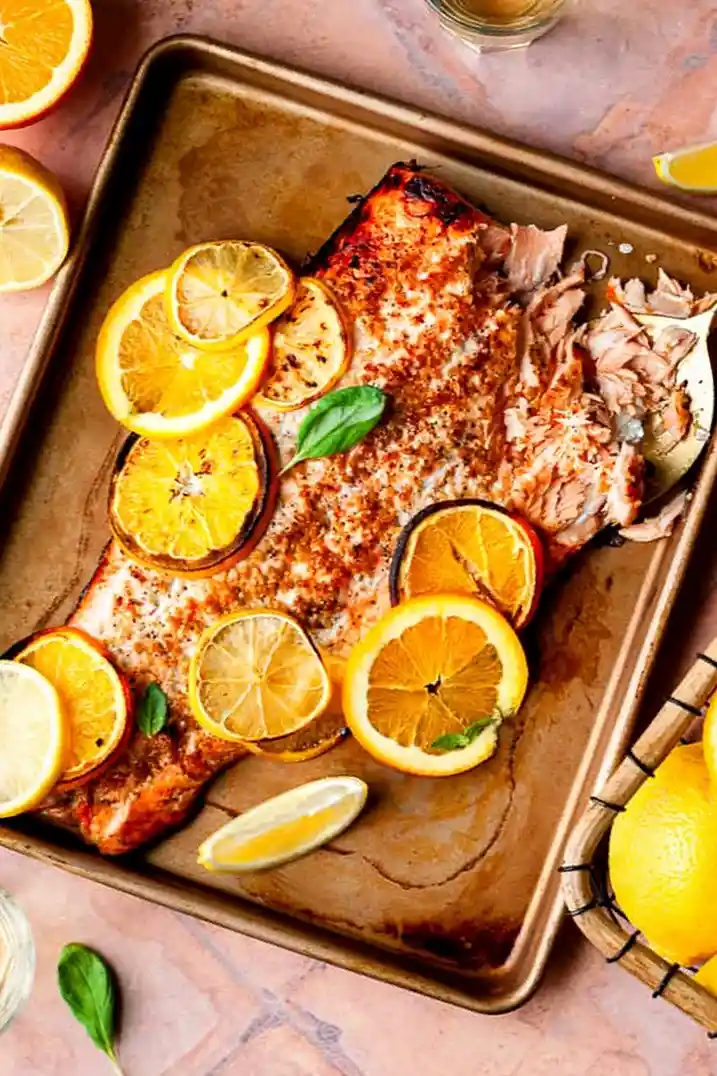
List of ingredients
- 4 salmon fillets (.5 lb each) – use skin-on or skinless based on preference.
- 1 teaspoon salt – essential for drawing out flavor.
- 1 teaspoon black pepper – adds a subtle spicy depth.
- 3 tablespoons olive oil – helps the glaze adhere and prevents sticking.
- 4 cloves garlic (minced) – provides a pungent, aromatic base.
- 1/4 cup honey – adds sweetness and aids in caramelization.
- 3 tablespoons soy sauce – delivers a savory umami element.
- 1 tablespoon fresh orange juice – adds a sweet, fruity brightness.
- 1 tablespoon lemon juice – provides necessary acidity to balance the sugar.
- 1 teaspoon fresh or ground ginger – introduces a zesty, warm flavor.
- Lemon and orange slices – used for both cooking and serving.
step-by-step instructions
- Prepare the oven: Preheat your oven to 350 degrees F. Line a large baking sheet with aluminum foil to make cleanup easier.
- Prep the fish: Pat each salmon fillet dry with paper towels. Place them on the foil-lined sheet and season both sides with salt and pepper.
- Whisk the glaze: In a small mixing bowl, combine the olive oil, minced garlic, honey, soy sauce, orange juice, lemon juice, and ginger. Whisk until the honey is fully incorporated.
- Apply the sauce: Pour the citrus honey mixture evenly over each of the salmon fillets.
- Add citrus toppings: Place a few slices of lemon and orange on top of each fillet.
- Bake and broil: Bake the salmon for 15 minutes. Switch the oven to the broil setting and cook for another 2-3 minutes until the top is crispy and caramelized.
- Final touch: Remove from the oven and serve immediately with additional fresh citrus slices.
Cooking Tips for Optimal Results
Pat the Salmon Fillets Completely Dry
Moisture on the surface of the fish creates steam during the cooking process. By patting the salmon dry with paper towels, you ensure that the glaze adheres better to the meat. This step is crucial for achieving a caramelized crust during the broiling phase.
Use a Meat Thermometer for Precision
Salmon can overcook quickly, leading to a dry texture. Use an instant-read thermometer to check the internal temperature. For a medium finish, aim for 135-145 degrees F depending on your preference.
Avoid Over-Broiling the Glaze
Honey has a high sugar content, which means it can burn quickly under a broiler. Keep a close eye on the fillets during the final 2-3 minutes. Remove them as soon as you see deep golden-brown bubbles.
Choose High-Quality Salmon Cuts
Center-cut fillets provide a consistent thickness, which ensures the fish cooks evenly across all pieces. If using fillets of varying sizes, adjust the baking time slightly so the thinner pieces do not overcook.
Ingredient Substitutions and Variations
Swap Honey for Maple Syrup
If you prefer a deeper, woodier sweetness, replace the honey with pure maple syrup. Use the same 1/4 cup measurement. This variation works exceptionally well with the soy sauce and ginger.
Use Agave Nectar for a Neutral Sweetness
Agave nectar is a thinner alternative to honey and has a more neutral flavor. This allows the citrus and garlic notes to stand out more prominently. It is also a suitable option for those who avoid bee products.
Experiment with Different Citrus Fruits
While lemon and orange are classic, you can substitute them with lime or grapefruit. Lime adds a sharper, more tropical tang, while grapefruit provides a slightly bitter edge that cuts through the richness of the salmon.
Substitute Soy Sauce with Coconut Aminos
For a lower-sodium alternative, use coconut aminos instead of soy sauce. It provides a similar savory profile with a slightly sweeter finish. Maintain the same ratio of 3 tablespoons.
Try Steelhead Trout as a Protein Alternative
Steelhead trout is very similar to salmon in flavor and texture. You can use the exact same glaze and cooking method. It is often a more sustainable or available option in some regions.
Recommended Serving Ideas
Pair with Fluffy Quinoa or Basmati Rice
The honey citrus glaze creates a delicious sauce that is perfect for soaking into grains. Serve the salmon over a bed of steamed basmati rice or fluffy quinoa. This adds bulk to the meal and balances the intensity of the glaze.
Serve Alongside Roasted Root Vegetables
Carrots, parsnips, and sweet potatoes roast well at 350 degrees F. You can cook them on the same sheet pan if it is large enough, or on a separate tray. The sweetness of the roasted vegetables complements the citrus notes.
Create a Fresh Salmon Salad Bowl
Flake the cooked salmon over a bed of mixed greens, cucumber, and cherry tomatoes. Use a light vinaigrette to avoid overpowering the salmon’s glaze. This is an excellent low-carb option for lunch or dinner.
Make Honey Citrus Salmon Tacos
Break the fillets into large chunks and place them in warm corn tortillas. Top with shredded cabbage, sliced avocado, and a drizzle of Greek yogurt or lime crema. This turns the recipe into a fun, hand-held meal.
Storage and Reheating Guide
Safe Refrigeration Practices
Store leftover salmon in an airtight container in the refrigerator. It will remain fresh and safe to eat for 4 to 5 days. Ensure the container is well-sealed to prevent the fish from absorbing other odors in the fridge.
Freezing for Long-Term Storage
You can freeze cooked salmon in a freezer-safe, airtight container for up to 3 months. To prevent freezer burn, wrap the fillets individually in foil before placing them in the container. Thaw overnight in the refrigerator before reheating.
Best Method for Reheating
To avoid drying out the fish, avoid the microwave. Instead, heat a skillet over low heat with a small amount of olive oil. Place the salmon in the pan and cover with a lid for a few minutes until warmed through.
Maintaining Moisture During Reheating
Adding a tablespoon of water or a squeeze of fresh lemon juice to the skillet while reheating helps create steam. This keeps the salmon moist and prevents the glaze from becoming too sticky or burnt.
Troubleshooting and FAQ
Why is my salmon sticking to the foil?
Sticking usually happens if the pan isn’t properly greased or if the foil is too thin. Ensure you use a generous amount of olive oil in your glaze. You can also lightly spray the foil with non-stick cooking spray before adding the fish.
How do I make the salmon taste less fishy?
The acidity from the lemon and orange juice naturally neutralizes the fishy scent and taste. Patting the fish dry and using fresh ginger also helps. If you find it still too strong, soak the raw fillets in milk for 20 minutes before prepping.
Can I make this recipe in an air fryer?
Yes, you can adapt this for an air fryer. Place the glazed fillets in the basket and cook at 380 degrees F for 8-12 minutes. Check the internal temperature frequently as air fryers cook faster than conventional ovens.
What is the best way to peel and mince garlic for this recipe?
Smash the garlic cloves with the side of a knife to loosen the skin. Once peeled, use a sharp chef’s knife to mince them into very small pieces. This ensures the garlic distributes evenly throughout the glaze.
How can I tell when the salmon is perfectly done?
The fish should flake easily with a fork. When you press the center of the fillet, it should feel firm but have a slight spring to it. The color should be opaque throughout, but the center should remain moist.
Print
Honey Citrus Salmon
- Total Time: 25 minutes
- Yield: 4 servings 1x
- Diet: General
Description
Honey Citrus Salmon will be your new favorite weeknight dinner recipe! This recipe bursts with sweet citrus flavor.
Ingredients
- 4 salmon fillets (.5 lb each)
- 1 teaspoon salt
- 1 teaspoon black pepper
- 3 tablespoons olive oil
- 4 cloves garlic (minced)
- 1/4 cup honey
- 3 tablespoons soy sauce
- 1 tablespoon fresh orange juice
- 1 tablespoon lemon juice
- 1 teaspoon fresh or ground ginger
- Lemon and orange slices (for serving)
Instructions
- Step 1: Preheat oven to 350 degrees F. Prepare a large baking sheet with foil.
- Step 2: Pat salmon dry and place on prepared baking sheet. Top with salt and pepper.
- Step 3: Combine olive oil, garlic, honey, soy sauce, orange juice, lemon juice, and ginger in a small bowl. Whisk well and pour over salmon.
- Step 4: Top salmon with lemon and orange slices. Bake for 15 minutes, then broil for 2-3 minutes, until the salmon is crispy.
- Step 5: Serve with additional citrus slices.
Notes
Refrigerator Storage: Store in an airtight container and eat leftovers within 4-5 days. Freezer Storage: Freeze in a freezer-safe, airtight container and keep for up to 3 months. Reheating: Heat in a skillet with a little olive oil over low heat until the salmon is warm.
- Prep Time: 5 minutes
- Cook Time: 20 minutes
- Category: Main Course
- Method: Baking
- Cuisine: Seafood
Nutrition
- Serving Size: 1 fillet
- Calories: 355 kcal
- Sugar: 18 g
- Sodium: 620 mg
- Fat: 18 g
- Saturated Fat: 4 g
- Unsaturated Fat: 14 g
- Trans Fat: 0 g
- Carbohydrates: 20 g
- Fiber: 1 g
- Protein: 42 g
- Cholesterol: 90 mg