This nutrient-dense vegetable quinoa soup is a filling meal that combines protein-rich grains with a colorful array of garden vegetables. It is highly versatile and can be prepared using a stovetop, slow cooker, or pressure cooker to fit your schedule.
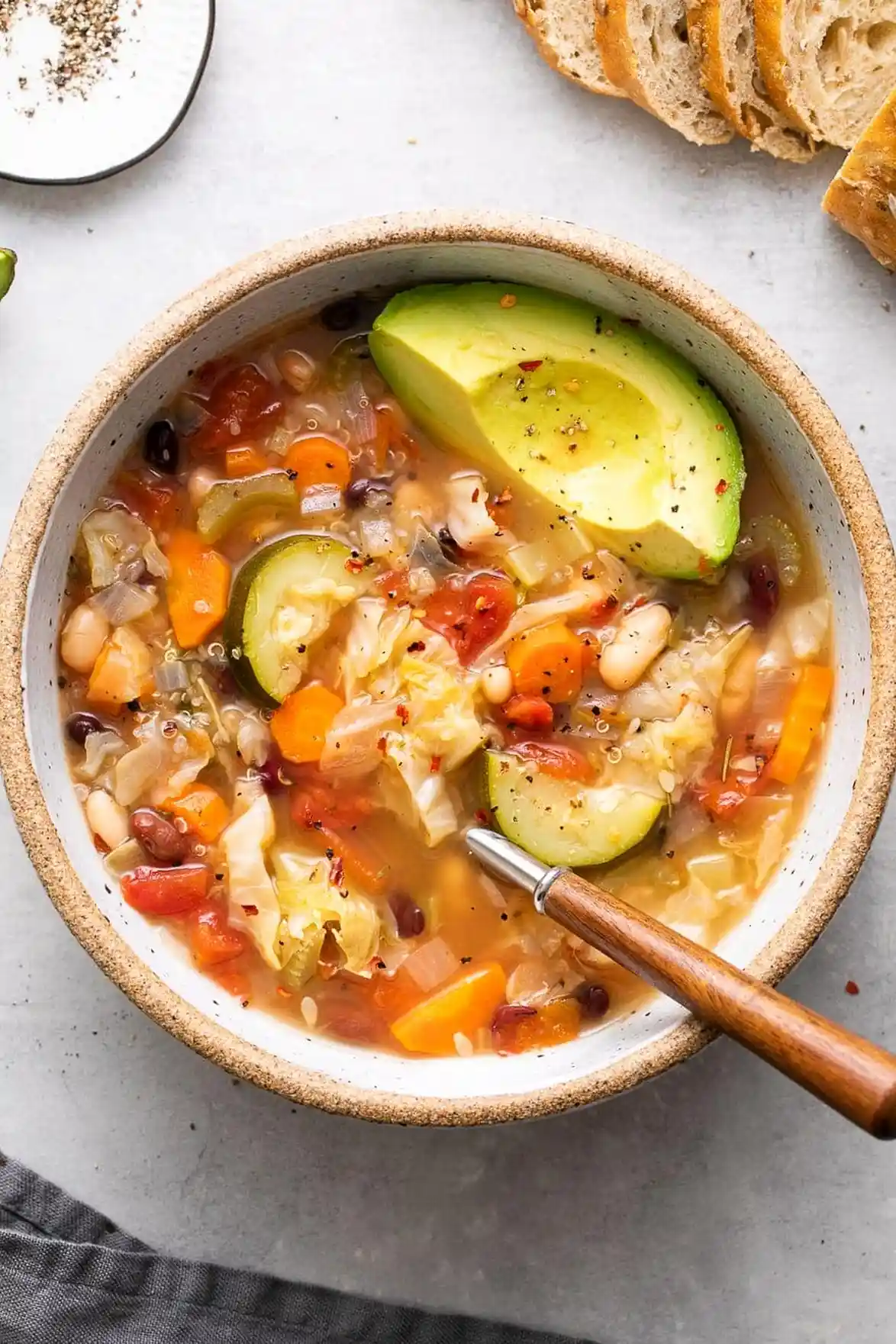
List of ingredients
- 2 large carrots, sliced or diced – provide sweetness and texture.
- 2 stalks celery, sliced – add a savory aromatic base.
- 1 onion, diced – essential for depth of flavor.
- 1/4 head of cabbage, chopped – adds bulk and nutrients.
- 2 medium zucchini, cut in half and sliced – provide a soft, tender consistency.
- 1 can (14 oz.) diced tomatoes with juices, preferably fire roasted – adds smoky acidity.
- 2 cans (14 oz.) beans of choice, drained and rinsed, such as one can white beans and one can three bean medley – increases protein and heartiness.
- 1/3 cup dry quinoa – adds fiber and a nutty flavor.
- 2 teaspoons herbes de provence or 1 teaspoon each thyme and rosemary – the primary seasoning blend.
- 1/2 teaspoon garlic powder – adds a subtle pungent depth.
- Pinch of red pepper flakes, optional – for a hint of warmth.
- 6 cups water or vegetable broth – the liquid base for the soup.
- Mineral salt and fresh cracked pepper, to taste – for final seasoning.
step-by-step instructions
- Stovetop Method: Heat 1 tablespoon oil (or 1/4 cup water for water sauté) in a large pot or dutch oven. Add the onions, carrots, and celery, and sauté for 5 minutes. Add all remaining ingredients, bring the mixture to a boil, then cover and turn the heat to low. Simmer for 35 minutes to 1 hour, then season with salt and pepper to taste.
- Slow Cooker Method: In a 5 to 6 quart crockpot, place all ingredients in the bottom, starting with the carrots and ending with the liquids. Cook on LOW for 6 to 8 hours, or on HIGH for 3 to 5 hours. Taste for seasoning and add salt and pepper before serving.
- Instant Pot Method: Set the Instant Pot to SAUTE mode and add 1 tablespoon olive oil (or 1/4 cup water), onion, carrot, and celery, sautéing for 5 minutes. Stir in the herbs and garlic powder during the last minute of sautéing. Add the quinoa, beans, cabbage, zucchini, tomatoes, red pepper flakes, salt, pepper, and vegetable broth, stirring to combine. Attach the lid, set the valve to SEALING, and manually set to HIGH pressure for 3 minutes. Allow a natural release for 10 minutes, then season to taste.
Vegetable Selection and Preparation
Choosing the Best Carrots
Select firm, bright orange carrots for the best flavor and snap. You can choose to peel them for a cleaner look or leave the skins on for extra nutrients, provided they are scrubbed thoroughly.
Preparing the Celery Stalks
Use crisp celery stalks and slice them into uniform pieces to ensure they cook evenly. Including a few of the tender inner leaves can add a more concentrated celery flavor to the broth.
Selecting the Right Onion
Yellow onions are ideal for this soup due to their balanced sweetness and pungency. However, white onions work well for a sharper taste, and red onions can be used if you prefer a milder flavor profile.
Picking Fresh Zucchini
Look for medium-sized zucchini that feel heavy for their size and have firm skin. If zucchini is unavailable, yellow summer squash is an excellent alternative that provides a similar texture.
Cabbage Variety Options
Green cabbage is the standard choice for a hearty crunch and mild flavor. Savoy cabbage is also a great option as it has more ruffled leaves and a slightly more tender texture when simmered.
Protein and Bean Variations
Mixing Different Bean Types
Using a combination of beans, such as white cannellini and a three-bean medley, adds visual interest and a variety of textures. This mix ensures the soup feels like a complete meal rather than just a side dish.
Substituting with Chickpeas
Garbanzo beans, or chickpeas, can be used to replace any of the canned beans for a nuttier taste. They hold their shape very well during long simmering processes in the slow cooker.
Using Lentils as a Protein Boost
While quinoa provides protein, adding a handful of red or green lentils can make the soup even heartier. Red lentils will break down and thicken the broth, while green lentils stay intact.
Adjusting Bean Quantities
If you prefer a more broth-forward soup, reduce the beans to one can. For those using this as a primary protein source, adding a third can of beans is a practical way to increase satiety.
Herb and Spice Guide
Using Herbes de Provence
This French herb blend typically contains savory, rosemary, thyme, and oregano, providing a complex floral note. It is the easiest way to achieve a professional flavor profile with a single ingredient.
Substituting Thyme and Rosemary
If you do not have a pre-made blend, use equal parts dried thyme and rosemary. These two herbs provide the woody, earthy foundation that complements the sweetness of the carrots.
Managing the Garlic Powder
Garlic powder provides a consistent, toasted flavor throughout the liquid. If you prefer a more pungent taste, you can replace the powder with three cloves of freshly minced garlic during the sauté step.
Adjusting Heat with Red Pepper Flakes
The pinch of red pepper flakes is optional but adds a subtle back-end heat. Increase the amount to a quarter teaspoon if you prefer a spicier soup that clears the sinuses on a cold day.
Adding a Bay Leaf
Adding a single dried bay leaf during the simmering process introduces a subtle tea-like depth. Remember to remove the leaf before serving the soup to your guests.
Cooking Method Comparisons
Stovetop Simmering Advantages
The stovetop method allows for the most control over the reduction of the broth. You can easily adjust the heat or add a splash of water if the soup becomes too thick during the hour of simmering.
Slow Cooker Convenience
The slow cooker is ideal for those who want a hands-off approach and a deeply infused flavor. The long cooking time allows the vegetables to soften completely and the flavors to meld together perfectly.
Instant Pot Efficiency
Pressure cooking is the fastest way to get this soup on the table without sacrificing tenderness. The high pressure forces flavors into the quinoa and beans much faster than traditional methods.
Serving and Pairing Suggestions
Adding Fresh Avocado Toppings
Diced avocado added just before serving provides a rich, creamy contrast to the savory broth. The healthy fats in the avocado help the body absorb the fat-soluble vitamins in the carrots and zucchini.
Pairing with Artisan Breads
A crusty slice of homemade artisan bread or soft vegan naan is perfect for soaking up the vegetable broth. Toasting the bread with a bit of olive oil can add an extra layer of flavor.
Serving with a Side Salad
A simple leafy green salad with a lemon-herb dressing balances the heartiness of the soup. This combination creates a well-rounded meal with a mix of cooked and raw vegetables.
Accompanying with Hummus
For a lighter lunch, serve the soup alongside raw veggie sticks and a scoop of classic hummus. This adds an extra protein punch and a different textural element to the dining experience.
Storage and Preservation
Refrigeration Guidelines
Store leftovers in an airtight container in the refrigerator for up to five or six days. The flavors often improve the next day as the herbs continue to infuse into the liquid.
Proper Freezer Storage Techniques
This soup freezes exceptionally well for two to three months. To prevent the container from cracking, leave about half an inch of headspace to allow the liquid to expand as it freezes.
Thawing and Reheating Process
Thaw the soup in the refrigerator overnight before reheating on the stovetop over low heat. Alternatively, use a microwave in 60-second intervals, stirring in between to ensure even heating.
Preventing Quinoa Overcooking
When reheating, be mindful that the quinoa may absorb more liquid over time. You may need to add a small amount of water or vegetable broth to restore the original soup consistency.
Quinoa Cooking Tips
Rinsing the Quinoa
Always rinse dry quinoa in a fine-mesh strainer before adding it to the pot. This removes the natural saponin coating, which can otherwise leave a bitter taste in the finished soup.
Using Tri-Color Quinoa
Tri-color quinoa adds a beautiful visual element and a slightly firmer texture than white quinoa. Regardless of the color, the cooking time and liquid requirements remain the same.
Managing Quinoa Absorption
Quinoa acts as a natural thickener because it absorbs the surrounding broth. If you store the soup for several days, you will notice it becomes more like a stew due to this absorption.
Substituting Other Grains
If you prefer a different grain, brown rice or farro can be used, though they require longer cooking times. Barley is another great option that provides a similar chewiness to the quinoa.
Broth and Liquid Options
Choosing the Right Vegetable Broth
Use a low-sodium vegetable broth to maintain control over the salt levels of the final dish. If using water, you may need to increase the amount of salt and herbs to achieve the same depth.
Using Homemade Broth
Homemade vegetable scrap broth adds a layer of complexity that store-bought versions lack. Simmering onion skins, carrot ends, and celery tops creates a rich, golden liquid base.
Adjusting Liquid Consistency
If you prefer a thinner soup, add an extra cup of water during the final simmering stage. For a thicker consistency, you can blend a small portion of the beans and stir them back into the pot.
Troubleshooting and Common Questions
Why is my soup too thin?
This usually happens if the quinoa hasn’t had enough time to absorb the liquid or if too much broth was added. Simmer the soup uncovered for an additional 15 minutes to reduce the liquid.
Can I use pre-cooked quinoa?
Yes, but you must add it at the very end of the cooking process. Stir in pre-cooked quinoa just before serving to avoid it becoming overly mushy.
How do I stop the zucchini from getting too mushy?
Add the zucchini during the last 15 to 20 minutes of stovetop cooking. For the Instant Pot, the short pressure cook time usually keeps the zucchini perfectly intact.
What can I use instead of vegetable broth?
Water mixed with a small amount of vegetable bouillon or a splash of soy sauce can provide a similar savory base. Tomato juice or a diluted tomato puree also works well for a redder broth.
My soup is too salty, how do I fix it?
Add a peeled, halved potato to the simmering soup to absorb excess salt, then remove it before serving. Alternatively, adding more water or a squeeze of fresh lemon juice can balance the saltiness.
Can I add spinach or kale instead of cabbage?
Yes, these greens are excellent substitutes. Stir in fresh spinach or kale during the last few minutes of cooking so they wilt without losing their vibrant color.
Print
Hearty Vegetable and Quinoa Soup
- Total Time: 55 minutes
- Yield: 6 servings 1x
- Diet: Vegan
Description
Bursting with vegetables and flavor, this vegetable quinoa soup recipe is another great vegan soup for the crockpot, Instant Pot or stovetop!
Ingredients
- 2 large carrots, sliced or diced
- 2 stalks celery, sliced
- 1 onion, diced
- 1/4 head of cabbage, chopped
- 2 medium zucchini, cut in half & sliced
- 1 can (14 oz.) diced tomatoes with juices
- 2 cans (14 oz.) beans of choice, drained and rinsed
- 1/3 cup dry quinoa
- 2 teaspoons herbes de provence
- 1/2 teaspoon garlic powder
- pinch of red pepper flakes, optional
- 6 cups vegetable broth
- mineral salt, to taste
- fresh cracked pepper, to taste
Instructions
- Stovetop: In a large pot or dutch oven, heat 1 tablespoon oil or 1/4 cup water, add onions, carrots and celery, saute for 5 minutes.
- Stovetop: Add remaining ingredients, bring to a boil, cover, turn heat to low and simmer for 35 minutes – 1 hour.
- Stovetop: Taste for seasoning, adding salt and pepper to taste.
- Slow Cooker: In 5 – 6 quart crockpot, place ingredients in the bottom starting with the carrots and ending with the liquids.
- Slow Cooker: Cook on LOW for 6 – 8 hours, or HIGH for 3 – 5 hours.
- Slow Cooker: Taste for seasoning, adding salt and pepper to taste.
- Instant Pot: Set Instant Pot to SAUTE and add 1 tablespoon olive oil or 1/4 cup water, onion, carrot, and celery, saute for 5 minutes, adding the herbs and garlic powder in the last minute.
- Instant Pot: Add quinoa, beans, cabbage, zucchini, tomatoes, red pepper flakes, salt, pepper, and vegetable broth, stir to combine.
- Instant Pot: Attach lid, set valve to SEALING, and manually set to HIGH pressure for 3 minutes.
- Instant Pot: Let natural release for 10 minutes and season to taste.
Notes
Substitute herbes de provence with a mix of thyme, rosemary, fennel seeds, basil, savory, and coriander. Cabbage can be substituted with 2–3 cups of fresh baby spinach or kale.
- Prep Time: 10 minutes
- Cook Time: 45 minutes
- Category: Entree, Soup
- Method: Stovetop, Slow Cooker, Instant Pot
- Cuisine: American
Nutrition
- Serving Size: 1 serving
- Calories: 240 kcal
- Sugar: 7 g
- Sodium: 580 mg
- Fat: 3 g
- Saturated Fat: 0.5 g
- Unsaturated Fat: 2.5 g
- Trans Fat: 0 g
- Carbohydrates: 32 g
- Fiber: 11 g
- Protein: 13 g
- Cholesterol: 0 mg