This traditional Polish sauerkraut soup is a comforting and filling meal that is perfect for cold weather. It combines the tanginess of fermented cabbage with hearty root vegetables for a nutritious and satisfying dish.
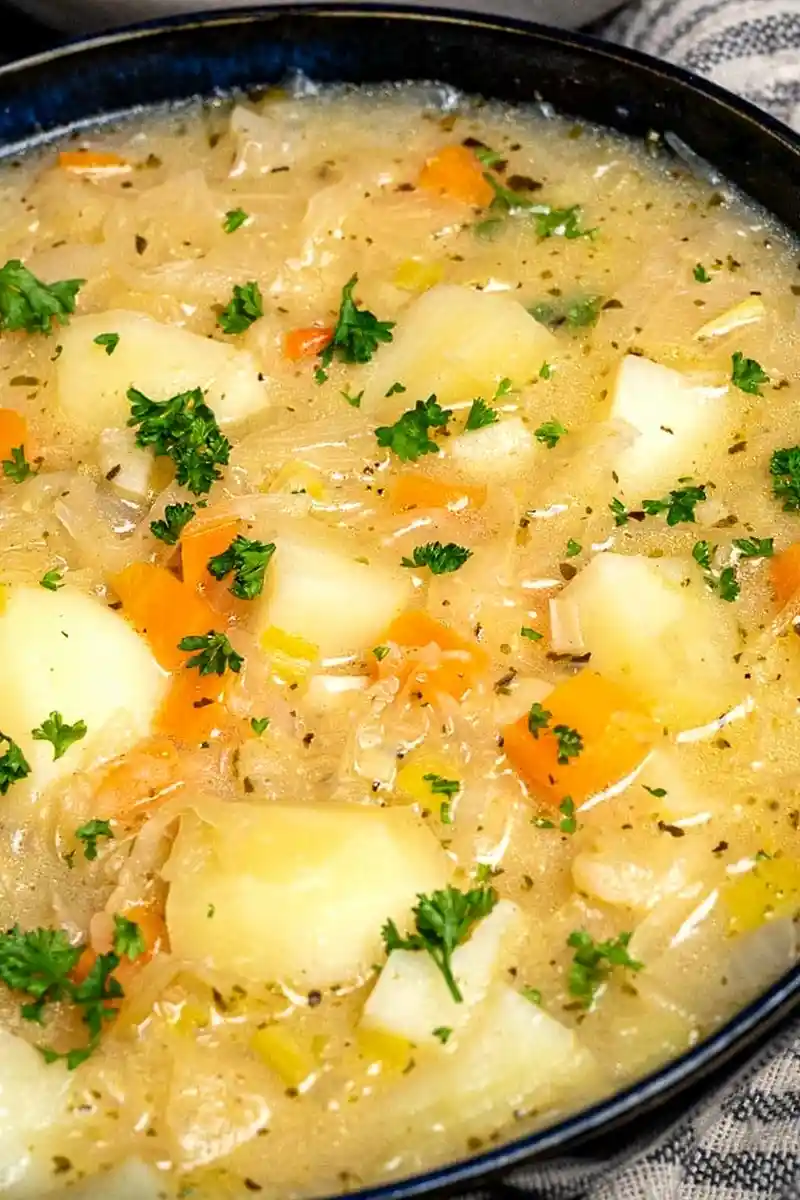
List of ingredients
- 2 tablespoons sunflower oil – used for sautéing the base vegetables.
- 1 large onion, diced – adds a sweet and aromatic foundation.
- 1 medium leek, white and light green parts only, finely sliced – provides a mild, onion-like flavor.
- 1 medium carrot, diced – contributes color and natural sweetness.
- 1 medium parsnip, diced – adds a distinct earthy and sweet note.
- 2 large garlic cloves, finely chopped – essential for depth and aroma.
- 1/2 teaspoon caraway seeds – a classic spice for cabbage dishes.
- 1 teaspoon dried marjoram – adds a subtle, herbal quality.
- 1 teaspoon allspice – provides warm, peppery undertones.
- 6-8 juniper berries – gives the soup a piney, forest-like aroma.
- 2-3 bay leaves – infuses the broth with a light herbal scent.
- 400 g (1 lb) sauerkraut, drained – the primary source of acidity and flavor.
- 3 potatoes, peeled and cut into 1-inch cubes (about 500 g) – adds substance and heartiness.
- 1.5 litres (6 cups) vegetable stock – the liquid base that ties everything together.
- Salt and freshly ground pepper to taste – for final flavor adjustment.
step-by-step instructions
- Sauté the onions: Heat the oil in a large stockpot or Dutch oven and sauté the onion for 2-3 minutes over medium heat.
- Soften root vegetables: Add the leek, carrot and parsnip and continue to cook for 8-10 minutes until the veggies soften.
- Toast spices: Stir in the garlic, caraway seeds, marjoram, allspice, juniper berries and bay leaves and continue to cook for 1-2 minutes, stirring occasionally.
- Cook sauerkraut: Add the sauerkraut and continue cooking for 1-2 minutes. Next, add a ladle of veggie stock and simmer for 10 minutes.
- Simmer potatoes: Add the potatoes and the rest of the stock and simmer on a low heat for 25 minutes or until the potatoes are fork-tender.
- Final touch: Season to taste and serve with rye bread or your favourite crusty bread.
Optimizing Your Ingredient Selection
Choosing the Right Sauerkraut
For the best results, select a high-quality, naturally fermented sauerkraut. Look for brands that contain only cabbage and salt to avoid unnecessary additives. If the sauerkraut is extremely sour, you can rinse it under cold water, though draining it without rinsing preserves the most flavor.
Selecting the Best Potatoes
Use waxy potatoes such as Yukon Gold or red potatoes for this recipe. These varieties hold their shape much better during the simmering process than starchy potatoes like Russets. This ensures you have distinct cubes of potato rather than a thickened, mushy broth.
Using Fresh Parsnips for Depth
Parsnips are crucial for providing a sweet contrast to the acidic sauerkraut. Ensure your parsnips are firm and creamy white in color. Peel them thoroughly and dice them to the same size as the carrots to ensure they cook at the same rate.
Choosing a Neutral Cooking Oil
Sunflower oil is ideal because it has a high smoke point and a neutral flavor. You can also use canola, grapeseed, or light olive oil. Avoid extra virgin olive oil if you want the authentic taste of the cabbage and spices to shine through without fruitiness.
Flavor Customization and Variations
Adding Smoked Tofu for Meatiness
To add a savory, smoked element while keeping the dish plant-based, add cubed smoked tofu. Sauté the tofu with the onions at the beginning of the process. This provides a chewy texture and a depth of flavor similar to traditional smoked meats.
Using Smoked Paprika for Depth
If you prefer a subtle smoky flavor without adding tofu, stir in a teaspoon of smoked paprika during the spice step. This adds a rich, woody note that complements the caraway and juniper berries perfectly.
Incorporating Extra Root Vegetables
You can expand the nutritional profile by adding celery or turnips. Dice these vegetables to the same size as the carrots and parsnips. Add them during the second step of the instructions to ensure they soften properly.
Creating a Creamier Texture
For a richer soup, stir in a tablespoon of vegan cream or a splash of cashew cream just before serving. This helps mellow out the sharp acidity of the sauerkraut and creates a velvety mouthfeel.
Perfecting the Cooking Process
Sautéing Vegetables for Maximum Flavor
Do not rush the initial sautéing of the onion, leek, and root vegetables. Allowing them to soften and lightly brown creates a complex flavor base. This process releases the natural sugars in the carrots and parsnips, which balances the sourness of the cabbage.
Managing the Simmer Temperature
Keep the soup at a gentle simmer rather than a rolling boil. High heat can cause the potatoes to break apart and the vegetables to overcook. A low heat allows the flavors of the juniper berries and allspice to infuse slowly into the broth.
Balancing the Acidity
If you find the soup is too tart after simmering, add a small pinch of brown sugar or maple syrup. This doesn’t make the soup sweet but rather neutralizes the sharp edges of the sauerkraut. Always taste the soup after adding the potatoes before making this adjustment.
Preparing the Sauerkraut Properly
Draining the sauerkraut is essential to prevent the soup from becoming overly salty. If you are using a brand that is very salty, a quick rinse can be beneficial. Simmering the cabbage with a small amount of stock before adding the potatoes helps soften the texture.
Serving and Pairing Suggestions
The Best Breads for Pairing
Hearty dark rye bread is the most traditional accompaniment for Kapusniak. The deep, earthy flavor of rye complements the tang of the sauerkraut. A crusty sourdough loaf is another excellent choice for dipping into the broth.
Fresh Herb Garnishes
Garnish each bowl with a sprinkle of fresh chopped parsley or dill. These herbs add a brightness and freshness that cuts through the richness of the root vegetables. It also adds a vibrant green color to the presentation.
Side Dish Recommendations
Serve this soup alongside a simple green salad with a light lemon vinaigrette. The crispness of the salad provides a refreshing contrast to the warm, dense nature of the soup. Roasted root vegetables are another great pairing for a full meal.
Non-Alcoholic Beverage Pairings
A chilled sparkling water with a slice of lemon cleanses the palate between bites. Alternatively, a warm, non-alcoholic apple cider pairs beautifully with the autumnal flavors of the parsnip and caraway.
Storage and Preservation Tips
Refrigeration Guidelines
Store leftovers in an airtight glass container in the refrigerator. The soup typically tastes even better the next day as the flavors have more time to meld. It will remain fresh and safe to eat for up to three days.
Freezing the Soup
This soup freezes well for up to three months. Use freezer-safe containers or bags, leaving a little room at the top for expansion. Note that the texture of the potatoes may change slightly after thawing, becoming a bit softer.
Preventing Potato Breakdown During Storage
If you plan to freeze the soup, consider slightly undercooking the potatoes. This prevents them from becoming too mushy during the reheating process. Alternatively, you can strain the potatoes out and freeze the broth and cabbage separately.
Reheating and Make-Ahead Advice
Stovetop Reheating Method
Reheat the soup slowly over medium-low heat on the stove. Add a splash of vegetable stock or water if the soup has thickened too much in the fridge. Stir gently to avoid breaking the potato cubes.
Microwave Heating Tips
When using a microwave, heat the soup in short intervals of one to two minutes. Stir the soup between intervals to ensure that the heat is distributed evenly. This prevents hot spots and ensures the vegetables are heated through.
Planning Your Batch Cooking
This recipe is ideal for meal prep. Double the quantities and divide the soup into individual portions. This allows you to have a healthy, warming lunch ready to go throughout the work week.
Common Troubleshooting and FAQs
Why is my soup too sour?
The acidity depends on the brand of sauerkraut used. To fix this, you can add a small amount of sugar or increase the amount of potatoes, as the starch helps neutralize the acid.
Can I use a slow cooker for this recipe?
Yes, you can use a slow cooker. Sauté the vegetables and spices in a pan first, then transfer them to the slow cooker with the sauerkraut and stock. Cook on low for 6-8 hours, adding the potatoes in the last two hours.
What can I use if I don’t have juniper berries?
If juniper berries are unavailable, you can use a small pinch of dried rosemary or a few extra crushed peppercorns. These provide a similar earthy and aromatic quality to the soup.
How do I stop the potatoes from getting mushy?
Ensure you use waxy potatoes and cut them into uniform one-inch cubes. Avoid overcooking them beyond the recommended 25 minutes of simmering.
Print
Hearty Polish Sauerkraut Soup (Kapusniak)
- Total Time: 1 hour
- Yield: 6 servings 1x
- Diet: Vegan
Description
Polish sauerkraut soup is a simple yet hearty recipe that’s just perfect to enjoy on a cold day. Also known as kapusniak, this sauerkraut soup is naturally vegan and can be easily customized to your liking.
Ingredients
- 2 tablespoons sunflower oil
- 1 large onion, diced
- 1 medium leek, white and light green parts only, finely sliced
- 1 medium carrot, diced
- 1 medium parsnip, diced
- 2 large garlic cloves, finely chopped
- 1/2 teaspoon caraway seeds
- 1 teaspoon dried marjoram
- 1 teaspoon allspice
- 6–8 juniper berries
- 2–3 bay leaves
- 400 g (1 lb) sauerkraut, drained
- 3 potatoes, peeled and cut into 1-inch cubes (about 500 g)
- 1.5 litres (6 cups) vegetable stock
- Salt and freshly ground pepper to taste
Instructions
- Step 1: Heat the oil in a large stockpot or Dutch oven and sauté the onion for 2-3 minutes over medium heat.
- Step 2: Add the leek, carrot and parsnip and continue to cook for 8-10 minutes until the veggies soften.
- Step 3: Stir in the garlic, caraway seeds, marjoram, allspice, juniper berries and bay leaves and continue to cook for 1-2 minutes, stirring occasionally.
- Step 4: Add the sauerkraut and continue cooking for 1-2 minutes. Next, add a ladle of veggie stock and simmer for 10 minutes.
- Step 5: Add the potatoes and the rest of the stock and simmer on a low heat for 25 minutes or until the potatoes are fork-tender.
- Step 6: Season to taste and serve with rye bread or your favourite crusty bread.
Notes
Kapusniak tastes better the next day. It can be stored in the fridge for up to three days in an airtight container or frozen for up to three months. Best served with hearty rye bread.
- Prep Time: 10 minutes
- Cook Time: 50 minutes
- Category: Soups
- Method: Simmering
- Cuisine: Polish
Nutrition
- Serving Size: 1 serving
- Calories: 189 kcal
- Sugar: 6 g
- Sodium: 513 mg
- Fat: 5 g
- Saturated Fat: 1 g
- Unsaturated Fat: 4 g
- Trans Fat: 0 g
- Carbohydrates: 33 g
- Fiber: 6 g
- Protein: 5 g
- Cholesterol: 0 mg