This homemade vegetable soup is a nutrient-dense meal that comes together in under an hour. It is a versatile dish that works well for meal prep or a quick family dinner.
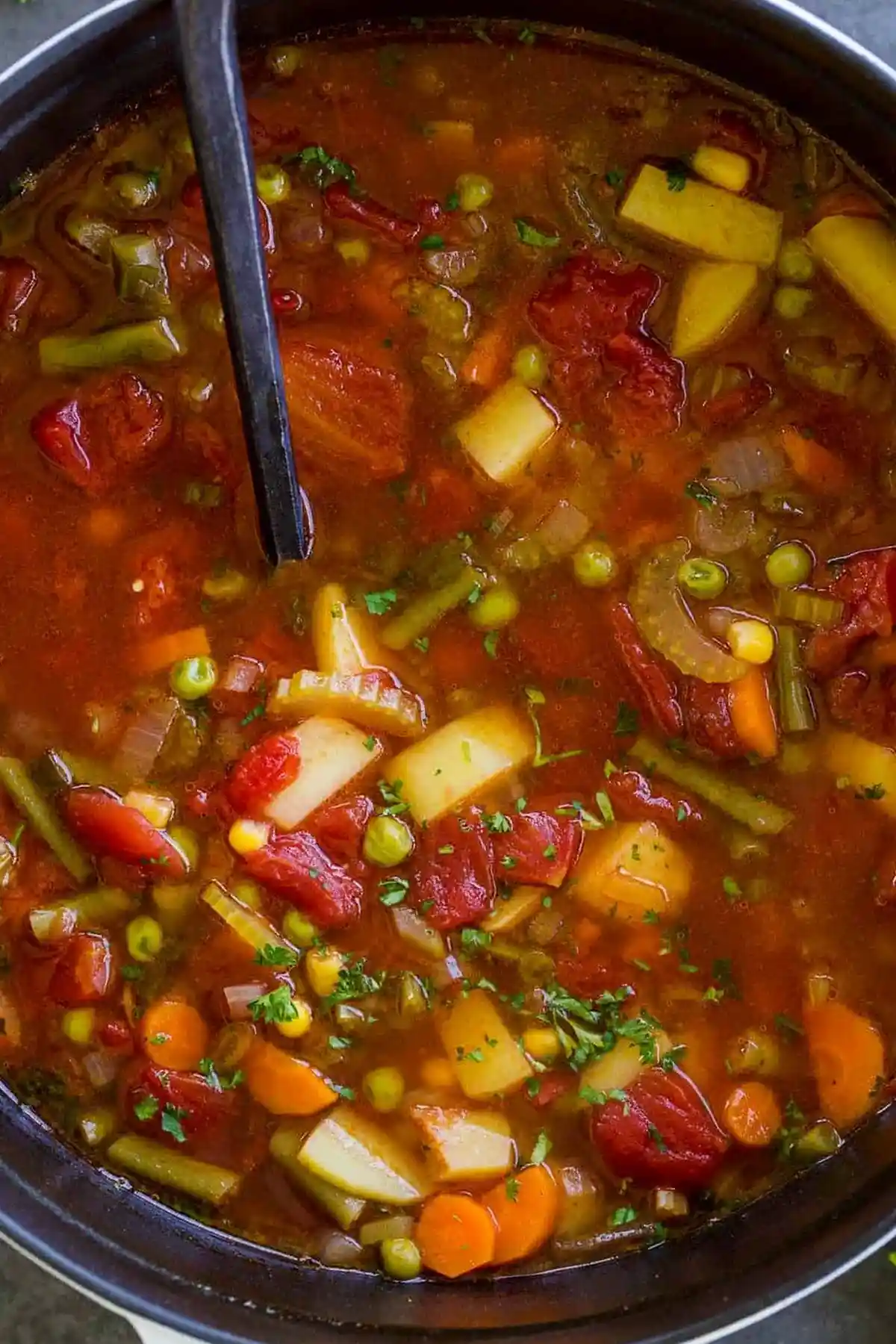
List of ingredients
- 2 Tbsp olive oil – used for sautéing aromatics.
- 1 medium yellow onion, chopped – provides a savory base.
- 2 large carrots, chopped – adds natural sweetness.
- 1 cup chopped celery – adds earthy depth.
- 28 oz canned diced tomatoes – provides acidity and body.
- 60 oz vegetable broth, low-sodium – the main liquid base.
- 3 medium potatoes, diced – thickens the soup naturally.
- 1 cup green beans, chopped – adds texture and color.
- 3 bay leaves – infuses the broth with herbal notes.
- 2 tsp salt, or to taste – enhances all other flavors.
- 1 tsp ground black pepper – adds a mild spicy kick.
- 1 cup frozen sweet corn – adds pops of sweetness.
- 1 cup frozen sweet peas – provides bright color and nutrition.
- 1/2 cup green onions, chopped – used for fresh finishing.
- 1/4 cup fresh parsley, chopped – adds a clean, herbal finish.
step-by-step instructions
- Sauté Aromatics: Preheat a heavy soup pot or Dutch oven over medium heat and add 2 Tbsp olive oil. Add chopped onions and carrots and saute for 6-8 minutes, stirring occasionally until golden.
- Simmer Base: Add celery, canned tomatoes (with juice), broth, potatoes, green beans, bay leaves, salt, and pepper. Bring it to a boil then reduce heat to a simmer and cook for 25 minutes.
- Final Additions: Once the vegetables are tender, add corn, sweet peas, green onion, and parsley. Season with salt to taste and simmer for another 5-8 minutes. Remove from heat and serve warm.
Customizing Your Vegetable Ingredients
Incorporating Leafy Greens
You can easily add spinach, kale, or Swiss chard to this soup for extra nutrients. Stir these in during the last 2 minutes of cooking so they wilt without losing their bright green color.
Adding Different Root Vegetables
For a sweeter flavor profile, replace the potatoes with diced sweet potatoes or butternut squash. Parsnips or turnips are also excellent alternatives that provide a more peppery, earthy taste.
Integrating Plant-Based Proteins
To make the soup more filling, stir in a can of drained chickpeas or cannellini beans. These additions increase the fiber and protein content, making the dish a complete meal.
Experimenting with Cruciferous Vegetables
Chopped broccoli, cauliflower, or cabbage can be added during the simmer stage. Cabbage adds a traditional hearty feel, while broccoli and cauliflower provide a softer texture.
Using Summer Squash
Diced zucchini or yellow squash can be added toward the end of the cooking process. Since they cook quickly, adding them in the final 10 minutes prevents them from becoming too mushy.
Adding Alliums for Depth
Leeks are a great substitute for yellow onions or can be used in addition to them. Sauté leeks with the carrots to create a more sophisticated and buttery flavor base.
Essential Cooking Techniques for Better Soup
The Importance of Sautéing Aromatics
Taking the time to sauté onions and carrots until golden develops the Maillard reaction. This process creates complex sugars that provide a deeper, richer flavor than simply boiling the vegetables.
Maintaining a Gentle Simmer
Once the soup reaches a boil, immediately reduce the heat to a simmer. Boiling the soup too vigorously can cause the potatoes to break apart and make the broth cloudy.
Consistent Vegetable Sizing
Try to cut all your vegetables into uniform, bite-sized pieces. This ensures that every ingredient cooks at the same rate and provides a consistent experience in every spoonful.
Balancing Salt and Acidity
Taste the soup after the 25-minute simmer before adding final seasonings. If the soup feels flat, a small squeeze of lemon juice or a pinch more salt can brighten the flavors.
Handling Frozen Vegetables
Frozen corn and peas should be added at the very end. Because they are blanched before freezing, they only need a few minutes to heat through without losing their texture.
Variations in Flavor and Texture
Increasing the Spice Level
For a spicy kick, add half a teaspoon of red pepper flakes during the sauté step. You can also stir in chopped jalapeños or a few dashes of your favorite hot sauce before serving.
Adding Herbaceous Notes
While parsley is great, fresh dill or basil can transform the flavor profile. Add these soft herbs at the very end to preserve their volatile oils and fresh aroma.
Thickening the Broth
If you prefer a thicker consistency, mash a few of the cooked potatoes against the side of the pot. Stir the mashed potato back into the liquid to naturally thicken the soup without adding flour.
Using Alternative Broths
While vegetable broth is standard, you can use a mushroom-based broth for a more umami-rich taste. Ensure any substitute broth is low-sodium to maintain control over the final seasoning.
Serving and Pairing Ideas
Complementary Bread Choices
Serve this soup with crusty French bread or a warm baguette for dipping. Garlic bread provides a savory contrast that complements the sweetness of the carrots and corn.
Using Bread Bowls
For a fun presentation, scoop out the center of a small sourdough boule. Pour the hot soup into the bread bowl for a rustic meal that is filling and visually appealing.
Adding Fresh Toppings
Garnish each bowl with a sprinkle of fresh chives or a dollop of Greek yogurt for creaminess. A sprinkle of nutritional yeast can add a cheesy flavor while keeping the dish vegan.
Pairing with Side Salads
A light arugula salad with a lemon vinaigrette pairs well with this hearty soup. The bitterness of the greens cuts through the richness of the root vegetables.
Storage and Reheating Guide
Refrigeration Best Practices
Allow the soup to cool completely to room temperature before transferring it to the fridge. Store it in airtight glass containers to keep it fresh for up to 5 days.
Freezing for Long-Term Use
Divide the cooled soup into individual freezer-safe portions. This allows you to thaw only what you need, and the soup will remain high-quality for up to 6 months.
Proper Thawing Methods
The best way to thaw frozen soup is to place the container in the refrigerator overnight. This slow thaw preserves the texture of the vegetables better than rapid thawing.
Reheating on the Stovetop
Heat the soup in a saucepan over medium-low heat, stirring occasionally. Add a splash of water or vegetable broth if the soup has thickened too much during storage.
Microwave Reheating Tips
Place the soup in a microwave-safe bowl and cover it with a lid or damp paper towel. Heat in 1-minute intervals, stirring in between to ensure the heat is distributed evenly.
Alternative Preparation Methods
Slow Cooker Instructions
Sauté the onions and carrots in a skillet first, then transfer them to the slow cooker with the other hearty vegetables and broth. Cook on low for 4-5 hours, adding the frozen vegetables and fresh herbs in the last 20 minutes.
Pressure Cooker Adaptation
Add all ingredients except the frozen vegetables and fresh herbs to the pressure cooker. Cook on high pressure for 10 minutes, then perform a quick release and stir in the final ingredients.
Frequently Asked Questions
Can I use dried herbs instead of fresh?
Yes, you can use dried herbs, but use about one-third of the amount called for in the recipe. Ensure your dried herbs are fragrant and not older than a few years for the best flavor.
How do I stop the potatoes from becoming mushy?
Avoid overcooking the soup beyond the recommended times. Cutting the potatoes into larger, uniform cubes also helps them maintain their structure during the simmering process.
What can I use if I don’t have bay leaves?
If bay leaves are unavailable, you can substitute them with a pinch of dried thyme or oregano. While the flavor is different, these herbs still provide the necessary earthy depth.
Is this soup suitable for meal prep?
Yes, this soup is ideal for meal prep because the flavors often improve after a day in the refrigerator. It freezes well and can be reheated quickly for lunch throughout the week.
Can I make this soup without canned tomatoes?
You can substitute canned diced tomatoes with fresh chopped tomatoes or a tablespoon of tomato paste. Tomato paste will provide a deeper color and a more concentrated flavor.
Print
Hearty Homemade Vegetable Soup
- Total Time: 60 minutes
- Yield: 8 servings 1x
- Diet: Vegetarian
Description
Homemade Vegetable Soup is hearty and packed with vegetables. It’s a comforting, feel-good soup your family will love. It takes less than an hour to make and tastes so much better than store-bought.
Ingredients
- 2 Tbsp olive oil
- 1 medium yellow onion (chopped)
- 2 large carrots (chopped)
- 1 cup chopped celery
- 28 oz canned diced tomatoes
- 60 oz vegetable broth (low-sodium)
- 3 medium potatoes (diced)
- 1 cup green beans (chopped)
- 3 bay leaves
- 2 tsp salt (or to taste)
- 1 tsp ground black pepper
- 1 cup frozen sweet corn
- 1 cup frozen sweet peas
- 1/2 cup green onions (chopped)
- 1/4 cup fresh parsley (chopped)
Instructions
- Step 1: Preheat a heavy soup pot or Dutch oven over medium heat and add 2 Tbsp olive oil. Add chopped onions and carrots and saute for 6-8 minutes, stirring occasionally until golden.
- Step 2: Add celery, canned tomatoes (with juice), broth, potatoes, green beans, bay leaves, salt, and pepper. Bring it to a boil then reduce heat to a simmer and cook for 25 minutes.
- Step 3: Once the vegetables are tender, add corn, sweet peas, green onion, and parsley. Season with salt to taste and simmer for another 5-8 minutes. Remove from heat and serve warm.
Notes
Salt measurements can vary depending on the type you are using. Table salt will be closer to 2 tsp while a coarser salt may need 1 Tbsp. Store in airtight containers for 5 days in the fridge or up to 6 months in the freezer.
- Prep Time: 15 minutes
- Cook Time: 45 minutes
- Category: Soup
- Method: Stovetop
- Cuisine: American
Nutrition
- Serving Size: 1 serving
- Calories: 167 kcal
- Sugar: 7 g
- Sodium: 753 mg
- Fat: 4 g
- Saturated Fat: 1 g
- Unsaturated Fat: 3 g
- Trans Fat: 0 g
- Carbohydrates: 30 g
- Fiber: 6 g
- Protein: 5 g
- Cholesterol: 0 mg