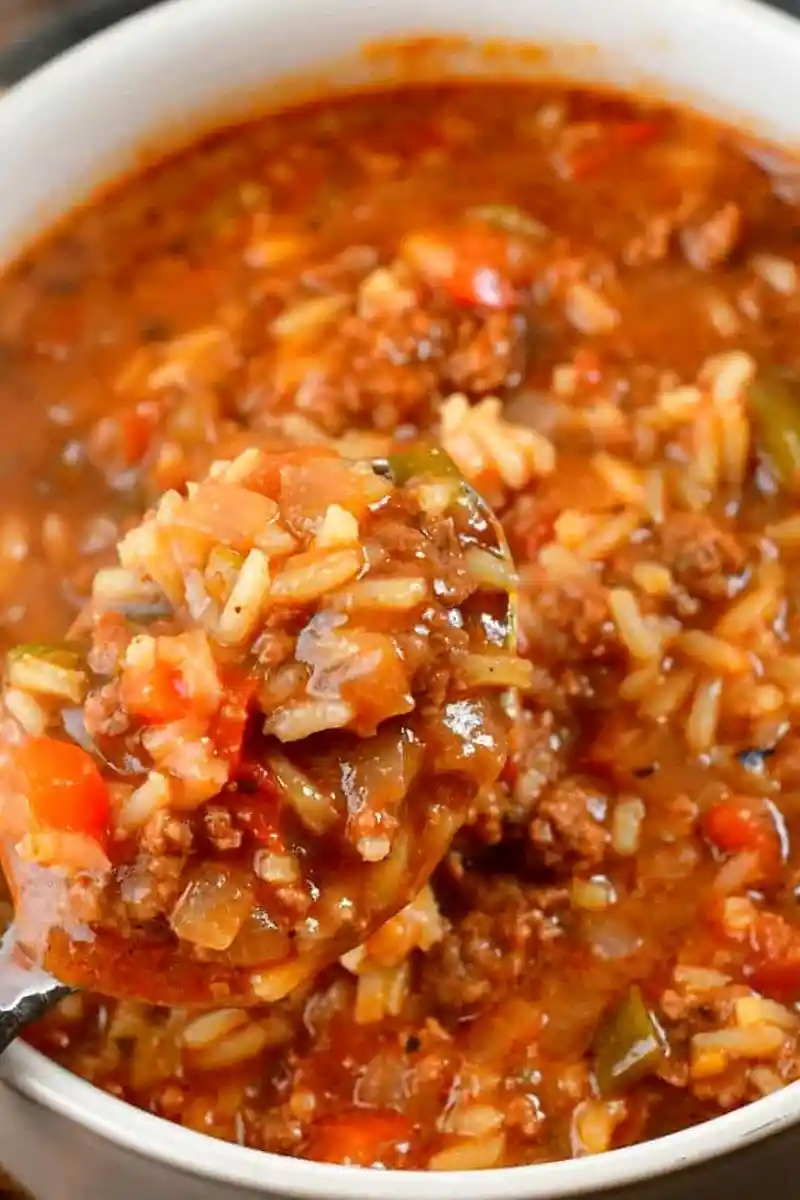
This hearty soup captures all the traditional flavors of stuffed bell peppers in a convenient, single-pot meal. It combines lean protein, fresh vegetables, and rice for a filling dinner that is easy to prepare.
List of ingredients
- 3 tbsp olive oil – used for sautéing vegetables and browning meat.
- 1 small yellow onion – finely diced for a sweet, aromatic base.
- 1 green or red bell pepper – diced to provide classic pepper flavor.
- 1 yellow bell pepper – diced for color and sweetness.
- 1 large tomato – diced to add acidity and body to the broth.
- 1 lb ground beef – 85/15 ratio recommended for optimal tenderness and flavor.
- 3 cups beef stock – provides the savory liquid base.
- 3 tbsp tomato paste – adds richness and thickens the soup.
- 1 tsp dried oregano – for a classic earthy herb note.
- 2 tsp dried basil – adds a sweet, peppery aromatic quality.
- 2 tsp garlic powder – for a consistent, savory garlic flavor.
- 1/4-1/2 tsp black pepper – adjusted to taste for a mild heat.
- salt – added to taste to enhance all other flavors.
- 3/4 cup Jasmine rice – adds texture and heartiness to the dish.
step-by-step instructions
- Prepare Vegetables: Dice all the vegetables first and set them aside to ensure a smooth cooking process.
- Sauté Aromatics: Preheat a Dutch oven over medium heat and add olive oil. Add diced onions and bell peppers and cook until they start to soften.
- Add Tomatoes: Mix in the diced tomato and cook for a few more minutes until the tomato begins to break down.
- Brown the Beef: Move the vegetables over to the sides of the pot and add the ground beef to the center. Break the meat apart, cover the pot with a lid, and cook for a few minutes.
- Combine Meat and Veggies: Break up the meat further and mix it with the vegetables. Close the lid and keep cooking until the beef is mostly browned, ensuring there are no large clumps.
- Incorporate Liquid: Stir in the tomato paste and then pour in the beef stock.
- Season and Simmer: Add oregano, basil, garlic powder, salt, and pepper. Mix well, lower the heat to low, and close the lid leaving a small crack for steam to escape. Cook for about 20 minutes.
- Cook the Rice: Mix in the rice, close the lid completely, and cook until the rice is tender.
- Serve: Dish out the soup immediately while hot.
Protein Customization and Substitutions
Choosing the Best Ground Beef Fat Ratio
Using ground beef with an 85/15 fat-to-lean ratio is recommended to keep the meat tender. Leaner beef, such as 90/10, can become chewy or dry during the simmering process. The fat in the 85/15 blend helps carry the flavors of the herbs and garlic throughout the soup.
Substituting Ground Turkey for a Leaner Option
Ground turkey is an excellent alternative for those seeking a lower-fat meal. Use standard ground turkey rather than extra-lean turkey to avoid a dry texture. If using turkey, you may need to add an extra tablespoon of olive oil to ensure the meat browns properly.
Using Ground Italian Sausage
For a more robust flavor profile, you can substitute the ground beef with ground Italian sausage. Since sausage is typically pre-seasoned, reduce the amount of added salt and garlic powder in the recipe. Ensure the sausage is fully browned before adding the beef stock to maximize flavor.
Rice and Grain Alternatives
Using Jasmine Rice for Fragrance
Jasmine rice is preferred for its slightly floral aroma and soft texture. It cooks relatively quickly, making it ideal for adding directly into the pot. Ensure you do not overcook it, or the grains will lose their individual structure.
Substituting Brown Rice for More Fiber
Brown rice is a healthy alternative but requires a different cooking approach. Because it takes much longer to soften than white rice, you should cook it separately before adding it to the soup. Alternatively, increase the simmering time significantly if adding it directly to the pot.
Using Quinoa as a Gluten-Free Grain
Quinoa is a protein-rich substitute that works well in this soup. It cooks faster than most rice varieties, so add it during the last 10-15 minutes of simmering. Quinoa adds a slightly nutty flavor and a different texture compared to traditional rice.
Utilizing Farro or Couscous
Farro provides a chewy, hearty texture that complements the beef. Couscous is the fastest option and should be stirred in just before serving. Note that these grains are not gluten-free, so they are only suitable for those without gluten sensitivities.
Vegetable Enhancements and Variations
Incorporating Leafy Greens
Adding kale or spinach can increase the nutritional value of the soup. Stir these greens in during the last 5 minutes of cooking so they wilt but remain vibrant. This adds a fresh, slightly bitter contrast to the rich beef broth.
Adding Root Vegetables for Heartiness
Diced carrots or parsnips can be added along with the onions and bell peppers. These vegetables provide a natural sweetness and additional bulk to the meal. Cook them until they are tender before adding the ground beef.
Boosting Umami with Mushrooms
Sliced mushrooms add a deep, savory umami flavor that complements the beef stock. Sauté them with the onions and bell peppers until they release their moisture and brown. This adds an earthy complexity to the overall dish.
Adding Corn or Green Beans
Frozen corn or chopped green beans add pops of color and texture. These should be added during the final simmering stage to prevent them from becoming overcooked. They provide a classic garden-soup feel to the stuffed pepper flavor profile.
Advanced Cooking Techniques
Managing the Simmering Process
Leaving a small crack in the lid during the first 20 minutes of simmering allows excess steam to escape. This prevents the soup from becoming too watery and helps concentrate the flavors. Once the rice is added, close the lid fully to trap the steam needed to cook the grains.
The Benefit of Cooking Rice Separately
If you plan to have leftovers, cook the rice in a separate pot and add it to individual bowls. Rice continues to absorb liquid as it sits in the refrigerator, which can turn the soup into a thick porridge. Separate storage maintains the ideal soup-to-grain ratio.
Optimizing the Beef Browning Stage
Pushing the vegetables to the side to brown the beef in the center creates a localized high-heat zone. This encourages the Maillard reaction, which develops a deeper, more savory crust on the meat. Breaking the beef into small crumbles ensures every bite has a consistent meat-to-vegetable ratio.
Using a Dutch Oven for Heat Distribution
A heavy-bottomed Dutch oven is ideal because it distributes heat evenly and prevents the bottom from scorching. The thick walls retain heat, allowing the soup to simmer steadily on low. This is crucial for achieving a tender consistency in the meat and vegetables.
Slow Cooker Adaptation
Preparing the Base for a Crockpot
To use a slow cooker, you must first sauté the vegetables and brown the beef on the stove. Transferring raw meat and vegetables directly to a slow cooker can result in a boiled texture rather than a sautéed one. This initial step preserves the depth of flavor.
Slow Cooker Timing and Temperature
Once the browned meat and veg are transferred, add the tomato paste, beef stock, and seasonings. Cook on the LOW setting for approximately 6 hours. This slow process allows the flavors to meld deeply into the broth.
Adding Rice to the Slow Cooker
Add the rice during the final 20 to 30 minutes of the slow cooking cycle. This ensures the rice is cooked through without becoming mushy. If you prefer a firmer grain, follow the advice of cooking the rice separately.
Storage, Freezing, and Reheating
Refrigerator Storage Guidelines
Store the soup base and the cooked rice in separate airtight containers in the refrigerator. This prevents the rice from absorbing all the broth overnight. Both components will remain fresh for up to 4 days.
Freezing the Soup Base
Freeze the soup without the rice in a heavy-duty zip-top bag or a freezer-safe container. The rice does not freeze well and often becomes grainy or mushy upon thawing. The soup base can be stored in the freezer for up to 3 months.
Thawing and Reheating Instructions
Thaw frozen soup in the refrigerator overnight before reheating on the stove. Simmer the soup over medium-low heat until it reaches a boil. Stir in fresh or previously cooked rice at the very end to warm it through.
Preventing Over-thickening During Reheating
When reheating, you may find the soup has thickened. Add a splash of beef stock or water to return the soup to its original consistency. This is especially important if you stored the rice inside the soup.
Troubleshooting and FAQs
Why is my soup too thick?
This usually happens if the rice has absorbed too much liquid or if the heat was too high during simmering. Stir in a small amount of additional beef stock or water until the desired consistency is reached.
How do I fix a soup that is too thin?
If the broth feels watery, simmer the soup without a lid for an additional 10-15 minutes. This allows some of the liquid to evaporate and concentrate. Alternatively, stir in an extra tablespoon of tomato paste.
Can I use frozen bell peppers?
Yes, frozen bell peppers can be used, but they release more water than fresh ones. Sauté them longer to evaporate the excess moisture before adding the ground beef. The flavor remains very similar to fresh peppers.
What if I don’t have tomato paste?
You can substitute tomato paste with a small amount of tomato sauce or crushed tomatoes. Since these are less concentrated, you may need to simmer the soup longer to achieve the same thickness. Be mindful that this will increase the overall liquid volume.
Can I make this recipe dairy-free?
This recipe is naturally dairy-free as it uses olive oil and beef stock for richness. There are no cream or butter additions required. To add creaminess, you can stir in a spoonful of coconut cream or a dairy-free alternative at the end.
Which beef stock is best to use?
A low-sodium beef stock is recommended so you can control the salt levels yourself. Homemade beef bone broth is an even better option for added depth and nutrients. Ensure the stock is well-strained for a smooth soup texture.
Print
Hearty Homemade Stuffed Pepper Soup
- Total Time: 60 minutes
- Yield: 6 servings 1x
- Diet: Gluten Free
Description
Comforting homemade soup packed with all the flavors of classic stuffed peppers including bell peppers, onions, tomatoes, ground beef, and rice.
Ingredients
- 3 tbsp olive oil
- 1 small yellow onion
- 1 green or red bell pepper
- 1 yellow bell pepper
- 1 large tomato
- 1 lb ground beef
- 3 cups beef stock
- 3 tbsp tomato paste
- 1 tsp dried oregano
- 2 tsp dried basil
- 2 tsp garlic powder
- 1/4–1/2 tsp black pepper
- salt to taste
- 3/4 cup Jasmine rice
Instructions
- Step: Dice all the vegetables first and set the aside.
- Step: Preheat a Dutch oven over medium heat and add olive oil.
- Step: Add diced onions and bell peppers and cook until they start to soften. Mix it diced tomato and cook for a few more minutes.
- Step: Move vegetables over to the sides and add ground beef to the center of the pan. Break it apart, cover the pot with a lid, and cook for a few minutes. After a few minutes, break up the meat some more and start mixing it with veggies. Close the lid and keep cooking until the beef is mostly done. Make sure to break up as many clumps as you can.
- Step: Mix in tomato taste and then, pour in beef stock.
- Step: Season with oregano, basil, garlic powder, salt, and pepper, mix well and lower the heat to low. Close the lid but leave a small crack for the heat to escape. Cook for about 20 minutes.
- Step: Mix in rice, close the lid back up and cook until rice is done.
- Step: Serve right away.
Notes
Pro Tip: If you know you’ll have leftovers, cook the rice separately instead and add it to the soup as needed to prevent it from becoming too mushy.
- Prep Time: 10 minutes
- Cook Time: 50 minutes
- Category: Main Course
- Method: Stove-top
- Cuisine: American
Nutrition
- Serving Size: 1 serving
- Calories: 406 kcal
- Sugar: 4 g
- Sodium: 360 mg
- Fat: 23 g
- Saturated Fat: 7 g
- Unsaturated Fat: 16 g
- Trans Fat: 0 g
- Carbohydrates: 32 g
- Fiber: 3 g
- Protein: 19 g
- Cholesterol: 54 mg