This nutrient-dense soup is a filling and savory option that combines a variety of colorful vegetables. It is easy to prepare in a single pot and provides a comforting meal for any time of the day.
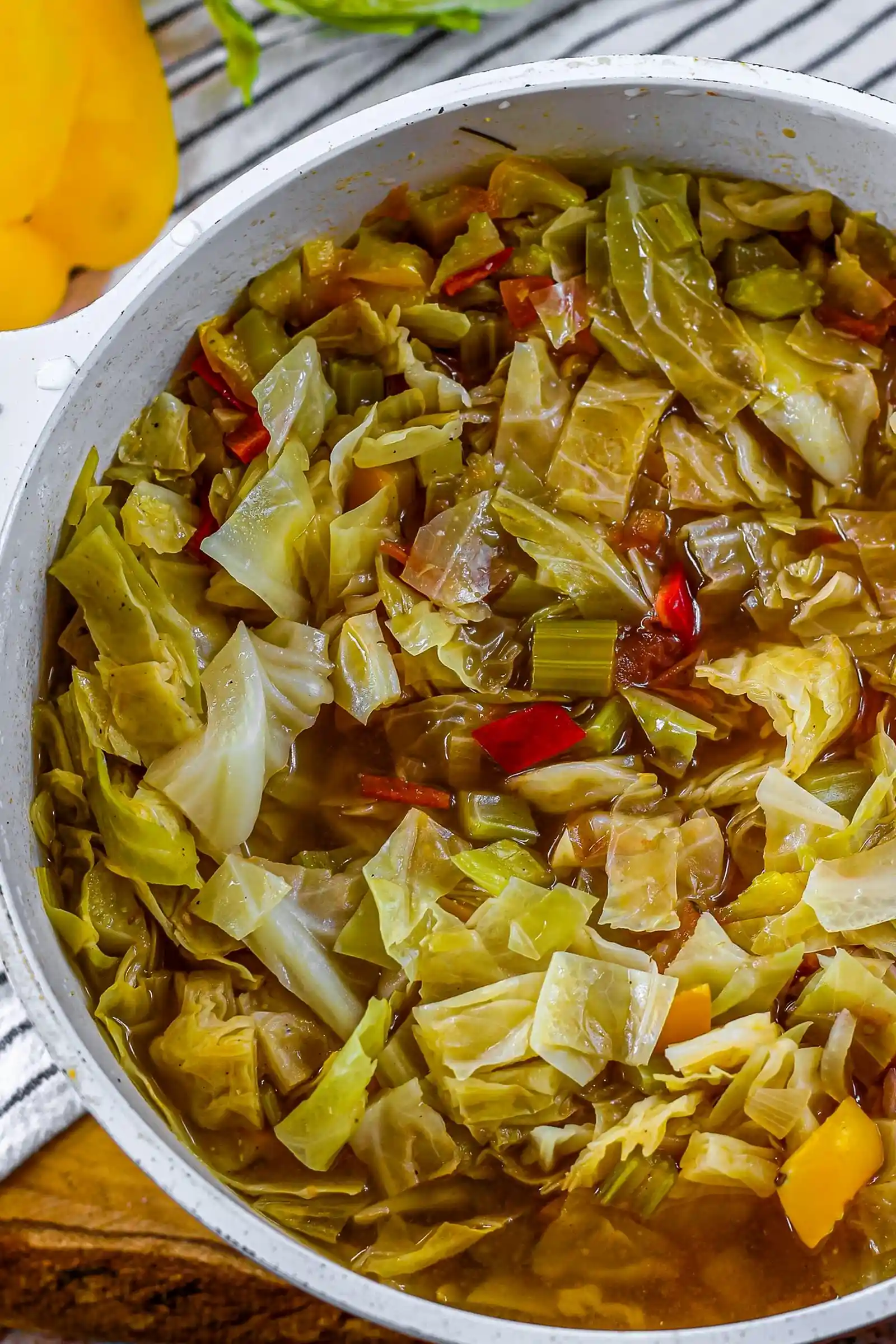
List of ingredients
- 3 cups Beef Broth – provides a rich, savory base.
- 1 tsp Thyme (fresh) – adds an earthy, herbal note.
- 3 tsp Garlic (minced) – enhances the aromatic depth.
- Salt and Pepper if desired – used for final seasoning adjustments.
- 2 tbsp Olive Oil – used for sautéing the vegetables.
- 1 tbsp Tomato Paste – thickens the broth and adds concentrated flavor.
- 2 small Yellow Onions (diced) – provides a sweet, savory foundation.
- 1 head Cabbage (medium, chopped) – the main hearty vegetable component.
- 1 cup Tomatoes (diced) – adds acidity and brightness.
- 3 stalks celery (sliced) – adds a subtle salty, crisp flavor.
- 1 Red bell pepper (diced) – contributes sweetness and color.
- 1 yellow bell pepper (diced) – adds a mild, fruity flavor.
- 1 orange bell pepper (diced) – provides a vibrant hue and sweetness.
step-by-step instructions
- Heat Oil: In a large Dutch oven, heat the Olive oil over medium heat to prepare for the aromatics.
- Sauté Initial Vegetables: Toss in the onions, all the bell peppers, and the tomatoes to begin softening them.
- Cook Down: Cook on medium high heat for 4 to 6 minutes until the vegetables are tender and fragrant.
- Add Aromatics: Add in the Garlic, Thyme, salt and pepper, and the Tomato paste to the pot.
- Combine: Stir well to combine all the seasonings and paste with the vegetables.
- Final Sauté: Continue to cook for an additional 2 minutes to toast the garlic and concentrate the tomato paste.
- Pour Liquid: Add in the 3 cups Beef Broth, stirring to scrape up any browned bits from the bottom.
- Add Main Vegetable: Add in the chopped cabbage, stirring it into the broth.
- Boil: Increase the heat until the liquid comes to a boil.
- Adjust Heat: Reduce the heat to low immediately after boiling.
- Simmer: Simmer for 15 to 20 minutes until the cabbage is cooked to your preferred tenderness.
- Serve: Serve the soup hot and enjoy immediately.
Expert Preparation Techniques
Choosing the Right Cabbage
Select a medium head of green cabbage that feels heavy for its size, which indicates freshness and moisture. Ensure the leaves are tightly packed and free from brown spots or wilting edges. Remove the outermost layer of leaves before chopping to ensure only the cleanest parts of the vegetable are used.
Uniform Vegetable Dicing
Cut your onions, bell peppers, and celery into uniform, small pieces to ensure they cook evenly. When vegetables are consistent in size, they soften at the same rate, preventing some pieces from becoming mushy while others remain raw. Use a sharp chef’s knife on a stable cutting board for safety and precision.
Maximizing the Sauté Phase
Allow the onions and peppers to develop a slight golden color before adding the garlic and tomato paste. This process, known as caramelization, creates a deeper flavor profile that persists throughout the soup. Avoid crowding the pan too much to prevent the vegetables from steaming rather than searing.
Handling Fresh Thyme
Strip the fresh thyme leaves from the woody stem by running your fingers down the stalk in one direction. Discard the stems to avoid any woody texture in the final dish. Adding the fresh herbs during the sauté phase allows their essential oils to release into the olive oil for better distribution.
Customizing the Flavor Profile
Using Vegetable Stock as an Alternative
For those who prefer a meat-free base, substitute the beef broth with a high-quality vegetable stock. This keeps the soup vegetarian while maintaining the necessary liquid volume and salt balance. Vegetable stock often highlights the natural sweetness of the bell peppers and carrots more prominently.
Incorporating Additional Root Vegetables
You can increase the heartiness of the soup by adding diced carrots or sweet potatoes during the initial sauté phase. These vegetables add a natural sweetness and a thicker consistency to the broth. If adding denser roots, you may need to increase the simmering time by an additional 10 minutes.
Adding Leafy Greens for Nutrition
Stir in a handful of chopped kale or spinach during the last 5 minutes of simmering. These greens wilt quickly and add a vibrant color and extra vitamins without altering the primary flavor of the cabbage. Ensure you stir them in thoroughly so they do not clump together.
Adjusting Heat and Spice
To add a spicy kick, incorporate a pinch of crushed red pepper flakes or a diced jalapeño during the sauté process. If the soup feels too acidic from the tomatoes, a tiny pinch of sugar can help balance the flavors. Always taste the broth after simmering before adding final salt and pepper.
Serving and Pairing Ideas
Complementary Bread Pairings
Serve this soup with a side of toasted sourdough or a crusty whole-grain baguette. The crunch of the bread provides a necessary textural contrast to the soft vegetables. Lightly brushing the bread with olive oil and garlic before toasting enhances the overall meal.
Brightening the Dish with Citrus
Squeeze a fresh lemon wedge over each bowl of soup just before serving. The acidity of the lemon cuts through the richness of the beef broth and lifts the earthy flavor of the cabbage. This simple addition makes the flavors taste fresher and more vibrant.
Pairing with Fresh Salads
A light side salad with a simple vinaigrette pairs well with this hearty soup. Choose bitter greens like arugula or radicchio to balance the sweetness of the cooked bell peppers. Avoid heavy creamy dressings, as the soup is already quite filling.
Garnishing for Presentation
Top the soup with a sprinkle of fresh parsley or chopped chives for a professional look. A small dollop of Greek yogurt or a sprinkle of microbial-rennet parmesan cheese can add a creamy element if desired. These additions provide a pop of color and an extra layer of flavor.
Storage and Preservation
Refrigerator Storage Guidelines
Store the leftover soup in an airtight glass or BPA-free plastic container. It will remain fresh in the refrigerator for approximately 7 to 10 days. Because it consists primarily of vegetables, it is less prone to rapid spoilage than cream-based soups.
Freezing for Long-Term Use
This soup freezes well and can be stored in the freezer for up to three months. Use freezer-safe bags or containers, leaving a small amount of space at the top for expansion as the liquid freezes. Thaw the soup in the refrigerator overnight before reheating.
Maintaining Cabbage Texture
If you plan to eat the soup over several days, consider slightly undercooking the cabbage. The cabbage will continue to soften as it sits in the hot broth and during the reheating process. This prevents the vegetables from becoming overly mushy during the second or third serving.
Managing Liquid Loss
During storage, some of the broth may be absorbed by the vegetables, making the soup thicker. Do not worry if the consistency changes slightly in the fridge. You can easily restore the original consistency by adding a splash of water or extra broth during reheating.
Reheating and Freshness
Stovetop Reheating Method
The best way to reheat the soup is in a small pot over medium-low heat. Stir occasionally to ensure the heat is distributed evenly and the vegetables do not stick to the bottom. Heat until it reaches a gentle simmer before serving.
Microwave Warming Tips
When using a microwave, place the soup in a microwave-safe bowl and cover it with a lid or damp paper towel. Heat in 1-minute intervals, stirring in between each session. This prevents hot spots and ensures the center of the soup is warmed through.
Adding Fresh Herbs After Reheating
Reheating can dull the flavor of fresh herbs like thyme. Consider stirring in a small pinch of fresh thyme or parsley after the soup has been warmed. This restores the bright, aromatic quality that was present when the soup was first made.
Adjusting Seasoning After Storage
Flavors often concentrate as the soup sits in the refrigerator. Taste the soup after reheating and add a splash of water if it has become too salty. You may also find that it needs a fresh crack of black pepper to wake up the flavors.
Troubleshooting Common Issues
Solving a Watery Consistency
If the soup is too thin, simmer it uncovered for an additional 10 to 15 minutes to reduce the liquid. Alternatively, you can mash a few of the cooked vegetables against the side of the pot with a spoon. This releases starches into the broth and naturally thickens the texture.
Balancing High Acidity
If the tomatoes or tomato paste make the soup too tart, add a small amount of grated carrot or a pinch of brown sugar. These ingredients provide a natural sweetness that neutralizes excess acid. Stir well and let it simmer for a few minutes to integrate the flavors.
Preventing Burnt Garlic
Garlic burns quickly and can turn bitter if exposed to high heat for too long. Ensure the heat is reduced to medium before adding the minced garlic and tomato paste. Stir constantly during those two minutes to keep the garlic moving and evenly cooked.
Handling Overcooked Cabbage
If the cabbage becomes too soft, it is usually due to over-simmering. To prevent this, check the texture every five minutes once the soup reaches a simmer. Once the cabbage is translucent but still has a slight bite, remove the pot from the heat immediately.
Frequently Asked Questions
Can I use frozen vegetables?
Yes, you can use frozen bell peppers and onions, though they may release more water than fresh ones. If using frozen vegetables, reduce the cooking time during the sauté phase and be prepared to simmer the soup slightly longer to thicken the broth.
Is this soup suitable for meal prep?
This soup is excellent for meal prep because the flavors actually improve as they meld together overnight. It is a convenient option for lunches throughout the week and holds up well during reheating.
How do I make the flavor more intense?
To deepen the flavor, try roasting the bell peppers and onions in the oven before adding them to the pot. You can also use a concentrated beef base or a pinch of smoked paprika to add a layer of complexity to the broth.
Can I replace the tomato paste?
If you do not have tomato paste, you can use two tablespoons of tomato puree or a small amount of ketchup. While the flavor will be slightly different, it will still provide the necessary color and acidic balance to the soup.
What is the best pot for this recipe?
A heavy-bottomed Dutch oven is ideal because it distributes heat evenly and is suitable for both sautéing and simmering. If you don’t have one, a large stainless steel stockpot will work perfectly well for this recipe.
Print
Hearty Garden Cabbage Soup
- Total Time: 35 minutes
- Yield: 12 cups 1x
- Diet: Vegetarian
Description
A great tasting soup filled with various flavors, textures, herbs, and spices. It is filling, savory, and easy to make.
Ingredients
- 3 cups vegetable broth
- 1 tsp fresh thyme
- 3 tsp minced garlic
- salt and pepper if desired
- 2 tbsp olive oil
- 1 tbsp tomato paste
- 2 small yellow onions, diced
- 1 medium head cabbage, chopped
- 1 cup tomatoes, diced
- 3 stalks celery, sliced
- 1 red bell pepper, diced
- 1 yellow bell pepper, diced
- 1 orange bell pepper, diced
Instructions
- Step: In a large Dutch oven, heat the Olive oil over medium heat
- Step: Toss in the onions, all the bell peppers, and the tomatoes
- Step: Cook on medium high heat for 4 to 6 minutes
- Step: Add in the Garlic, Thyme, salt and pepper, and the Tomato paste
- Step: Stir to combine
- Step: Continue to cook for an additional 2 minutes before adding the broth
- Step: Add in the 3 cups vegetable broth
- Step: Add in the chopped cabbage
- Step: Increase the heat until it comes to a boil
- Step: Reduce the heat to low
- Step: Simmer for 15 to 20 minutes
- Step: Serve and enjoy!
Notes
The soup can be kept in an airtight container in the refrigerator for up to 7 to 10 days. It can be made in advance to let the flavors blend together.
- Prep Time: 10 minutes
- Cook Time: 20 minutes
- Category: Soups & Stews
- Method: Simmering
- Cuisine: American
Nutrition
- Serving Size: 1 cup
- Calories: 69 kcal
- Sugar: 5 g
- Sodium: 380 mg
- Fat: 3 g
- Saturated Fat: 0.4 g
- Unsaturated Fat: 2.6 g
- Trans Fat: 0 g
- Carbohydrates: 11 g
- Fiber: 3 g
- Protein: 3 g
- Cholesterol: 0 mg