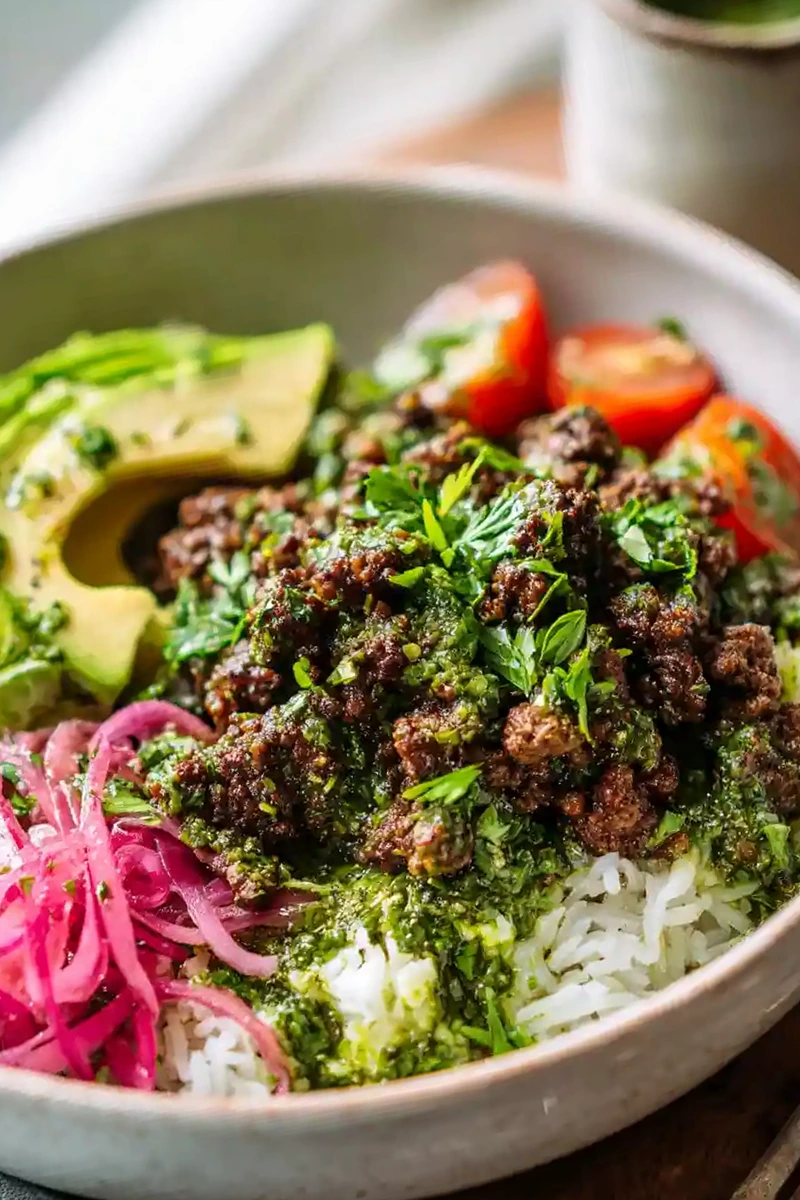
These Ground Beef Chimichurri Bowls combine seared, seasoned meat with a zesty herb sauce for a fast and nutritious dinner. They are balanced with fresh vegetables and fluffy grains to create a satisfying meal with professional flavor profiles.
List of ingredients
- 1 cup fresh Italian flat-leaf parsley, packed, stems removed – providing the primary herbaceous base.
- 1/2 cup fresh cilantro, optional, or more parsley – adds a bright, citrusy note.
- 4 cloves garlic, minced or microplaned – for sharp, aromatic depth.
- 2 tablespoons red onion or shallot, very finely minced – adds a mild piquant flavor.
- 1/2 teaspoon red pepper flakes – introduces a subtle heat.
- 1/4 cup red wine vinegar – provides the necessary acidity to cut through the beef fat.
- 1/2 cup extra virgin olive oil – creates a smooth, rich emulsion for the sauce.
- 1/2 teaspoon kosher salt – enhances all the herbal flavors.
- 1/4 teaspoon freshly cracked black pepper – adds a mild woody spice.
- 1 lb ground beef, 85/15 or 90/10 – the protein base, with 85/15 recommended for better searing.
- 1 teaspoon smoked paprika – adds a deep, woody smoke flavor.
- 1/2 teaspoon ground cumin – provides an earthy, warm undertone.
- 1/2 teaspoon onion powder – concentrates the savory allium taste.
- Salt and black pepper, to taste – for final seasoning adjustments.
- 1 tablespoon avocado oil – used for searing due to its high smoke point.
- 2 cups cooked jasmine rice or quinoa – the hearty base for the bowl.
- 1 cup cherry tomatoes, halved – adds sweetness and acidity.
- 1 large avocado, sliced – provides creaminess and healthy fats.
- 1/2 cup pickled red onions – adds a bright pink color and tangy crunch.
- Sliced radishes or cucumber, optional – for additional crisp texture.
step-by-step instructions
- Prepare the herbs: Finely mince the parsley and cilantro by hand using a sharp knife to avoid bruising. In a small bowl, combine the minced herbs, garlic, red onion or shallot, and red pepper flakes.
- Macerate the aromatics: Stir in the red wine vinegar and let the mixture sit for 5 minutes. This process mellows the harshness of the raw garlic and onion.
- Finish the sauce: Whisk in the olive oil, kosher salt, and black pepper. Set the chimichurri aside at room temperature to allow the flavors to meld.
- Heat the pan: Place a large cast-iron or stainless steel skillet over medium-high heat and add the avocado oil.
- Sear the beef: Add the ground beef in a flat, even layer. Let it cook undisturbed for 3 to 4 minutes to develop a deep brown, caramelized crust.
- Season and brown: Break the beef into large crumbles with a spatula. Season with smoked paprika, cumin, onion powder, salt, and pepper, continuing to cook until browned and slightly crispy. Drain excess fat if necessary.
- Prepare the base: Fluff the cooked jasmine rice or quinoa and divide it equally among serving bowls.
- Integrate the sauce: Turn off the heat and toss 2 tablespoons of the prepared chimichurri directly into the hot beef to coat the meat.
- Assemble the bowl: Divide the chimichurri beef among the bowls. Arrange cherry tomatoes, avocado slices, and pickled red onions on top. Add radishes or cucumber if desired.
- Final garnish: Drizzle the remaining chimichurri over the top of each bowl and serve immediately.
Advanced Cooking Techniques for Better Flavor
Achieving a Deep Brown Crust on the Beef
The key to this dish is the Maillard reaction, which occurs when proteins and sugars are heated. By leaving the beef undisturbed for several minutes, you create a caramelized crust that adds a savory, umami depth. Avoid the temptation to stir the meat immediately, as this releases moisture and leads to steaming rather than searing.
Hand-Cutting Herbs for Optimal Texture
Using a food processor for chimichurri often results in a muddy paste or an overly homogenized sauce. Hand-mincing with a sharp chef’s knife keeps the herb leaves intact and prevents them from bruising. This preserves the bright green color and ensures a distinct, chunky texture in every bite.
Reducing the Harshness of Raw Garlic and Onion
Combining the minced garlic and onions with vinegar before adding the oil is a technique called macerating. The acid in the red wine vinegar breaks down the sulfur compounds in the raw alliums. This removes the ‘bite’ and prevents the raw garlic from overpowering the delicate herbs.
Customizable Ingredient Swaps
Using Lean Turkey or Bison
You can replace ground beef with ground turkey or bison for a leaner protein option. Since turkey has significantly less fat, add an extra tablespoon of avocado oil to the pan to ensure the meat doesn’t stick. You may also want to slightly increase the smoked paprika to compensate for the milder flavor of turkey.
Low-Carb and High-Protein Base Options
For a keto-friendly version, substitute jasmine rice with cauliflower rice. If you want a more nutrient-dense base, use quinoa or a mix of baby spinach and arugula. These options maintain the bowl structure while altering the macronutrient profile of the meal.
Adjusting the Acid Profile with Lime or Cider Vinegar
If red wine vinegar is unavailable, fresh lime juice is an excellent substitute that adds a tropical, citrusy zing. Apple cider vinegar is another option, though it provides a slightly sweeter, fruitier acidity. Adjust the amount by a teaspoon at a time until the flavor balance is to your liking.
Replacing Shallots with Green Onions
If you cannot find shallots or red onion, the white and light green parts of scallions work well. Scallions offer a milder, fresher onion flavor that complements the cilantro. Ensure they are sliced very thinly to blend seamlessly into the sauce.
Assembly and Presentation Tips
Arranging Ingredients for Visual Appeal
To create a restaurant-style presentation, place the rice slightly off-center in a wide, shallow bowl. Position the beef, avocado, and tomatoes in distinct clusters rather than mixing them together. This contrast in colors makes the dish look more appetizing and professional.
Balancing the Plate with Vibrant Vegetables
The bright red of the tomatoes and the deep pink of the pickled onions provide a visual contrast to the green chimichurri. Ensure the vegetables are fresh and crisp to provide a textural break from the soft rice and tender beef. Using a variety of colors ensures a wide range of micronutrients.
Adding Crunch with Seeds and Fresh Radishes
Adding sliced radishes or cucumbers provides a refreshing, watery crunch that cleanses the palate between bites of rich beef. For an additional layer of texture, sprinkle toasted pumpkin seeds or sesame seeds over the top. This adds a nutty element that pairs well with the cumin in the beef.
Storage and Preservation
Storing Cooked Grains and Meat Separately
When saving leftovers, store the cooked rice and beef in one airtight container and the fresh toppings in another. Storing the avocado and tomatoes with the hot meat will cause the vegetables to wilt and the avocado to brown. This separation preserves the integrity of each component.
Maintaining the Green Color of Chimichurri
The acidity in the vinegar will eventually cause the chlorophyll in the parsley to break down, turning the sauce a dull olive green. To keep the sauce vibrant, store it in a glass jar with a thin layer of olive oil on top to block out air. Use the sauce within 24 to 48 hours for maximum freshness.
Keeping Avocado and Tomatoes Fresh
To prevent avocado from oxidizing, squeeze a bit of lime juice over the slices before storing them in an airtight container. Cherry tomatoes should be kept whole until the moment of serving to prevent them from releasing excess juice. This keeps the bowl from becoming watery during storage.
Reheating Instructions
Gently Reheating Beef to Avoid Dryness
When reheating the beef and rice in a microwave, add a teaspoon of water or beef broth to the container. Cover it with a damp paper towel to create steam, which prevents the meat from becoming rubbery. Heat in 30-second intervals, stirring in between to ensure even temperature distribution.
Using a Pan to Restore the Beef Crust
For the best results, reheat the beef and rice in a skillet over medium heat with a tiny amount of oil. This allows the beef to regain some of its crisp edges that are lost during refrigeration. Once hot, remove from the pan before adding the fresh toppings.
Serving the Sauce at Room Temperature
Never reheat the chimichurri sauce, as the heat will wilt the herbs and destroy the fresh flavor. If the sauce has been refrigerated, let it sit at room temperature for 15 to 30 minutes before serving. This ensures the olive oil is fluid and the flavors are fully expressed.
Make-Ahead Strategy
Making the Herb Sauce 24 Hours Ahead
The chimichurri can be prepared a day in advance to save time on busy weeknights. The flavors actually deepen slightly as the herbs steep in the oil and vinegar. Just remember to shake the jar well before serving, as the oil and vinegar may separate.
Batch Cooking Rice for the Week
Cook a large pot of jasmine rice or quinoa at the start of the week and store it in the refrigerator. When assembling your bowls, the pre-cooked grains can be quickly fluffed in the microwave. This reduces the active cooking time for the meal to just the beef searing process.
Cooking the Beef in Large Quantities
You can sear multiple pounds of ground beef at once to use for different meals throughout the week. Store the seasoned beef in the fridge and simply toss it with fresh chimichurri when you are ready to eat. This makes the assembly of the bowls take less than five minutes.
Troubleshooting Common Issues
Avoiding the Food Processor for Herb Sauces
If your sauce feels like a paste, it is likely because the herbs were over-processed. To fix this in the future, stick to hand-chopping or use a very light pulse setting on your processor. If the sauce is already too smooth, you can stir in some freshly chopped parsley to restore the texture.
Balancing Excessive Salt with More Oil or Acid
If the chimichurri tastes too salty, do not add more salt to the beef. Instead, whisk an additional tablespoon of olive oil or a teaspoon of red wine vinegar into the sauce to dilute the sodium. The acid helps mask the saltiness and restores the balance of the sauce.
Ensuring the Pan is Hot Enough Before Adding Meat
If the beef is steaming and turning grey instead of browning, the pan is not hot enough. Wait until the avocado oil is shimmering or just starting to wisps of smoke before adding the meat. If the pan cools down too much, remove the beef and let the pan reheat before adding the next batch.
Frequently Asked Questions
Can I make the chimichurri in advance?
Yes, you can prepare the sauce up to 24 hours before serving. While the flavor remains excellent, the bright green color may fade slightly due to the acid in the vinegar. Store it in an airtight container in the refrigerator.
Is this recipe spicy?
The recipe has a very mild heat coming from the red pepper flakes. If you prefer a spice-free meal, simply omit the flakes. For those who want more heat, add a finely minced jalapeño to the herb mixture.
What is the best fat percentage for the beef?
An 85/15 lean-to-fat ratio is recommended for this recipe. The fat provides enough moisture to carry the spices and is essential for creating the crispy, browned bits that define the texture of the bowl.
Can I freeze the leftover chimichurri?
Yes, chimichurri freezes well if stored in ice cube trays. Once frozen, transfer the cubes to a freezer-safe bag. Thaw a cube in the refrigerator overnight and use it as a garnish or marinade for other proteins.
How do I store leftovers?
Store the cooked beef and rice together in one container, but keep the avocado, tomatoes, and extra sauce in separate containers. Reheat the meat and grains, then add the cold fresh components back on top just before eating.
Print
Ground Beef Chimichurri Bowls
- Total Time: 25 minutes
- Yield: 4 servings 1x
- Diet: Gluten Free
Description
These ground beef chimichurri bowls are a fast, flavor-packed dinner built on contrast: richly browned ground beef, fluffy rice, creamy avocado, juicy tomatoes, and a bright, garlicky chimichurri sauce. The result is fresh, savory, and satisfying with a restaurant-style finish.
Ingredients
- 1 cup fresh Italian flat-leaf parsley, packed, stems removed
- 1/2 cup fresh cilantro, optional, or use more parsley
- 4 cloves garlic, minced or microplaned
- 2 tablespoons red onion or shallot, very finely minced
- 1/2 teaspoon red pepper flakes
- 1/4 cup fresh lime juice
- 1/2 cup extra virgin olive oil
- 1/2 teaspoon kosher salt
- 1/4 teaspoon freshly cracked black pepper
- 1 lb ground beef, 85/15 or 90/10
- 1 teaspoon smoked paprika
- 1/2 teaspoon ground cumin
- 1/2 teaspoon onion powder
- Salt and black pepper, to taste
- 1 tablespoon avocado oil
- 2 cups cooked jasmine rice or quinoa
- 1 cup cherry tomatoes, halved
- 1 large avocado, sliced
- 1/2 cup pickled red onions
- Sliced radishes or cucumber, optional
Instructions
- Step: Finely mince the parsley and cilantro by hand with a sharp knife. In a small bowl, combine the herbs, garlic, red onion or shallot, and red pepper flakes.
- Step: Stir in the fresh lime juice and let the mixture sit for 5 minutes to mellow the raw onion and garlic flavor.
- Step: Whisk in the olive oil, kosher salt, and black pepper. Set the chimichurri aside at room temperature while you cook the beef.
- Step: Heat a large cast-iron or stainless steel skillet over medium-high heat. Add the avocado oil.
- Step: Add the ground beef in a flat layer and let it cook undisturbed for 3 to 4 minutes so a deep brown crust can form.
- Step: Break the beef into large crumbles and season with smoked paprika, cumin, onion powder, salt, and pepper. Continue cooking until fully browned and slightly crispy on the edges. Drain excess fat if needed.
- Step: Fluff the cooked rice or quinoa and divide it among serving bowls.
- Step: Toss 2 tablespoons of the prepared chimichurri directly into the hot beef and stir to coat.
- Step: Top each bowl with the chimichurri beef, cherry tomatoes, avocado slices, and pickled red onions. Add radishes or cucumber if using.
- Step: Drizzle extra chimichurri over the bowls and serve immediately.
Notes
Pro tips: Do not use a food processor for the chimichurri or the herbs may turn pasty. Let the beef sear undisturbed before breaking it up for crisp browned bits. Always serve chimichurri at room temperature for the best flavor. Storage: Store the beef and rice together, but keep the avocado, tomatoes, and extra chimichurri separate until serving. Make ahead: Chimichurri can be made up to 24 hours in advance.
- Prep Time: 15 minutes
- Cook Time: 10 minutes
- Category: Dinner
- Method: Stovetop
- Cuisine: Argentinian-inspired
Nutrition
- Serving Size: 1 bowl
- Calories: 685 kcal
- Sugar: 4 g
- Sodium: 540 mg
- Fat: 45 g
- Saturated Fat: 11 g
- Unsaturated Fat: 31 g
- Trans Fat: 1 g
- Carbohydrates: 35 g
- Fiber: 7 g
- Protein: 31 g
- Cholesterol: 78 mg