This dish combines savory, marinated salmon with a bright, tropical fruit topping. It is a nutrient-dense meal that balances smoky heat with sweet citrus notes.
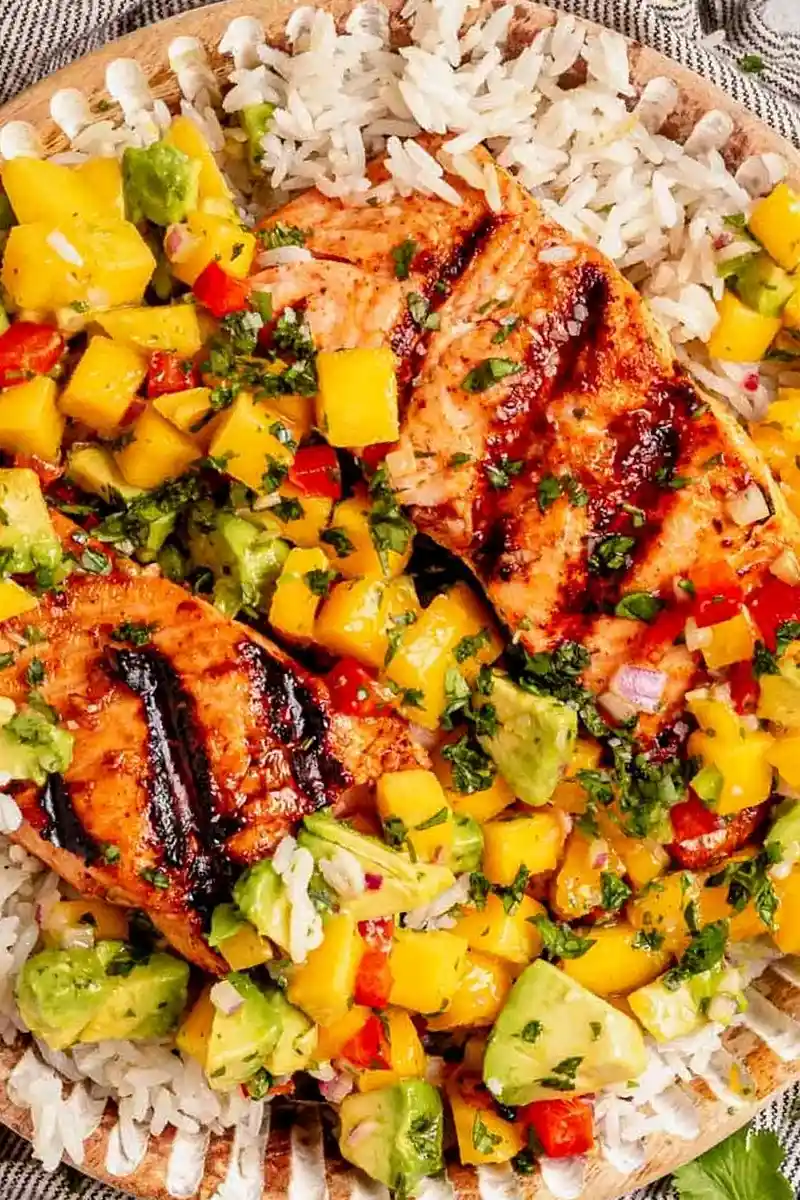
List of ingredients
- 2 tablespoons soy sauce or coconut aminos – provides a savory umami base.
- 1 tablespoon maple syrup or brown sugar – adds a touch of sweetness for caramelization.
- 2 tablespoons olive oil – helps the salmon sear and prevents sticking.
- 2 tablespoons lime juice (about 1 lime) – adds acidity to balance the fat of the fish.
- 2 cloves crushed garlic (or 1 teaspoon garlic powder) – adds pungent depth to the marinade.
- 1/2 teaspoon kosher salt – enhances all the other flavors.
- 2 teaspoons Tajin – adds a tangy, chili-lime kick (substitute with red chili flakes and lime zest).
- 1 teaspoon paprika – gives a rich color and earthy flavor.
- 1 teaspoon chili powder – provides a mild, warm heat.
- 4 salmon filets (4-6 ounces each) – the main protein source, preferably wild-caught.
- 1 large ripe avocado, pitted and diced – adds creaminess to the salsa.
- 1 large mango, diced – the sweet, fruity star of the topping.
- 1/2 red bell pepper, diced small – adds crunch and sweetness.
- 2 tablespoons finely chopped cilantro – provides a fresh, herbal finish.
- 1/2 jalapeño, seeded and minced – adds a spicy contrast.
- 1/4 cup finely diced red onion – offers a sharp, crisp bite.
- 2 tablespoons fresh lime juice (about 1 lime) – preserves the salsa and adds tang.
- 1/2 teaspoon kosher salt (plus more to taste) – seasons the fresh produce.
step-by-step instructions
- Prepare the marinade: In a large mixing bowl, whisk together the soy sauce, olive oil, maple syrup, lime juice, crushed garlic, salt, Tajin, paprika, and chili powder. Toss the salmon filets in the mixture until they are completely coated. Cover the bowl with plastic wrap and refrigerate for at least 20 minutes, though you may marinate them overnight for deeper flavor.
- Mix the mango salsa: While the fish marinates, dice the mango, avocado, red bell pepper, red onion, and jalapeño. Combine these in a medium bowl with the chopped cilantro. Squeeze fresh lime juice over the top and sprinkle with salt, tossing gently to combine. Keep the salsa chilled in the refrigerator until the salmon is ready to serve.
- Prepare the grill: Clean the grill grates thoroughly and brush them with an oiled paper towel to create a non-stick surface. Preheat the grill to medium-high heat, targeting a temperature between 400-450°F.
- Grill the salmon: Remove the filets from the marinade and shake off any excess liquid to prevent flare-ups. Place the salmon skin-side down on the grates and grill for 7-9 minutes, flipping halfway through. Remove the fish from the heat when the internal temperature reaches 135-140°F.
- Rest and serve: Allow the salmon to rest for a few minutes until the internal temperature rises to 145°F. Spoon a generous amount of the chilled mango salsa over each filet and serve immediately.
- Alternative baking method: For oven preparation, preheat to 400°F and line a baking sheet with parchment paper. Place marinated filets on the sheet and bake for 12-15 minutes until the internal temperature hits 135-140°F, then let them rest to 145°F.
Optimal Salmon Cooking Techniques
Grilling for a Smoky Char
Using a grill provides a distinct smoky flavor and visually appealing grill marks. Ensure the grates are very hot before adding the fish to achieve an immediate sear, which helps the skin release easily from the metal. Monitor the heat carefully to prevent the maple syrup in the marinade from burning.
Baking for Consistent Tenderness
Baking is the best method for those who prefer a more uniform texture without the risk of flare-ups. Using parchment paper prevents the salmon from sticking and makes cleanup effortless. This method is ideal for cooking multiple filets at once with consistent heat distribution.
Blackening for Intense Flavor
To blacken the salmon, omit the wet marinade and coat the filets heavily in the dry spice blend. Sear the fish in a very hot cast-iron skillet with a small amount of oil. This creates a dark, flavorful crust that contrasts beautifully with the fresh mango salsa.
Choosing High Quality Ingredients
Selecting Wild-Caught Salmon
Wild-caught Alaskan salmon typically offers a more robust flavor and a different nutritional profile compared to farmed Atlantic salmon. Look for filets with a deep orange-red color and firm flesh that springs back when touched. Ensure the filets are uniform in thickness to prevent some pieces from overcooking.
Identifying a Perfectly Ripe Mango
A ripe mango should give slightly when squeezed, similar to a ripe avocado. Smell the stem end; it should have a strong, sweet, fruity aroma. Avoid mangoes with shriveled skin or those that feel excessively mushy, as they may be overripe.
Picking the Right Avocado
Choose an avocado that is firm but has a slight give under gentle pressure. The skin should be dark green to nearly black. Once diced, toss the avocado immediately with lime juice to prevent oxidation and browning.
Flavor Modifications and Substitutions
Replacing Soy Sauce for Dietary Needs
If you need a soy-free or gluten-free alternative, coconut aminos provide a similar savory profile with slightly less sodium. Tamari is another excellent option for those who only require a gluten-free substitute but still want the traditional soy flavor.
Substituting for Tajin Seasoning
If Tajin is unavailable, you can recreate the flavor using a combination of a pinch of red chili flakes and one teaspoon of fresh lime zest. Alternatively, a small amount of smoked paprika mixed with sea salt can provide a similar tangy heat.
Using Alternative Sweeteners
While maple syrup provides a rich, woody sweetness, brown sugar or coconut sugar are practical substitutes. Honey can also be used, though it may result in a faster caramelization on the grill, requiring closer monitoring of the heat.
Herb Alternatives for Cilantro
For those who find cilantro soapy, fresh flat-leaf parsley is the best alternative for adding a green, fresh note. Fresh basil can also work, though it will shift the flavor profile toward a more Mediterranean style.
Serving and Pairing Suggestions
Pairing with Coconut Rice
The creaminess of coconut rice complements the acidity of the mango salsa and the richness of the salmon. Cook jasmine rice with a mixture of coconut milk and water for a fragrant, slightly sweet base. This pairing creates a cohesive tropical theme for the meal.
Adding a Fresh Side Salad
A simple arugula salad with a lemon-olive oil dressing adds a peppery contrast to the sweet salsa. You can also include sliced cucumbers or radishes for extra crunch. Keep the dressing light to avoid overpowering the delicate flavors of the fish.
Low-Carb Serving Options
To make this meal low-carb, replace the rice with cauliflower rice sautéed with garlic and lime. Steamed asparagus or sautéed spinach also pair well with the salmon and salsa while maintaining a healthy, light profile.
Storage and Food Safety
Refrigerating Salmon and Salsa
Store leftover cooked salmon and the mango salsa in separate airtight containers in the refrigerator for up to three days. Keeping them separate prevents the salsa from making the salmon soggy and preserves the texture of the fish.
Proper Reheating Methods
The best way to reheat salmon is in an air fryer or oven at 300°F until just warmed through to avoid drying out the meat. Avoid using a microwave, as it can make the fish rubbery. Always serve the mango salsa cold, regardless of how the salmon is reheated.
Maximum Marination Guidelines
Do not marinate the salmon for longer than 24 hours. The lime juice in the marinade contains acid that can begin to ‘cook’ the fish (similar to ceviche), which can result in a mushy texture if left too long.
Troubleshooting Common Issues
Preventing Salmon from Sticking
Ensure the grill grates are scrubbed clean of old residue and heavily oiled right before the fish hits the heat. If the salmon feels stuck, wait another minute; it will usually release naturally once a proper sear has formed.
Avoiding Overcooked Dry Fish
Salmon continues to cook after being removed from the heat due to residual energy. Always pull the fish off the grill or out of the oven at 135-140°F. This ensures that when it rests, it reaches the safe target of 145°F without becoming dry.
Balancing a Too-Sweet Salsa
If the mango is exceptionally sweet, the salsa may taste more like a dessert than a condiment. Balance this by adding an extra squeeze of fresh lime juice or a pinch more salt. Adding a bit more minced jalapeño can also provide a heat contrast to cut through the sugar.
Frequently Asked Questions
How do I cut a mango for salsa?
Cut vertically along both sides of the flat center pit to create two halves. Score the flesh in a crisscross pattern without cutting through the skin, then push the center upward to pop the cubes out. Scoop the cubes away from the skin with a spoon.
Can I use frozen salmon for this recipe?
Yes, but ensure the salmon is completely thawed in the refrigerator before marinating. Pat the filets dry with paper towels before adding the marinade to ensure the flavors adhere better and the fish sears properly.
Is it possible to make the salsa ahead of time?
You can prepare the salsa a few hours in advance, but add the diced avocado just before serving. This prevents the avocado from softening too much and keeps the colors vibrant.
What is the best way to check for doneness?
An instant-read meat thermometer is the most reliable tool. Insert the probe into the thickest part of the filet to get an accurate reading. Alternatively, the fish should flake easily with a fork and look opaque throughout.
Print
Grilled Salmon with Zesty Mango Salsa
- Total Time: 30 minutes
- Yield: 4 servings 1x
- Diet: Healthy
Description
This salmon with mango salsa recipe is vibrant, full of flavor, and healthy. Featuring a fruity salsa and a smoky flavor on the flaky salmon, it’s great for those who love both sweet and spicy!
Ingredients
- 2 tablespoons soy sauce or coconut aminos
- 1 tablespoon maple syrup or brown sugar
- 2 tablespoons olive oil
- 2 Tablespoons lime juice
- 2 cloves crushed garlic
- 1/2 teaspoon kosher salt
- 2 teaspoons Tajin
- 1 teaspoon paprika
- 1 teaspoon chili powder
- 4 4-6-ounce salmon filets
- 1 large ripe avocado, pitted and diced
- 1 large mango, diced
- 1/2 red bell pepper, diced small
- 2 Tablespoons finely chopped cilantro
- 1/2 jalapeño, seeded and minced
- 1/4 cup finely diced red onion
- 2 Tablespoons fresh lime juice
- 1/2 teaspoon kosher salt
Instructions
- Step: In a large bowl, whisk together the soy sauce, olive oil, maple syrup, lime juice, garlic, and spices.
- Step: Add the salmon filets and toss to coat the salmon in the marinade; cover and marinate in the fridge for at least 20 minutes or overnight.
- Step: Dice and chop the avocado, mango, pepper, cilantro, jalapeño, and red onion.
- Step: Squeeze the lime juice on top and sprinkle with salt, then toss to coat.
- Step: Heat grill to medium high heat (400-450°F) and brush grill grates with oil.
- Step: Remove salmon from marinade, shake off excess, and grill skin-side-down for 7-9 minutes, flipping halfway through.
- Step: Remove salmon from heat when it reaches 135-140°F and let it rest until it reaches 145°F.
- Step: Serve immediately with the prepared mango salsa.
Notes
Replace Tajin with a pinch of red chili flakes and 1 teaspoon of lime zest if unavailable. Cook times are based on 4-6 ounce fillets.
- Prep Time: 22 minutes
- Cook Time: 8 minutes
- Category: Dinner
- Method: Grilling
- Cuisine: American
Nutrition
- Serving Size: 1 serving
- Calories: 370 kcal
- Sugar: 10.6 g
- Sodium: 765.2 mg
- Fat: 19.3 g
- Saturated Fat: 3.2 g
- Unsaturated Fat: 16.1 g
- Trans Fat: 0 g
- Carbohydrates: 18.7 g
- Fiber: 4.3 g
- Protein: 33.9 g
- Cholesterol: 72.4 mg