This grilled lemon chicken recipe delivers tender, zesty breasts with a bright Mediterranean flavor profile. It is an efficient, healthy option for summer grilling or weekly meal preparation.
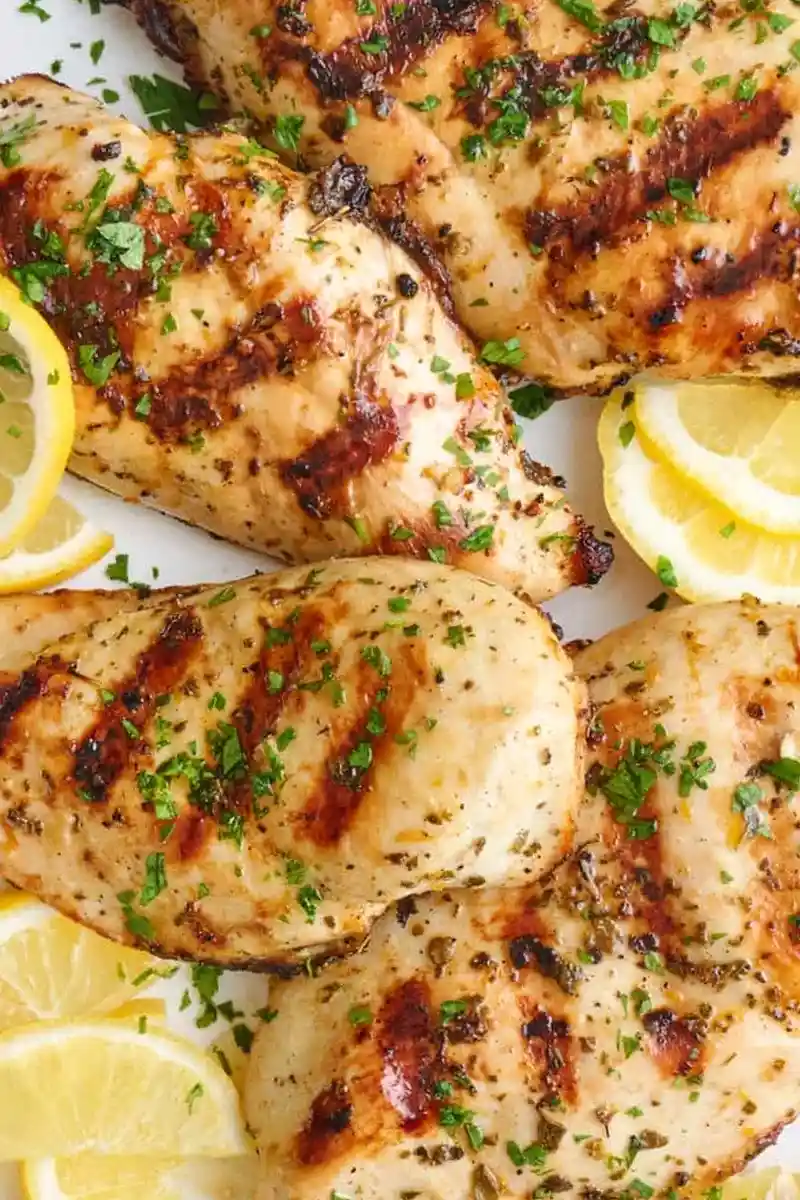
List of ingredients
- 4 (6-ounce) boneless skinless chicken breasts – ensures uniform cooking times.
- 1/4 cup olive oil – used for moisture and heat conduction.
- 1 large lemon (zest and juice, about 3 tablespoons juice) – provides acidity and brightness.
- 4 garlic cloves (minced) – adds a pungent, aromatic base.
- 1 tablespoon oregano – contributes a classic earthy herb flavor.
- 3/4 teaspoon salt – enhances all other flavors.
- 1/2 teaspoon black pepper – adds a subtle spicy kick.
- Chopped parsley – used for fresh garnish.
- Lemon wedges – served on the side for extra acidity.
step-by-step instructions
- Prepare the chicken: Pat the chicken breasts dry with paper towels. Pound the thicker sections of the breast with a meat mallet or rolling pin so the pieces are even in thickness for uniform grilling.
- Mix the marinade: In a medium bowl, combine the olive oil, lemon juice, lemon zest, minced garlic, oregano, salt, and black pepper. Whisk until the ingredients are well blended.
- Marinate the meat: Add the chicken breasts to the bowl and toss them thoroughly to ensure every surface is coated. Cover the bowl and refrigerate to marinate for at least 30 minutes, but no longer than 2 hours.
- Heat the grill: Preheat your outdoor grill or an indoor grill pan over medium-high heat. Ensure the surface is hot before adding the meat to achieve a proper sear.
- First side cook: Place the marinated chicken on the hot grill. Leave the chicken undisturbed for 5 to 7 minutes.
- Flip and finish: Use tongs to flip the chicken breasts. Cook the other side for an additional 5 to 7 minutes, or until the internal juices run clear and the meat is cooked through.
- Garnish and serve: Remove the chicken from the heat. Sprinkle with chopped fresh parsley and serve immediately with lemon wedges.
Professional Grilling Techniques
Using a Digital Meat Thermometer
To avoid dry chicken, use a digital thermometer to check the internal temperature. White meat is safe and juicy at 160°F, while dark meat should reach 165°F. Insert the probe into the thickest part of the breast to get an accurate reading.
The Importance of Undisturbed Searing
Avoid moving the chicken frequently during the first few minutes of grilling. Allowing the meat to sit undisturbed helps create a caramelized crust through the Maillard reaction. The chicken will naturally release from the grill grates once a proper sear has formed.
Resting the Meat Before Slicing
Allow the chicken to rest on a plate for 5 to 10 minutes before cutting into it. This resting period allows the internal juices to redistribute throughout the muscle fibers. Cutting too early causes the juices to leak out, resulting in drier meat.
Ingredient Substitutions and Options
Replacing Chicken Breasts with Thighs
Boneless skinless chicken thighs are a viable alternative for this recipe. Thighs have a higher fat content, which makes them more forgiving and harder to overcook. You may need to increase the grilling time by 2 to 3 minutes per side due to the different meat structure.
Alternative Herb Combinations
While oregano provides a Mediterranean profile, you can substitute it with dried thyme, rosemary, or basil. Use an equal 1:1 ratio for the substitution. Fresh herbs can be used, but dried herbs are often preferred for grilling as they do not burn as quickly as fresh leaves.
Choosing Different Cooking Oils
Extra virgin olive oil is traditional, but avocado oil is an excellent substitute due to its higher smoke point. Avocado oil can withstand higher heat without breaking down or smoking. This is particularly useful if you prefer to grill on very high heat for deeper char marks.
Marinade Management
Optimizing Marination Time
Marinating for 30 minutes is the minimum required for the garlic and herbs to penetrate the surface. A window of 1 to 2 hours is ideal for maximum flavor. This allows the salt and acid to break down the protein fibers slightly, increasing tenderness.
Avoiding Long-Term Acid Exposure
Do not marinate this chicken overnight or for more than 6 hours. Because lemon juice is highly acidic, prolonged exposure will chemically cook the exterior of the meat. This leads to a mushy, mealy texture rather than a tender one.
Maximizing Flavor with Lemon Zest
Do not skip the lemon zest, as it contains essential oils that provide a more intense citrus aroma than the juice alone. Use a microplane to grate only the yellow skin. Avoid the white pith, which can introduce a bitter taste to the marinade.
Serving and Pairing Suggestions
Complementary Grilled Vegetables
Pair this chicken with grilled zucchini, asparagus, or bell peppers. Brush the vegetables with olive oil and salt before placing them on the grill. They typically take 4 to 6 minutes per side, making them easy to cook alongside the chicken.
Nutritious Grain Pairings
Serve the chicken over a bed of fluffy quinoa or brown rice for a complete meal. To enhance the dish, stir a tablespoon of fresh parsley and a squeeze of lemon into the grains. This echoes the flavors of the chicken marinade.
Fresh Salad Combinations
A Greek-style salad with cucumbers, cherry tomatoes, Kalamata olives, and feta cheese pairs perfectly with the lemon-oregano profile. Use a light vinaigrette of olive oil and red wine vinegar to keep the meal light and refreshing.
Storage and Reheating Advice
Safe Refrigeration Practices
Store leftover grilled chicken in an airtight glass container in the refrigerator. It will remain safe for consumption for up to 4 days. Ensure the chicken has cooled slightly before sealing the container to prevent excess moisture buildup.
Best Methods for Reheating
To prevent the chicken from drying out, reheat it in a skillet over low heat with a tablespoon of water or chicken broth. Cover the pan with a lid to create a steaming effect. Avoid using a microwave on high power, as this often toughens the proteins.
Freezing for Future Use
Grilled chicken can be frozen for up to 3 months. Wrap the pieces tightly in aluminum foil and then place them in a heavy-duty freezer bag. Thaw the chicken in the refrigerator overnight before reheating it gently on the stove.
Common Troubleshooting
Preventing Dry Chicken Breasts
Dryness is usually caused by uneven thickness or overcooking. Pounding the chicken to a uniform thickness ensures the thin end doesn’t overcook while the thick center remains raw. Always prioritize the internal thermometer over a timer.
Achieving Better Grill Marks
If you are not getting distinct char marks, ensure your grill is fully preheated. Clean the grates with a wire brush and lightly oil them before adding the meat. Pressing down slightly with tongs during the first minute can also improve contact with the heat source.
Managing Grill Flare-ups
Flare-ups occur when oil from the marinade drips onto the burners. If the flames become too intense, move the chicken to a cooler area of the grill (indirect heat). This allows the meat to finish cooking without burning the exterior.
Frequently Asked Questions
What temperature should I grill chicken breast?
Use a meat thermometer to ensure the internal temperature reaches 160°F for white meat. While the USDA recommends 165°F, the temperature will typically rise another 5 degrees during the resting period, meaning 160°F is the ideal pull temperature.
How long to grill chicken breast?
For a standard 6-ounce breast, grill for 5 to 7 minutes per side. This timing depends on the heat intensity of your grill and the thickness of the meat. Always rely on the internal temperature rather than the clock for safety.
Can I use a grill pan if I don’t have an outdoor grill?
Yes, a cast-iron grill pan works exceptionally well. Heat the pan on a stovetop over medium-high heat until a drop of water beads and dances on the surface. The results will be very similar to an outdoor grill in terms of flavor and texture.
Can I substitute lemon juice with lime juice?
You can use lime juice, but it will change the flavor profile from Mediterranean to a more tropical or zesty Latin style. If you switch to lime, consider substituting the oregano with cilantro or cumin for a more cohesive taste.
How do I pound chicken without tearing the meat?
Place the chicken breast between two sheets of plastic wrap or inside a zip-top bag. Use a meat mallet or the bottom of a heavy skillet to gently flatten the thicker end. This prevents the meat from sticking to the tool and keeps the surface smooth.
Print
Grilled Lemon Chicken
- Total Time: 55 minutes
- Yield: 4 servings 1x
- Diet: General
Description
Grilled lemon chicken is a tender, juicy and savory grilling recipe that is perfect for summer. It’s light, healthy and beaming with Mediterranean flavor!
Ingredients
- 4 (6-ounce) boneless skinless chicken breasts
- ¼ cup olive oil
- 1 large lemon (zest and juice)
- 4 garlic cloves (minced)
- 1 tablespoon oregano
- ¾ teaspoon salt
- ½ teaspoon black pepper
- Chopped parsley (for serving)
- Lemon wedges (for serving)
Instructions
- Step: Pat chicken dry and pound chicken if some parts are too thick so the pieces are even in thickness.
- Step: Combine the olive oil, lemon juice (and lemon zest, if using), garlic, oregano, salt, and pepper in a bowl.
- Step: Add chicken and toss well to combine.
- Step: Cover and marinate for at least 30 minutes, but no more than 2 hours.
- Step: Preheat the grill or grill pan to medium-high heat.
- Step: Place the chicken on the grill for 5–7 minutes.
- Step: Use tongs to flip over and cook on the other side for 5–7 more minutes, or until juices run dry.
- Step: Remove chicken from the grill.
- Step: Sprinkle with parsley and serve with lemon wedges, if desired.
Notes
Don’t move the chicken while it cooks to ensure best sear and grill marks. Store leftovers in an airtight container for up to 4 days.
- Prep Time: 10 minutes
- Cook Time: 15 minutes
- Category: Entree
- Method: Grilling
- Cuisine: American, Mediterranean
Nutrition
- Serving Size: 6 oz
- Calories: 329 kcal
- Sugar: 1 g
- Sodium: 635 mg
- Fat: 18 g
- Saturated Fat: 3 g
- Unsaturated Fat: 13 g
- Trans Fat: 0.02 g
- Carbohydrates: 5 g
- Fiber: 1 g
- Protein: 37 g
- Cholesterol: 109 mg