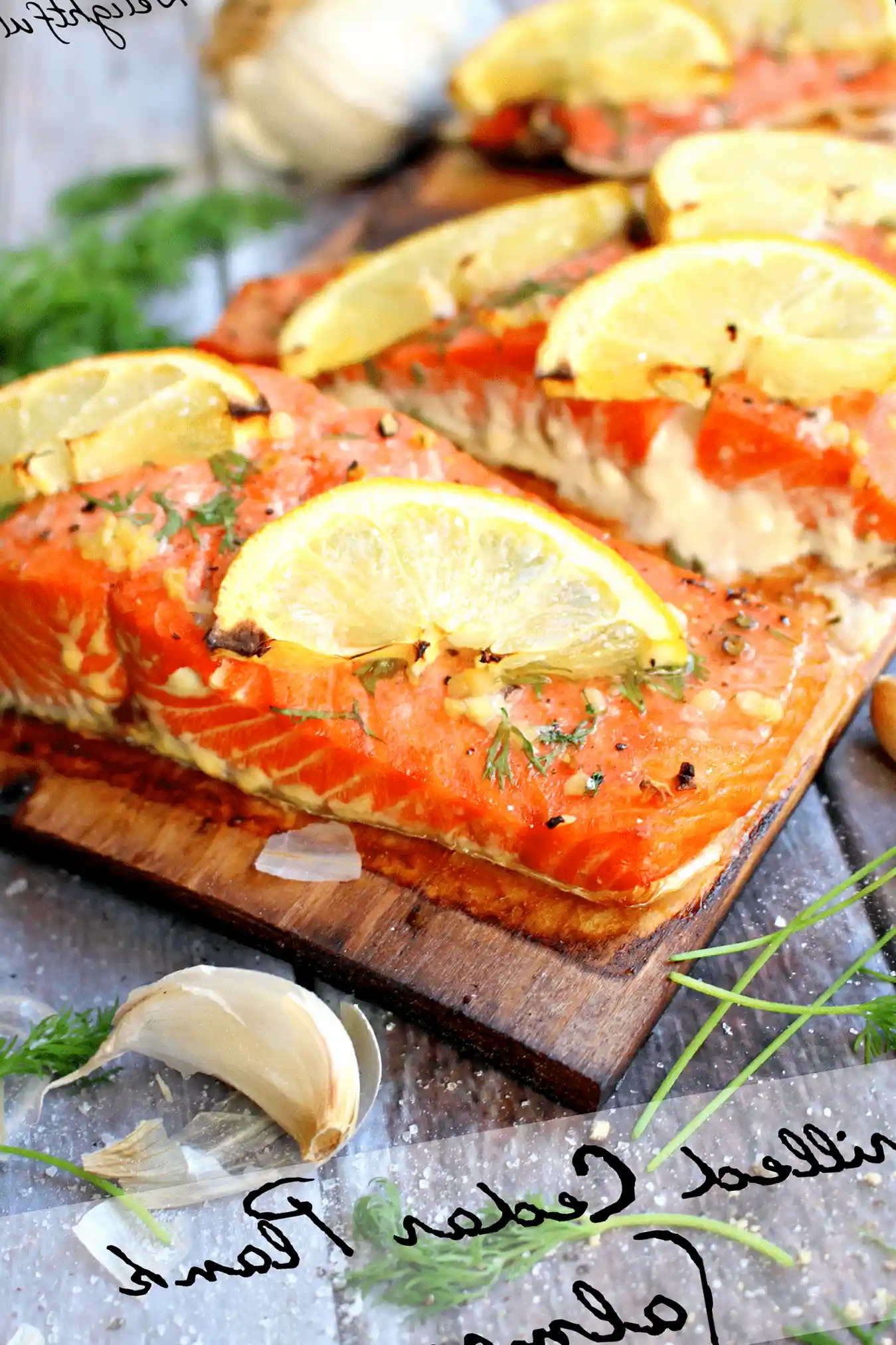
This recipe delivers a smokey, restaurant-quality salmon using a simple cedar plank method. It combines fresh garlic, lemon, and dill for a bright flavor profile that perfectly complements the wood-fired aroma.
List of ingredients
- 4 6 oz. salmon fillets (or one large half salmon) – use wild-caught for best flavor.
- 1 lemon – divided for juicing and slicing.
- 2-3 cloves garlic – finely minced.
- 1 Tablespoon fresh dill – minced to provide a fresh herbal note.
- Fresh ground salt and pepper – used to taste.
step-by-step instructions
- Soak the plank: At least 2 hours before grilling, submerge your cedar plank in a large roasting pan filled with a few inches of water. Hold the plank down with a heavy object, such as a heavy jar of sauce, to ensure it is fully saturated.
- Prepare the grill: Preheat your outdoor gas or charcoal grill to medium-high heat. Remember that cedar planks should never be used on indoor grills or stovetops due to smoke levels.
- Season the salmon: Place the fully thawed salmon fillets directly onto the soaked plank. Season the fillets evenly with salt and pepper, then sprinkle the minced garlic and dill over the top.
- Add citrus: Cut the lemon in half. Squeeze the juice from one half over the seasoned fillets. Slice the remaining half into thin rounds, then cut those slices in half and place them on top of the fish.
- Grill the fish: Place the plank on the hot grill. Monitor the wood occasionally; if the plank begins to flame up, use a spray bottle filled with water to extinguish the fire.
- Check for doneness: Grill for 12-15 minutes. The salmon is done when the meat flakes easily with a fork. Increase the time slightly for thicker cuts of fish.
- Remove and serve: Carefully lift the hot plank off the grill using tongs. Place it onto a baking sheet for safety. Serve immediately with extra lemon wedges on the side.
Cedar Plank Preparation and Safety
Properly Soaking Cedar Planks to Prevent Fires
Soaking the plank is the most critical safety step in this process. Water saturates the wood fibers, which prevents the plank from catching fire immediately upon hitting the heat. This allows the wood to smolder rather than burn, infusing the fish with a subtle smoke flavor.
Identifying Safe Food-Grade Wood
Always purchase planks specifically labeled for grilling. Never use scrap wood from a hardware store, as construction lumber is often treated with chemicals and preservatives that are toxic when heated. Food-grade cedar is untreated and safe for contact with food.
Disposing of Used Grilling Planks
Cedar planks are single-use items and cannot be reused. After grilling, the bottom is charred and the top has been in contact with raw fish proteins. Once the plank has cooled completely, dispose of it in your regular waste or compost bin.
Mastering the Grilling Process
Using an Instant-Read Thermometer for Accuracy
While the fork-flake test is useful, a digital thermometer ensures perfect results. Aim for an internal temperature of 145 degrees Fahrenheit. This prevents the salmon from drying out while ensuring it is cooked through.
Managing Charcoal and Gas Grill Flare-ups
It is normal for a cedar plank to spark or produce small flames. Keep a spray bottle of water nearby to quickly dampen any flare-ups that become too intense. This keeps the heat steady and prevents the fish from scorching.
Determining Doneness Using the Fork Test
Gently press a fork into the thickest part of the fillet and twist slightly. If the meat separates easily along the natural flakes and is no longer translucent in the center, it is ready. If the center remains dark pink or red, allow it to cook for another 2-3 minutes.
The Advantage of Not Flipping the Salmon
Unlike traditional grilling, you do not need to flip fish on a cedar plank. The heat from the wood and the ambient air above the fillet cook the fish evenly. Flipping would remove the fish from the flavor-infusing wood and risk breaking the delicate fillets.
Salmon Selection and Handling
Choosing Between Wild-Caught and Farmed Salmon
Wild-caught salmon typically has a deeper red color and a more robust, leaner flavor. Farmed salmon is often milder and has a higher fat content, which can make it more forgiving if slightly overcooked. Both work well with this lemon-garlic seasoning.
Safe Thawing Techniques for Frozen Fillets
Thaw frozen salmon slowly in the refrigerator for 24 hours before cooking. Avoid thawing at room temperature or in warm water, as this can compromise the texture of the meat and increase the risk of bacterial growth.
Identifying Freshness Through Color and Scent
Fresh salmon should have a mild, briny scent and a moist, glossy appearance. Avoid fillets that have a strong fishy odor or a dull, grayish tint. The meat should spring back when lightly pressed with a finger.
Customizing Your Flavor Profile
Substituting Fresh Dill with Other Herbs
If you do not have fresh dill, minced parsley or cilantro are excellent alternatives. Parsley offers a clean, peppery taste, while cilantro adds a zesty, bright note that pairs well with the lemon juice.
Using Lime Instead of Lemon for a Different Zest
For a more tropical flavor, replace the lemon with fresh lime. The acidity of the lime interacts with the cedar smoke to create a more pungent, tangy profile that works particularly well with a side of coconut rice.
Adding Smoked Paprika for Enhanced Color
Adding a pinch of smoked paprika to the salt and pepper mix adds a vibrant reddish-orange hue to the fillets. It also reinforces the smokiness provided by the cedar wood, giving the dish a deeper flavor dimension.
Optimal Side Dish Pairings
Pairing Salmon with Nutritious Grains
Quinoa or wild rice are excellent companions for cedar plank salmon. These grains absorb the extra lemon-garlic juices from the platter. A lemon-orzo pasta salad is also a refreshing choice for a summer meal.
Complementing the Dish with Fresh Green Vegetables
Grilled asparagus or sautéed spinach provide a nutritional balance to the protein. Since the grill is already hot, you can roast asparagus spears on a separate tray next to the salmon plank for efficiency.
Creating a Balanced Salad Side
A crisp cucumber, tomato, and avocado salad adds a creamy texture and cooling effect. Dress the salad with a simple vinaigrette of olive oil and lemon juice to mirror the flavors found in the salmon.
Storage and Reheating Guide
Storing Leftover Salmon in Airtight Containers
Place cooled salmon in a glass, airtight container and refrigerate immediately. Cooked salmon stays fresh and safe to eat for up to 3 to 4 days. Ensure it is completely cooled before sealing to prevent moisture buildup.
Reheating Salmon Without Overcooking
Avoid the microwave, as it often makes salmon rubbery. Instead, place the fillet in a 275 degree Fahrenheit oven for 10-15 minutes. Adding a small pat of butter or a squeeze of fresh lemon helps restore the moisture.
Freezing Cooked Salmon for Long-Term Storage
You can freeze cooked salmon by wrapping individual fillets tightly in foil and placing them in a freezer bag. This preserves the fish for up to two months. Thaw in the refrigerator overnight before reheating in the oven.
Frequently Asked Questions
Can I use this method on an indoor grill?
No, cedar planks should only be used on outdoor grills. The amount of smoke generated by the wood is far too intense for an indoor kitchen and can trigger smoke alarms or cause ventilation issues.
How long do cedar planks last in storage?
Unused, dry cedar planks can be stored in a cool, dry place for several months. As long as they remain dry and free of mold, they will maintain their aromatic properties for your next grilling session.
What if I do not have a cedar plank?
You can grill the salmon directly on the grill grates over medium heat. However, you will lose the signature smokey flavor and the protection the wood provides, so you will need to flip the fillets carefully using a wide spatula.
Print
Grilled Cedar Plank Salmon with Lemon Garlic and Dill
- Total Time: 30 minutes
- Yield: 4 servings 1x
- Diet: Clean Eating, Paleo Friendly
Description
This Grilled Cedar Plank Salmon is deliciously simple. Made with just a few ingredients, it gets its flavor from the smokey cedar plank that its grilled on. Clean Eating and Paleo Friendly, this dish is super health, and super delicious!!
Ingredients
- 4 6 oz. salmon fillets (or one large half salmon)
- 1 lemon (for juice)
- 2–3 cloves garlic (minced)
- 1 Tablespoon fresh dill (minced)
- Fresh ground Salt and Pepper to taste
Instructions
- Step 1: 30 minutes prior to grilling, prepare your cedar plank by soaking it in water. (A large roasting pan filled with a couple inches of water works well. Submerge the plank in water by holding it down with a heavy item like a jar of sauce.) Let the plank soak fully for at least 2 hours.
- Step 2: Using an outdoor gas or charcoal grill, light it for medium high heat.
- Step 3: When plank has been soaked, place your fully thawed salmon fillets on the plank. Sprinkle fillets with salt and pepper to your taste. Next sprinkle on the minced garlic and dill. Lastly, slice the lemon in half. Squeeze one half of the juice of the lemon onto the fillets. Slice the other half of the lemon in slices, then the slices in halves. Place the halves on top of the salmon.
- Step 4: Place the prepared salmon onto the hot grill. Check the salmon on occasion to ensure the plank isn’t flaming up. Use a spray bottle filled with water to shoot out any flare-ups. Grill for 12-15 minutes, or when salmon flakes. For a thicker salmon, increase grill time appropriately. Safely remove the hot plank from the grill with grilling tongs.
- Step 5: Serve right away with additional lemon wedges if desired.
Notes
When buying salmon, look for wild caught, if possible. Fresh or frozen salmon can be used for this recipe. Be sure to thaw frozen salmon before cooking.
- Prep Time: 15 minutes
- Cook Time: 15 minutes
- Category: Dinner/Main Dish
- Method: Grilling
- Cuisine: American
Nutrition
- Serving Size: 1 fillet
- Calories: 350 kcal
- Sugar: 1 g
- Sodium: 150 mg
- Fat: 18 g
- Saturated Fat: 3 g
- Unsaturated Fat: 15 g
- Trans Fat: 0 g
- Carbohydrates: 2 g
- Fiber: 0 g
- Protein: 34 g
- Cholesterol: 75 mg