This recipe provides a simple method for preparing tender, flaky salmon fillets infused with a rich garlic butter sauce. It is a high-protein meal that comes together quickly, making it ideal for busy weeknights or healthy meal prep.
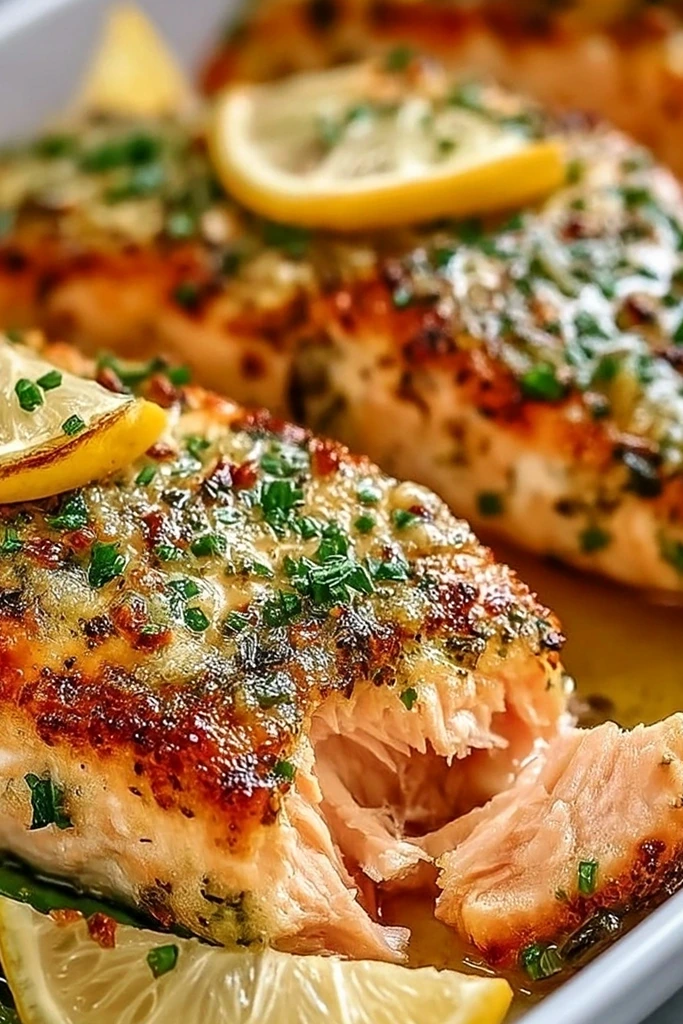
List of ingredients
- 2 pounds salmon fillets – use center-cut for even cooking.
- 4 tablespoons unsalted butter, melted – provides the rich base for the sauce.
- 1 tablespoon olive oil – prevents butter from burning and adds richness.
- 4 cloves garlic, minced – adds a pungent, savory aroma.
- 2 tablespoons fresh lemon juice – cuts through the richness with acidity.
- 1 teaspoon lemon zest – adds concentrated citrus flavor.
- 1 teaspoon salt – enhances all the other seasonings.
- 1/2 teaspoon black pepper – provides a subtle, warm spice.
- 1/2 teaspoon paprika – adds a warm color and mild smokiness.
- 1 tablespoon chopped fresh parsley – for a fresh, herbal finish.
- 4 lemon slices – used for topping and additional flavor.
step-by-step instructions
- Prepare the oven: Preheat your oven to 400°F and lightly grease a baking dish or line it with parchment paper to prevent sticking.
- Dry the fish: Pat the salmon fillets dry using paper towels and place them in the dish skin-side down if you are using skin-on fillets.
- Mix the sauce: In a small bowl, whisk together the melted butter, olive oil, minced garlic, lemon juice, lemon zest, salt, black pepper, and paprika until well blended.
- Season the salmon: Spoon or brush the garlic butter mixture evenly over the top and sides of each salmon fillet.
- Bake: Place lemon slices on top of the fillets and bake for 12 to 15 minutes, or until the fish is opaque and flakes easily with a fork.
- Final touch: Remove from the oven, sprinkle with fresh parsley, and spoon the remaining pan juices over the fish before serving.
Guidelines for Selecting Salmon
Center Cut Fillets
Choosing center-cut fillets ensures that the thickness is consistent across each piece of fish. This consistency allows the fillets to cook at the same rate, preventing the thinner tail ends from overcooking while the center remains raw.
Skin-On versus Skinless
Skin-on salmon is often preferred for baking because the skin acts as a protective barrier between the heat and the flesh. This helps keep the meat moist and prevents the fillet from sticking to the baking pan.
Fresh versus Frozen Options
Fresh salmon is ideal for the best texture, but high-quality frozen fillets work well if thawed correctly. Always thaw frozen salmon slowly in the refrigerator overnight to maintain the cellular structure of the fish.
Atlantic and Sockeye Varieties
Atlantic salmon generally has a higher fat content, making it more forgiving during the baking process. Sockeye salmon is leaner and has a deeper red color, so it may require a slightly shorter cooking time to avoid dryness.
Flavor Customizations and Variations
Adding a Honey Glaze
For a sweeter profile, whisk one tablespoon of honey into the garlic butter mixture before brushing it on the fish. The honey caramelizes under the heat of the oven, creating a sticky, sweet-and-savory crust.
Using Different Fresh Herbs
While parsley is the standard garnish, fresh dill or chives provide excellent alternatives. Dill pairs exceptionally well with lemon and salmon, offering a more traditional seafood flavor profile.
Introducing a Spicy Element
To add heat, include a pinch of crushed red pepper flakes or a small amount of cayenne pepper in the butter mixture. This creates a spicy contrast to the rich butter and bright lemon juice.
Adding a Parmesan Crust
For extra texture, sprinkle a tablespoon of grated Parmesan cheese over the buttered salmon before baking. The cheese melts and browns, adding a salty, umami-rich layer to the top of the fillet.
Substituting Citrus Fruits
If lemons are unavailable, lime juice and zest can be used for a zestier, tropical flavor. Orange zest also works well to add a subtle sweetness that complements the richness of the salmon.
Optimal Side Dish Pairings
Steamed or Roasted Asparagus
Asparagus is a classic pairing because its earthy flavor balances the richness of the garlic butter. You can roast the asparagus on the same pan as the salmon for a one-pan meal.
Quinoa or Brown Rice
Hearty grains like quinoa or brown rice are excellent for absorbing the extra garlic butter from the baking dish. These options add fiber and make the meal more filling.
Roasted Baby Potatoes
Small potatoes roasted with olive oil and salt provide a satisfying starchy contrast to the tender fish. Their crisp exterior and soft interior complement the flaky texture of the salmon.
Fresh Garden Salads
A crisp salad with a light vinaigrette provides a refreshing contrast to the buttery sauce. Use mixed greens, cucumbers, and cherry tomatoes to keep the plate light and balanced.
Sautéed Spinach or Kale
Quickly sautéing dark leafy greens with a bit of garlic and oil adds essential nutrients to the meal. The slight bitterness of the greens helps cleanse the palate between bites of rich fish.
Professional Baking Techniques
The Importance of Patting Dry
Moisture on the surface of the fish creates steam, which prevents the salmon from searing and can make the texture mushy. Using paper towels to remove surface water ensures the butter sauce adheres properly.
Using a Digital Meat Thermometer
The most reliable way to avoid overcooking is to use a meat thermometer. Remove the salmon from the oven when the internal temperature reaches 145°F (63°C) in the thickest part.
Choosing the Right Baking Pan
A rimmed baking sheet or a ceramic baking dish works best for this recipe. Ceramic dishes hold heat well, while parchment-lined sheets make the cleanup process significantly faster.
Allowing the Fish to Rest
Letting the salmon rest for 3 to 5 minutes after removal from the oven allows the juices to redistribute. This ensures the meat remains moist and the sauce thickens slightly.
Managing Garlic Sizes
Ensure the garlic is minced finely and uniformly. Large chunks of garlic can burn at 400°F, creating a bitter taste, whereas fine mincing allows the flavor to infuse the butter evenly.
Controlling Oven Hot Spots
Every oven has areas that are hotter than others. Rotating the baking pan halfway through the cooking time ensures that all fillets brown evenly and no single piece is overcooked.
Storage and Reheating Guidelines
Refrigeration Limits
Store leftover cooked salmon in an airtight container in the refrigerator for up to three days. Ensure the fish has cooled completely before sealing the container to prevent excess condensation.
Freezing Cooked Salmon
While fresh is best, cooked salmon can be frozen for up to one month. Wrap the fillets tightly in foil and place them in a freezer-safe bag to prevent freezer burn.
Cold Serving Suggestions
Cold salmon is excellent when flaked into a grain bowl or a fresh salad. The garlic butter flavor remains intact even when served chilled, making it a great lunch option.
Gentle Reheating Methods
To reheat, place the salmon in a low-temperature oven (about 275°F) until warmed through. Avoid high heat or long microwave bursts, as this will dry out the protein quickly.
Preventing Dryness During Reheating
Add a small pat of butter or a teaspoon of water to the fish before reheating. This adds moisture back into the fillet and prevents the salmon from becoming rubbery.
Troubleshooting Common Issues
Salmon is Too Dry
If the salmon is dry, it was likely left in the oven too long. Start checking the fish at the 12-minute mark, especially for fillets that are thinner than an inch.
Sauce Not Adhering
If the butter mixture slides off the fish, it is usually because the fillets were not dried sufficiently. Always pat the salmon with paper towels before applying the seasoning.
Garlic Tasting Burnt
A burnt garlic taste occurs when the garlic is too coarsely chopped or the oven temperature is too high. Ensure the garlic is minced finely and the oven is calibrated correctly.
Fish Sticking to the Pan
Sticking happens when the pan isn’t sufficiently greased or parchment paper isn’t used. Using a high-smoke point oil or parchment paper prevents the fish from tearing when served.
Unevenly Cooked Fillets
This is often caused by using fillets of different thicknesses. Separate the thinner pieces from the thicker ones and remove the thinner fillets from the oven a few minutes early.
Frequently Asked Questions
Can I use frozen salmon for this recipe?
Yes, frozen salmon works perfectly as long as it is fully thawed. Thaw it in the refrigerator overnight and pat it very dry before adding the garlic butter mixture.
How do I know when the salmon is fully cooked?
The salmon is done when it changes from a translucent pink to an opaque light pink. It should flake easily when pressed with a fork at the thickest part of the fillet.
Can I prepare the garlic butter in advance?
You can whisk the butter mixture together and store it in the refrigerator for up to two days. Simply bring it to room temperature or melt it slightly before brushing it on the fish.
What are the best vegetables to pair with this?
Asparagus, broccoli, and carrots are ideal because they roast well at the same temperature as the salmon. Steamed green beans also provide a fresh, crunchy contrast.
Can I use dried parsley instead of fresh?
Dried parsley can be used, but the flavor is more muted and the color is less vibrant. Use about one-third of the amount of dried parsley compared to the fresh requirement.
Is it better to bake salmon with or without the skin?
Baking with the skin is generally better as it protects the fish from the direct heat of the pan. This results in a more moist fillet and makes the fish easier to handle.
Print
Garlic Butter Baked Salmon
- Total Time: 25 minutes
- Yield: 4 servings 1x
- Diet: Gluten Free
Description
Garlic Butter Baked Salmon is a quick breakfast-for-dinner option, easy dinner idea, and healthy snack-style protein that turns simple ingredients into a flavorful meal. This easy recipe features tender salmon baked with buttery garlic, bright lemon, and herbs for one of those reliable food ideas that works for busy weeknights, dinner ideas, and wholesome meal prep.
Ingredients
- 2 pounds salmon fillets
- 4 tablespoons unsalted butter, melted
- 1 tablespoon olive oil
- 4 cloves garlic, minced
- 2 tablespoons fresh lemon juice
- 1 teaspoon lemon zest
- 1 teaspoon salt
- 1/2 teaspoon black pepper
- 1/2 teaspoon paprika
- 1 tablespoon chopped fresh parsley
- 4 lemon slices
Instructions
- Step 1: Preheat the oven to 400°F and lightly grease or line a baking dish.
- Step 2: Pat the salmon fillets dry and arrange them in the baking dish skin-side down if using skin-on salmon.
- Step 3: In a small bowl, whisk together the melted butter, olive oil, minced garlic, lemon juice, lemon zest, salt, black pepper, and paprika.
- Step 4: Spoon or brush the garlic butter mixture evenly over the salmon fillets.
- Step 5: Top the salmon with lemon slices and bake for 12 to 15 minutes, or until the salmon is opaque and flakes easily with a fork.
- Step 6: Remove from the oven, sprinkle with fresh parsley, and spoon some of the pan juices over the top before serving.
Notes
Do not overbake the salmon, because even a few extra minutes in the oven can make it dry instead of tender and flaky.
- Prep Time: 10 minutes
- Cook Time: 15 minutes
- Category: Dinner
- Method: Baked
- Cuisine: American
Nutrition
- Serving Size: 1 fillet
- Calories: 430 kcal
- Sugar: 1 g
- Sodium: 540 mg
- Fat: 28 g
- Saturated Fat: 11 g
- Unsaturated Fat: 15 g
- Trans Fat: 0 g
- Carbohydrates: 2 g
- Fiber: 0 g
- Protein: 39 g
- Cholesterol: 125 mg