This straightforward baked salmon recipe delivers a nutritious, high-protein dinner in just 30 minutes. By combining melted butter, fresh garlic, and roasted lemon, the fillet remains moist and flavorful throughout the cooking process.
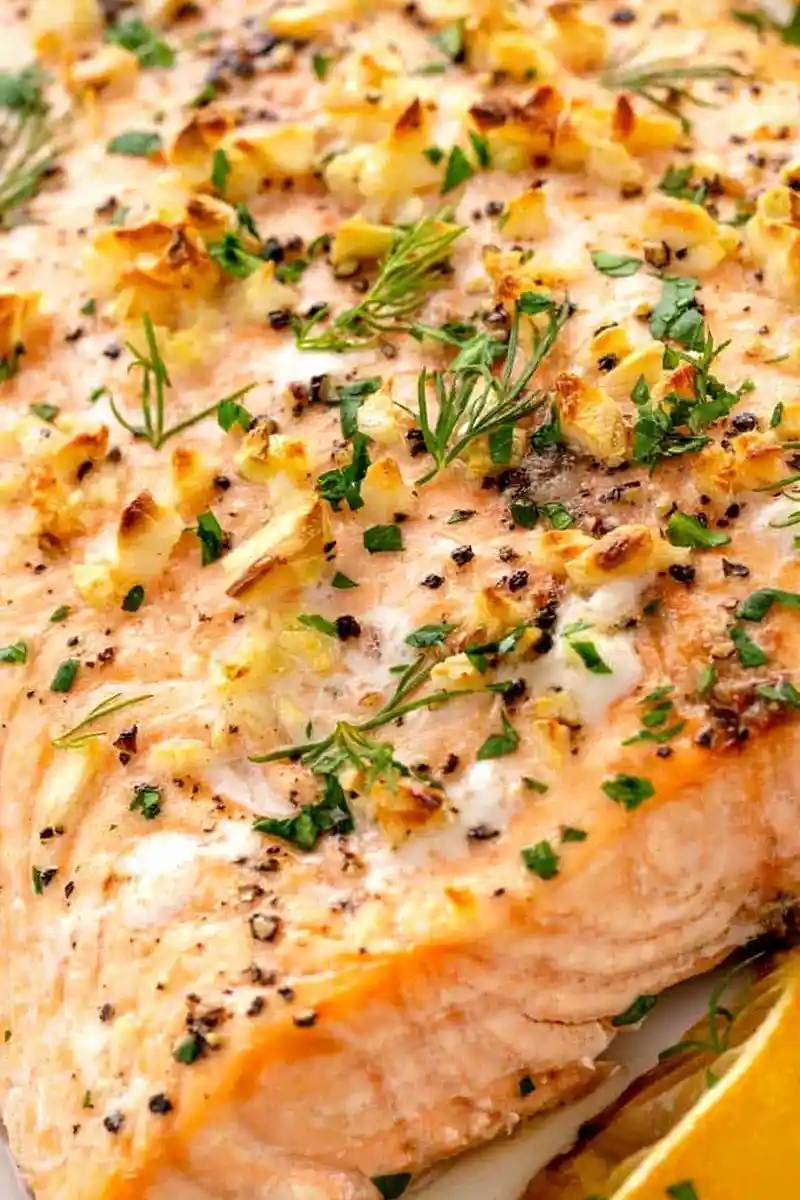
List of ingredients
- 1 ½ pound salmon fillet – skin-on is recommended for moisture retention.
- 2 tablespoons unsalted butter, melted – acts as a flavor carrier and prevents drying.
- ½ teaspoons kosher salt – enhances the natural flavor of the fish.
- ¼ teaspoon black pepper – adds a subtle warmth and balance.
- 1 tablespoon minced garlic – provides a savory, aromatic base.
- 8 lemon wedges – roast in the oven to mellow the acidity.
- 1 teaspoon chopped parsley – adds a clean, peppery finish.
- 1 teaspoon chopped dill – provides a delicate, grassy note.
step-by-step instructions
- Preheat the Oven: Set your oven rack to the center position and preheat to 375ºF (191ºC). Line a rimmed baking sheet with aluminum foil and lightly grease it with vegetable oil or a cooking spray.
- Prepare the Fillet: Place the salmon fillet on the baking sheet with the skin-side facing down. Brush half of the melted butter over the surface, then season evenly with salt and pepper. Drizzle the remaining butter on top, spread the minced garlic across the fish, and arrange lemon wedges around the sides.
- Bake the Salmon: Bake the fish until a meat thermometer inserted into the thickest part reaches an internal temperature of 125ºF (52ºC), which typically takes about 12 minutes.
- Broil the Salmon: Switch the oven setting to high broil. Cook for another 3 to 4 minutes until the surface is light golden and the garlic is just beginning to brown.
- To Serve: Gently remove the skin from the fillet and transfer the fish to a serving platter. Garnish with chopped parsley and dill, and serve with the roasted lemon wedges on the side.
Selecting the Right Salmon
Richness of Atlantic and King Salmon
Farmed varieties such as Atlantic or King salmon are known for their higher fat content. This results in a buttery, rich taste and a more forgiving cooking process, as the fat prevents the meat from drying out quickly.
Leaner Texture of Wild-Caught Salmon
Wild-caught salmon generally has a deeper red color and a leaner muscle structure. While this is a heart-healthy option, it can become dry more rapidly, so it is essential to monitor the internal temperature closely.
Flavor Profiles of Sockeye and Coho
Sockeye salmon offers a bold, intense flavor that stands up well to strong seasonings. Coho salmon is more delicate with a subtle sweetness, making it ideal for recipes where the natural taste of the fish should remain prominent.
Characteristics of Pink and Chum Salmon
Pink salmon is very mild and lean, often used in canned products but suitable for baking if handled gently. Chum salmon is lighter and less fatty, providing a delicate flavor profile that pairs well with citrus.
Ingredient Substitutions and Customizations
Replacing Butter with Olive Oil
For a dairy-free alternative, extra-virgin olive oil works exceptionally well as a fat source. It carries the garlic and salt effectively while providing a fruity, heart-healthy profile to the finished dish.
Using Ghee for a Nutty Flavor
Ghee is an excellent substitute for butter as it is clarified and free of milk solids. It has a higher smoke point than regular butter, which can lead to a slightly nuttier flavor during the broiling stage.
Dried Garlic Powder Alternatives
If fresh garlic is unavailable, use garlic powder for a more concentrated allium flavor. Use about one-quarter teaspoon of powder to replace one tablespoon of fresh minced garlic to avoid overpowering the fish.
Adding Smoked Paprika for Color
A small pinch of smoked or sweet paprika can be added to the salt and pepper mix. This provides a vibrant reddish hue to the surface of the salmon and adds a subtle depth of flavor.
Fresh versus Dried Herb Options
While fresh parsley and dill are preferred, dried versions can be used in a 1:3 ratio. Sprinkle dried herbs on before baking rather than as a garnish to allow the heat to release their oils.
Sweet Glaze Variations
For a sweeter profile, drizzle honey or sprinkle a small amount of brown sugar over the fillet before baking. This creates a caramelized crust when paired with the high-heat broiling step.
Asian-Inspired Flavor Twists
Replace the butter and lemon with a mixture of soy sauce, ginger, and toasted sesame oil. This transforms the dish into a savory, umami-rich entree that pairs perfectly with steamed rice.
Advanced Cooking Techniques
Removing Pin Bones Before Seasoning
Always check the center of the fillet for small, translucent pin bones. Use needle-nose pliers or tweezers to pull them out in the direction they are running to avoid tearing the delicate flesh.
Adjusting Time for Individual Fillets
If cutting the whole fillet into 4 to 6-ounce portions, reduce the baking time. Smaller pieces have more surface area exposed to heat and will reach the target temperature several minutes faster than a whole side.
Judging Doneness by Visual Cues
Salmon transitions from a translucent orange to an opaque pink as it cooks. For medium doneness, the fish should flake easily with a fork in the thickest part, while the center remains slightly glossy.
The Role of the Broiling Step
Broiling triggers the Maillard reaction, which browns the proteins and sugars on the surface. This step is optional but highly recommended to intensify the garlic flavor and create a professional visual finish.
Using a Digital Meat Thermometer
The only way to ensure precision is by using an instant-read thermometer. Target 125ºF (52ºC) for medium-rare or 140ºF (60ºC) for medium; temperatures above 145ºF (63ºC) often result in a dry texture.
Serving and Pairing Ideas
Pairing with Sautéed Greens
Serve the baked salmon alongside sautéed spinach, kale, or asparagus. The bitterness of the greens balances the richness of the butter-basted fish and provides a vibrant color contrast on the plate.
Serving Over a Fresh Salad
Place the warm fillet on a bed of mixed greens, arugula, or a Caesar salad. The heat from the salmon slightly wilts the greens, creating a balanced meal of warm protein and crisp vegetables.
Complementing with Complex Grains
Quinoa, farro, or wild rice serve as excellent bases for this dish. These grains absorb the melted butter and lemon juices that run off the salmon during plating.
Creating a Simple Lemon-Butter Sauce
While the roasted lemon wedges are great, you can whisk the pan juices with a teaspoon of cold butter. Drizzle this emulsion over the fillet for a more luxurious, restaurant-style presentation.
Storage and Reheating Guidance
Refrigeration Limits and Containers
Store leftover salmon in an airtight glass or plastic container in the refrigerator. It remains safe and tasty for up to 5 days, though the texture is best within the first 48 hours.
Gentle Microwave Reheating
To reheat in the microwave, cover the fish with a damp paper towel to lock in moisture. Heat in 30-second intervals at medium power to avoid overcooking the fish and making it rubbery.
Oven Reheating for Better Texture
For a better result, place the salmon on a foil-lined sheet at 275ºF (175ºC). Heat for 15 to 20 minutes until just warm, which preserves the flaky texture better than the microwave.
Avoiding Overheating During Warm-up
Salmon continues to cook if exposed to high heat during reheating. Always aim to warm the fish through rather than trying to ‘re-cook’ it, as this will lead to a dry, chalky consistency.
Common Troubleshooting
Preventing the Salmon from Drying Out
If the salmon consistently comes out dry, check your oven calibration with a thermometer. Reducing the baking time by 2 minutes and relying more on the broiler can also help keep the center moist.
Preventing Burnt Garlic
Garlic can burn quickly under a broiler, turning bitter. Keep a close eye on the fillet during the last 2 minutes of broiling and remove the fish the moment the garlic turns golden brown.
Dealing with Rubbery Skin
Baked skin is generally soft and rubbery rather than crispy. The best approach is to leave the skin on during cooking to protect the meat, then peel it off and discard it before serving.
Managing Uneven Cooking
Because the tail end is thinner than the center, it always cooks faster. If using a very large fillet, you can slightly tuck the thin tail under itself to create a more uniform thickness across the fish.
Frequently Asked Questions
What temperature should salmon be cooked at?
The ideal oven temperature is 375ºF (191ºC). This moderate heat ensures the fish cooks evenly without seizing the proteins too quickly, which helps maintain a moist internal texture.
How long does it take to bake salmon?
A 1 ½ pound fillet typically takes 10 to 12 minutes to reach medium-rare doneness. As a general rule, allow approximately 5 minutes of cooking time for every half-inch of thickness.
How do you tell when salmon is done?
The fish is done when the flesh changes from translucent to opaque pink. It should flake easily when pressed with a fork, and the internal temperature should be between 125ºF and 140ºF.
Do you eat the skin on salmon?
While the skin contains beneficial omega-3 fatty acids, it is often rubbery when baked. It is typically removed before serving unless it has been pan-seared to a crisp.
Should I remove the salmon skin before baking?
It is better to leave the skin on during the baking process. The skin acts as a barrier that protects the delicate flesh from the direct heat of the pan, ensuring a more moist result.
Print
Garlic and Lemon Baked Salmon
- Total Time: 30 minutes
- Yield: 4 servings 1x
- Diet: General
Description
Baked salmon recipe seasoned with garlic, roasted lemons, and fresh herbs. A healthy family dinner ready in just 30 minutes.
Ingredients
- 1 ½ pound salmon fillet
- 2 tablespoons unsalted butter, melted
- ½ teaspoons kosher salt
- ¼ teaspoon black pepper
- 1 tablespoon minced garlic
- 8 lemon wedges
- 1 teaspoon chopped parsley
- 1 teaspoon chopped dill
Instructions
- Preheat the Oven: Set the oven rack to the center position—Preheat to 375ºF (191ºC). Line a rimmed baking sheet with foil and lightly grease with vegetable oil or cooking spray.
- Prepare the Fillet: Place the salmon on the sheet, skin-side down (if still intact). Brush half of the melted butter over the fillet. Season with salt and pepper. Drizzle the remaining butter on top, then add the minced garlic. Place lemon wedges around the sides.
- Bake the Salmon: Bake until the thickest part reaches an internal temperature of 125ºF (52ºC), about 12 minutes.
- Broil the Salmon: Change the oven setting to broil on high. Cook until the surface is a light golden color and the garlic just begins to brown, 3 to 4 minutes.
- To Serve: Carefully remove and discard the skin, then transfer the fillet to a serving platter. Garnish with parsley and dill, and serve with roasted lemon wedges.
Notes
Substitute ghee or extra-virgin olive oil for butter for Whole30. Store leftovers in an airtight container in the refrigerator for up to 5 days.
- Prep Time: 15 minutes
- Cook Time: 15 minutes
- Category: Entree
- Method: Baking
- Cuisine: American
Nutrition
- Serving Size: 1 fillet
- Calories: 292 kcal
- Sugar: 3 g
- Sodium: 366 mg
- Fat: 16 g
- Saturated Fat: 5 g
- Unsaturated Fat: 11 g
- Trans Fat: 0 g
- Carbohydrates: 5 g
- Fiber: 1 g
- Protein: 33 g
- Cholesterol: 108 mg