This roasted chicken recipe delivers a golden-brown finish and juicy meat every time. It is a versatile main course that pairs well with a variety of side dishes for any dinner occasion.
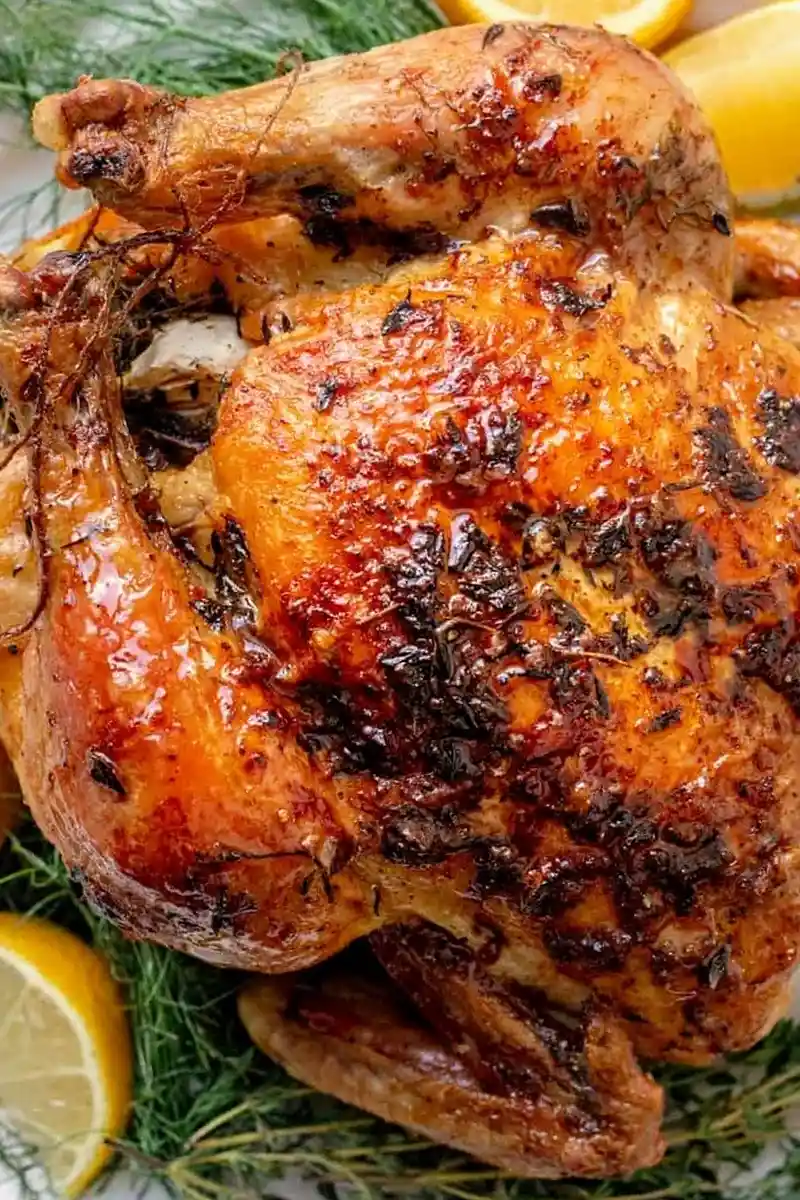
List of ingredients
- 1 whole chicken (about 3 ½ pounds) – Ensure it is fully thawed before preparing.
- 3 tablespoons butter (melted) – Used for the exterior rub to promote browning.
- 1 teaspoon salt – Enhances flavor and helps draw moisture from the skin.
- ½ teaspoon black pepper – Provides a mild heat and aromatic quality.
- 1 bunch thyme + 1 tablespoon fresh thyme – Used both inside the cavity and in the butter rub.
- 1 head garlic (sliced in half horizontally) – Stuffed inside to infuse the meat with garlic aroma.
- ½ onion – Provides a sweet, aromatic base within the cavity.
- Lemon slices – Fresh slices for serving and adding acidity to the finished dish.
step-by-step instructions
- Prepare the Oven: Preheat your oven to 400°F to ensure a consistent high heat for searing the skin.
- Prep the Bird: Pat the chicken completely dry with paper towels, remove any giblets from the cavity, tuck the wings underneath the breast, and tie the legs together using kitchen twine.
- Apply the Herb Rub: In a small bowl, mix the melted butter, salt, pepper, and 1 tablespoon of fresh thyme. Rub this mixture thoroughly over the entire chicken, including underneath the skin of the breast.
- Stuff the Cavity: Place the sliced garlic head, the half onion, and the thyme sprigs inside the chicken cavity.
- Roast: Place the chicken breast side up in a large baking dish and roast for 60-75 minutes, or until the skin is golden brown and a meat thermometer inserted into the thickest part of the thigh reads 165°F.
- Finish and Rest: Spoon the accumulated pan juices over the chicken. Let the bird rest for 15 minutes before carving to allow juices to redistribute.
Professional Roasting Techniques
The Importance of Trussing the Chicken
Trussing involves tying the legs and wings close to the body using kitchen twine. This process ensures that the chicken maintains a compact shape, which prevents the thinner extremities from overcooking or burning while the breast reaches the safe internal temperature. A trussed bird cooks more evenly and presents a more professional appearance on the platter.
Achieving Maximum Skin Crispiness
The biggest enemy of crispy skin is surface moisture, which creates steam instead of searing. By patting the skin thoroughly dry with paper towels before applying the butter rub, you facilitate the Maillard reaction. For those who prefer an even deeper crunch, placing the chicken under the broiler for the final 2-3 minutes of cooking can provide an extra layer of crispiness.
Using a Meat Thermometer for Accuracy
Relying on time alone can be risky due to variations in oven calibration and bird size. Always insert a digital meat thermometer into the thickest part of the thigh, ensuring the probe does not touch the bone, which can give a false high reading. The chicken is safely cooked and juicy when it hits exactly 165°F.
The Science of Resting the Meat
When chicken roasts, the muscle fibers contract and push juices toward the center of the meat. If you carve the chicken immediately after removing it from the oven, these juices will run out onto the cutting board, leaving the meat dry. Resting the bird for 15 to 30 minutes allows the fibers to relax and reabsorb the moisture, ensuring every slice remains succulent.
Ingredient Substitutions and Adjustments
Alternative Herb Combinations
While thyme is the primary herb in this recipe, you can easily swap it for other woody herbs. Rosemary and sage are excellent alternatives that pair well with roasted poultry. For a more complex profile, use a mixture of thyme, rosemary, and sage in equal parts to create a traditional poultry blend.
Substituting Butter with Oil
If you prefer not to use butter, melted coconut oil or extra-virgin olive oil can be used as a replacement. Olive oil provides a slightly more fruity flavor and a higher smoke point, which can be beneficial for very high-heat roasting. Maintain the same 3-tablespoon ratio to ensure the skin remains moist during the roasting process.
Adjusting Cavity Aromatics
If onions are unavailable, you can substitute them with shallots or a whole carrot. Celery stalks also work well inside the cavity to add a subtle savory depth. These vegetables help keep the interior of the bird moist while imparting a classic aromatic base into the meat.
Serving Suggestions and Side Pairings
Roasted Root Vegetables
Since the oven is already preheated, roasting vegetables in the same pan or a separate tray is efficient. Carrots, parsnips, and potatoes absorb the rendered chicken fat, which adds immense flavor. Toss them in olive oil, salt, and pepper, and roast them for the same duration as the chicken.
Fresh and Acidic Salads
The richness of the butter-rubbed chicken is best balanced by a bright, acidic side dish. A Greek salad with cucumbers, olives, and feta, or a chopped green goddess salad, provides a refreshing contrast. The acidity from a lemon-based vinaigrette helps cut through the fat of the roasted skin.
Starchy Side Accompaniments
Garlic mashed potatoes or a wild rice pilaf are traditional pairings that complement the herb profile of the chicken. Parmesan roasted potatoes offer a salty, crispy alternative that echoes the texture of the chicken skin. For a lighter option, steamed quinoa with parsley and lemon is a healthy choice.
Storage and Leftover Management
Refrigeration Guidelines
Store leftover roasted chicken in an airtight container in the refrigerator. The meat should be removed from the carcass to save space and ensure faster cooling. Properly stored chicken will remain fresh and safe to eat for up to 4 days.
Freezing Instructions for Long-Term Storage
To freeze roasted chicken, break the meat down into breasts, thighs, and wings first. Wrap each piece tightly in foil or place them in vacuum-sealed bags to prevent freezer burn. Frozen cooked chicken can be kept for up to 4 months and should be thawed in the refrigerator overnight before reheating.
Maximizing the Chicken Carcass
Do not discard the bones and the roasted aromatics after the meal. Place the carcass in a large pot with water, onion, celery, and carrots, and simmer for several hours to create a rich, homemade chicken stock. This stock serves as a superior base for soups, stews, and gravies.
Reheating Methods
Oven Reheating for Texture
To maintain the crispness of the skin, reheat leftover chicken in the oven at 325°F. Place the meat in a baking dish and cover it loosely with foil to prevent the meat from drying out. Heat until the internal temperature reaches 165°F, then remove the foil for the last few minutes to crisp the skin.
Microwave Reheating for Convenience
For a quicker option, microwave the chicken on medium power to avoid toughening the protein. Cover the meat with a damp paper towel to lock in moisture and heat in short 30-second intervals. This method is best for shredded chicken used in sandwiches or salads where skin texture is less important.
Advanced Prep and Planning
Overnight Dry-Brining
For the absolute best results, prepare the chicken the night before. Rub the salt and butter mixture onto the bird and leave it uncovered in the refrigerator for up to 12 hours. This process, known as dry-brining, allows the salt to penetrate deep into the meat and dries out the skin further for a superior crunch.
Prepping the Cavity in Advance
You can stuff the garlic and onion into the bird several hours before cooking. This gives the aromatics more time to settle and begin flavoring the interior of the chicken. Ensure the bird stays refrigerated until the moment it goes into the oven to maintain food safety.
Troubleshooting Common Issues
Preventing Dry Breast Meat
If you find that the breast meat often overcooks before the legs are done, use a piece of foil to tent the breast. Once the breast reaches approximately 150°F, cover it loosely with foil and continue roasting the legs. This protects the delicate breast meat from the direct heat of the oven.
Fixing Pale or Non-Crispy Skin
If the chicken is fully cooked but the skin remains pale, it is likely due to a lack of surface heat or too much moisture. Increase the oven temperature by 25°F for the final 10 minutes, or use the broiler setting. Ensure the chicken is not crowded in the pan, as this can lead to steaming rather than roasting.
Managing Undercooked Thighs
Because thighs contain more connective tissue and bone, they often take longer to cook than the breast. If the breast is done but the thighs are under 165°F, remove the breast pieces from the bird and leave the legs and thighs in the oven. Continue roasting the legs for another 10-15 minutes until they reach a safe temperature.
Frequently Asked Questions
How much chicken should I allot per person?
A general rule of thumb is to plan for approximately one pound of whole chicken per person. A 3.5 to 4 pound chicken is ideal for a family of four, providing enough for the main meal and a few leftover portions.
Can I roast my chicken without tying the legs?
Yes, you can roast the chicken without tying the legs. While trussing helps the bird cook more evenly and maintain a compact shape, the chicken will still cook through safely without it; however, the legs may brown more quickly than the breast.
How do I know when my chicken is fully cooked?
The only definitive way to know the chicken is done is by using a meat thermometer. Insert it into the thickest part of the thigh; when the reading hits 165°F, the bird is safe to remove from the oven.
Print
Garlic and Herb Roasted Whole Chicken
- Total Time: 75 minutes
- Yield: 4 servings 1x
- Diet: General
Description
Whole roasted chicken rubbed in butter and thyme on the outside for crispy skin and stuffed with a head of garlic and more thyme on the inside to carry the flavor through the whole chicken.
Ingredients
- 1 whole chicken (about 3 ½ pounds)
- 3 tablespoons butter (melted)
- 1 teaspoon salt
- ½ teaspoon black pepper
- 1 bunch thyme + 1 tablespoon fresh thyme
- 1 head garlic (sliced in half horizontally)
- ½ onion
- Lemon slices (for serving)
Instructions
- Step: Preheat the oven to 400°F.
- Step: Pat the chicken dry with paper towel, remove the giblets, tuck the chicken wings underneath the breast and tie the legs together with kitchen twine.
- Step: In a small bowl, combine the melted butter, salt, pepper and thyme. Use your hands to rub the butter mixture all over the chicken, making sure to get underneath the skin as well.
- Step: Stuff the garlic, onion and thyme sprigs inside the chicken cavity.
- Step: Place the chicken on a large baking dish and roast in the oven breast side up until the skin is golden brown and a thermometer inserted in the chicken reads 165°F, about 60-75 minutes.
- Step: Spoon the juices from the bottom of the baking dish over the chicken and allow the chicken to rest for 15 minutes before carving.
Notes
Storage: Store any leftovers in an airtight container. They will last up to 4 days. Substitutes: You can switch out the herbs based on your preferences.
- Prep Time: 15 minutes
- Cook Time: 60 minutes
- Category: Main Course
- Method: Roasting
- Cuisine: American
Nutrition
- Serving Size: 1 serving
- Calories: 506 kcal
- Sugar: 1 g
- Sodium: 792 mg
- Fat: 37 g
- Saturated Fat: 14 g
- Unsaturated Fat: 23 g
- Trans Fat: 0 g
- Carbohydrates: 5 g
- Fiber: 1 g
- Protein: 36 g
- Cholesterol: 165 mg