This refreshing pesto pasta salad is a quick and easy meal perfect for lunch or potluck gatherings. It combines homemade basil pesto with fresh vegetables and mozzarella for a vibrant taste that comes together in 30 minutes.
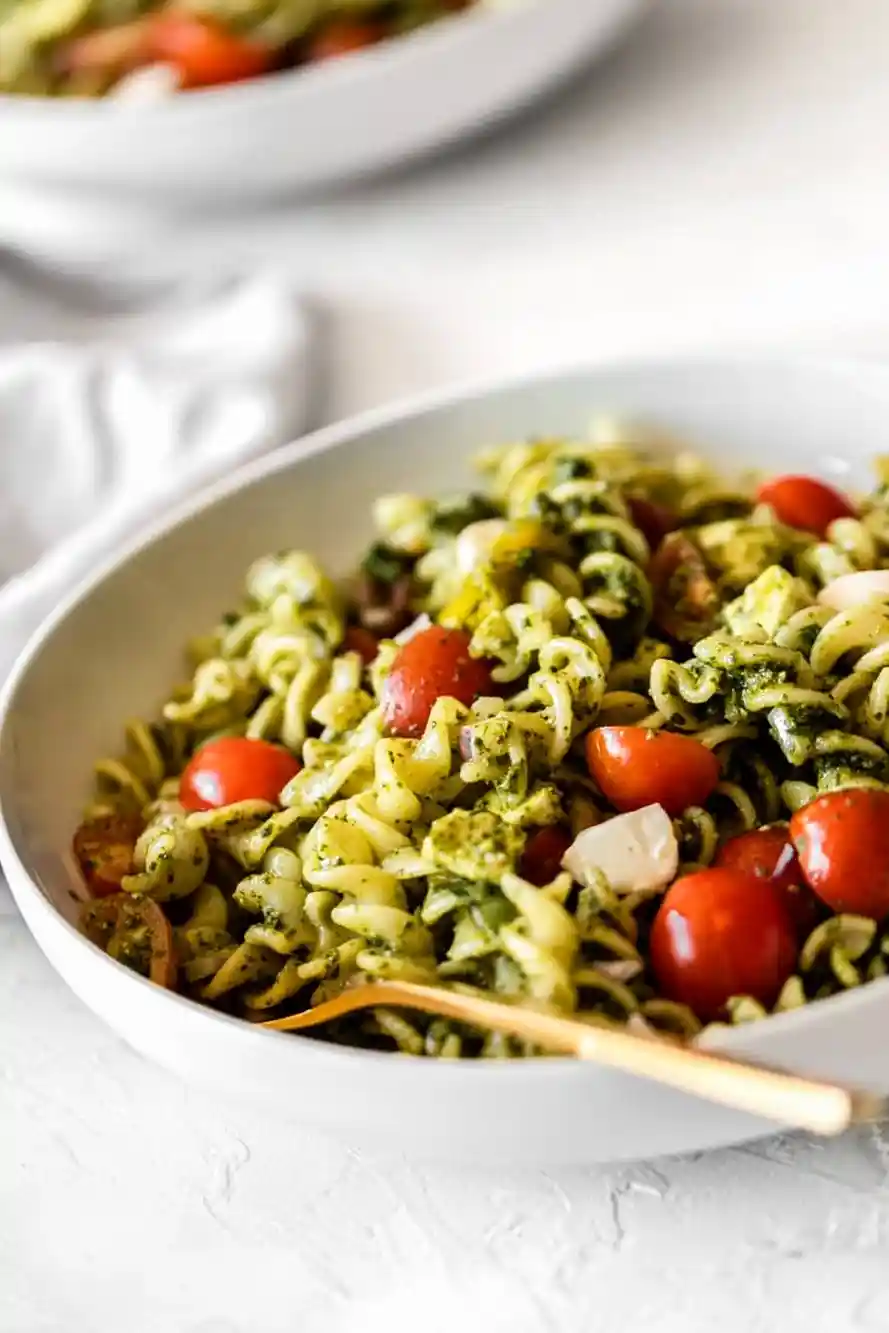
List of ingredients
- 1 pound pasta (such as cavatelli or penne) – provides the hearty base.
- 1 cup cherry tomatoes (halved) – adds juicy sweetness.
- 8 oz fresh mozzarella (cut into small bite-sized pieces) – provides creamy texture.
- 1/2 cup finely chopped red onion – adds a sharp, crisp bite.
- 1/4 cup chopped pepperoncini – contributes a tangy, pickled flavor.
- 1/4 cup finely chopped parsley – adds a fresh herbal note.
- 3 cups basil leaves – the primary flavor for the pesto.
- 1/2 cup olive oil – creates the smooth emulsion for the sauce.
- 1/3 cup pine nuts – adds richness and a nutty taste.
- 1/3 cup grated parmesan cheese – provides a salty, savory depth.
- 1 tablespoon lemon juice – balances the richness with acidity.
- 2 cloves garlic – adds aromatic pungency.
- 1 teaspoon sea salt – enhances all the individual flavors.
- 1/4 teaspoon black pepper – provides a subtle spicy finish.
step-by-step instructions
- Cook the pasta: Bring a large pot of salted water to a boil. Add pasta and cook until tender, following the package directions. Drain and rinse well under cold water to stop the cooking process.
- Make the pesto: While the pasta cooks, combine fresh basil, pine nuts, parmesan cheese, olive oil, garlic, lemon juice, salt, and pepper in a food processor. Process until the mixture is smooth and creamy, then scoop it into a bowl.
- Assemble the pasta salad: In a large mixing bowl, combine the cooked noodles, prepared pesto, halved cherry tomatoes, mozzarella pieces, pepperoncini, and chopped parsley. Toss until everything is evenly coated, then taste and adjust seasonings as needed.
Selecting the Best Components
Choosing the Right Pasta Shape
Penne and cavatelli are excellent choices because their shapes capture the pesto sauce effectively. Penne has a hollow center that holds sauce, while cavatelli provides a denser chew that stands up well to the fresh vegetables.
Selecting Fresh Mozzarella Pearls
Using small mozzarella pearls or cutting a larger ball into uniform bite-sized pieces ensures a bit of cheese in every forkful. Fresh mozzarella offers a mild, milky flavor that contrasts beautifully with the bold basil pesto.
Using Sweet Cherry Tomatoes
Cherry tomatoes are preferred over larger tomatoes because they maintain their shape and provide bursts of sweetness. Halving them allows the pesto to cling to the cut surfaces, integrating the flavors better.
Preparing Red Onions for Crunch
Finely chopping the red onion ensures you get the sharp flavor without overwhelming any single bite. The red color also provides a visually appealing contrast against the green pesto and white cheese.
Adding Tang with Pepperoncini
Chopped pepperoncini add a vinegary tang and a mild heat that cuts through the richness of the pine nuts and olive oil. This ingredient is key for adding complexity to the overall flavor profile.
Sourcing High-Quality Fresh Basil
Fresh, bright green basil leaves provide the most aromatic and vibrant pesto. Avoid leaves that have turned brown or black, as they can introduce a bitter taste to the sauce.
Using Pine Nuts for Texture
Pine nuts offer a buttery consistency and a distinct flavor that defines traditional pesto. If you prefer a deeper taste, you can lightly toast them in a dry pan before adding them to the food processor.
Choosing Aged Parmesan Cheese
Aged parmesan cheese adds a concentrated salty and umami element to the pesto. Using finely grated cheese allows it to blend seamlessly into the emulsion for a smooth texture.
Cooking Techniques for Success
Salting the Pasta Water Correctly
Adding a generous amount of salt to the boiling water is the only chance to season the pasta itself. This ensures the noodles taste flavorful even before the pesto is added during assembly.
The Importance of Cold Rinsing
Rinsing the pasta under cold water immediately after draining removes excess starch. This prevents the noodles from sticking together and stops them from overcooking, which keeps the salad refreshing.
Achieving a Smooth Pesto Consistency
When using a food processor, blend the ingredients in pulses to avoid over-processing. Over-blending can cause the olive oil to separate or the basil to heat up and lose its bright green color.
Balancing Garlic Intensity
Using fresh garlic cloves provides a sharp, pungent flavor that defines the pesto. If you prefer a milder taste, you can remove the germ from the center of the clove before processing.
Incorporating Fresh Lemon Juice
Freshly squeezed lemon juice provides a necessary acidic lift to the sauce. This brightness prevents the olive oil and cheese from feeling too heavy on the palate.
Dietary Modifications
Making the Salad Vegan
To make this recipe vegan, omit the mozzarella and parmesan cheese. You can replace the parmesan with nutritional yeast to maintain a similar savory, cheesy flavor profile.
Substituting with Gluten-Free Noodles
Gluten-free pasta made from brown rice or corn works well in this salad. Be careful not to overcook gluten-free noodles, as they can become mushy more quickly than wheat-based pasta.
Creating a Nut-Free Pesto
If you have a nut allergy, replace the pine nuts with sunflower seeds or pumpkin seeds. These seeds provide a similar creamy texture and earthy flavor without the risk of allergens.
Replacing Basil with Other Greens
If fresh basil is unavailable, you can use baby spinach or kale. While the flavor will change, these greens still provide the vibrant color and nutritional benefits of the original recipe.
Preservation and Serving
Maximum Refrigeration Periods
This pasta salad can be stored in the refrigerator for up to four days. Keeping it chilled maintains the freshness of the vegetables and allows the flavors to meld together.
Selecting the Right Storage Containers
Use an airtight glass or plastic container to prevent the salad from absorbing other fridge odors. A sealed environment also helps keep the basil pesto from drying out.
Preventing Pesto from Drying Out
Pasta tends to absorb sauce as it sits in the fridge. If the salad seems dry before serving, stir in a tablespoon of olive oil or a splash of lemon juice to revive the moisture.
Optimizing Flavor Through Chilling
Letting the salad rest in the refrigerator for at least 30 minutes before serving improves the taste. Chilling allows the pasta to fully absorb the garlic, lemon, and basil notes.
Frequently Asked Questions
Can I use store-bought pesto instead of homemade?
Yes, you can use a high-quality store-bought pesto to save time. However, homemade pesto typically has a fresher basil taste and allows you to control the amount of salt and oil.
Which pasta shapes hold sauce best?
Ridged pastas like penne or spiral shapes like fusilli are best for pesto. These textures create more surface area for the thick sauce to cling to compared to smooth noodles.
How do I stop basil from oxidizing?
Adding lemon juice to the pesto helps preserve the green color by slowing down oxidation. You can also press a piece of plastic wrap directly onto the surface of the pesto if storing it separately.
Can I add extra vegetables like bell peppers?
Adding diced red or yellow bell peppers is a great way to increase the crunch and nutritional value. Simply toss them in during the assembly step along with the tomatoes and onions.
Is this pasta salad suitable for freezing?
It is not recommended to freeze this salad because the fresh mozzarella and cherry tomatoes will change texture. The pesto may also separate upon thawing, affecting the overall quality.
Print
Fresh Basil Pesto Pasta Salad
- Total Time: 30 minutes
- Yield: 8 servings 1x
- Diet: Vegetarian
Description
Whether you’re looking for a refreshing lunch or a dish to bring to a potluck, this pesto pasta salad is delicious and easy to make. Made with basil pesto tossed in perfectly cooked pasta noodles, this recipe comes together in under 30 minutes!
Ingredients
- 1 pound pasta (such as cavatelli or penne)
- 1 cup cherry tomatoes (halved)
- 8 oz fresh mozzarella (cut into small bite-sized pieces)
- 1/2 cup finely chopped red onion
- 1/4 cup chopped pepperoncini
- 1/4 cup finely chopped parsley
- 3 cups basil leaves
- 1/2 cup olive oil
- 1/3 cup pine nuts
- 1/3 cup grated parmesan cheese
- 1 tablespoon lemon juice
- 2 cloves garlic
- 1 teaspoon sea salt
- 1/4 teaspoon black pepper
Instructions
- Cook the pasta: Bring a large pot of salted water to a boil. Add pasta and cook until tender. Drain and rinse well under cold water.
- Make the pesto: In a food processor, combine the fresh basil, pine nuts, parmesan cheese, olive oil, garlic, lemon juice, salt, and pepper. Process until smooth and creamy.
- Assemble the pasta salad: In a large bowl, combine noodles, pesto, cherry tomatoes, mozzarella, pepperoncini, and parsley. Toss until well combined.
Notes
Chill before serving. Pasta salad gets better as it rests. For the best flavor, mix and refrigerate the salad for at least 30 minutes.
- Prep Time: 10 minutes
- Cook Time: 20 minutes
- Category: Main Dish, Side Dish
- Method: Mixing
- Cuisine: Italian
Nutrition
- Serving Size: 1 serving
- Calories: 287 kcal
- Sugar: 4 g
- Sodium: 834 mg
- Fat: 25 g
- Saturated Fat: 7 g
- Unsaturated Fat: 18 g
- Trans Fat: 0 g
- Carbohydrates: 32 g
- Fiber: 2 g
- Protein: 10 g
- Cholesterol: 26 mg