Salmon crudo is a classic Italian preparation that emphasizes the pure, delicate flavor of high-quality raw fish combined with bright, acidic, and savory accents. This refined appetizer requires minimal cooking time and relies entirely on the quality of your ingredients to create a sophisticated dish that elevates any gathering. By keeping the preparation simple, you allow the natural, buttery texture of the salmon to take center stage, complemented by the sharp crunch of aromatics and a silky finish of premium oil.
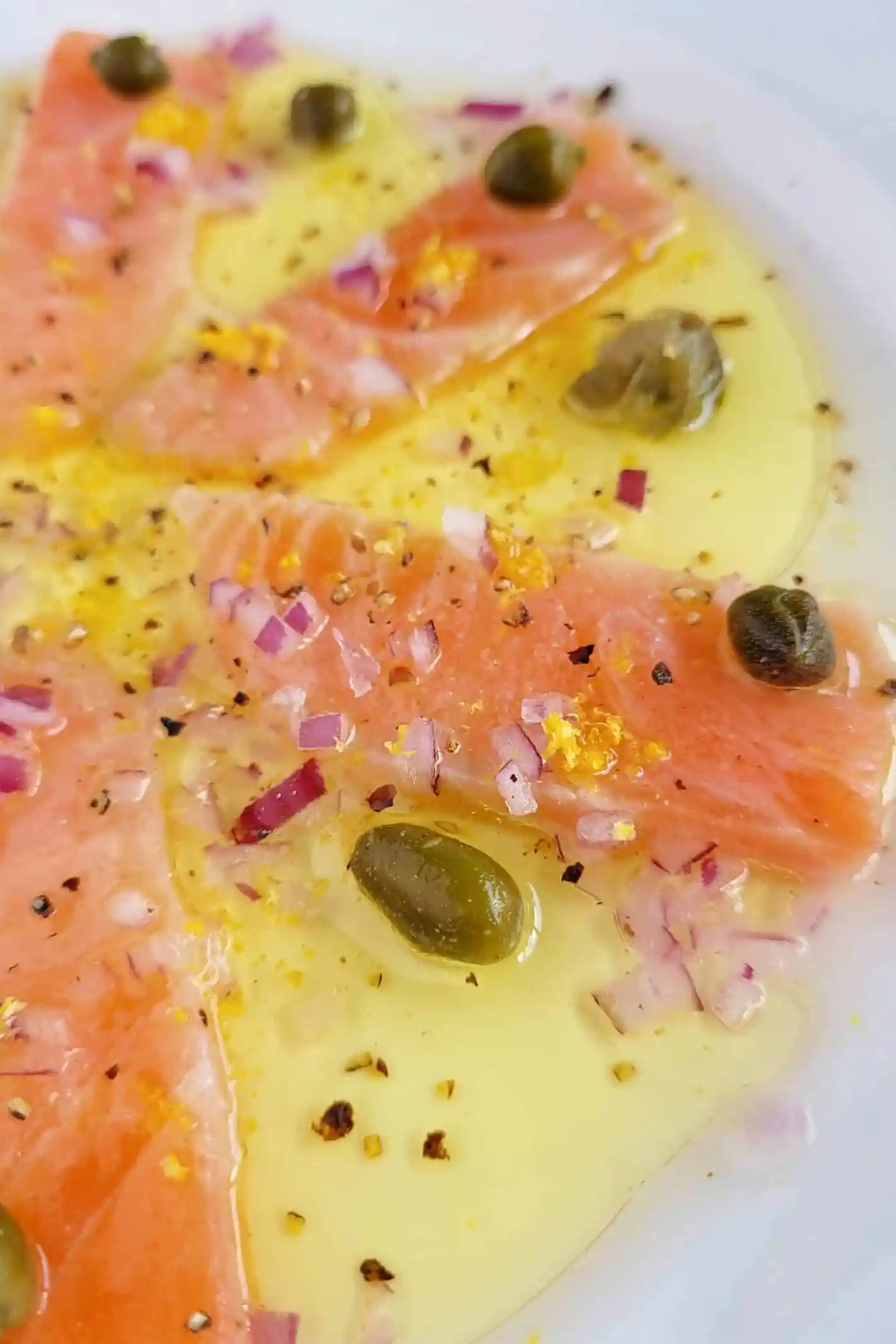
List of ingredients
- 11 oz sashimi-grade salmon (sliced into 1/8 inch or 4mm slices)
- 2 tbsp red onion (finely diced)
- 2 tbsp capers
- 2 tbsp lemon juice (freshly squeezed)
- 4 tbsp olive oil (extra virgin)
- salt (to taste)
- black pepper (freshly ground, to taste)
- lemon zest (of 1 lemon)
step-by-step instructions
- Step: Arrange salmon slices on a plate.
- Step: Drizzle over lemon juice and olive oil.
- Step: Sprinkle over red onion, capers, and lemon zest.
- Step: Season with salt and pepper.
- Step: Serve immediately.
Refining the Preparation Environment
Sanitizing Tools Before Handling
When working with raw fish, sanitation is the most critical element of the preparation process. Before you begin slicing, ensure your cutting board is non-porous; glass, plastic, or acrylic boards are generally safer than wood for raw seafood because they do not harbor bacteria in grooves. After washing your board and knife with hot, soapy water, you can perform an extra sanitizing step by pouring boiling water over the surfaces to ensure any lingering pathogens are eliminated before you introduce the salmon.
The Role of Temperature Control
Salmon crudo relies on maintaining a cool temperature throughout the plating process to keep the fish firm and pleasant to eat. It is often helpful to place your serving plates in the refrigerator for about ten minutes before you begin the assembly. This pre-chilling keeps the fish at an ideal temperature while you add the room-temperature oil and aromatics, preventing the salmon from losing its structure during the final plating stages.
Selecting and Slicing the Protein
Identifying Quality Sashimi-Grade Fish
The success of this dish rests entirely on the quality of your salmon. Do not substitute with standard supermarket salmon, which has not been processed or handled with the specific intent of being consumed raw. Look for clear, vibrant flesh that shows no signs of discoloration or dullness, and ensure the fish smells like the ocean rather than being overly fishy, which can indicate poor freshness or improper storage.
Mastering the Thin-Slice Technique
Achieving the perfect 1/8-inch slice is best accomplished when the salmon is slightly chilled, as it offers more resistance to the blade. Use a long, slicing motion rather than a sawing motion; pull the knife through the fillet in one fluid stroke to avoid tearing the delicate muscle fibers. If your slices are too thick, the mouthfeel becomes chewy, but if they are too thin, they may dissolve too quickly when they hit the lemon juice, so accuracy in your knife work is highly beneficial.
Flavor Balancing and Balancing Acidity
Balancing the Fat with Citrus
Salmon is an oily fish, and the addition of olive oil further increases the lipid content, which is why the lemon juice serves as a functional component rather than just a flavor enhancer. The acidity helps to cut through the heavy, buttery nature of the fish, cleansing the palate with every bite. If you find the lemon juice too aggressive, you can experiment by using a combination of lemon and lime or even a touch of mild orange juice to soften the edges of the citrus profile.
Selecting the Right Aromatics
The aromatics are designed to contrast the soft texture of the fish. Red onion provides a crisp, pungent bite, while capers offer a burst of savory saltiness. If you find red onion too sharp, you can soak the diced pieces in cold water for five minutes and pat them dry before using; this removes the excess sulfur and leaves you with a much milder, sweeter flavor that won’t overpower the delicate fish.
Common Queries Regarding Crudo
What is the distinction between sashimi and crudo?
Sashimi is a Japanese preparation that focuses exclusively on the quality of the raw fish, which is served essentially unadorned, often with a side of soy sauce or wasabi for the diner to add as they wish. Crudo is an Italian concept that encourages the chef to dress the raw protein with oil, citrus, and seasonings before it hits the table, creating a more integrated flavor experience.
Can I assemble this ahead of time?
It is not recommended to assemble or plate the dish in advance. Because the acidity from the lemon juice begins to denature the protein the moment it touches the fish, letting it sit will cause the salmon to change from a translucent, firm texture to a chalky, opaque, and mushy consistency. Always prepare the components ahead, but only plate the dish just before your guests sit down to eat.
How should I store leftover portions?
There are no reliable storage options for salmon crudo once it has been dressed, as the combination of citrus and oil will degrade the texture of the raw fish within minutes. It is best to prepare only what you intend to serve immediately. If you realize you have sliced too much salmon, store the undressed fish in an airtight container at the lowest temperature point in your refrigerator and consume it within the same day for other preparations.
Creative Variations for the Home Cook
Experimenting with Alternative Proteins
While salmon is the traditional choice for this recipe due to its high fat content and beautiful color, you can successfully apply this technique to other sashimi-grade seafood. Scallops, thinly sliced, offer a sweet, creamy texture that pairs beautifully with citrus. White fish like snapper or kingfish provide a firmer, cleaner profile that acts as a blank canvas for more experimental toppings like chili oil, microgreens, or even shaved fennel.
Incorporating Fusion Flavors
Crudo is inherently versatile and welcomes creative infusions. For a modern twist, try replacing the olive oil with a small amount of toasted sesame oil and adding a light dusting of furikake or a touch of miso-based dressing. You can also experiment with different types of citrus, such as yuzu for a more floral and complex acidity, which pairs exceptionally well with the rich, omega-3-packed profile of wild-caught salmon fillets.
Print
Elegant Salmon Crudo Preparation
- Total Time: 10 minutes
- Yield: 4 1x
- Diet: Pescatarian
Description
Salmon crudo is an Italian dish of raw salmon. With only a few ingredients and a few minutes, you can effortlessly make an elegant and refreshingly delicious appetizer that will impress your guests. This dish will elevate any dinner party.
Ingredients
- 11 oz sashimi-grade salmon (sliced into 1/8 inch or 4mm slices)
- 2 tbsp red onion (finely diced)
- 2 tbsp capers
- 2 tbsp lemon juice (freshly squeezed)
- 4 tbsp olive oil (extra virgin)
- salt (to taste)
- black pepper (freshly ground, to taste)
- lemon zest (of 1 lemon)
Instructions
- Step: Arrange salmon slices on a plate.
- Step: Drizzle over lemon juice and olive oil.
- Step: Sprinkle over red onion, capers, and lemon zest.
- Step: Season with salt and pepper.
- Step: Serve immediately.
Notes
Ensure you are using sashimi-grade salmon to ensure safety for raw consumption. Maintain a sterile environment by cleaning all surfaces, knives, and cutting boards thoroughly before preparation. This dish must be served immediately and cannot be made in advance.
- Prep Time: 10 minutes
- Cook Time: 0 minutes
- Category: Side Dish
- Method: Raw
- Cuisine: Italian
Nutrition
- Serving Size: 1 serving
- Calories: 180 kcal
- Sugar: 1 g
- Sodium: 250 mg
- Fat: 12 g
- Saturated Fat: 2 g
- Unsaturated Fat: 9 g
- Trans Fat: 0 g
- Carbohydrates: 3 g
- Fiber: 1 g
- Protein: 16 g
- Cholesterol: 40 mg