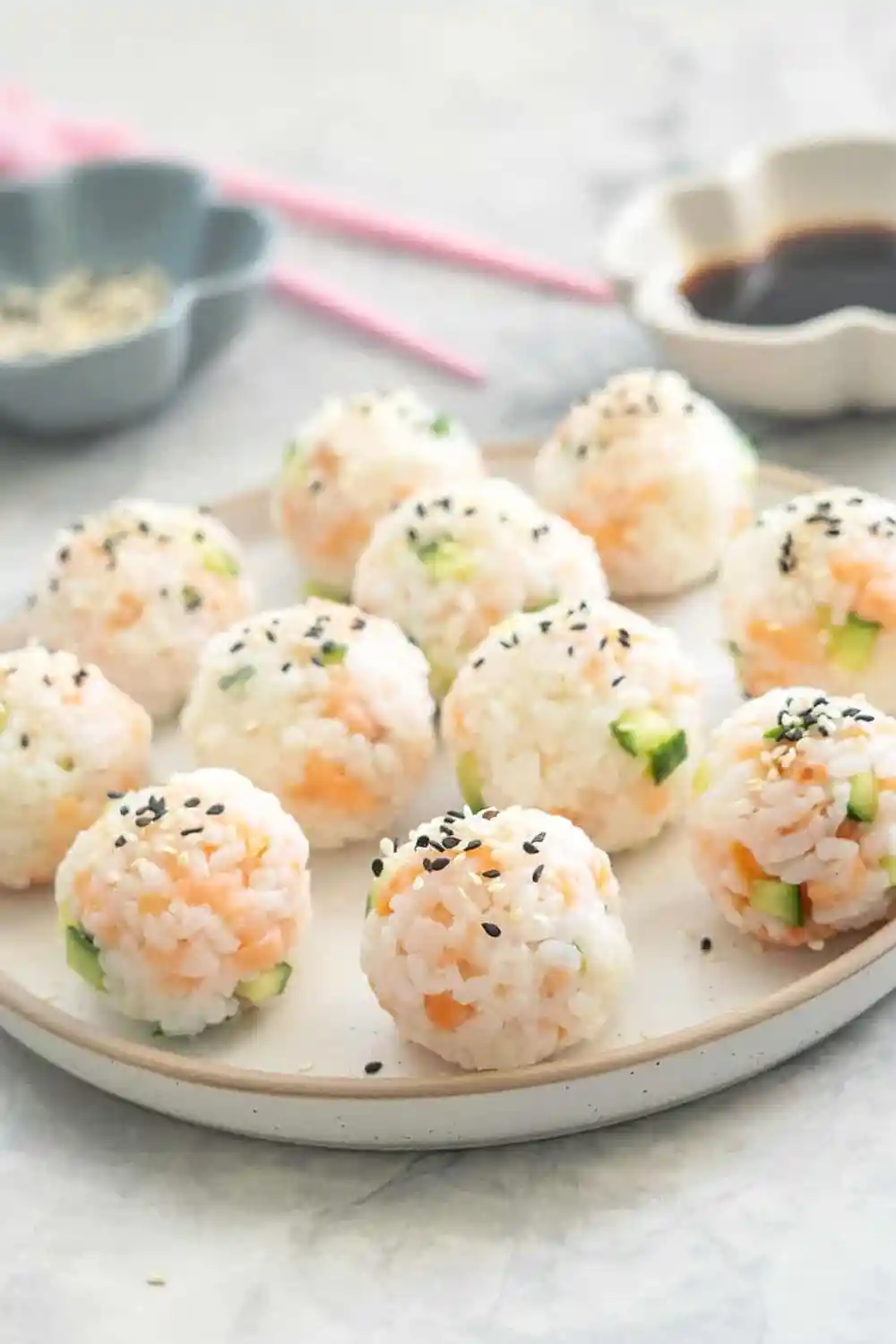
These sushi balls offer all the classic flavors of your favorite hand rolls without the technical challenge of using bamboo mats or nori sheets. This method is incredibly approachable for home cooks who want to enjoy high-quality sushi ingredients in a fun, bite-sized format that is perfect for gatherings or quick lunches. By shaping the seasoned rice around a creamy center, you achieve a delightful texture contrast that keeps every bite interesting and satisfying.
List of ingredients
- 2 cups sushi rice (cooked and seasoned)
- 100 grams smoked salmon (chopped, approx 1/2 cup)
- 1/2 cup cucumber (deseeded and finely diced)
- 100 grams cream cheese (cubed)
- Sesame seeds
step-by-step instructions
- Step: Prepare your sushi rice according to your preferred method.
- Step: Cut the cream cheese into 1cm cubes. Deseed the cucumber by slicing it in half and scraping out the seeds with a spoon, then dice into small pieces. Dice the smoked salmon.
- Step: Once the sushi rice has cooled, add it to a large mixing bowl with the diced cucumber and salmon. Gently mix until the fillings are evenly distributed.
- Step: Take a spoonful of the rice mixture, place a cube of cream cheese in the center, and top with a second spoonful of rice. Shape into a ball with your hands.
- Step: Sprinkle the balls with sesame seeds and chill in the fridge until ready to serve.
Practical Handling and Rice Technique
Achieving the Perfect Rice Texture
The foundation of any successful sushi dish is the quality of the rice preparation. Sushi rice, or short-grain japonica rice, contains the necessary starch content to become sticky once cooled and seasoned. Rinsing your rice thoroughly under cold running water until the water runs clear is a non-negotiable step to remove excess surface starch that can lead to gummy rice. Once cooked, folding the vinegar mixture into the rice while it is still steaming ensures the grains absorb the seasoning evenly, which is vital for the signature sweet-and-sour flavor.
Working with Wet Hands
Handling sticky rice can be frustrating if your hands are dry. Keep a small bowl of water with a splash of rice vinegar on your workstation to dip your fingertips into frequently. This thin barrier prevents the grains from adhering to your skin and makes the shaping process effortless and clean. If you notice your hands are starting to get coated in rice starch, wash them briefly, dry them, and refresh your water bowl to maintain a smooth assembly line.
Refining the Filling Preparation
Why Precise Dicing Matters
The success of the ball shape relies on the physical size of your fillings. When the cucumber and salmon pieces are larger than a few millimeters, they act as spacers that break the structural integrity of the rice, making the ball prone to falling apart during handling. Aim for a fine dice that mimics the size of individual cooked rice grains. This consistency allows the rice to pack tightly around the fillings, resulting in a cohesive bite that holds its form beautifully when picked up or served on a platter.
Managing the Cucumber Moisture
Cucumber is naturally high in water content, which can soften the surrounding rice and turn it mushy if not handled correctly. By scooping out the pulpy seed section of the cucumber, you remove the wettest part of the vegetable, leaving behind the firm, crunchy skin and flesh. After dicing the remaining cucumber, you can optionally pat the pieces with a paper towel to remove even more excess surface moisture. This extra minute of effort significantly improves the mouthfeel and shelf-life of your final sushi balls.
Customization and Flavor Variations
Exploring Different Filling Profiles
While smoked salmon is a classic pairing for cream cheese, you can easily adapt these balls to suit different preferences using your favorite ingredients. Finely shredded cooked crab meat, imitation crab, or even small pieces of cooked shrimp work wonderfully as seafood alternatives. For those who prefer vegetable-forward options, thinly sliced green onions or blanched, finely chopped asparagus add a fresh, grassy note that balances the richness of the cheese. Always ensure that any added protein is cooked and chilled before incorporating it into the rice mixture to maintain food safety and structural stability.
Adding Crunch and Umami
Sesame seeds provide a lovely texture, but you can elevate the flavor profile further by experimenting with various outer coatings. Furikake, a Japanese seasoning blend typically containing toasted sesame seeds, dried seaweed, salt, and sometimes sugar, adds a punch of umami that elevates the dish significantly. If you want a bit of heat, consider mixing a small amount of finely minced pickled ginger directly into the rice mixture or using a light dusting of crushed chili flakes on the exterior. Crispy fried onions can also provide a surprising and delicious texture contrast if added immediately before serving.
Storage and Serving Strategies
Keeping Sushi Balls Fresh
Sushi balls are best enjoyed at room temperature or slightly chilled, but they are highly perishable due to the cream cheese and seafood content. Once shaped, keep them in an airtight container in the refrigerator to prevent the rice from drying out. They will generally stay fresh for up to 24 hours. Because cold rice can become hard and unpalatable, pull the container out of the refrigerator about 20 to 30 minutes before serving to allow the ingredients to come closer to room temperature, which improves the texture and allows the flavors of the salmon and cheese to bloom.
Plating and Accompaniments
For a beautiful presentation, arrange the sushi balls on a flat platter with small decorative leaves or a dusting of extra sesame seeds. Serve them alongside a small dish of high-quality soy sauce, a dollop of prepared wasabi, and a pile of pickled ginger. These accompaniments allow each guest to customize their bites to their personal taste preferences. Because the sushi balls are self-contained, they are excellent for buffet-style setups where guests can grab a serving without needing extra utensils or worrying about messy dips.
Frequently Asked Questions
Can I make these with brown rice?
Using short-grain brown rice is possible but requires a slightly different approach as it does not have the same natural stickiness as white sushi rice. You may need to add a touch more vinegar or a small amount of sticky rice flour to the cooked grains to help them bind properly, or simply accept a looser texture that is best eaten with a fork.
How do I stop the rice from sticking to the bowl?
A non-metallic mixing bowl is generally preferred for sushi rice to prevent the vinegar from reacting with the container material. If the rice is sticking excessively, ensure you are using a damp wooden paddle or a silicone spatula to fold the rice. Keeping the bowl slightly damp can also help prevent the rice from clinging to the sides during the cooling process.
Are these suitable for meal prep?
While you can prepare the components ahead of time, it is best to shape the balls as close to the serving time as possible. You can safely cook the rice and chop the fillings the night before, keeping them in separate containers, but the final assembly is quick and ensures the rice remains perfectly hydrated and the fillings stay fresh.
What is the best way to handle the cream cheese?
To get clean, uniform cubes of cream cheese, work with it while it is cold and firm from the refrigerator. Use a sharp, thin knife and wipe the blade with a warm, damp paper towel between each cut to prevent the cheese from smearing. If the cheese becomes too soft, place the cubes back in the freezer for five minutes before you begin assembling the sushi balls.
Can I replace the cream cheese with a dairy-free alternative?
Yes, many plant-based cream cheese alternatives perform similarly in this recipe. Look for a spread that has a firm consistency when cold, as this will help the ball maintain its shape during the pressing process. If your alternative is too soft, you can try mixing it with a small amount of finely chopped avocado to help stabilize the texture, which also adds a wonderful creamy richness that complements the salmon.
Print
Easy Smoked Salmon and Cream Cheese Sushi Balls
- Total Time: PT15M
- Yield: 15 balls 1x
- Diet: Pescatarian
Description
Sushi Balls are easy to make and offer all the flavours of sushi you love without the fiddly rolling with a bamboo mat.
Ingredients
- 2 cups sushi rice (cooked and seasoned)
- 100 grams smoked salmon (chopped, approx 1/2 cup)
- 1/2 cup cucumber (deseeded and finely diced)
- 100 grams cream cheese (cubed)
- Sesame seeds
Instructions
- Step: Prepare your sushi rice according to your preferred method.
- Step: Cut the cream cheese into 1cm cubes. Deseed the cucumber by slicing it in half and scraping out the seeds with a spoon, then dice into small pieces. Dice the smoked salmon.
- Step: Once the sushi rice has cooled, add it to a large mixing bowl with the diced cucumber and salmon. Gently mix until the fillings are evenly distributed.
- Step: Take a spoonful of the rice mixture, place a cube of cream cheese in the center, and top with a second spoonful of rice. Shape into a ball with your hands.
- Step: Sprinkle the balls with sesame seeds and chill in the fridge until ready to serve.
Notes
Preparation is key; ensure fillings are finely diced for easier shaping. Use damp hands and utensils to prevent the rice from sticking. Can be served with pickled ginger, soy sauce, and wasabi.
- Prep Time: PT15M
- Cook Time: PT0M
- Category: Snack
- Method: No-cook
- Cuisine: New Zealand
Nutrition
- Serving Size: 1 ball
- Calories: 77 kcal
- Sugar: 0.3 g
- Sodium: 74 mg
- Fat: 3 g
- Saturated Fat: 1 g
- Unsaturated Fat: 2 g
- Trans Fat: 0 g
- Carbohydrates: 11 g
- Fiber: 0.4 g
- Protein: 2 g
- Cholesterol: 8 mg