This vibrant salmon stir fry provides a balanced, protein-packed meal that comes together in under 25 minutes. By combining fresh, colorful vegetables with a savory, house-made sauce, you achieve a restaurant-quality dish right in your own kitchen. It is a perfect solution for busy weeknights when you want something nourishing that tastes like a professional takeout meal.
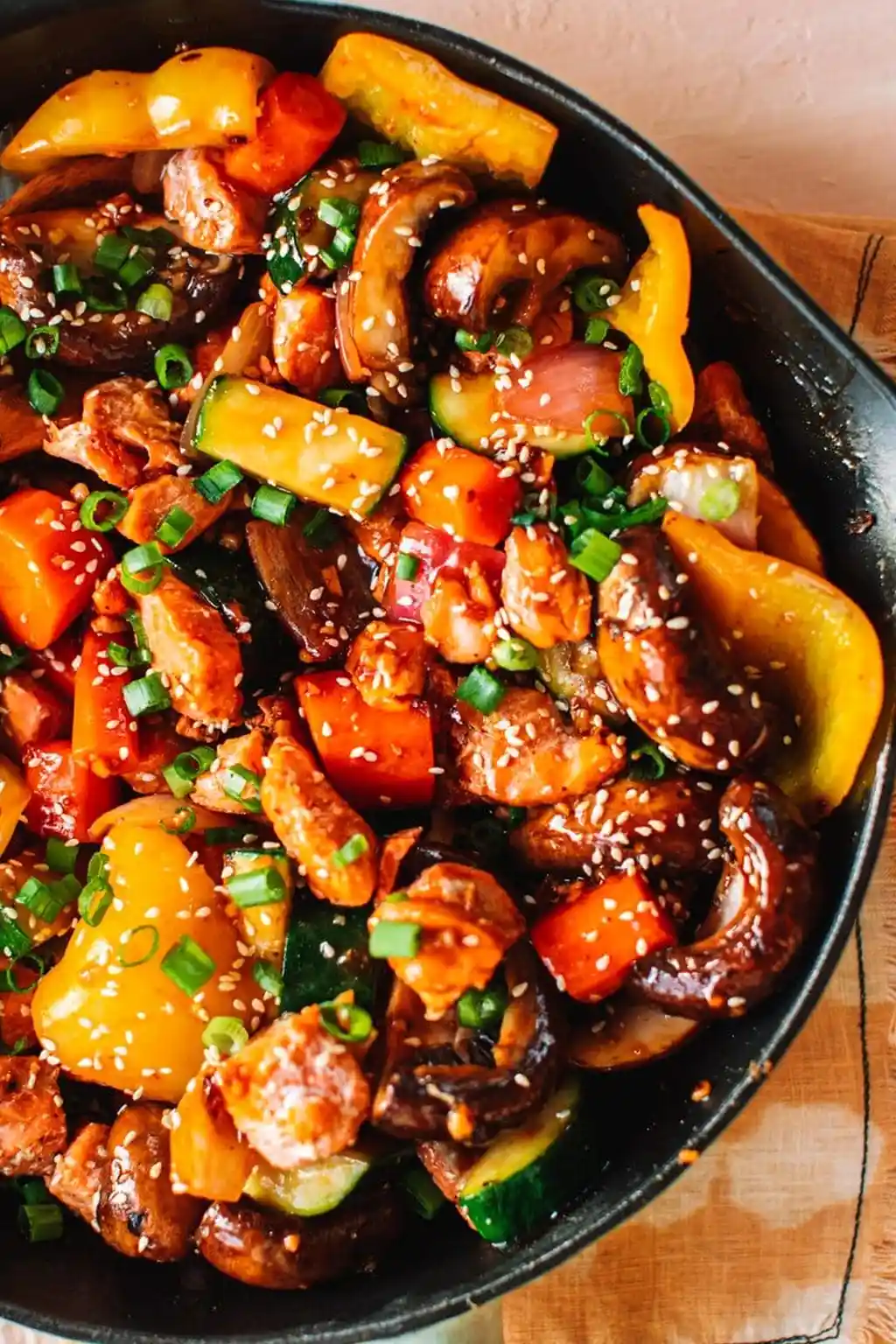
List of ingredients
- 1 lb salmon
- Kosher salt
- Black pepper
- 1 small yellow onion
- 1 yellow bell pepper
- 1 zucchini
- 8 mushrooms
- 3 carrots
- 2 tsp cornstarch
- ¼ cup soy sauce
- 2 tbsp honey
- 2-3 tsp sriracha
- 2 tsp sesame oil
- 5 garlic cloves
- 2 tbsp olive oil
- 3 green onions
- Sesame seeds
step-by-step instructions
- Step: Remove the skin on the salmon and cut it into 1-inch, bite-sized cubes. Sprinkle the salmon evenly with salt and pepper.
- Step: Chop onion, pepper, zucchini, mushrooms, and carrots and set aside.
- Step: In a small bowl, whisk together corn starch, soy sauce, honey, sriracha, sesame oil, garlic cloves and 2 tbsp of water and set aside.
- Step: Heat a large wok or skillet over medium heat and add the olive oil. Add in salmon cubes and cook for 3-5 minutes, or until cooked to medium. Gently stir and shake the pan to move salmon. Remove the salmon and place in a separate bowl. Tent to keep warm.
- Step: Add the vegetables to the same wok or skillet and cook over medium heat for 5-7 minutes, until they are tender but still crisp.
- Step: Add the soy sauce mixture, reduce heat to medium-low and cook for an additional 2-3 minutes, or until the sauce has thickened and turns glossy.
- Step: Gently add the salmon back in and toss lightly to combine.
- Step: Garnish with green onions and sesame seeds.
Refining Your Stir Fry Technique
Achieving the Perfect Sear on Salmon
When cooking delicate fish like salmon, the temperature of your pan is the most critical factor. Make sure your skillet or wok is fully preheated before adding the oil and salmon, as this helps create that necessary golden crust without overcooking the inside. If the pan isn’t hot enough, the fish may stick to the surface and break apart when you try to turn it.
The Importance of Consistent Vegetable Sizes
Uniformity in your vegetable cuts ensures that everything finishes cooking at the same time. Aim to cut your carrots and onions roughly the same size as your salmon chunks, which provides a cohesive mouthfeel in every bite. If your carrots are cut too thick, they will remain raw while the zucchini turns mushy, so taking the time to chop with intention is a key step.
Customization and Variations
Adjusting the Vegetable Selection
If you prefer a different flavor profile, feel free to swap the vegetables based on what is available in your pantry. Snap peas, broccoli florets, or baby bok choy make excellent additions that pair well with the teriyaki-style sauce. Always remember that denser vegetables like carrots should be added to the pan first to ensure they have enough time to soften before the rest of the ingredients are finished.
Managing the Spice Level
The sriracha in this recipe provides a manageable level of heat, but you can certainly customize it to your preference. If you enjoy extra heat, try adding a pinch of crushed red pepper flakes during the sauce-making step or topping the dish with fresh sliced jalapeños. For those who prefer a milder flavor, you can reduce the sriracha or add a teaspoon of apple cider vinegar to brighten the sauce without adding additional spice.
Practical Serving Suggestions
Noodle Accompaniments
Serving this stir fry over noodles is a classic choice that helps absorb the extra sauce. Vermicelli rice noodles are particularly efficient because they only require soaking in hot water, making them the perfect companion for a quick 25-minute meal. For a heartier option, udon or ramen noodles can also be tossed directly into the pan during the final step to integrate them with the sauce.
Low-Carb Alternatives
If you are looking to keep the meal low-carb, cauliflower rice is the ideal substitute for traditional grain. You can serve the stir fry over a bed of steamed cauliflower rice, or even sauté the cauliflower rice in the pan with a little bit of garlic and ginger before serving. This keeps the calorie count lower while still providing a satisfying base for the saucy salmon and vegetable mixture.
Storage and Reheating Guidelines
Managing Leftover Stir Fry
If you have leftovers, store the mixture in an airtight container in the refrigerator for no more than three days. It is important to ensure the container is tightly sealed to maintain the moisture of the fish. Because salmon is sensitive to temperature changes, I do not recommend freezing this dish, as the texture of both the fish and the zucchini will degrade significantly upon thawing.
Reheating for Optimal Texture
To reheat, it is best to use a skillet over low heat rather than a microwave. Adding a small splash of water or vegetable broth to the pan can help thin out the sauce if it has thickened too much in the fridge. Gently heat the mixture until it is warmed through, ensuring you do not leave it on the heat for too long, which would result in dry, rubbery salmon.
Frequently Asked Questions
Can I use a different type of fish?
Yes, white fish varieties such as cod or halibut can be used in this recipe as a direct substitute for salmon. Keep in mind that these fish are even more delicate than salmon, so reduce the searing time slightly to prevent them from flaking apart during the tossing phase.
How can I make the sauce less salty?
Using a low-sodium soy sauce is the most effective way to control the salt content in this dish. Alternatively, you can dilute your standard soy sauce with a tablespoon of water or add a small amount of extra honey to balance the saltiness, though the latter will make the flavor profile sweeter.
Why is my sauce not thickening?
If your sauce remains runny, it is likely because the cornstarch was not fully dissolved or the pan was not hot enough. Ensure the cornstarch is whisked with cold water or broth before being added to the hot pan. If it still doesn’t thicken, you can make a quick slurry of one teaspoon of cornstarch mixed with one teaspoon of water and stir it into the simmering sauce.
Can I prepare the ingredients ahead of time?
Yes, prepping your vegetables and mixing the sauce ahead of time is a great way to save energy on busy days. Store the chopped vegetables in containers in the fridge and keep the sauce in a sealed jar until you are ready to cook. This preparation allows you to complete the entire cooking process in under 10 minutes when you finally step into the kitchen.
Print
Easy Salmon Stir Fry with Vegetables
- Total Time: 25 minutes
- Yield: 4 servings 1x
- Diet: Pescatarian
Description
Salmon Stir Fry is a colorful and delicious weeknight dinner that’s totally customizable and ready in less than 25 minutes! This savory stir fry and salmon recipe gets a gentle toss with a savory sauce that pairs perfectly with your favorite noodles or cauliflower fried rice.
Ingredients
- 1 lb salmon
- Kosher salt
- Black pepper
- 1 small yellow onion
- 1 yellow bell pepper
- 1 zucchini
- 8 mushrooms
- 3 carrots
- 2 tsp cornstarch
- ¼ cup soy sauce
- 2 tbsp honey
- 2–3 tsp sriracha
- 2 tsp sesame oil
- 5 garlic cloves
- 2 tbsp olive oil
- 3 green onions
- Sesame seeds
Instructions
- Step: Remove the skin on the salmon and cut it into 1-inch, bite-sized cubes. Sprinkle the salmon evenly with salt and pepper.
- Step: Chop onion, pepper, zucchini, mushrooms, and carrots and set aside.
- Step: In a small bowl, whisk together corn starch, soy sauce, honey, sriracha, sesame oil, garlic cloves and 2 tbsp of water and set aside.
- Step: Heat a large wok or skillet over medium heat and add the olive oil. Add in salmon cubes and cook for 3-5 minutes, or until cooked to medium. Gently stir and shake the pan to move salmon. Remove the salmon and place in a separate bowl. Tent to keep warm.
- Step: Add the vegetables to the same wok or skillet and cook over medium heat for 5-7 minutes, until they are tender but still crisp.
- Step: Add the soy sauce mixture, reduce heat to medium-low and cook for an additional 2-3 minutes, or until the sauce has thickened and turns glossy.
- Step: Gently add the salmon back in and toss lightly to combine.
- Step: Garnish with green onions and sesame seeds.
Notes
Store in an airtight container in the fridge and enjoy within 3 days. Reheat in a skillet over low heat until warmed through.
- Prep Time: 10 minutes
- Cook Time: 15 minutes
- Category: Savory
- Method: Stir Fry
- Cuisine: Asian
Nutrition
- Serving Size: 1 serving
- Calories: 349 kcal
- Sugar: 14 g
- Sodium: 955 mg
- Fat: 17 g
- Saturated Fat: 2 g
- Unsaturated Fat: 13 g
- Trans Fat: 0 g
- Carbohydrates: 24 g
- Fiber: 3 g
- Protein: 27 g
- Cholesterol: 62 mg