This homemade ramen soup offers a quick and healthy way to satisfy noodle cravings in the comfort of your own kitchen. By combining fresh, vibrant vegetables with a savory, customizable broth, you create a balanced meal that feels both nourishing and comforting. This recipe is designed to be prepared in about thirty minutes, making it an excellent choice for a busy weeknight dinner.
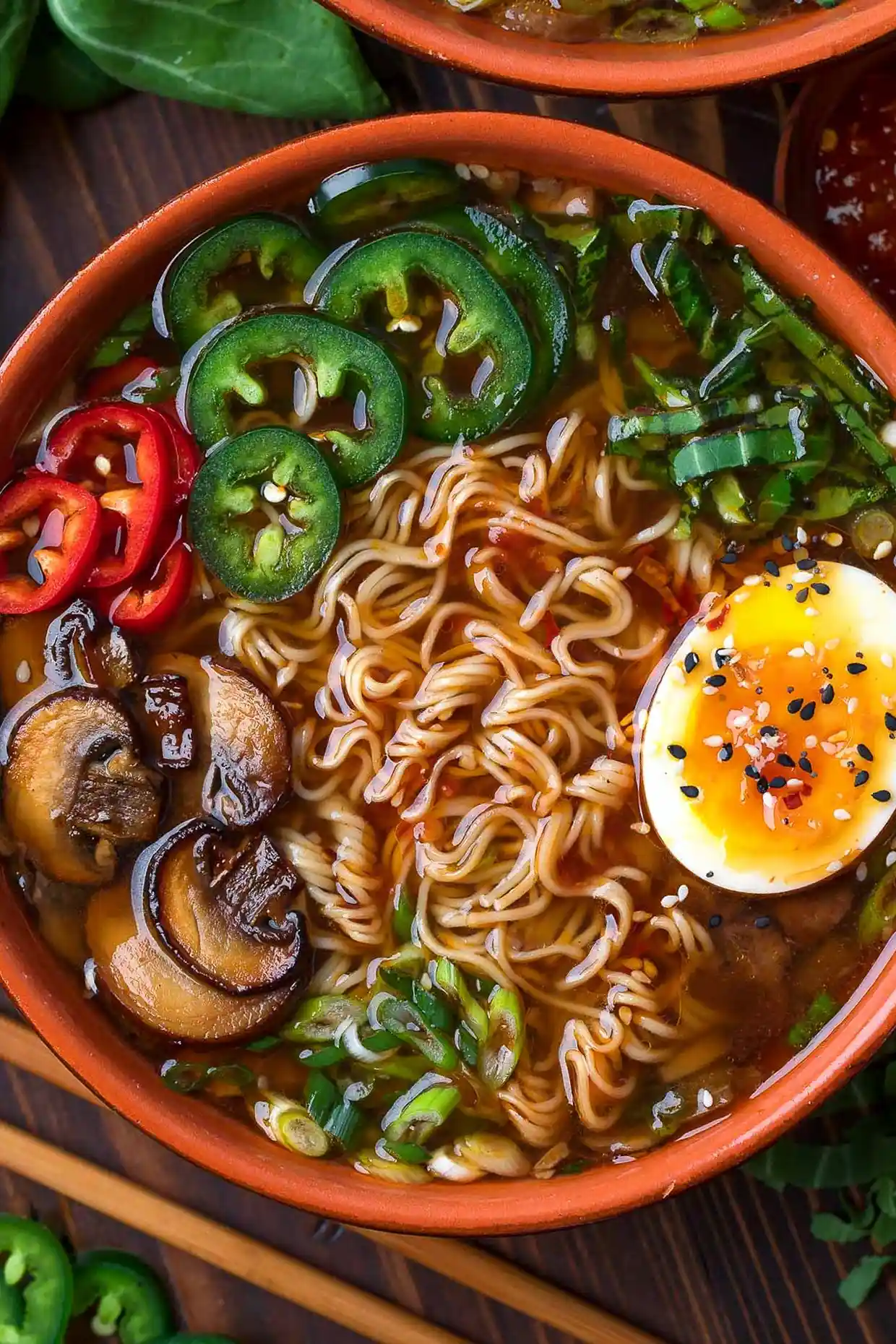
List of ingredients
- 6-8 oz sliced baby portobello mushrooms
- 2 cloves garlic
- 1 jalapeño
- 4 green onion stalks
- 1-2 tsp avocado oil
- 1 tsp sesame oil
- 4 cups low-sodium vegetable broth
- 1 TBSP Sriracha
- 1-2 TBSP low-sodium soy sauce
- 4 oz uncooked ramen noodles
step-by-step instructions
- Prep: Measure out all ingredients, prep veggies, and set aside chosen toppings.
- Prepare Peppers: Thinly slice jalapeño for more spice, or remove seeds and mince for less spice.
- Aromatics: Peel and mince garlic; slice green onions, separating white and green parts.
- Sauté: Heat avocado oil in a large pot. Sauté mushrooms until golden. Remove and set aside some mushrooms for garnish.
- Flavor Base: Add sesame oil, jalapeños, and white parts of green onions to the pot. Sauté for 4 minutes. Add garlic and cook for 30 seconds.
- Simmer Broth: Add vegetable broth, soy sauce, and Sriracha. Bring to a boil, then reduce to low and cover.
- Cook Noodles: In a separate pot, boil water and cook ramen noodles according to package instructions.
- Combine: Drain noodles and add to the broth. Remove from heat and adjust seasoning with extra Sriracha or soy sauce if desired.
- Serve: Divide into bowls and top with reserved mushrooms, green onion tops, and preferred veggie toppings.
Practical Preparation Strategies
Maintaining Texture in Toppings
To keep your ramen feeling professional, add delicate vegetables like baby bok choy or bean sprouts right at the very end of the cooking process. Adding them too early often leads to mushy textures that detract from the overall quality of the dish. Flash-blanching harder vegetables like carrots in the broth ensures they stay crisp-tender rather than turning soft.
Balancing the Flavor Profile
The secret to a great ramen broth lies in the balance between salt, spice, and acidity. If your broth tastes a bit flat after combining, a small splash of rice vinegar or a tiny drop of lime juice can brighten the flavors significantly. Always taste the broth only after the soy sauce has been incorporated, as the sodium content can vary between different brands.
Selecting the Best Noodle Variety
When selecting ramen noodles, look for options that retain their structure without becoming gummy in hot liquid. Dried wheat noodles often work better than soft varieties for home cooks who might be prepping ahead of time. If you find your noodles are softening too quickly, rinse them under cold water after boiling before adding them to the final bowls to remove excess surface starch.
Customizing Your Bowl
Incorporating Proteins for Nutrition
For a heartier meal, consider adding firm tofu cubes that have been quickly seared in a pan with a little ginger. If you are not strictly plant-based, soft-boiled eggs are a traditional and protein-rich addition that provides a wonderful creamy mouthfeel when the yolk is stirred into the broth. Simply boil an egg for six and a half minutes, then shock it in an ice bath to ensure a jammy center.
Elevating the Heat Levels
If you enjoy a very spicy experience, do not rely solely on the Sriracha in the broth base. Infusing your own chili oil with star anise or peppercorns can add a complex, slow-burning heat that lingers. For those who prefer a brighter, cleaner heat, top your finished bowl with extra serrano peppers or thinly sliced Thai chilies.
Utilizing Seasonal Vegetables
Ramen is a versatile platform that adapts well to whatever is in your produce drawer. In the spring, try adding tender asparagus tips or snap peas for a fresh snap. During colder months, hearty additions like roasted squash or thick-cut kale leaves hold up beautifully to the hot, savory broth without losing their shape.
Storage and Reheating Advice
Storing Leftover Components
If you expect to have leftovers, store the noodles separately from the broth whenever possible. Noodles tend to soak up the liquid and become bloated if left sitting in the soup for more than a few hours. Keep the broth in an airtight container in the refrigerator for up to three days, and boil a fresh batch of noodles when you are ready to serve again.
Reheating the Soup Base
When reheating your broth, do so slowly on the stovetop over medium heat to prevent the aromatic oils from burning or separating. Avoid boiling the broth aggressively, as this can cause the delicate flavors of the garlic and ginger to dissipate. If the broth seems too salty after storage, simply add a half-cup of water or unsalted vegetable stock to bring the seasoning back into balance.
Frequently Asked Questions
Can I make this soup ahead of time for work lunches?
Yes, this is an excellent meal-prep option. Pack the broth and cooked vegetables in one container and the cooked noodles in another to prevent the noodles from becoming overly soft. When you are ready to eat, simply heat the broth in the microwave or on a burner, then stir in the noodles and fresh toppings.
Is there a way to make the broth thicker?
If you prefer a richer, thicker consistency, you can whisk in a teaspoon of cornstarch mixed with a tablespoon of cold water into the simmering broth. Allow the mixture to boil for one minute after adding the slurry to ensure the starch is fully activated. This creates a luxurious mouthfeel that coats the noodles more effectively.
What is the best way to handle bok choy?
The best way to prepare bok choy for ramen is to separate the leaves from the stalks, as they cook at different rates. Slice the thick, crunchy stems into thin strips and add them early in the simmering process. Add the leafy green portions during the final minute of cooking, as they wilt almost instantly when exposed to the heat of the soup.
How do I prevent the noodles from clumping together?
A common issue when boiling noodles for ramen is sticking. To combat this, ensure you are using a large enough pot with plenty of water so the noodles have room to move as they expand. Once drained, a quick toss with a tiny amount of sesame oil will act as a lubricant, preventing them from fusing together while you finish preparing your garnish and toppings.
Why should I use low-sodium vegetable broth?
Using a low-sodium base gives you complete control over the final salt level of the dish. Many store-bought vegetable broths are high in sodium, and when combined with soy sauce, they can quickly become overwhelming. Starting with low-sodium broth allows you to season the bowl incrementally to achieve the perfect depth of flavor without the risk of an overly salty result.
Print
Easy Homemade Veggie Ramen Soup
- Total Time: PT34M
- Yield: 2 servings 1x
- Diet: Vegetarian
Description
Craving oodles of noodles? Get your ramen fix with this delicious and easy-to-customize Veggie Ramen Soup recipe!
Ingredients
- 6–8 oz sliced baby portobello mushrooms
- 2 cloves garlic
- 1 jalapeño
- 4 green onion stalks
- 1–2 tsp avocado oil
- 1 tsp sesame oil
- 4 cups low-sodium vegetable broth
- 1 TBSP Sriracha
- 1–2 TBSP low-sodium soy sauce
- 4 oz uncooked ramen noodles
Instructions
- Prep: Measure out all ingredients, prep veggies, and set aside chosen toppings.
- Prepare Peppers: Thinly slice jalapeño for more spice, or remove seeds and mince for less spice.
- Aromatics: Peel and mince garlic; slice green onions, separating white and green parts.
- Sauté: Heat avocado oil in a large pot. Sauté mushrooms until golden. Remove and set aside some mushrooms for garnish.
- Flavor Base: Add sesame oil, jalapeños, and white parts of green onions to the pot. Sauté for 4 minutes. Add garlic and cook for 30 seconds.
- Simmer Broth: Add vegetable broth, soy sauce, and Sriracha. Bring to a boil, then reduce to low and cover.
- Cook Noodles: In a separate pot, boil water and cook ramen noodles according to package instructions.
- Combine: Drain noodles and add to the broth. Remove from heat and adjust seasoning with extra Sriracha or soy sauce if desired.
- Serve: Divide into bowls and top with reserved mushrooms, green onion tops, and preferred veggie toppings.
Notes
Recipe yields 2 servings. Use your favorite ramen-style noodles or fresh ramen. Adjust seasonings and toppings based on personal preference.
- Prep Time: PT20M
- Cook Time: PT14M
- Category: Main Course, Soup
- Method: Stovetop
- Cuisine: Vegetarian
Nutrition
- Serving Size: 1 bowl
- Calories: 296 kcal
- Sugar: 5 g
- Sodium: 896 mg
- Fat: 5 g
- Saturated Fat: 1 g
- Unsaturated Fat: 3 g
- Trans Fat: 0 g
- Carbohydrates: 55 g
- Fiber: 4 g
- Protein: 14 g
- Cholesterol: 0 mg