Making restaurant-quality shrimp fried rice at home is a quick, rewarding process that allows you to control the ingredients and quality of your meal. By using chilled, day-old rice and high-heat cooking techniques, you can achieve that distinct savory flavor and perfect texture without needing to order takeout. This dish serves as an excellent weeknight dinner that comes together in under thirty minutes.
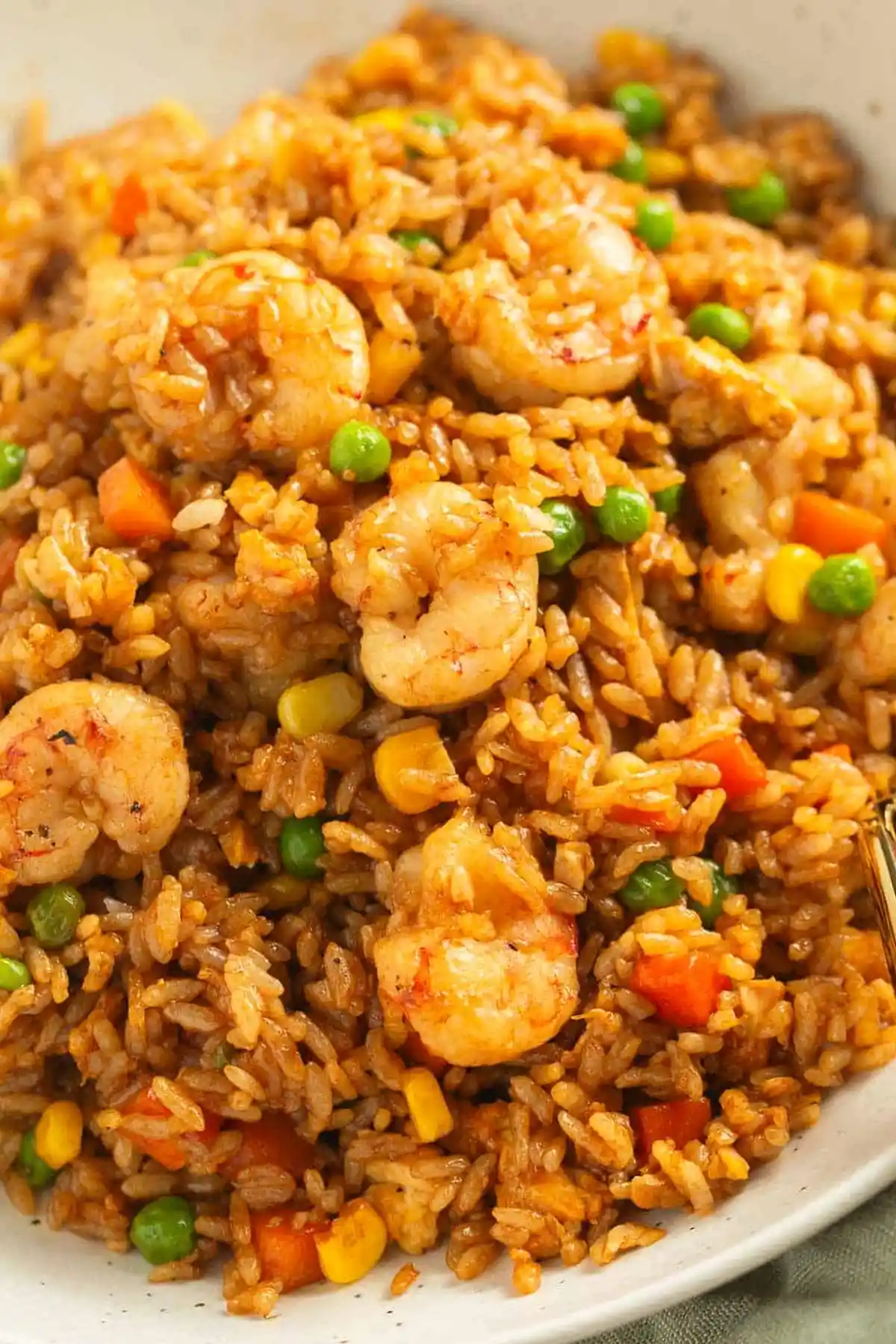
List of ingredients
- 3 cups day old white rice
- 4 large eggs
- 1 ½ pounds frozen shrimp, thawed
- 4 tablespoons butter, divided
- 1 medium onion, diced
- 1 cup frozen corn, thawed
- 1 cup frozen peas and carrots mix, thawed
- 1/2 cup low sodium soy sauce
- Splash of dark soy sauce (optional)
- Salt and pepper, to taste
step-by-step instructions
- Step: Reheat your leftover rice in the microwave for 2 minutes to warm it through so it’s easy to break up in the wok. Set aside.
- Step: In a wok, use a little cooking oil then cook your eggs to a scramble. Remove the scrambled eggs from wok and set aside in a bowl.
- Step: In the same wok, add cooking oil then add your shrimp to the wok. You may have to do this in two batches to ensure that the shrimp doesn’t steam but actually browns on the exterior. Season with salt and pepper. Shrimp cooks fast so watch it! 2-3 minutes on each side then remove and set aside on a plate.
- Step: Add 1 tablespoon of butter to the wok then add onion and cook until onion is translucent and soft, about 3-4 minutes.
- Step: Add the warmed rice and break it up with your spatula, as needed. Add the corn and peas and carrot mix to the rice along with the scrambled eggs. Keep folding the rice in with the veggies until well-combined.
- Step: Pour the soy sauce over the rice slowly, mixing and tasting until you reach the desired flavor.
- Step: Finally, add the shrimp and the remaining butter. Remove from heat and continue to mix until all ingredients are evenly distributed and butter has fully melted.
- Step: Serve warm and enjoy!
Refining Your Stir-Fry Technique
Managing Moisture Content for Crispy Rice
The secret to successful fried rice lies in removing as much excess moisture as possible before the rice hits the pan. Using cold, day-old rice is ideal because the refrigeration process dries out the outer layers of the starch. If you must use freshly cooked rice, spread it out on a large baking sheet and allow it to air dry for thirty minutes before cooking to prevent a soggy final result.
Achieving Even Heat Distribution
A large, heavy-bottomed wok or skillet is critical because it provides the surface area necessary for the ingredients to make direct contact with the heat. When the pan is properly heated, the rice undergoes a minor transformation known as the Maillard reaction, which creates those desirable slightly crispy, charred edges. Avoid overcrowding the pan with too many ingredients at once, as this traps steam and results in boiled or mushy ingredients rather than stir-fried ones.
Customization and Flavor Variations
Incorporating Protein Alternatives
While shrimp is the star of this dish, you can easily adapt the protein components based on what you have available. Shredded cooked chicken, seared cubes of tofu, or small pieces of lean beef all work well with the existing vegetable and rice base. If choosing a different protein, ensure it is either pre-cooked or chopped into small, bite-sized pieces so it cooks through at the same rate as the shrimp.
Adding Fresh Aromatic Elements
To brighten the flavor profile, consider folding in fresh aromatics right at the end of the cooking process. Finely sliced green onions, freshly grated ginger, or a small amount of minced garlic can be added during the final stages of tossing. These additions provide a sharp, fresh contrast to the deep, savory notes of the soy sauce and butter.
Proper Storage and Reheating
Maintaining Texture During Storage
Store leftover shrimp fried rice in an airtight container within the refrigerator for up to five days. To keep the rice from drying out during the storage period, ensure the container is filled appropriately to minimize air exposure. The cold environment will naturally harden the rice slightly, but this is expected and can be easily reversed during the reheating process.
Reviving Leftovers in the Microwave
When reheating, moisture is your best friend to prevent the rice from becoming brittle. Place a damp paper towel over the bowl before microwaving to create a gentle steam environment inside the container. Heat the rice in thirty-second intervals, stirring in between to ensure even warming and to prevent the shrimp from becoming overcooked or rubbery.
Frequently Asked Questions
Why did my rice turn out mushy?
Mushy rice usually occurs when the rice grains contain too much moisture or when the heat in the wok is too low. Always use day-old rice, and ensure your pan is at the highest heat setting possible throughout the stir-frying process. Adding too many cold, wet vegetables can also release excess liquid, so ensure your corn, peas, and carrots are fully thawed and drained.
Can I use brown rice for this recipe?
Yes, you can substitute brown rice, though the texture will be nuttier and slightly firmer than traditional white rice. Brown rice contains more fiber and structural integrity, meaning it won’t absorb the soy sauce quite as quickly as white rice. You may need to add a splash of water or a little more butter to help the flavor penetrate the heartier grains.
Is there a way to make this spicier?
You can certainly increase the heat by adding diced chili peppers, a dash of dried chili flakes, or a spoonful of a spicy chili-garlic paste. Add these ingredients at the same time you cook the onions to allow their heat to infuse into the base of the dish. Start with a small amount, as the intensity of spice can be amplified by the heat of the wok.
How do I prevent the shrimp from becoming rubbery?
Shrimp only requires a few minutes to cook, and they will continue to heat up once they are returned to the pan with the rice. Remove the shrimp from the wok as soon as they turn pink and opaque to prevent them from drying out. By finishing the cooking process with the residual heat of the rice and butter, you ensure they remain succulent.
Ingredient Quality and Selection
Selecting the Right Soy Sauce
Using a combination of regular and dark soy sauce is a common professional trick for fried rice. Regular soy sauce provides the primary salt and savory profile, while dark soy sauce is much thicker, slightly sweeter, and significantly darker, providing that classic golden-brown aesthetic. If you only have one type available, proceed as usual, as the flavor impact is more important than the final color.
Importance of Thawing Frozen Ingredients
When using frozen shrimp, corn, and pea-carrot mixtures, it is vital to fully thaw and drain them before they touch the hot pan. Excess water trapped in frozen vegetables will lower the temperature of your wok, preventing the ingredients from browning properly. Pat the shrimp dry with paper towels after thawing, as removing surface moisture is the key to getting a nice sear rather than steaming the protein.
Print
Easy Homemade Shrimp Fried Rice
- Total Time: 30 minutes
- Yield: 6 servings 1x
- Diet: Pescatarian
Description
Loaded with succulent shrimp and a medley of vegetables, this fried rice is so much better than take-out and you get exactly what you’re paying for!
Ingredients
- 3 cups day old white rice
- 4 large eggs
- 1 ½ pounds frozen shrimp, thawed
- 4 tablespoons butter, divided
- 1 medium onion, diced
- 1 cup frozen corn, thawed
- 1 cup frozen peas and carrots mix, thawed
- 1/2 cup low sodium soy sauce
- Splash of dark soy sauce (optional)
- Salt and pepper, to taste
Instructions
- Step: Reheat your leftover rice in the microwave for 2 minutes to warm it through so it’s easy to break up in the wok. Set aside.
- Step: In a wok, use a little cooking oil then cook your eggs to a scramble. Remove the scrambled eggs from wok and set aside in a bowl.
- Step: In the same wok, add cooking oil then add your shrimp to the wok. You may have to do this in two batches to ensure that the shrimp doesn’t steam but actually browns on the exterior. Season with salt and pepper. Shrimp cooks fast so watch it! 2-3 minutes on each side then remove and set aside on a plate.
- Step: Add 1 tablespoon of butter to the wok then add onion and cook until onion is translucent and soft, about 3-4 minutes.
- Step: Add the warmed rice and break it up with your spatula, as needed. Add the corn and peas and carrot mix to the rice along with the scrambled eggs. Keep folding the rice in with the veggies until well-combined.
- Step: Pour the soy sauce over the rice slowly, mixing and tasting until you reach the desired flavor.
- Step: Finally, add the shrimp and the remaining butter. Remove from heat and continue to mix until all ingredients are evenly distributed and butter has fully melted.
- Step: Serve warm and enjoy!
Notes
Day-old rice is best for texture. If your wok is not large enough, cook the shrimp in batches to ensure browning rather than steaming.
- Prep Time: 15 minutes
- Cook Time: 15 minutes
- Category: Main Course
- Method: Stir Fry
- Cuisine: Chinese
Nutrition
- Serving Size: 1 serving
- Calories: 351 kcal
- Sugar: 1 g
- Sodium: 1530 mg
- Fat: 12 g
- Saturated Fat: 6 g
- Unsaturated Fat: 4 g
- Trans Fat: 0.3 g
- Carbohydrates: 35 g
- Fiber: 2 g
- Protein: 25 g
- Cholesterol: 272 mg