This efficient meal combines protein, vegetables, and grains in a single pan for a complete dinner. It is a fast-cooking recipe that allows you to prepare a filling meal in just 30 minutes.
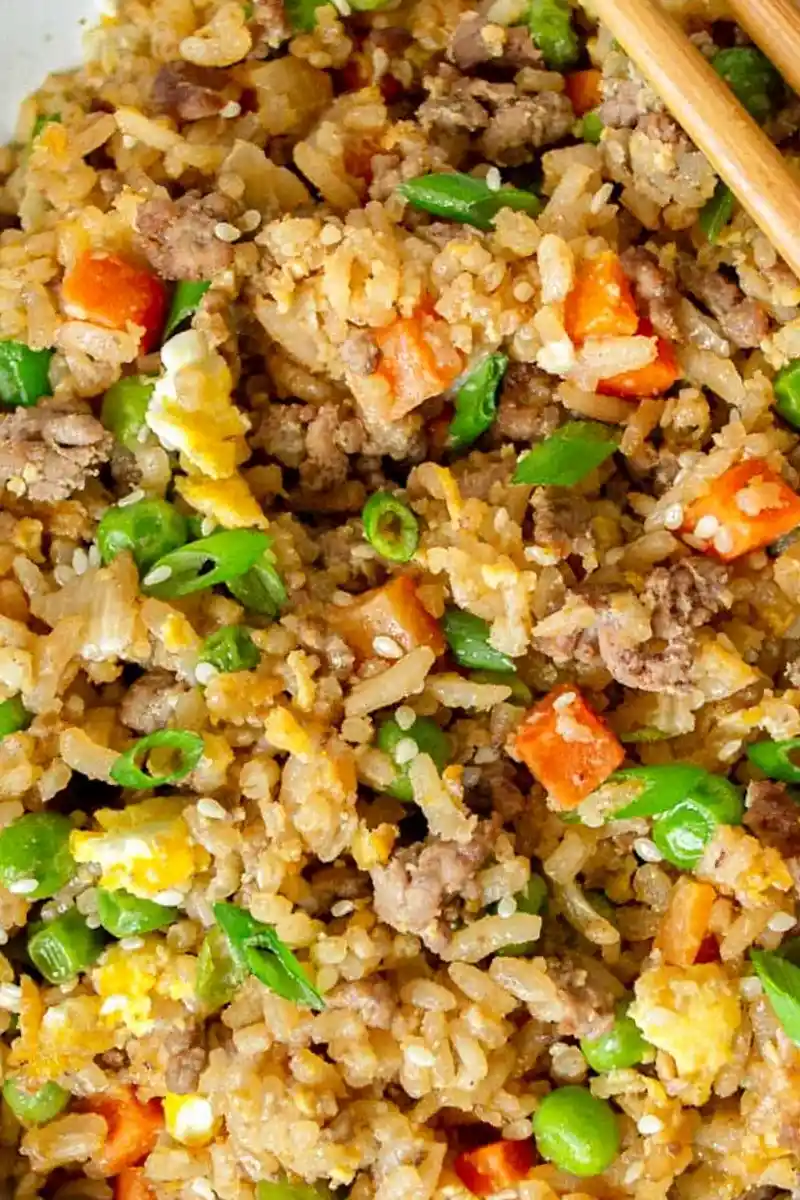
List of ingredients
- 1/4 cup soy sauce – provides the primary salty and savory base.
- 1 tablespoon honey (replacement for mirin) – adds a subtle sweetness and gloss.
- 1 tablespoon honey – balances the saltiness of the soy sauce.
- Olive oil – used to coat the pan and brown the meat.
- 1 pound lean ground beef – the main protein source.
- 3 tablespoons unsalted butter (divided) – adds richness and helps with browning.
- 1/2 white or yellow onion – provides aromatic flavor and texture.
- 1 cup frozen peas and carrots – a convenient mix of vegetables.
- 2 teaspoons minced garlic – adds a pungent, savory depth.
- 1/2 teaspoon grated ginger – provides a warm, zesty note.
- 2 eggs (beaten) – adds protein and color to the rice.
- Salt and pepper – used for basic seasoning throughout.
- 4 cups cooked white rice (preferably cold day-old rice) – the essential base for frying.
- 1 tablespoon sesame oil – gives the dish an authentic nutty finish.
- 2 green onions, chopped (optional) – for a fresh, sharp garnish.
- 1 tablespoon sesame seeds (optional) – adds a slight crunch and visual appeal.
step-by-step instructions
- Prepare the sauce: In a small bowl, whisk together the soy sauce, the honey used as a mirin replacement, and the additional tablespoon of honey. Set this mixture aside for later use.
- Brown the beef: Heat a swirl of olive oil in a large heavy duty skillet over medium heat until it shimmers. Add the ground beef, breaking it into smaller pieces with a spatula, allowing it to cook undisturbed for a few minutes before flipping to ensure it is well browned on all sides. Season lightly, drain any excess fat, and remove the beef to a plate.
- Sauté the onions: Add half of the butter to the pan, then add the chopped white onion. Cook for about three minutes until the onion becomes softened and translucent.
- Cook the vegetables: Add the frozen peas and carrots and continue cooking for about two minutes until softened. Stir in the minced garlic and grated ginger, heating for about 30 seconds until fragrant.
- Scramble the eggs: Push the vegetables to the side of the pan and pour in the beaten eggs. Use a spatula to scramble the eggs into smaller pieces until they are mostly set, then push them to the side with the vegetables and season both with salt and pepper.
- Fry the rice: Turn the heat up to high and melt the remaining butter. Add the cooked white rice, spreading it across the pan and letting it cook undisturbed for several minutes to create crispy bits.
- Combine and finish: Return the browned ground beef to the pan and toss the vegetables with the rice. Pour in the soy sauce mixture and stir for a few minutes until the rice is well combined and has absorbed the sauce.
- Garnish: Drizzle the dish with sesame oil and garnish with chopped green onions and sesame seeds if desired before serving.
Tips for Optimal Rice Texture
Use Day-Old Refrigerated Rice
Rice that has been chilled overnight is the best choice because the grains dry out. This prevents the rice from clumping and allows it to fry instead of steaming. Freshly cooked rice contains too much surface moisture, which often results in a mushy consistency.
Apply High Heat for Searing
Turning the heat to high before adding the rice is essential for achieving a restaurant-style sear. This high temperature creates the Maillard reaction, which produces the desired crispy edges on the grains. Avoid lowering the heat once the rice is in the pan to keep the texture firm.
Avoid Over-Stirring the Grains
Allow the rice to sit undisturbed in the butter for a few minutes before stirring. This technique creates concentrated areas of crispiness rather than just warming the rice through. Excessive stirring can break the grains and release too much starch, leading to a gummy texture.
Protein and Ingredient Substitutions
Using Tamari for Gluten-Free Needs
If you require a gluten-free version, replace the soy sauce with an equal amount of tamari. Tamari provides a similar salty, fermented flavor profile without the wheat content. Ensure the tamari brand used is certified gluten-free for strict dietary requirements.
Alternative Ground Meats
While lean ground beef is the primary protein, ground turkey or ground chicken can be used as leaner alternatives. When using poultry, you may need to add an extra tablespoon of butter or oil since these meats have less natural fat for browning. Adjust the salt slightly to compensate for the milder flavor of poultry.
Swapping Frozen for Fresh Vegetables
Fresh carrots and peas can be used, but they require a longer cooking time than frozen versions. Dice the carrots very small to ensure they soften at the same rate as the onions. You may need to add a tablespoon of water to the pan to help them steam slightly before the sautéing process.
Substituting Honey with Maple Syrup
For a slightly different sweetness, maple syrup can replace the honey in the sauce mixture. Maple syrup has a distinct woody flavor that pairs well with soy sauce and beef. Use the same measurements to maintain the balance of the glaze.
Essential Kitchen Equipment
Benefits of a Carbon Steel Wok
A wok is ideal for this recipe because its sloping sides allow for easy tossing of ingredients. The shape focuses heat at the bottom, which is perfect for searing the rice and beef quickly. It also allows you to push ingredients to the sides while cooking the eggs in the center.
Using Heavy-Bottomed Skillets
If you do not have a wok, a heavy-bottomed stainless steel or cast iron skillet is the next best option. These materials retain heat more effectively than thin aluminum pans, preventing temperature drops when the cold rice is added. This ensures the rice crisps up rather than boiling in the butter.
Spatula Selection for Stir-Frying
A silicone or wooden spatula is recommended for moving the ingredients without scratching the pan. A flat-edged spatula is particularly useful for pressing the rice against the heat to create crispy bits. It also makes breaking up the ground beef and scrambling the eggs much easier.
Advanced Flavor Enhancements
The Role of Sesame Oil
Sesame oil is added at the very end because its aromatic compounds are volatile and break down under high heat. Drizzling it as a finishing touch preserves the nutty, toasted scent. This is the key ingredient that provides the characteristic aroma of takeout fried rice.
Balancing Sweet and Salty
The combination of soy sauce and honey creates a balanced glaze that coats each grain of rice. If the dish tastes too salty, add a small amount of additional honey or a pinch of brown sugar. Conversely, a squeeze of fresh lime juice can cut through the richness if the dish feels too heavy.
Adding Fresh Aromatics
Increasing the amount of fresh ginger or adding a crushed clove of garlic at the end can brighten the flavor. Freshly grated aromatics provide a sharper contrast to the savory beef. Be careful not to burn them, as burnt garlic becomes bitter and can ruin the sauce.
Incorporating Extra Heat
For those who prefer a spicy dish, add a teaspoon of Sriracha or chili garlic sauce to the soy mixture. Red pepper flakes can also be added during the vegetable sauté step. This adds a layer of warmth that complements the richness of the butter and beef.
Storage and Food Safety
Proper Cooling Procedures
Allow the fried rice to cool slightly before transferring it to a storage container. Placing steaming hot rice in a sealed container can create excess condensation, which makes the rice mushy when reheated. Spreading the rice on a baking sheet for 10 minutes can speed up the cooling process.
Airtight Storage Solutions
Store the leftovers in a glass or BPA-free plastic airtight container to prevent the rice from absorbing odors from the refrigerator. A tight seal also prevents the rice from drying out completely. This ensures the flavors remain concentrated and the texture stays consistent.
Maximizing Fridge Life
Ground beef fried rice typically stays fresh in the refrigerator for 3 to 4 days. Ensure the refrigerator is kept at or below 40 degrees Fahrenheit to prevent bacterial growth. If the rice develops an off-smell or slimy texture, it should be discarded immediately.
Best Reheating Methods
Stovetop Sautéing for Texture
The best way to reheat fried rice is in a skillet over medium-high heat. Add a small knob of butter or a teaspoon of oil to the pan before adding the rice. This restores the crispy texture that is often lost during refrigeration.
Microwave Steam Method
When using a microwave, place the rice in a bowl and sprinkle a teaspoon of water over the top. Cover the bowl with a damp paper towel or a microwave-safe lid. This creates a steam chamber that prevents the grains from becoming hard and rubbery.
Adding Moisture During Reheat
If the rice seems too dry after storage, add a splash of soy sauce or water during the reheating process. This re-hydrates the grains without making them soggy. Stir frequently to ensure the heat is distributed evenly through the beef and vegetables.
Troubleshooting Common Issues
Fixing Mushy Fried Rice
Mushy rice usually occurs when fresh rice is used or when too much sauce is added too quickly. To mitigate this, increase the heat and stir-fry the rice longer to evaporate excess moisture. In the future, ensure the rice is chilled for at least 12 hours before cooking.
Handling Stuck Eggs
If eggs stick to the pan, it is usually due to insufficient fat or a pan that was not hot enough. Add a small amount of extra butter or oil specifically for the egg-scrambling step. Using a non-stick skillet can also eliminate this problem entirely.
Reducing Excess Grease
Ground beef can release a significant amount of fat depending on the lean-to-fat ratio. Always drain the browned beef in a colander or pat it with paper towels before returning it to the pan. This prevents the final dish from becoming oily and heavy.
Preventing Burnt Garlic
Garlic burns much faster than onions and carrots. Always add the minced garlic and ginger during the last 30 seconds of the vegetable sauté process. If the pan is too hot, remove it from the heat momentarily before adding the aromatics.
Serving and Pairing Ideas
Fresh Garnish Options
Beyond green onions and sesame seeds, fresh cilantro or sliced radishes can add a crisp contrast. A sprinkle of toasted nori strips provides an added salty, umami element. These toppings add visual color and a fresh taste to the rich beef base.
Complementary Appetizers
Pair this dish with a side of steamed edamame or a crisp cucumber salad with rice vinegar. These lighter, refreshing options balance the density of the fried rice. A simple miso soup also serves as a traditional and warming accompaniment.
Beverage Pairings
A cold glass of iced green tea or a sparkling water with lemon complements the savory flavors. The acidity of lemon or the astringency of green tea helps cleanse the palate between bites of the buttery rice. Avoid heavy drinks that might clash with the soy-honey glaze.
Rice Variety Comparisons
Long Grain Jasmine Rice
Jasmine rice is the preferred choice for this recipe due to its floral aroma and slightly sticky yet distinct grains. It absorbs the soy-honey sauce well while maintaining its shape. It is the standard for most Chinese-style fried rice recipes.
Basmati Rice Options
Basmati rice provides a firmer texture and longer grains that are less likely to clump. It has a nuttier flavor than jasmine rice, which pairs exceptionally well with the ground beef. Ensure it is cooked until just tender to avoid over-softening.
Short Grain White Rice
Short grain rice is more starchy and tends to stick together more than long grain varieties. While it can be used, it requires more chilling time to ensure the grains separate during frying. It results in a denser, chewier fried rice experience.
Efficient Preparation Workflow
Pre-Mixing the Sauce
Combining the soy sauce, honey, and mirin replacement in a bowl beforehand prevents the rice from overcooking. If you measure ingredients while the rice is frying, the grains may burn or become mushy. Having the liquid ready allows for a quick and even coating.
Mise en Place for Fast Cooking
Stir-frying happens very quickly, so all vegetables should be chopped and measured before the heat is turned on. This is known as mise en place, and it ensures you can focus on the temperature of the pan. It prevents the panic of chopping onions while the beef is already browning.
Preparing the Beef First
Cooking the beef separately allows you to control the browning and manage the grease. If the beef is cooked with the vegetables, the pan may become too crowded, leading to steaming rather than searing. Removing the beef ensures a better crust on the meat.
Frequently Asked Questions
Can I use brown rice?
Yes, brown rice works well, though it has a nuttier flavor and a chewier texture. Ensure it is also chilled overnight to prevent clumping during the frying process.
Is butter necessary?
Butter is used to add a rich, savory flavor and to help the rice crisp up. You can substitute it with more olive oil or a neutral oil, but the final taste will be less rich and creamy.
How to cook rice specifically for this?
Cook your rice with slightly less water than usual to ensure the grains are firm. Once cooked, spread the rice on a tray to cool quickly before placing it in the fridge for several hours.
Can I double the batch?
Doubling the recipe is possible, but it is recommended to cook in two separate batches. Overcrowding a skillet with too much rice prevents the grains from searing and leads to a steamed, mushy texture.
Print
Easy Ground Beef Fried Rice
- Total Time: 30 minutes
- Yield: 4 servings 1x
- Diet: General
Description
Get dinner on the table quickly with our 30-minute Ground Beef Fried Rice.
Ingredients
- 1/4 cup soy sauce
- 1 tablespoon rice vinegar and a pinch of sugar
- 1 tablespoon honey
- Olive oil, to coat
- 1 pound lean ground beef
- 3 tablespoons unsalted butter (divided)
- 1/2 white or yellow onion
- 1 cup frozen peas and carrots
- 2 teaspoons minced garlic
- 1/2 teaspoon grated ginger
- 2 eggs (beaten)
- Salt and pepper
- 4 cups cooked white rice (preferably cold day-old rice)
- 1 tablespoon sesame oil
- 2 green onions, chopped (optional)
- 1 tablespoon sesame seeds (optional)
Instructions
- Step: In a small bowl, whisk together soy sauce, rice vinegar/sugar mixture, and honey. Set aside.
- Step: Heat a swirl of olive oil in a large heavy duty skillet over medium heat until it shimmers.
- Step: Add the ground beef to the skillet and break it up into smaller pieces with a spatula. Allow to cook undisturbed for a few minutes, then flip and continue to cook until the beef is well browned on all sides. Season lightly. Drain any excess fat from the ground beef and then remove it to a plate or bowl.
- Step: Add half the butter to the wok, then add the chopped white onion and cook until it starts to become softened and translucent, about three minutes.
- Step: Add the frozen peas and carrots and continue cooking until the veggies are softened, about two minutes. Add the garlic and ginger and heat until fragrant, about 30 seconds.
- Step: Push the veggies to the side and crack the eggs into the pan. Use a spatula to scramble the egg and cook, stirring occasionally, chopping them into smaller pieces, until mostly set, a few minutes. Push the eggs to the side with the veggies, and sprinkle both with salt and pepper.
- Step: Turn the heat up to high and melt the remaining butter. Add the rice, spreading it over the pan and allowing it to cook undisturbed for a few minutes. We want to get some crispy bits!
- Step: Add the ground beef back to the pan and toss the veggies with the rice. Add the soy sauce mixture and stir until it is well combined and soaked into the rice, another few minutes.
- Step: Drizzle with sesame oil and garnish with green onion and sesame seeds, if desired.
Notes
Substitute tamari for the soy sauce to make this fried rice gluten free. Leftover rice straight from the fridge is perfect for this dish, because it holds its shape best and crisps up nicely.
- Prep Time: 5 minutes
- Cook Time: 25 minutes
- Category: Main Course
- Method: Stir-fry
- Cuisine: Chinese
Nutrition
- Serving Size: 1 serving
- Calories: 567 kcal
- Sugar: 6 g
- Sodium: 980 mg
- Fat: 21 g
- Saturated Fat: 9 g
- Unsaturated Fat: 10 g
- Trans Fat: 1 g
- Carbohydrates: 58 g
- Fiber: 2 g
- Protein: 35 g
- Cholesterol: 175 mg