This blackened salmon recipe transforms simple filets into a restaurant-quality meal with a bold, smoky spice crust. By searing the fish at a high temperature, you create a complex, deep flavor profile while keeping the interior moist and tender, all in under fifteen minutes of active cooking time. It is a versatile dish that works perfectly for quick weeknight dinners or healthy lunches.
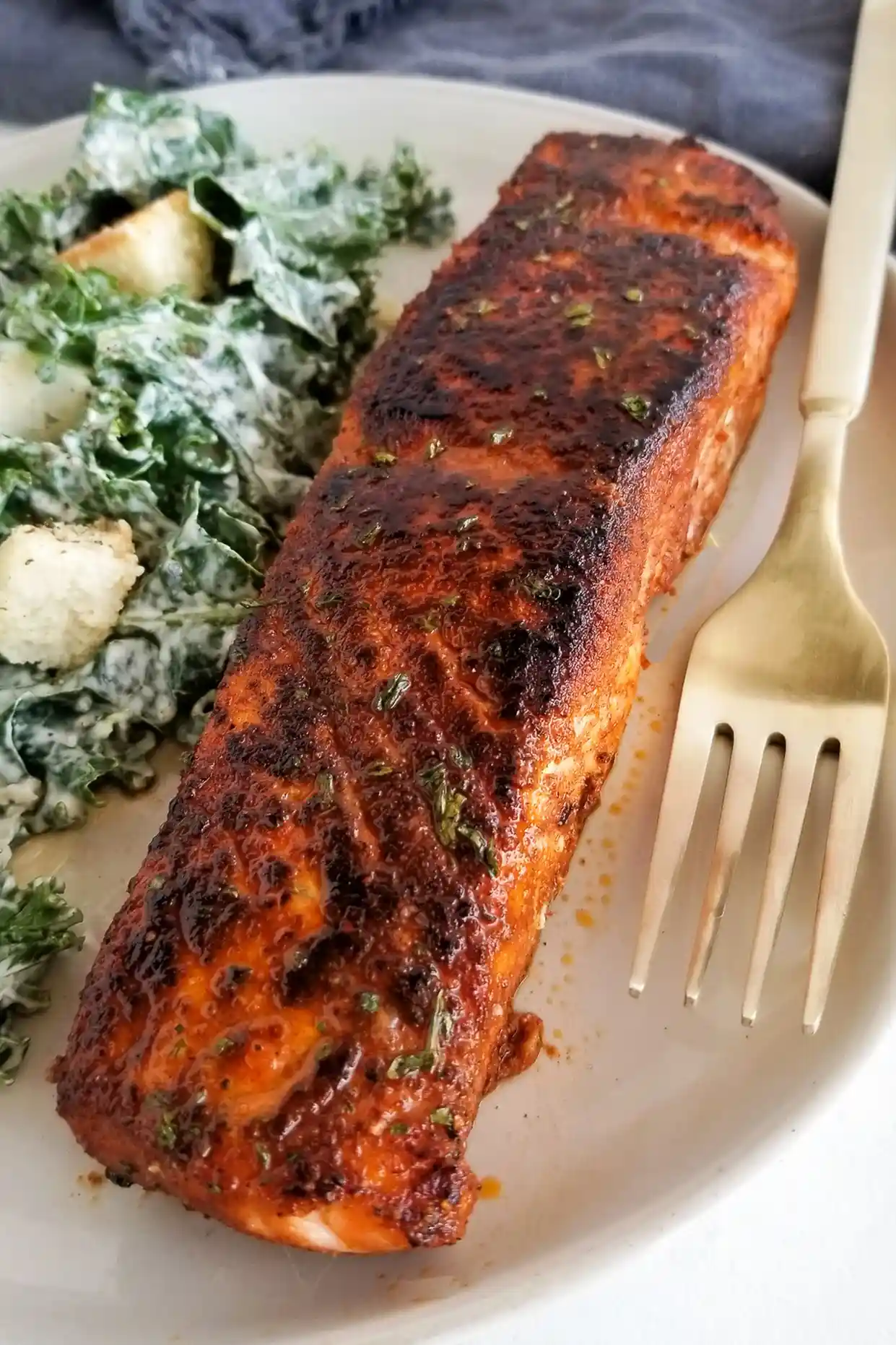
List of ingredients
- 4 6 oz. Salmon Filets
- 1/2 tbsp Oil
- 2 tbsp Lemon Juice
- 1 1/2 tbsp Paprika
- 1 tsp Salt
- 1 tsp Black Pepper
- 1 tsp Garlic Powder
- 1/2 tsp Cumin
- 1/2 tsp Cayenne Pepper
step-by-step instructions
- Step: In a small bowl, combine blackened seasoning. Rub seasoning all over the salmon generously.
- Step: Heat oil in a large nonstick skillet over medium-high heat. Once the skillet is nice and hot, carefully add salmon.
- Step: Cook the salmon for about 3-4 minutes until the bottom is blackened. Flip salmon over and cook for another 3-4 minutes until blackened. The salmon should be cooked through to an internal temperature of about 125 degrees.
- Step: When done, remove salmon from skillet. Squeeze a little lemon juice over cooked salmon.
- Step: Serve blackened salmon with your favorite side dishes, on a salad or on tacos!
Refining Your Sear Technique
Achieving The Proper Crust
The secret to a true blackening crust lies in the balance between high heat and the sugar content in your paprika. Ensure your skillet is genuinely hot before the fish hits the surface, as a tepid pan will cause the spices to steam rather than sear. If the spices look like they are smoking excessively, turn the heat down slightly, but maintain enough intensity to achieve that distinct, dark color.
Selecting The Right Skillet
While a high-quality nonstick skillet is convenient for easier cleanup, a cast iron pan is arguably superior for this recipe. Cast iron retains heat exceptionally well, ensuring that the temperature does not drop significantly when you add the cold salmon filets. This consistency is vital for getting a crispy exterior before the interior hits the point of overcooking.
Understanding Ingredient Roles
Managing The Spice Profile
Paprika acts as the canvas for this spice blend, while the cayenne and pepper provide the necessary heat. If you find the blend is too spicy, you can replace half of the cayenne pepper with extra sweet or smoked paprika. Smoked paprika can be a great addition if you want to emphasize a deeper wood-fire flavor in the final result.
Substituting Lemon Juice
If you lack fresh lemons, you can use a high-quality, unsweetened citrus concentrate, though fresh juice is strongly preferred for the aromatic oils in the rind. Some cooks enjoy adding a tiny splash of orange juice mixed with the lemon for a slightly sweeter finish. This acidity is non-negotiable, as the fat in the salmon requires a tart counterpoint to prevent the dish from feeling too heavy on the palate.
Creative Serving Suggestions
Incorporating Into Daily Meals
Blackened salmon is exceptionally versatile when it comes to plating. Try serving it over a bed of cilantro-lime quinoa or jasmine rice to absorb the spicy drippings. For a lighter approach, place the filets directly onto a bed of bitter greens like arugula or radicchio, which stand up well to the intense flavors of the fish.
Taco And Salad Variations
To serve this as a taco filling, flake the cooked salmon into smaller pieces once it has cooled slightly. Pair it with a cooling slaw made of shredded cabbage, carrots, and a lime-yogurt dressing to offset the heat. If you prefer a salad, serve the blackened filets whole over chilled romaine or spinach, topped with shaved radish and cucumber to add crunch.
Storage And Reheating
Maintaining Texture During Storage
Leftover salmon should be cooled completely before being placed in an airtight container to prevent sogginess. Store the filets in the refrigerator for no more than two days to ensure the best quality. When storing, try to avoid stacking the filets, as the pressure can soften the spice crust you worked hard to build.
Reheating Without Overcooking
Reheating salmon is a delicate process because the fish is already cooked to a tender point. The best method is to use a skillet over low heat with a tiny amount of water or vegetable broth to create steam, which keeps the fish moist. Microwave reheating should be avoided if possible, but if necessary, use a power level of 50 percent for thirty-second intervals until warmed through.
Common Questions Regarding Preparation
Is it safe to eat the charred bits?
There is a distinct difference between charred spices and burnt fish. The blackening process involves the dry spices hitting a hot surface, which caramelizes the paprika and garlic powder. As long as the fish itself is not carbonized, the dark, spicy coating is entirely safe and represents the primary source of the dish’s intense flavor.
Can I grill this salmon instead?
Yes, you can adapt this recipe for an outdoor grill, provided you have a high-heat setting. Preheat your grill grates thoroughly and lightly oil them before placing the salmon skin-side down initially. Because the grill provides more airflow than a skillet, the crust may not look exactly the same, but the flavor will be equally robust and well-developed.
What if my spices taste bitter?
Bitterness usually occurs if the garlic powder or black pepper burns beyond the point of caramelization. Ensure your heat is managed correctly by using a steady medium-high flame rather than the highest setting your stove offers. If the spices start turning black almost instantly, your pan is likely too hot, or you may be using too much oil which can cause the spices to fry and darken too rapidly.
Can I prepare the seasoning in advance?
You can mix the dry rub in large quantities and store it in a glass jar in a cool, dark cupboard. Because this recipe uses common spices, it is a convenient way to keep a pre-mixed blackened seasoning blend ready for any night of the week. Just ensure the jar is sealed tight to keep moisture out, which can cause the spices to clump together over time.
How do I know if the salmon is fully cooked?
The most accurate method is using a digital instant-read thermometer inserted into the thickest part of the filet. Once the temperature reaches 125 degrees, remove it from the heat. The salmon will continue to cook slightly from its own internal heat after being removed, reaching the ideal texture of 130 to 135 degrees, which is the sweet spot for flaky, tender fish.
Why does the salmon stick to the pan?
Sticking usually happens if the fish is moved before the crust has formed or if the pan is not hot enough. Always wait for the salmon to naturally release from the surface of the skillet when lifted gently with a spatula. If you have to force the fish to move, the crust is likely still in the process of forming, so give it an extra sixty seconds of undisturbed time.
Print
Easy Blackened Salmon Recipe
- Total Time: PT15M
- Yield: 4 servings 1x
- Diet: Pescatarian
Description
Flavorful salmon recipe made with blackened seasoning seared hot in a skillet and finished with fresh lemon juice.
Ingredients
- 4 6 oz. Salmon Filets
- 1/2 tbsp Oil
- 2 tbsp Lemon Juice
- 1 1/2 tbsp Paprika
- 1 tsp Salt
- 1 tsp Black Pepper
- 1 tsp Garlic Powder
- 1/2 tsp Cumin
- 1/2 tsp Cayenne Pepper
Instructions
- Step: In a small bowl, combine blackened seasoning. Rub seasoning all over the salmon generously.
- Step: Heat oil in a large nonstick skillet over medium-high heat. Once the skillet is nice and hot, carefully add salmon.
- Step: Cook the salmon for about 3-4 minutes until the bottom is blackened. Flip salmon over and cook for another 3-4 minutes until blackened. The salmon should be cooked through to an internal temperature of about 125 degrees.
- Step: When done, remove salmon from skillet. Squeeze a little lemon juice over cooked salmon.
- Step: Serve blackened salmon with your favorite side dishes, on a salad or on tacos!
Notes
Store leftover salmon in an airtight container in the fridge for up to 2 days. You can also use a cast iron skillet.
- Prep Time: PT5M
- Cook Time: PT10M
- Category: Main Course
- Method: Pan Seared
- Cuisine: American
Nutrition
- Serving Size: 1 fillet
- Calories: 385 kcal
- Sugar: 1 g
- Sodium: 615 mg
- Fat: 21 g
- Saturated Fat: 3 g
- Unsaturated Fat: 18 g
- Trans Fat: 0 g
- Carbohydrates: 3 g
- Fiber: 1 g
- Protein: 44 g
- Cholesterol: 125 mg