This hearty vegetable beef soup is a nutrient-dense meal that requires minimal active preparation. It is an ideal choice for those who want a comforting, filling dinner that cooks slowly to ensure tender meat and deep flavors.
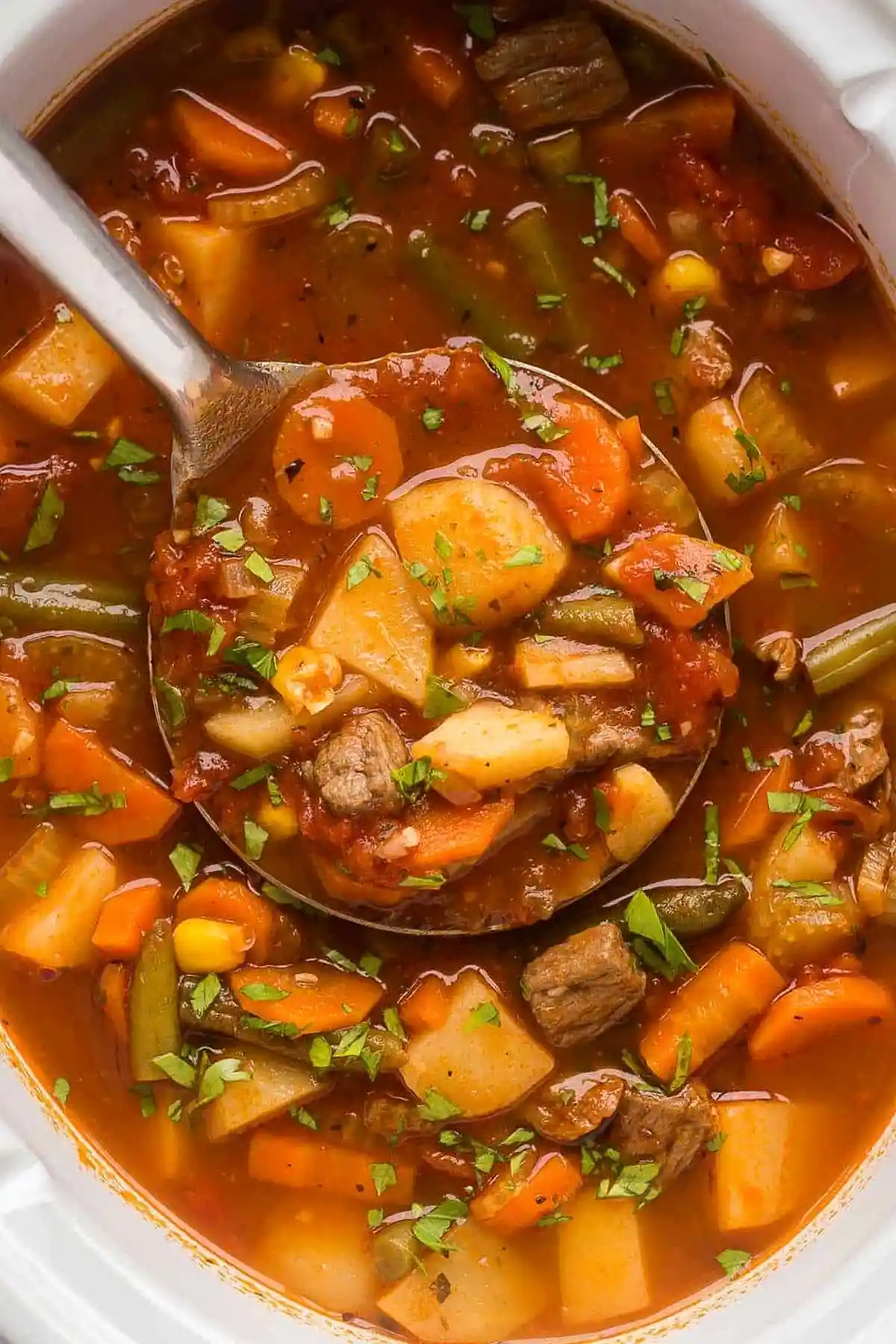
List of ingredients
- 1 tablespoon oil – used for searing the beef and sautéing vegetables.
- 1 pound cubed beef – choose a tough cut like chuck for the best results in a slow cooker.
- 2 large carrots – peeled and chopped into bite-sized rounds.
- 2 ribs celery – finely chopped to build the aromatic base.
- 1 small onion – finely chopped for flavor.
- 2 tablespoons tomato paste – adds thickness and a rich, concentrated tomato taste.
- 4 cloves garlic – finely minced for a pungent aroma.
- 1½ teaspoons salt – adjusts the overall seasoning.
- 1 teaspoon dried parsley – provides a mild herbal note.
- ½ teaspoon dried thyme – adds an earthy, woody flavor.
- ¼ teaspoon paprika – introduces a subtle smokiness and color.
- ¼ teaspoon pepper – adds a hint of spice.
- 4 cups low-sodium beef broth – the liquid base for the soup.
- 1 pound potatoes – chopped into roughly 1-inch cubes (about 4 medium potatoes).
- 1 can diced tomatoes (14oz or 398ml) – include the juice for extra liquid and acidity.
- 1 cup trimmed and chopped fresh or frozen green beans – adds texture and color.
- ¾ cup marinara sauce – thickens the broth and adds complex tomato flavors.
- ½ cup canned or frozen corn – provides sweetness and a pop of color.
- 1 bay leaf – adds a subtle depth of flavor during the slow cook.
step-by-step instructions
- Sear the beef: Heat the oil in a large skillet over medium-high heat. Brown the beef cubes on all sides to lock in flavor, then transfer the meat to a 5- to 6-quart slow cooker.
- Sauté aromatics: In the same skillet, add the chopped carrots, celery, and onion. Cook these vegetables until the onion becomes translucent and softened.
- Add seasonings: Stir in the tomato paste, minced garlic, salt, dried parsley, thyme, paprika, and pepper. Cook for exactly one minute to toast the spices and cook the garlic.
- Combine ingredients: Transfer the sautéed vegetable mixture from the skillet into the slow cooker with the beef. Add the beef broth, chopped potatoes, diced tomatoes with juice, green beans, marinara sauce, corn, and the bay leaf.
- Slow cook: Cover the slow cooker with a tight-fitting lid and cook on the low setting for 7 to 8 hours. The soup is done when the beef and vegetables are completely tender.
- Final touch: Remove the bay leaf from the pot. Taste the soup and add additional salt or pepper if needed before serving immediately or keeping it on the warm setting.
Optimizing Your Beef Selection
Use Chuck Roast for Maximum Tenderness
Chuck roast is an ideal cut for this recipe because it contains a high amount of connective tissue and collagen. During the long, slow cooking process, this collagen breaks down into gelatin, resulting in meat that is incredibly tender and a broth that has a naturally thicker body.
Utilize Pre-Cut Beef Stew Meat
If you are short on time, purchasing pre-cut beef stew meat is a convenient alternative. Ensure the pieces are uniform in size so that they cook evenly and no single piece remains tough while others overcook.
Maintain Uniform Cube Sizes
Cutting your beef into consistent 1-inch cubes ensures that every piece of meat reaches the same level of tenderness. This prevents the frustration of having some pieces that are too large and chewy alongside others that have fallen apart.
Enhancing the Flavor Profile
Sear the Meat for Depth
Browning the beef in a skillet before adding it to the slow cooker creates a Maillard reaction. This process develops complex, savory flavors and a rich brown color that cannot be achieved by simmering the meat alone in the broth.
The Importance of Tomato Paste
Tomato paste provides a concentrated burst of umami and helps to thicken the soup’s consistency. Sautéing it for a minute with the other aromatics removes the raw metallic taste and deepens the overall color of the broth.
Select Low-Sodium Beef Broth
Using low-sodium beef broth allows you to control the salt levels more precisely. Since the soup cooks for several hours and the liquid reduces slightly, using a high-sodium broth can often result in a final dish that is overly salty.
Incorporate Fresh Garlic
Freshly minced garlic provides a sharper, more vibrant flavor than garlic powder. Adding it at the end of the sauté process prevents the garlic from burning while still allowing its aromatic oils to infuse the vegetables.
Customizing the Vegetable Mix
Incorporate Root Vegetables
While carrots and potatoes are standard, you can add parsnips or rutabaga for a more complex flavor profile. These root vegetables hold up well during the long cooking time and add a natural sweetness to the soup.
Add Leafy Greens for Nutrition
To increase the nutrient density, stir in fresh spinach or chopped kale during the last 30 minutes of cooking. This allows the greens to wilt slightly without becoming overcooked or losing their vibrant green color.
Use Frozen Mixed Vegetables
For a faster prep time, you can substitute the individual green beans and corn with a bag of frozen mixed vegetables. This is a practical way to use whatever you have in the freezer while keeping the heartiness of the meal.
Substitute Potatoes for Cauliflower
If you prefer a lower-carb version, replace the potatoes with cauliflower florets. Since cauliflower cooks faster than potatoes, consider adding them in the last 2-3 hours of the cooking cycle to avoid them becoming too soft.
Mastering the Slow Cooker Process
Low Temperature vs High Temperature
Cooking this soup on the low setting for 7-8 hours is recommended for the most tender beef. While high settings can reduce the time to 4-5 hours, the slower temperature allows the muscle fibers in the beef to break down more effectively.
Preventing Excess Liquid Loss
Ensure your slow cooker lid is sealed tightly to prevent too much steam from escaping. If the soup appears too thick toward the end of the cooking time, you can stir in an extra half-cup of beef broth to reach your desired consistency.
Monitoring Vegetable Texture
If you prefer your vegetables to have a slight bite, add the carrots and potatoes halfway through the cooking process. However, for a traditional, soft-stew texture, adding them at the start is the best approach.
Storage and Meal Prep Strategy
Short-Term Refrigeration
Store the leftover soup in an airtight glass or plastic container in the refrigerator for 4 to 5 days. The flavors often meld and improve after a day of resting, making this an excellent make-ahead meal.
Long-Term Freezer Guidelines
This soup freezes well for up to 3 months. Use heavy-duty freezer bags and squeeze out as much air as possible to prevent freezer burn and allow the soup to lay flat for quicker thawing.
Managing Potato Texture After Freezing
Be aware that the cellular structure of potatoes changes during the freezing and thawing process, which can make them slightly grainy. If this texture bothers you, consider omitting the potatoes when making a batch intended for the freezer.
Safe Thawing Procedures
Thaw the frozen soup overnight in the refrigerator for the safest results. If you need it faster, place the sealed bag in a bowl of room temperature water for about 30 minutes before heating.
Reheating and Serving Suggestions
Stovetop Reheating for Quality
The best way to reheat this soup is in a small pot over low to medium heat. This allows you to stir the ingredients gently and add a splash of broth if the soup has thickened too much in the fridge.
Microwave Reheating Tips
When using a microwave, heat the soup in 2-minute intervals, stirring in between. This ensures that the beef and vegetables are heated evenly and prevents hot spots from forming in the liquid.
Ideal Bread Pairings
Serve the soup with toasted garlic bread or a crusty sourdough baguette. The bread is perfect for soaking up the rich broth and adds a satisfying crunch to the meal.
Adding a Fresh Garnish
To brighten the dish before serving, sprinkle a tablespoon of fresh chopped parsley or chives on top. A dollop of sour cream or a squeeze of fresh lemon juice can also add a nice contrast to the savory beef broth.
Cooking Troubleshooting
Thickening a Thin Broth
If your soup is too watery, you can mash a few of the cooked potato chunks directly against the side of the pot. Stirring the mashed potatoes back into the liquid acts as a natural thickener without requiring extra ingredients.
Balancing Excessive Saltiness
If the soup tastes too salty, add a small amount of unsalted water or more unsalted beef broth. Alternatively, adding a splash of apple cider vinegar or lemon juice can help cut through the saltiness with acidity.
Preventing Mushy Vegetables
To avoid overcooked vegetables, ensure you are cutting your carrots and potatoes into larger, uniform pieces. Smaller pieces are more likely to disintegrate during an 8-hour slow cook cycle.
Common Questions
Can I use ground beef instead of cubed beef?
Yes, you can use ground beef. However, you must brown the ground beef and drain the excess fat thoroughly before adding it to the slow cooker to prevent the soup from becoming greasy.
Is it possible to make this on a stovetop?
Yes, you can make this in a Dutch oven. Sauté the meat and vegetables, then simmer everything on low heat for about 2 to 3 hours until the beef is tender, as it cooks faster than in a slow cooker.
Can I make this soup in advance?
Absolutely. This soup is excellent for meal prep and can be made a day or two before serving. Simply reheat it on the stove, and you will find that the flavors have become more integrated.
Do I have to brown the beef first?
Browning is not strictly necessary for the soup to be edible, but it is highly recommended for flavor. Skipping this step will result in a milder taste and a lighter color in the final broth.
Print
Crockpot Vegetable Beef Soup
- Total Time: 7 hours 30 minutes
- Yield: 8 servings 1x
- Diet: General
Description
This Crockpot Vegetable Beef Soup is a hearty and healthy recipe that takes just 15 minutes to prep! It’s loaded with chunks of tender beef and tons of veggies.
Ingredients
- 1 tablespoon oil
- 1 pound cubed beef
- 2 large carrots, peeled and chopped
- 2 ribs celery, finely chopped
- 1 small onion, finely chopped
- 2 tablespoons tomato paste
- 4 cloves garlic, finely minced
- 1½ teaspoons salt
- 1 teaspoon dried parsley
- ½ teaspoon dried thyme
- ¼ teaspoon paprika
- ¼ teaspoon pepper
- 4 cups low-sodium beef broth
- 1 pound potatoes, chopped
- 1 can diced tomatoes with juice (14oz or 398ml)
- 1 cup trimmed and chopped fresh or frozen green beans
- ¾ cup marinara sauce
- ½ cup canned or frozen corn
- 1 bay leaf
Instructions
- Step: Heat the oil in a large skillet over medium-high heat. Brown the beef on all sides and place in a 5- to 6-quart slow cooker.
- Step: To the skillet, add the carrots, celery, and onion and cook until the onion has softened. Stir in the tomato paste, garlic, salt, parsley, thyme, paprika, and pepper and cook for 1 minute.
- Step: Transfer the vegetables from the skillet to the slow cooker. Add the broth, potatoes, tomatoes, green beans, marinara sauce, corn, and bay leaf.
- Step: Cover and cook on low for 7 to 8 hours, until the beef and vegetables are tender. Remove the bay leaf, taste and adjust seasonings as desired. Serve immediately or keep on warm until ready to serve.
Notes
Store in an airtight container in the fridge for 4-5 days. This soup also freezes great for up to 3 months.
- Prep Time: 15 minutes
- Cook Time: 7 hours 15 minutes
- Category: Soup
- Method: Slow Cooker
- Cuisine: American
Nutrition
- Serving Size: 257 grams
- Calories: 193 kcal
- Sugar: 5 g
- Sodium: 927 mg
- Fat: 5 g
- Saturated Fat: 1 g
- Unsaturated Fat: 3 g
- Trans Fat: 1 g
- Carbohydrates: 21 g
- Fiber: 3 g
- Protein: 18 g
- Cholesterol: 35 mg