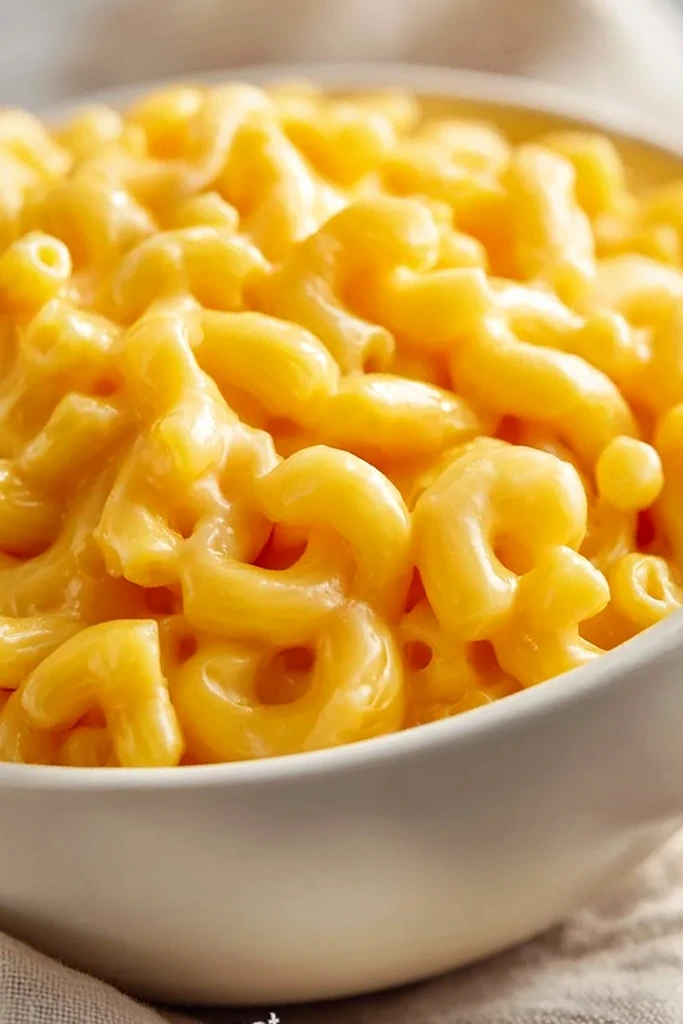
Discover the foolproof method for achieving restaurant-quality, ultra-creamy macaroni and cheese without ever boiling a pot of water. This dump-and-go slow cooker recipe uses precise dairy science to create a velvety, cohesive cheese sauce that clings perfectly to every noodle. It is the ultimate hands-off solution for busy weeknights or large family gatherings where consistency and comfort are essential.
List of ingredients
- 1 lb elbow macaroni, dry and uncooked
- 4 tbsp unsalted butter, cubed
- 12 oz evaporated milk
- 2 cups whole milk
- 8 oz sharp cheddar cheese, freshly grated
- 8 oz white American cheese, cubed
- 1/2 cup sour cream
- 1 tsp ground dry mustard
- 1/2 tsp garlic powder
- 1/2 tsp smoked paprika
- 1/2 tsp salt
- 1/4 tsp black pepper
step-by-step instructions
- Step: Whisk the 12 oz evaporated milk, 2 cups whole milk, sour cream, dry mustard, garlic powder, smoked paprika, salt, and pepper directly in the slow cooker insert.
- Step: Add the 1 lb dry elbow macaroni and the 4 tbsp cubed butter to the liquid.
- Step: Stir in the 8 oz cubed white American cheese. Keep the cheddar aside for now.
- Step: Cover and cook on LOW for 1 hour 30 mins. The liquid should be bubbling gently at the edges.
- Step: At the 1 hour 30 min mark, open the lid and stir in the 8 oz freshly grated sharp cheddar. The pasta should be mostly tender but still have a slight bite.
- Step: Cover and cook for an additional 30 to 45 minutes. Wait until the sauce is thick and the noodles are perfectly soft.
- Step: Turn the slow cooker to the Warm setting and let the Mac and Cheese sit for 10 minutes before serving.
- Step: Give it one last stir and taste. Add a pinch more salt or pepper if the flavors feel muted. Serve immediately while the cheese is still stretchy.
Essential Techniques for Texture
Starch Suspension for Thick Sauces
By cooking the dry pasta directly in the milk bath, the natural starches released from the noodles dissolve into the liquid. This process creates a natural thickener that gives the cheese sauce its signature clinging power. Rinsing or pre-boiling the noodles would strip away these starches, resulting in a thin, watery consistency.
Emulsion Stability through Melting Salts
The inclusion of processed cheese like Velveeta or American cheese provides sodium citrate, which acts as a crucial emulsifying agent. This component keeps the fat molecules from the sharp cheddar bound to the water-based proteins in the milk. Without this stabilizing effect, the cheese would likely separate into an oily, curdled sauce during the long, gentle heating cycle of the slow cooker.
Thermal Buffering with Ceramic Inserts
Slow cookers provide an even, consistent heat that gently hydrates the pasta from the outside in. This slow transformation is vital because it prevents the macaroni from turning into mush before the center reaches the desired al dente bite. The ceramic material absorbs and radiates heat slowly, ensuring the dairy components do not scorch along the perimeter of the cooking vessel.
Refining the Flavor Profile
Why Fresh Grating Matters
Pre-shredded cheese typically contains cellulose powder or potato starch used to prevent clumping in the bag. These agents resist melting and will leave tiny, gritty particles in your otherwise smooth cheese sauce. Taking five minutes to grate a block of high-quality sharp cheddar ensures a seamless, velvety texture that mimics professional kitchen quality.
The Role of Dry Mustard
While the ingredient list calls for dry mustard, you will not taste a distinct mustard flavor in the finished product. Instead, this powder acts as a natural flavor booster that amplifies the complexity of the cheddar. It provides a sharp, savory bite that cuts through the richness of the milk, butter, and cheese, preventing the dish from tasting overly heavy or one-dimensional.
Scaling and Storage
Adapting to Different Group Sizes
When scaling down for a smaller household, you can halve all ingredients and utilize a 3-quart slow cooker. Be vigilant with the timing, as smaller volumes will reach the desired internal temperature faster than full loads. Conversely, doubling the recipe requires an 8-quart slow cooker to prevent overflows and ensures the heat circulates evenly around the increased mass of pasta and liquid.
Managing Leftovers and Reheating
If you have leftovers, store them in an airtight container for up to four days. During the cooling process, the pasta will continue to absorb liquid, so you should add a tablespoon or two of milk before reheating in the microwave. Stirring in this extra moisture restores the glossy, liquid texture of the sauce, preventing it from feeling dry or clumpy during the second serving.
Troubleshooting Common Issues
Addressing a Grainy Sauce
A grainy texture almost always points to the use of pre-shredded cheese or an overly high temperature setting. If you suspect the sauce has broken, turn the cooker to the Warm setting immediately and whisk in a tablespoon of cold sour cream or heavy cream to help re-emulsify the fats. In the future, always stick to the LOW heat setting to avoid overheating the dairy proteins.
Fixing Undercooked Noodles
If the pasta still has a tough center after the total cook time, it is likely due to the liquid volume being slightly too low or the slow cooker having a cooler hot spot. Simply add a small splash of hot milk, stir to incorporate, and continue cooking for 10 to 15-minute increments. Frequent lid-lifting for checks will delay the process, so try to keep the lid sealed as long as possible to maintain thermal efficiency.
Maximizing Cleanup Efficiency
The cheesy nature of this dish can make the ceramic insert difficult to clean if the dairy adheres to the sides. Use a high-quality non-stick spray on the interior walls of the slow cooker before adding any ingredients. This creates a thin barrier that allows the finished sauce to slide out easily, leaving you with minimal scrubbing after your meal is served.
Frequently Asked Questions
Can I assemble this recipe in advance?
Yes, you can combine all ingredients in the slow cooker insert and refrigerate the setup for up to 12 hours before cooking. When you are ready to serve, pull the insert from the fridge and let it sit at room temperature for 15 minutes before starting the cycle. Expect to add roughly 20 minutes to the total cook time to account for the chilled temperature of the ingredients.
What is the benefit of using evaporated milk?
Evaporated milk is essentially milk with about 60% of its water content removed, resulting in a much higher concentration of protein and fat. This density is critical for maintaining the integrity of the sauce over two hours of cooking. It prevents the water from evaporating too rapidly, which would otherwise leave the starch-heavy sauce feeling pasty or overly thick.
Does the pasta need to be a specific shape?
While elbow macaroni is the standard for this recipe, you can use other short, ridged shapes like cavatappi or penne. These shapes have grooves that effectively trap the cheese sauce, ensuring each bite is flavorful. Avoid large or flat pasta shapes, as they tend to stick together or become unevenly hydrated in the slow cooker environment.
Why must I keep the cheddar separate initially?
The sharp cheddar has a lower melting threshold and higher fat content that can separate if exposed to heat for the full duration of the cooking cycle. Adding it during the final 45 minutes of the process allows it to melt gently into the existing base, preserving its sharp flavor profile and ensuring the final consistency remains uniform and smooth throughout the entire batch.
Print
Crock Pot Mac and Cheese: Ultra Creamy
- Total Time: PT2H25M
- Yield: 10 servings 1x
- Diet: Vegetarian
Description
Master this easy Crock Pot Mac and Cheese recipe for an ultra-creamy, velvety finish every time without ever boiling a pot of water.
Ingredients
- 1 lb elbow macaroni, dry and uncooked
- 4 tbsp unsalted butter, cubed
- 12 oz evaporated milk
- 2 cups whole milk
- 8 oz sharp cheddar cheese, freshly grated
- 8 oz white American cheese, cubed
- 1/2 cup sour cream
- 1 tsp ground dry mustard
- 1/2 tsp garlic powder
- 1/2 tsp smoked paprika
- 1/2 tsp salt
- 1/4 tsp black pepper
Instructions
- Step: Whisk the 12 oz evaporated milk, 2 cups whole milk, sour cream, dry mustard, garlic powder, smoked paprika, salt, and pepper directly in the slow cooker insert.
- Step: Add the 1 lb dry elbow macaroni and the 4 tbsp cubed butter to the liquid.
- Step: Stir in the 8 oz cubed white American cheese. Keep the cheddar aside for now.
- Step: Cover and cook on LOW for 1 hour 30 mins. The liquid should be bubbling gently at the edges.
- Step: At the 1 hour 30 min mark, open the lid and stir in the 8 oz freshly grated sharp cheddar. The pasta should be mostly tender but still have a slight bite.
- Step: Cover and cook for an additional 30 to 45 minutes. Wait until the sauce is thick and the noodles are perfectly soft.
- Step: Turn the slow cooker to the Warm setting and let the Mac and Cheese sit for 10 minutes before serving.
- Step: Give it one last stir and taste. Add a pinch more salt or pepper if the flavors feel muted. Serve immediately while the cheese is still stretchy.
Notes
Always grate your own sharp cheddar to avoid the anti-caking agents in pre-shredded cheese, which can make the sauce grainy. Use only the LOW setting to prevent the dairy from curdling.
- Prep Time: PT10M
- Cook Time: PT2H15M
- Category: Side Dish
- Method: Slow Cooker
- Cuisine: American
Nutrition
- Serving Size: 1 serving
- Calories: 458 kcal
- Sugar: 8.2 g
- Sodium: 622 mg
- Fat: 23.4 g
- Saturated Fat: 14.1 g
- Unsaturated Fat: 8.5 g
- Trans Fat: 0 g
- Carbohydrates: 42.8 g
- Fiber: 1.6 g
- Protein: 19.3 g
- Cholesterol: 71 mg