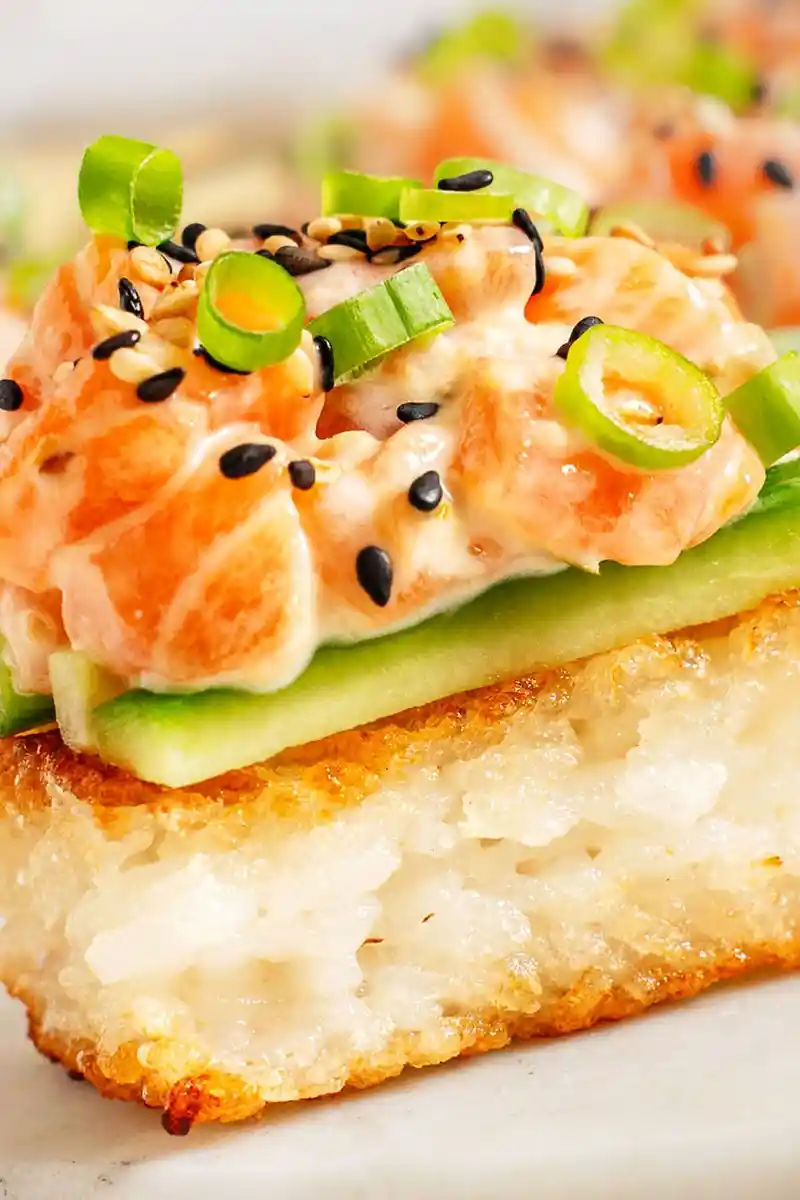
Create a sophisticated appetizer with these pan-fried sushi rice cakes topped with zesty salmon. This dish combines a crunch texture with a bright, citrusy flavor profile that satisfies sushi cravings. It is a practical way to serve a high-end snack at home.
List of ingredients
- 1.5 cups dry short grain sushi rice – rinsed until the water is clear for proper texture.
- 2 cups water – used for steaming the rice.
- 1 teaspoon salt – seasons the rice base.
- 3 tablespoon rice vinegar – adds a mild tang to the sushi rice.
- 1 tablespoon granulated sugar – balances the acidity of the vinegar.
- 1 teaspoon toasted sesame oil – provides a nutty aroma to the rice.
- 1 pound salmon (sushi grade) – high-quality raw fish chopped for the topping.
- 3 tablespoon Kewpie mayonnaise – adds creaminess and umami flavor.
- 1 teaspoon yuzu kosho – a fermented chili and citrus paste for zing.
- 1 teaspoon yuzu juice – adds bright acidity.
- 1 tablespoon soy sauce – adds saltiness and depth.
- 2 teaspoon sesame oil – enhances the salmon mixture.
- 2 cucumbers – halved and thinly sliced for a fresh layer.
- 2 tablespoon toasted sesame seeds – used for garnish.
- 4 stalks Green onion – chopped for a fresh finish.
step-by-step instructions
- Prepare the rice: Thoroughly rinse the sushi rice 4-5 times until the water turns clear. Cook the rice and water together in a rice cooker or on the stove until fully tender.
- Season the rice: In a small bowl, mix the salt, rice vinegar, sugar, and sesame oil until the sugar has dissolved. Toss this mixture into the cooked rice in a large bowl and combine thoroughly.
- Shape and refrigerate: Place the seasoned rice into a small square baking tray lined with plastic wrap. Press the rice into a 1/2-inch thick square block, wrap it tightly, and refrigerate for at least 3 hours or overnight to dry out.
- Cut the rice: Once chilled, remove the rice block and cut it into bite-sized rectangles. Pat the surfaces dry to remove any water condensation before frying.
- Pan-fry the rice: Heat 1/4-1/2 cup of vegetable oil in a medium skillet over medium-high heat for 30 seconds. Place rice pieces in the pan with 2 inches of space between them, frying for 2 minutes per side until golden brown.
- Cool and drain: Remove the fried rice from the pan and place it on a wire rack over a lined baking sheet to maintain crispiness.
- Mix the salmon: In a medium mixing bowl, combine the chopped sushi-grade salmon, Kewpie mayonnaise, yuzu kosho, yuzu juice, soy sauce, and sesame oil. Mix until the ingredients are fully integrated.
- Assemble the bites: Place a thinly sliced cucumber piece on top of each crispy rice rectangle. Add 1-2 tablespoons of the spicy salmon mixture and garnish with toasted sesame seeds and chopped green onions.
Essential Rice Preparation Techniques
Rinsing Grains for Better Texture
Rinsing short-grain sushi rice removes excess surface starch that can lead to an overly sticky or gummy consistency. This process involves swirling the rice in water and draining it several times until the liquid runs clear. Removing the starch ensures that the grains remain distinct and achieve a better crust when pan-fried.
Proper Rice Packing Methods
When molding the rice in the baking tray, press the grains firmly but avoid mashing them. Packing the rice too loosely creates air bubbles that can cause the cakes to fall apart in the hot oil. Firm pressure ensures a dense structure that holds its rectangular shape during the frying process.
The Role of Refrigeration
Chilling the rice block for at least three hours is necessary to reduce moisture levels. This drying process makes the rice easier to slice into clean, sharp edges without sticking to the knife. Additionally, drier rice reduces the amount of oil splatter when it hits the hot skillet.
Choosing the Correct Rice Variety
Short-grain sushi rice is essential because of its specific starch content and plump shape. Long-grain varieties like jasmine or basmati lack the necessary stickiness to hold together without a binder. The short-grain variety stays soft on the inside while allowing the exterior to crisp up perfectly.
Mastering the Frying Process
Testing Oil Temperature
Ensure the oil is sufficiently hot before adding the rice to prevent the grains from absorbing too much fat. A quick way to test this is by dropping a single grain of rice into the oil; it should sizzle immediately and rapidly. If the oil is too cold, the rice will become greasy rather than crispy.
Managing Oil Splatter
Adding rice to hot oil can cause popping and splattering due to remaining surface moisture. To minimize this, always pat the chilled rice rectangles dry with a paper towel. Maintaining a gap of two inches between each piece also prevents them from sticking together and allows for even heat distribution.
Using a Wire Rack for Cooling
Placing fried rice directly onto a plate or paper towel can trap steam underneath the cakes, making the bottom soggy. A wire rack allows air to circulate around the entire piece of rice. This technique preserves the golden-brown crust and ensures maximum crunch upon serving.
Selecting a High-Smoke Point Oil
Use a neutral oil with a high smoke point, such as vegetable, canola, or avocado oil, for frying. Oils with lower smoke points, like extra virgin olive oil, may burn and develop a bitter taste at the temperatures required for crisping rice. Neutral oils provide a clean taste that doesn’t overpower the yuzu and salmon.
Salmon Quality and Food Safety
Identifying Sushi-Grade Salmon
Always purchase salmon explicitly labeled as sushi-grade or sashimi-grade for raw consumption. This label indicates that the fish has been handled and frozen according to specific safety standards to eliminate parasites. Check the packaging date and ensure the fish is sourced from a reputable vendor.
Visual Indicators of Freshness
Fresh sushi-grade salmon should have a vibrant, consistent orange or pink color without any dull or greyish patches. The flesh should feel firm to the touch and spring back when pressed lightly. Avoid any fish that has a strong, fishy odor, as fresh salmon should have a mild, clean scent.
Handling Raw Seafood Safely
Keep the salmon refrigerated at all times until you are ready to mix it with the marinade. Use a clean cutting board and knife to avoid cross-contamination with other kitchen items. Wash your hands thoroughly before and after handling the raw fish to maintain food hygiene.
Temperature Control During Mixing
Mix the salmon and mayonnaise in a chilled bowl if possible to keep the fish at a safe temperature. Once the salmon mixture is prepared, assemble the bites immediately before serving. This prevents the raw fish from sitting at room temperature for extended periods.
Flavor Customizations and Substitutions
Incorporating Creamy Avocado
Adding a slice of ripe avocado provides a rich, buttery contrast to the zingy yuzu flavor. You can place a thin slice of avocado either under the cucumber or on top of the salmon. Avocado helps balance the saltiness of the soy sauce and the heat of the yuzu kosho.
Increasing Heat with Spicy Additives
If the yuzu kosho does not provide enough heat, stir in a small amount of sriracha or a dash of cayenne pepper. For a fresh heat, place a thin slice of jalapeño or serrano pepper on top of the salmon. These additions enhance the spicy profile without masking the citrus notes.
Alternative Green Garnishes
Finely minced chives can be used as a substitute for green onions to provide a more delicate onion flavor. Microgreens or sprouts can also be added for additional visual appeal and a peppery taste. These options add fresh color and different textures to the finished appetizer.
Substituting Yuzu Components
If yuzu juice is unavailable, a mixture of lime juice and a small amount of lemon juice can mimic the bright acidity. For yuzu kosho, a combination of minced green chilies and lemon zest with salt is a close alternative. While not identical, these substitutes maintain the overall citrus-spice balance.
Serving and Presentation Logic
Platter Arrangement Strategies
Arrange the rice bites in a linear or circular pattern on a flat slate or ceramic platter to create a professional look. Leaving enough space between the pieces prevents them from touching and keeping the crust crisp. A dark-colored plate makes the bright orange salmon and green onions pop visually.
Pairing with Asian-Inspired Sides
Serve these bites alongside a light seaweed salad or edamame to create a complete appetizer spread. The acidity of a pickled ginger side can also cleanse the palate between bites. These pairings complement the Japanese-fusion theme of the dish.
Creating a Tasting Flight
Offer a variety of toppings on the crispy rice base to create a tasting flight. Along with the yuzu salmon, you can try topped versions with spicy tuna or minced scallops. This allows guests to experience different flavor profiles using the same crispy rice technique.
Storage and Freshness Guidelines
Refrigeration Limits for Raw Salmon
Assembled salmon rice bites must be eaten fresh for the best safety and quality. If you must store them, keep the salmon mixture and the fried rice in separate airtight containers in the refrigerator. The raw salmon should be consumed within one to two days of purchase.
Managing Leftover Rice Cakes
Fried rice cakes can be stored in the fridge for up to three days. To restore their crispiness, reheat them in an oven or air fryer at 350 degrees Fahrenheit for a few minutes. Avoid using a microwave, as this will make the rice chewy and soft.
Preventing Rice Moisture Build-up
Store the fried rice cakes in a container lined with a paper towel to absorb any excess moisture. If they are packed too tightly while still warm, they will steam and lose their crunch. Ensure they are completely cooled on the wire rack before placing them in storage.
Troubleshooting Common Issues
Fixing Rice That Falls Apart
If the rice rectangles break during frying, it is usually due to insufficient packing or inadequate chilling. Ensure the rice is pressed firmly into the mold and chilled for the full three hours. Using a sharper knife to cut the blocks also prevents the rice from tearing.
Addressing Lack of Crispiness
A lack of crunch usually occurs if the oil is not hot enough or if the rice was too moist. Always test the oil with a single grain and pat the rice blocks dry before frying. Avoid overcrowding the pan, as this lowers the oil temperature and leads to oil absorption.
Correcting Loose Salmon Mixture
If the salmon mixture feels too runny, add an extra teaspoon of Kewpie mayonnaise to bind the ingredients. Ensure the salmon is chopped into very small, uniform pieces to help the sauce cling to the fish. This ensures the topping stays securely on the rice cake.
Frequently Asked Questions
Where can I buy yuzu kosho?
Yuzu kosho is commonly available at specialized Japanese grocery stores or through online Asian food retailers. It is typically sold in small jars as a fermented paste. If you cannot find it, look for it in the condiments section of an international market.
Can I use long-grain rice for this recipe?
No, long-grain rice does not have the necessary starch to stick together and form a cohesive block. Using jasmine or basmati rice will result in the cakes crumbling during the frying process. Only short-grain sushi rice provides the required structure.
Is it possible to freeze the rice cakes?
You can freeze the fried rice cakes once they have completely cooled. Store them in a freezer-safe bag with parchment paper between layers. Reheat them directly in an air fryer or oven to bring back the original texture.
How long does the sushi-grade salmon stay fresh?
According to general food safety guidelines, raw sushi-grade fish should be kept in the refrigerator and consumed within one to two days. Always check the use-by date on the packaging. When in doubt, discard any fish that has changed in color or smell.
Print
Crispy Yuzu Salmon Rice Bites
- Total Time: 30 minutes
- Yield: 10 servings 1x
- Diet: General
Description
Crispy rice salmon is a light, zingy, and savory appetizer made with fresh sushi-grade salmon, yuzu kosho, yuzu juice, and seasoned sushi rice, perfect for satisfying sushi cravings.
Ingredients
- 1.5 cups dry short grain sushi rice, rinsed
- 2 cups water
- 1 teaspoon salt
- 3 tablespoon rice vinegar
- 1 tablespoon granulated sugar
- 1 teaspoon toasted sesame oil
- 1 pound sushi-grade salmon
- 3 tablespoon Kewpie mayonnaise
- 1 teaspoon yuzu kosho
- 1 teaspoon yuzu juice
- 1 tablespoon soy sauce
- 2 teaspoon sesame oil
- 2 cucumbers, halved and thinly sliced
- 2 tablespoon toasted sesame seeds
- 4 stalks green onion, chopped
Instructions
- Prepare the rice: Rinse the rice 4-5 times until water is clear, then cook rice and water in a rice cooker or pot.
- Season the rice: Mix salt, rice vinegar, sugar, and sesame oil until sugar dissolves, then toss with cooked rice.
- Shape and refrigerate: Press rice into a lined small square baking tray as a 1/2-inch thick block; refrigerate for 3 hours or overnight.
- Cut the rice: Slice the chilled rice into bite-sized rectangles and pat dry.
- Pan-fry the rice: Heat vegetable oil in a skillet on medium-high; fry rice pieces for 2 minutes per side until golden brown, then drain on a wire rack.
- Mix the salmon: Combine chopped salmon, Kewpie mayonnaise, yuzu kosho, yuzu juice, soy sauce, and sesame oil in a bowl.
- Assemble: Place cucumber slices on the crispy rice, top with 1-2 tablespoons of spicy salmon, and garnish with sesame seeds and green onions.
Notes
Wash rice thoroughly to remove excess starch. Pack the rice firmly but do not mash the grains. Chill the rice block for at least 3 hours for easier cutting and less oil splatter. Use a wire rack for cooling to maintain maximum crispiness. Store leftovers in an airtight container in the refrigerator for up to 2 days.
- Prep Time: 10 minutes
- Cook Time: 20 minutes
- Category: Appetizer
- Method: Pan-frying
- Cuisine: Japanese Fusion
Nutrition
- Serving Size: 1 piece
- Calories: 238 kcal
- Sugar: 2 g
- Sodium: 413 mg
- Fat: 8 g
- Saturated Fat: 1 g
- Unsaturated Fat: 6 g
- Trans Fat: 0.01 g
- Carbohydrates: 28 g
- Fiber: 2 g
- Protein: 13 g
- Cholesterol: 171 mg