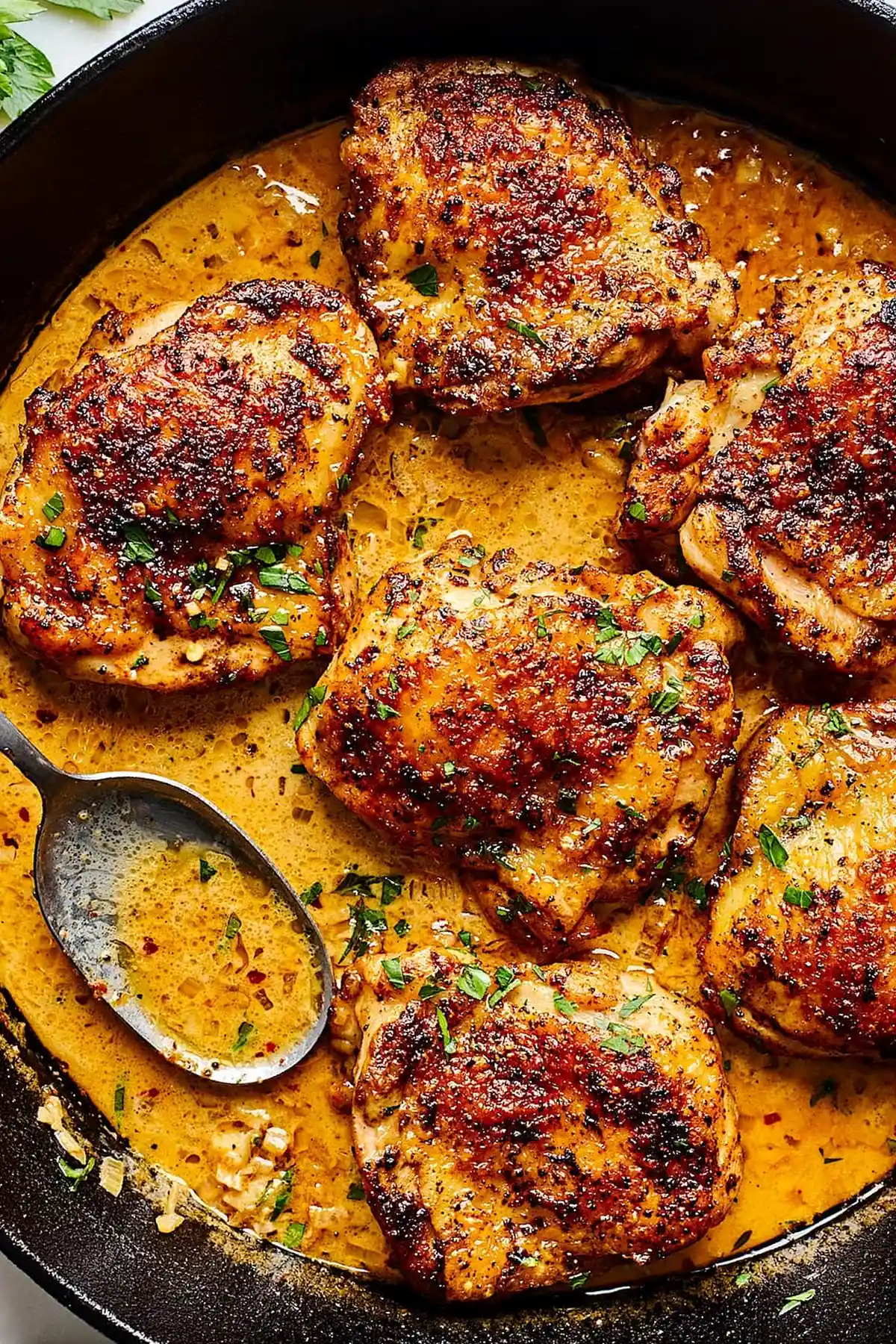
This one-pan meal delivers perfectly seared chicken thighs smothered in a rich, savory garlic cream sauce. It is a practical choice for busy weeknights that requires minimal cleanup while providing a gourmet flavor profile.
List of ingredients
- 6 chicken thighs (about 1 1/2 pounds) – bone-in and skin-on provide the best flavor and juiciness.
- 1/2 teaspoon garlic powder – adds a base layer of savory flavor.
- 1/2 teaspoon onion powder – complements the garlic for a well-rounded rub.
- 1/2 teaspoon paprika – provides a warm color and subtle smokiness.
- Kosher salt and black pepper – added to taste for primary seasoning.
- 2 tablespoons olive oil – used for searing the chicken to prevent sticking.
- 1 tablespoon butter – adds richness to the aromatics in the sauce.
- 1 small shallot, minced – provides a delicate, sweet onion flavor.
- 3 cloves garlic, minced – creates the primary aromatic base for the cream sauce.
- 1/2 cup chicken broth – adds depth and helps deglaze the pan.
- 1 tablespoon fresh lemon juice – cuts through the richness of the cream.
- 2 sprigs fresh thyme – adds an earthy, herbal note to the sauce.
- 1/4 teaspoon crushed red pepper flakes – provides a very mild heat.
- 1/3 cup heavy cream – thickens the sauce and adds a luxurious texture.
- Freshly chopped parsley – used for a bright, colorful finish.
step-by-step instructions
- Prepare the chicken: Use a paper towel to pat the chicken thighs dry. This step is essential for achieving a crispy skin.
- Apply seasoning: In a small bowl, combine the garlic powder, onion powder, paprika, salt, and black pepper. Rub the seasoning mixture all over the chicken thighs on both sides.
- Heat the pan: Heat a large cast iron skillet over medium heat and add the olive oil.
- Sear the chicken: Place chicken thighs skin side down in the hot skillet. Cook until the skin is crispy, about 7 to 8 minutes.
- Cook through: Flip the chicken thighs and cook for another 15 to 25 minutes, or until the internal temperature reaches 165 degrees. The exact time depends on the size and thickness of the meat. Transfer the chicken to a plate.
- Sauté aromatics: Add the butter, minced shallot, and minced garlic to the same skillet. Cook for about 1 minute until fragrant.
- Deglaze and simmer: Stir in the chicken broth, lemon juice, thyme, and red pepper flakes. Reduce the heat to low and stir in the heavy cream.
- Thicken the sauce: Simmer for about 5 minutes, stirring occasionally, until the sauce thickens slightly.
- Final assembly: Place the chicken back into the pan with the sauce. Garnish with freshly chopped parsley and serve warm.
Advanced Searing Techniques
Patting the Skin for Maximum Crispiness
Moisture is the enemy of a good sear. Use high-absorbency paper towels to remove every bit of surface moisture from the skin before seasoning. This ensures the chicken fries in the oil rather than steaming in its own juices.
Utilizing Cast Iron for Even Heat
A cast iron skillet is ideal because it retains heat better than stainless steel or non-stick pans. This consistent heat allows the skin to render its fat slowly and develop a deep golden-brown crust. Avoid non-stick pans as they often cannot handle the temperatures needed for a professional sear.
Monitoring Internal Temperatures
To avoid overcooking, use an instant-read meat thermometer. Insert the probe into the thickest part of the thigh, making sure not to touch the bone. Remove the chicken from the heat exactly when it hits 165 degrees Fahrenheit for optimal juiciness.
Proper Resting Period
Let the chicken rest on a plate for a few minutes before adding it back to the sauce. This allows the juices to redistribute within the meat. If you skip this, the juices may leak out into the sauce, thinning it down and leaving the meat drier.
Ingredient Substitutions and Alternatives
Replacing Heavy Cream with Half and Half
If you do not have heavy cream, half and half is a suitable replacement. Because it has a lower fat content, the sauce may be slightly thinner. You can compensate by simmering the sauce for an extra two minutes to reduce it further.
Using Dried Herbs Instead of Fresh Thyme
Dried thyme can be used if fresh sprigs are unavailable. Use a ratio of one teaspoon of dried thyme for every tablespoon of fresh thyme. Stir the dried herbs in with the broth to allow them to rehydrate and release their oils.
Substituting Shallots with Red Onion
A finely minced red onion can replace the shallot in this recipe. Red onions have a slightly sharper taste, so you may want to sauté them for an extra minute to mellow the flavor. Ensure the mince is very fine to maintain the sauce’s smooth texture.
Using Coconut Milk for a Dairy-Free Option
Full-fat canned coconut milk can be used as a substitute for heavy cream. This will introduce a slight coconut flavor to the dish but maintains the creamy consistency. Pair this version with a bit more lemon juice to balance the sweetness of the coconut.
Suggested Side Dish Pairings
Creamy Garlic Mashed Potatoes
The rich cream sauce from the chicken pairs perfectly with smooth mashed potatoes. The potatoes act as a sponge, soaking up the garlic and lemon flavors. Add a touch of butter and milk to the potatoes to match the luxury of the main dish.
Roasted Root Vegetables
Carrots or parsnips roasted with olive oil and salt provide a sweet contrast to the savory chicken. The natural sugars in the vegetables caramelize in the oven, adding a different dimension of flavor. Serve them alongside the chicken to add color to the plate.
Garlic Toast and Crusty Baguettes
Warm, toasted bread is essential for cleaning the skillet of any remaining sauce. A toasted baguette slice rubbed with a raw garlic clove enhances the garlic notes in the dish. This makes the meal more filling and satisfying.
Fresh Leafy Green Salads
A simple salad of kale or mixed greens with a lemon vinaigrette helps balance the richness of the cream sauce. The acidity of the dressing cleanses the palate between bites of the savory chicken. Add sliced cucumbers or radishes for extra crunch.
Storage and Reheating Advice
Refrigeration Guidelines
Store leftover chicken and sauce in an airtight glass container in the refrigerator. The dish will remain fresh and safe to eat for up to four days. Ensure the chicken is fully submerged in the sauce to prevent the meat from drying out.
Freezing for Long Term Storage
You can freeze this dish for up to three months. Place the chicken and sauce in a freezer-safe bag, squeezing out as much air as possible. Thaw the meal in the refrigerator overnight before reheating to maintain the best texture.
Reheating in the Oven
To maintain the skin’s integrity, reheat the chicken in an oven-safe dish at 350 degrees Fahrenheit. Cover the dish with foil to trap moisture and bake for about 15 minutes. This method prevents the meat from becoming rubbery, which often happens in the microwave.
Air Fryer Reheating Method
For those who want the skin to be crispy again, use an air fryer at 350 degrees Fahrenheit. Heat for 3 to 4 minutes until the chicken is warmed through. Spoon the reheated sauce over the chicken just before serving.
Cooking Troubleshooting
Fixing a Sauce That is Too Thin
If the sauce has not thickened enough after simmering, continue to cook it over low heat without the chicken. Stir frequently to prevent the bottom from scorching. The longer it simmers, the more the water evaporates and the thicker the cream becomes.
Addressing Sauce Separation
If the sauce appears to separate or look oily, it is usually due to high heat. Lower the temperature and whisk vigorously to re-emulsify the fats and liquids. Adding a small splash of chicken broth can also help stabilize the mixture.
Preventing Chicken from Sticking
If the chicken sticks to the pan, it usually means the pan wasn’t hot enough or the meat was flipped too early. Allow the chicken to sear undisturbed for several minutes. Once a proper crust forms, the meat will naturally release from the skillet surface.
Managing Overcooked Chicken
If the chicken feels dry, it was likely cooked past the safe temperature. To fix this, ensure the chicken is fully coated in the cream sauce during the final step. The fat in the cream helps mask dryness and adds perceived moisture to the meat.
Frequently Asked Questions
Can I use boneless chicken thighs?
Yes, you can use boneless thighs, but they will cook much faster than bone-in thighs. Reduce the second cooking stage by several minutes and use a thermometer to ensure they hit 165 degrees without overcooking.
What is the ideal internal temperature for chicken thighs?
While chicken breast is done at 165 degrees, thighs can actually be cooked to 175 degrees for better texture. Thighs have more connective tissue that breaks down at higher temperatures, making them even more tender.
Should chicken be room temperature before cooking?
Allowing chicken to sit at room temperature for 15 to 20 minutes before searing leads to more even cooking. This prevents the outside from overcooking before the inside reaches the safe temperature.
Can I make this recipe in a non-stick pan?
You can, but you will not achieve the same level of crispiness on the skin. Non-stick surfaces prevent the high-heat caramelization known as the Maillard reaction, resulting in a paler, softer skin.
Print
Crispy Skillet Chicken Thighs with Garlic Cream Sauce
- Total Time: 40 minutes
- Yield: 6 servings 1x
- Diet: General
Description
There’s nothing more satisfying than perfectly crispy chicken thighs cooked in just one skillet—simple, flavorful, and easy to clean up! With a golden, crispy skin and juicy meat, this one-pan meal is perfect for busy weeknights or easy entertaining.
Ingredients
- 6 chicken thighs (about 1 1/2 pounds)
- 1/2 teaspoon garlic powder
- 1/2 teaspoon onion powder
- 1/2 teaspoon paprika
- Kosher salt and black pepper, to taste
- 2 tablespoons olive oil
- 1 tablespoon butter
- 1 small shallot, minced
- 3 cloves garlic, minced
- 1/2 cup chicken broth
- 1 tablespoon fresh lemon juice
- 2 sprigs fresh thyme
- 1/4 teaspoon crushed red pepper flakes
- 1/3 cup heavy cream
- Freshly chopped parsley, for garnish
Instructions
- Step: Use a paper towel to pat the chicken thighs dry.
- Step: In a small bowl, combine the garlic powder, onion powder, paprika, salt, and black pepper. Rub the seasoning mixture all over the chicken thighs, on both sides.
- Step: Heat a large cast iron to medium heat and add the olive oil.
- Step: Place chicken thighs skin side down in the hot skillet and cook, until skin is crispy about 7 to 8 minutes, flip chicken thighs and cook for another 15 to 25 minutes or until internal temp is 165 degrees. Transfer chicken to a plate.
- Step: Add the butter, shallot, and garlic to the skillet. Cook for 1 minute. Stir in the chicken broth, lemon juice, thyme, and red pepper flakes. Reduce heat to low and stir in the heavy cream. Simmer for about 5 minutes, stirring occasionally, or until sauce thickens up a bit.
- Step: Place the chicken back in the pan with the sauce. Garnish with fresh parsley. Serve the chicken warm with the sauce.
Notes
For best results, use bone-in skin-on chicken thighs. If you don’t have heavy cream, you can use half and half. Store leftovers in an airtight container in the refrigerator for up to 4 days or freeze for up to 3 months.
- Prep Time: 10 minutes
- Cook Time: 30 minutes
- Category: Main Course
- Method: Skillet Searing
- Cuisine: American
Nutrition
- Serving Size: 1 serving
- Calories: 360 kcal
- Sugar: 1 g
- Sodium: 380 mg
- Fat: 30 g
- Saturated Fat: 10 g
- Unsaturated Fat: 18 g
- Trans Fat: 0 g
- Carbohydrates: 3 g
- Fiber: 1 g
- Protein: 19 g
- Cholesterol: 131 mg