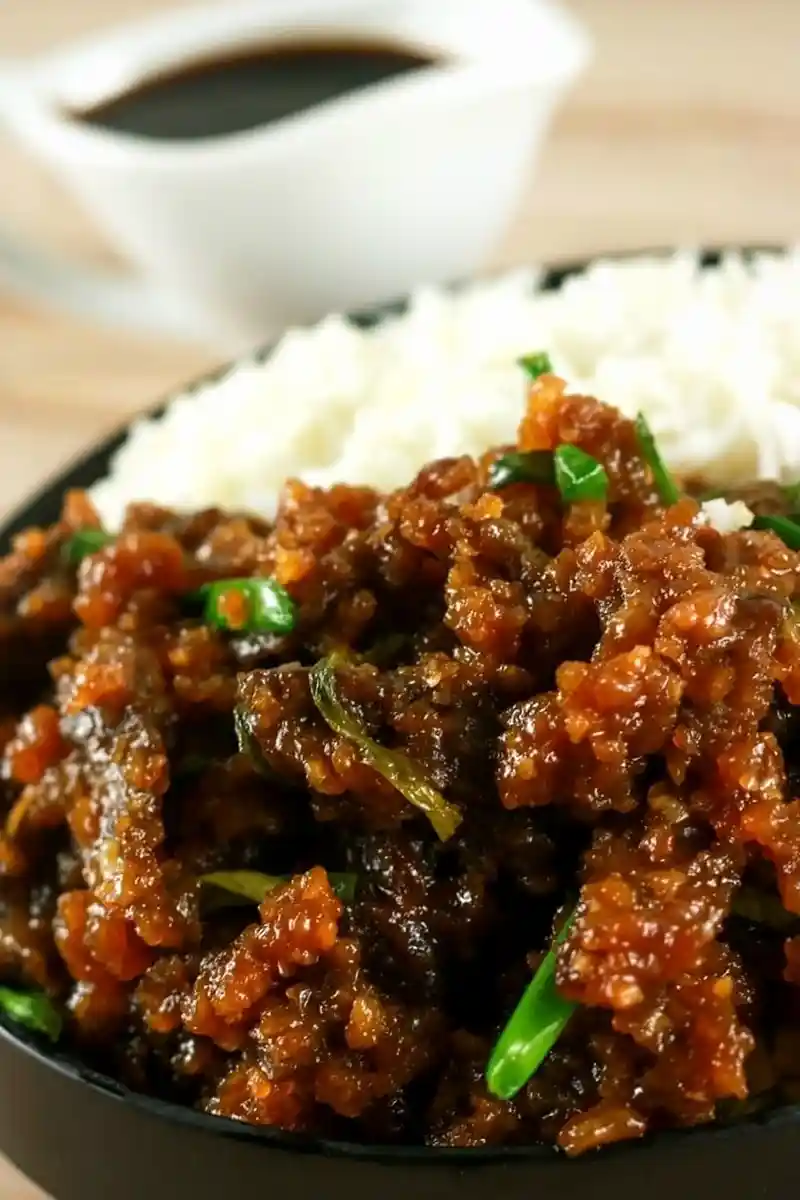
This Mongolian beef is a fast, high-protein dinner option that delivers authentic takeout flavors at home. It uses a simple cornstarch coating to achieve a satisfying crunch in under 20 minutes.
List of ingredients
- 2 pounds beef tenderloin or beef chuck, cut into strips – use tenderloin for maximum tenderness or chuck for a richer flavor.
- 1/2 cup cornstarch or cornflour – used to create the signature crispy exterior.
- Oil, for deep frying – select a high-smoke point oil like vegetable, canola, or peanut oil.
- 2 tablespoons cooking oil – used for sautéing the aromatics in the pan.
- 1 tablespoon finely chopped ginger – adds a fresh, zesty heat to the sauce.
- 1 tablespoon finely chopped garlic – provides a fundamental savory depth.
- 1/2 cup soy sauce – serves as the primary salty and umami base.
- 1/2 cup rice vinegar – balances the sweetness with a necessary acidic tang.
- 1/2 cup water – used to dilute the sauce to the correct consistency.
- 1 teaspoon hoisin sauce (optional) – adds a subtle sweetness and a thicker texture.
- 1/2 cup brown sugar – caramelizes during cooking for a glossy, sweet glaze.
- 1 teaspoon cornstarch diluted in 3 teaspoons water – a slurry used to thicken the final sauce.
- 1 teaspoon red chili flakes (optional) – provides a customizable level of spicy heat.
- 1/2 cup green onion, chopped into 1-inch pieces – adds a fresh, mild onion finish and color.
step-by-step instructions
- Coat the beef: Toss the beef strips in cornstarch, ensuring every piece is evenly coated to guarantee a uniform crunch.
- Fry the beef: Deep fry the beef strips for 4-5 minutes until golden brown, then drain the excess oil on paper towels and set aside.
- Sauté aromatics: Heat 2 tablespoons of oil in a saucepan over high heat, stir-fry the ginger and garlic for 10 seconds, and then immediately add the soy sauce, water, rice vinegar, and hoisin sauce.
- Boil the sauce: Bring the sauce mixture to a quick boil to integrate the flavors.
- Thicken the glaze: Stir in the brown sugar and the cornstarch slurry, mixing thoroughly until the sauce becomes thick and glossy.
- Combine: Add the fried beef strips back into the pan and cook for 2 minutes, tossing to coat the beef completely.
- Final touch: Stir in the green onions and cook for one additional minute until they are slightly wilted.
- Serve: Plate the beef immediately while hot, ideally over a bed of steamed white rice.
Pro Tips for Perfect Textures
Slice Beef Against the Grain
Identify the muscle fibers running through the meat and cut perpendicular to them. This shortens the fibers, making the beef much easier to chew and preventing a rubbery texture. This is especially important when using beef chuck.
Maintain High Oil Temperature
Ensure your frying oil is hot, ideally around 350-375°F, before adding the meat. If the oil is too cool, the cornstarch will absorb the grease, resulting in soggy beef. Use a kitchen thermometer to monitor the heat accurately.
Fry in Small Batches
Avoid overcrowding the pan or pot when deep frying the beef strips. Adding too much meat at once drops the oil temperature rapidly, which prevents the cornstarch from crisping. Fry in two or three batches for the best results.
Pat the Beef Dry First
Use paper towels to remove excess moisture from the beef strips before tossing them in cornstarch. Moisture on the surface can cause the cornstarch to clump or steam rather than fry. A dry surface ensures a smoother, crispier crust.
Ingredient Alternatives and Swaps
Coconut Aminos for Soy Sauce
For those looking to reduce sodium or avoid soy, coconut aminos are an excellent alternative. They provide a similar salty-sweet profile but with significantly less salt. You may need to add a pinch of extra salt to maintain the flavor balance.
Honey or Maple Syrup for Brown Sugar
If you do not have brown sugar, honey or maple syrup can be used as liquid sweeteners. Since these are already liquid, you may need to slightly reduce the water in the sauce. Be mindful that honey burns faster than sugar, so keep the heat controlled.
Apple Cider Vinegar for Rice Vinegar
Apple cider vinegar is a suitable pantry substitute for rice vinegar if the latter is unavailable. While it has a slightly different fruitiness, it provides the necessary acidity to cut through the sweetness. Use the same measurement for a similar result.
Using Flank Steak or Sirloin
While tenderloin is very soft, flank steak or sirloin are great alternatives that provide a more beefy flavor. Flank steak is leaner and chewier, so ensure you slice it very thinly against the grain. Sirloin offers a middle ground in terms of tenderness and price.
Flavor Variations to Try
Sesame Garlic Twist
Add one teaspoon of toasted sesame oil to the sauce and garnish the finished dish with toasted sesame seeds. This adds a nutty aroma and a professional finish common in high-end Asian cuisine. It complements the soy and ginger perfectly.
Extra Spicy Szechuan Style
Increase the red chili flakes to two teaspoons or add a tablespoon of Sriracha or chili garlic sauce. For an even more authentic heat, use dried whole red chilies during the aromatic sauté step. This transforms the mild glaze into a spicy kick.
Ginger-Forward Profile
Double the amount of fresh ginger to highlight its peppery, citrusy notes. Fresh ginger helps cut through the richness of the deep-fried beef and the sweetness of the sugar. This variation is particularly refreshing when served with steamed greens.
Citrus Infused Mongolian Beef
Add one teaspoon of orange zest or a tablespoon of fresh orange juice to the sauce mixture. The citrus notes brighten the heavy soy-sugar glaze and add a layer of complexity. This mimics the flavor profile of orange beef while keeping the Mongolian structure.
Recommended Serving Ideas
Classic Jasmine Rice Pairing
Serve this dish over steamed jasmine rice for a traditional experience. The fragrant, slightly sticky nature of jasmine rice absorbs the extra glaze and balances the salty flavors. This is the most common way to enjoy this meal.
Low-Carb Cauliflower Rice
For a lighter version, use sautéed cauliflower rice instead of white rice. This keeps the meal low-carb while still providing a base to soak up the savory sauce. Season the cauliflower rice with a bit of salt and garlic powder.
Steamed Broccoli or Bok Choy
Add a side of steamed broccoli or baby bok choy to provide a fresh, crunchy contrast. The bitterness of the greens balances the sweetness of the brown sugar glaze. You can also toss the vegetables directly into the sauce at the end.
Garnish with Sliced Scallions
While the recipe includes green onions in the sauce, adding fresh, raw sliced scallions on top adds a sharp, fresh bite. This provides a visual contrast and a layer of raw onion flavor that cuts through the fried beef.
Proper Storage and Reheating
Refrigeration Guidelines
Store leftover Mongolian beef in an airtight container in the refrigerator for up to 3 to 4 days. Keep the rice in a separate container to prevent it from absorbing all the sauce. Ensure the beef has cooled slightly before sealing the lid to avoid condensation.
Freezing Instructions
While the texture changes, you can freeze this dish for up to 2 months in a freezer-safe bag. Press the air out of the bag to prevent freezer burn. Note that the beef will lose its crispiness upon thawing and reheating.
Reheating in a Skillet
To maintain as much texture as possible, reheat the beef in a skillet over medium-high heat. Add a tiny splash of water or oil to loosen the sauce. Toss quickly for 2-3 minutes until the sauce bubbles and the beef is heated through.
Microwave Reheating Tips
If using a microwave, heat the beef in short 30-second bursts, stirring in between. Overheating in the microwave can make the beef tough and the sauce too thin. Covering the dish with a damp paper towel helps retain moisture.
Make-Ahead Preparation Guide
Prep the Sauce in Advance
You can whisk together all the sauce ingredients, including the cornstarch slurry, and store them in a jar in the fridge. This saves significant time during the actual cooking process. Just give the sauce a good shake before pouring it into the pan.
Pre-cut and Portion the Beef
Slice your beef into strips a few hours before you plan to cook. Store the strips in a sealed container or bag to keep them fresh. This reduces the active prep time to just the coating and frying stages.
Chop Aromatics Early
Finely chop the garlic and ginger and store them in small containers. Having your ‘mise en place’ ready is crucial because the sautéing step happens very quickly. This prevents the garlic from burning while you are still chopping.
Troubleshooting Common Cooking Errors
Dealing with Thin Sauce
If the sauce is too watery after adding the beef, mix an additional teaspoon of cornstarch with a teaspoon of water. Stir this slurry into the boiling sauce and simmer for one minute. This will quickly thicken the glaze to a sticky consistency.
Fixing Non-Crispy Beef
If the beef is not crisping, check your oil temperature or reduce the amount of meat in the pan. If the beef is already cooked but soggy, you can quickly flash-fry it again for 60 seconds. Ensure the beef is fully drained of oil before adding it to the sauce.
Preventing Burnt Garlic
Garlic burns quickly on high heat and becomes bitter. To avoid this, ensure the soy sauce and water are ready to be poured in immediately after the 10-second sauté. The liquid will instantly drop the temperature and stop the garlic from burning.
Reducing Beef Toughness
If the beef feels tough, it is likely because it was sliced with the grain. Always ensure your cuts are perpendicular to the muscle fibers. If using a tougher cut like chuck, consider a very short marinade in a bit of soy sauce before coating.
Frequently Asked Questions
Can I use an air fryer for the beef?
Yes, you can toss the coated beef in a small amount of oil and air fry at 400°F for 8-10 minutes, shaking halfway through. This reduces the amount of oil used while still providing a decent crunch.
Is hoisin sauce mandatory?
No, hoisin sauce is optional. It adds a bit of thickness and a distinct sweetness, but the brown sugar and soy sauce provide enough flavor on their own to make the dish delicious.
Which beef cut is best for this?
Beef tenderloin is the best for a melt-in-your-mouth texture. However, flank steak or sirloin are more affordable options that offer a great balance of flavor and tenderness if sliced thinly.
How do I make the sauce thicker?
Increase the amount of cornstarch in the slurry by half a teaspoon. Ensure the sauce reaches a boil after adding the slurry, as cornstarch only activates and thickens when it reaches a specific temperature.
Print
Crispy Savory Mongolian Beef
- Total Time: 20 minutes
- Yield: 6 servings 1x
- Diet: General
Description
This Mongolian Beef recipe is super easy to make and uses simple, readily available ingredients! Whip this up in under 20 minutes and have the perfect mid-week dinner meal!
Ingredients
- 2 pounds (1 kg) beef tenderloin or beef chuck, cut into strips
- 1/2 cup cornstarch
- Oil for deep frying
- 2 tablespoons cooking oil
- 1 tablespoon finely chopped ginger
- 1 tablespoon finely chopped garlic
- 1/2 cup soy sauce
- 1/2 cup rice vinegar
- 1/2 cup water
- 1 teaspoon hoisin sauce (optional)
- 1/2 cup brown sugar
- 1 teaspoon cornstarch diluted in 3 teaspoons water
- 1 teaspoon red chili flakes (optional)
- 1/2 cup green onion, chopped into 1-inch pieces
Instructions
- Step: Toss the beef strips in cornstarch, ensuring they are coated evenly.
- Step: Deep fry the beef strips for 4-5 minutes, drain the oil, and set aside.
- Step: Heat oil in a saucepan on high heat, quickly add in the ginger and garlic, stir for 10 seconds, and then add the soy sauce, water, rice vinegar, and hoisin sauce, bringing the sauce to a quick boil.
- Step: Add in the brown sugar and cornstarch mixture, stirring thoroughly.
- Step: Add the beef strips and let cook for 2 minutes.
- Step: Add the green onions and cook for an additional minute.
- Step: Serve hot with rice.
Notes
To make this recipe spicy, add 1 to 2 teaspoons of red chili flakes. Marinating the beef beforehand is not necessary for this version. For a thicker and stickier sauce, add an additional teaspoon of cornstarch diluted in two teaspoons of water.
- Prep Time: 5 minutes
- Cook Time: 15 minutes
- Category: Main Dish
- Method: Stir Frying
- Cuisine: Chinese
Nutrition
- Serving Size: 1 serving
- Calories: 703 kcal
- Sugar: 15 g
- Sodium: 1286 mg
- Fat: 45 g
- Saturated Fat: 16 g
- Unsaturated Fat: 24 g
- Trans Fat: 0 g
- Carbohydrates: 28 g
- Fiber: 1 g
- Protein: 43 g
- Cholesterol: 143 mg