These salmon cakes are perfectly golden on the outside and tender on the inside. Combined with a zesty garlic and chive yogurt sauce, they provide a balanced and satisfying meal. This recipe is designed for efficiency and maximum flavor using simple kitchen staples.
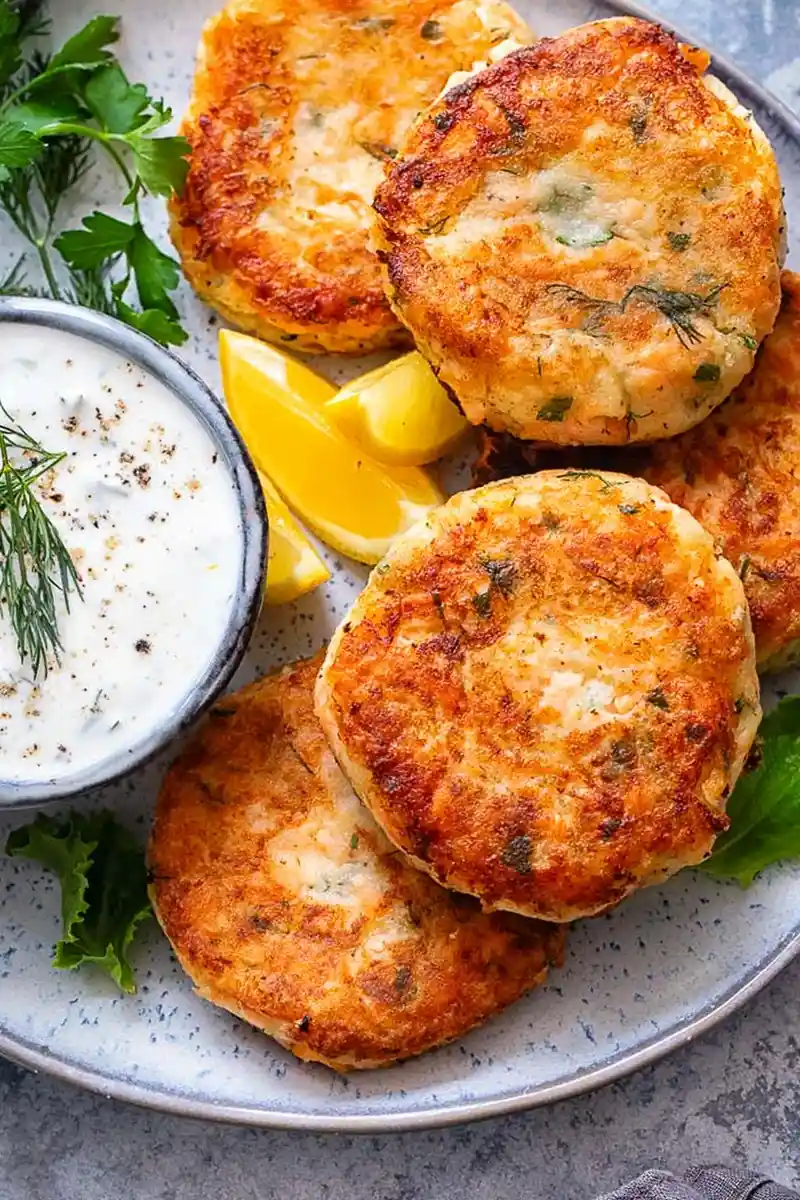
List of ingredients
- 4-5 potatoes (or 3 cups of mashed potatoes) – provides the soft interior structure.
- 450g/2cups canned or fresh cooked salmon – the primary protein source.
- 1 egg – acts as the primary binder for the patties.
- 1 lemon, juice and zest of – adds essential brightness and acidity.
- 1 tbsp flour, plus extra for dusting – helps bind the mixture and creates a crispy crust.
- 2 tbsp parsley or dill – adds a fresh, herbal note.
- salt and pepper to taste – basic seasoning for depth.
- 2 tbsp olive oil – used for pan-frying.
- 125ml/1/2 cup Greek yogurt – the creamy base for the sauce.
- 1 tbsp chives – provides a mild onion flavor to the dip.
- 1 clove garlic, pressed – adds a pungent, aromatic kick.
- 1 tsp lemon juice – ensures the sauce remains tangy.
- salt and pepper to taste – to balance the yogurt sauce.
step-by-step instructions
- Combine Base Ingredients: In a large mixing bowl, combine the mashed potatoes and salmon. Ensure no skin or bones are present in the salmon, and break in one egg.
- Add Flavorings and Binder: Stir in the lemon zest, lemon juice, chopped parsley or dill, and one tablespoon of flour. Mix the ingredients thoroughly to ensure an even distribution.
- Season: Add a pinch of salt and pepper to the mixture and stir once more.
- Shape the Cakes: Use an ice cream scoop to portion the mixture into even balls. Roll each ball in flour on a dusted surface and flatten slightly to form a patty shape.
- Pan-Fry: Heat olive oil in a pan and fry the cakes until they are golden brown and crunchy on both sides.
- Air Fryer Alternative: Preheat your air fryer to 240C/500F. Spray the cakes with oil and arrange them in the basket, cooking for 8-9 minutes until golden. Work in batches to avoid overcrowding.
- Prepare the Sauce: In a small bowl, mix together the Greek yogurt, lemon juice, chopped chives, and minced garlic.
- Final Sauce Touch: Season the sauce with salt and pepper. Let it sit for at least 15 minutes before serving to allow the flavors to meld.
Procedures for Selecting Quality Ingredients
Choosing Between Canned and Fresh Salmon
Canned salmon is a convenient and budget-friendly option that provides a softer texture. If using canned, ensure it is well-drained to prevent the cakes from becoming too wet. Fresh salmon, when poached or baked, offers a more refined flavor and a firmer flake.
Selecting the Best Potato Variety
Starchy potatoes like Russets are ideal for this recipe because they mash into a light, fluffy consistency. Waxy potatoes can result in a denser, gummier cake. If you are using leftover mashed potatoes, ensure they are chilled for easier shaping.
Evaluating Fresh Herb Options
Dill provides a classic, slightly anise-like flavor that pairs traditionally with salmon. Parsley offers a cleaner, peppery taste that brightens the dish. Using fresh herbs instead of dried is crucial for the aromatic profile of the patties.
Mastering the Binding Process
The Role of the Egg in Structure
The egg serves as the protein binder that prevents the cakes from crumbling during the frying process. Without it, the moisture from the potatoes and salmon would cause the patty to split. Ensure the egg is well-beaten into the mixture for uniform stability.
Using Flour for Exterior Crispiness
Dusting the patties in flour before frying creates a thin barrier that browns quickly. This technique prevents the salmon from sticking to the pan and adds a delicate crunch. Avoid using too much flour, as a thick layer can taste raw or powdery.
Controlling Moisture Levels
Excess moisture is the primary cause of salmon cakes falling apart. If the mixture seems too wet, add an extra teaspoon of flour or a tablespoon of breadcrumbs. Properly draining the canned salmon or patting fresh salmon dry is an essential step.
Optimal Cooking Techniques
Maintaining Pan Temperature
The olive oil should be shimmering but not smoking before adding the cakes. If the oil is too cold, the cakes will absorb the fat and become greasy. If the oil is too hot, the exterior will burn before the center is heated through.
Preventing Pan Overcrowding
Cooking only 5 or 6 cakes at a time ensures that the pan temperature remains constant. Overcrowding drops the heat of the oil, which leads to steaming rather than frying. This results in soggy cakes rather than crispy ones.
Air Fryer Calibration
When using an air fryer, spacing is critical for airflow. Use a light oil spray to ensure the edges brown evenly. This method is particularly effective for those who prefer a lower-fat option without sacrificing the golden exterior.
Customizing the Chive and Garlic Sauce
Adjusting the Yogurt Consistency
Depending on the brand of Greek yogurt, the sauce may be very thick or slightly runny. If it is too thick, stir in a few drops of water or extra lemon juice. For a thicker dip, use a strained Greek yogurt with a higher fat percentage.
Balancing the Garlic Pungency
Freshly pressed garlic is very potent and can easily overpower the salmon. Start with one small clove and taste the sauce after it has rested for 15 minutes. You can add more garlic if a sharper flavor is desired.
Adding Variation to the Herb Mix
While chives are the primary aromatic, adding a pinch of dried mint or fresh cilantro can change the flavor profile. These additions can make the sauce feel more Mediterranean or zesty. Always keep the lemon juice as it cuts through the richness of the yogurt.
Serving and Pairing Suggestions
Integrating Green Vegetables
Steamed broccoli or tenderstem broccoli provides a necessary textural contrast to the soft cakes. The bitterness of the greens balances the richness of the salmon and potato. A light vinaigrette on the vegetables can further enhance the meal.
Pairing with Roasted Asparagus
Roasted asparagus with a hint of mustard complements the lemon notes in the salmon cakes. The earthiness of the asparagus pairs well with the creamy garlic sauce. Serve them side-by-side for a visually appealing presentation.
Creating a Light Side Salad
A simple garden salad with mixed greens, cucumbers, and a lemon-olive oil dressing keeps the meal light. Avoid heavy cream-based dressings, as the yogurt sauce already provides plenty of creaminess. This ensures the salmon remains the star of the plate.
Storage and Preservation Guide
Refrigeration Parameters
Store leftover cooked salmon cakes in an airtight container in the refrigerator. They will remain fresh for 3 to 4 days. Keep the chive and garlic sauce in a separate container to prevent the cakes from absorbing moisture.
Freezing Uncooked Patties
You can freeze the cakes after assembly but before cooking. Place them on a parchment-lined baking sheet to flash-freeze them individually before transferring them to a bag. This prevents them from sticking together in a large block.
Handling Pre-Cooked Frozen Cakes
Cooked cakes can be frozen for up to three months. Wrap them tightly in foil and place them in a freezer bag to prevent freezer burn. This is an excellent way to prepare a batch for future quick meals.
Defrosting for Best Quality
Always defrost frozen salmon cakes in the refrigerator overnight. Avoid defrosting them at room temperature, as this can compromise the texture and safety of the fish. Once thawed, they can be reheated using the methods below.
Effective Reheating Methods
The Skillet Method
To restore the original crispiness, reheat the cakes in a skillet with a small amount of olive oil. Use medium heat and cook for 2-3 minutes per side. This method is superior to others because it reactivates the fried crust.
The Air Fryer Refresh
An air fryer is the fastest way to reheat the cakes without adding extra oil. Heat at 180C/350F for about 4-5 minutes. This ensures the center is hot while the exterior remains crunchy.
Why to Avoid the Microwave
Microwaving salmon cakes often leads to a rubbery texture and a soggy exterior. The moisture trapped inside the potato mash turns into steam, which softens the crust. If you must use a microwave, do so on low power for a very short duration.
Troubleshooting Common Problems
Fixing Patties That Crumble
If the cakes fall apart during frying, the binder is likely insufficient. Try adding another tablespoon of flour or an extra egg yolk to the mixture. Ensuring the potatoes are properly mashed without being too watery also helps.
Managing Excessive Oil Absorption
Soggy cakes are usually a result of oil that is not hot enough. Test the oil by dropping a small piece of potato into the pan; it should sizzle immediately. Patting the flour-dusted cakes gently to remove excess powder can also help.
Reducing Strong Fishy Odors
If the salmon has a very strong scent, increase the amount of lemon zest in the mixture. The citric acid neutralizes the fishy amines. Fresh parsley also helps to mask stronger odors and provides a cleaner taste.
Frequently Asked Questions
Can I use a different fish for this recipe?
Yes, any firm-fleshed fish like trout or cod can be used. Ensure the fish is cooked and flaked before adding it to the mashed potatoes. The proportions of binder and potato should remain the same.
How can I make these cakes gluten-free?
Replace the all-purpose flour with a gluten-free blend, cornstarch, or almond flour. The binding properties may vary slightly, so you might need a tiny bit more of the substitute to achieve the same consistency.
Can I substitute the Greek yogurt for something else?
Sour cream or mayonnaise are suitable alternatives for the sauce. Sour cream provides a similar tang, while mayonnaise offers a richer, saltier flavor. Adjust the lemon juice accordingly to balance the taste.
Do I have to use mashed potatoes?
While mashed potatoes provide the best texture, you could use mashed cauliflower for a lower-carb version. Be aware that cauliflower contains more water, so you will need to add more flour or breadcrumbs to keep the cakes from falling apart.
Is it necessary to let the sauce sit for 15 minutes?
Yes, the resting period allows the raw garlic and chives to infuse into the yogurt. This mellows the sharp bite of the garlic and creates a more cohesive flavor profile.
Print
Crispy Salmon Cakes with Creamy Chive and Garlic Sauce
- Total Time: 40 minutes
- Yield: 6 servings 1x
- Diet: General
Description
Soft and fluffy on the inside, crispy on the outside, these salmon cakes with chive and garlic sauce are a delicious and inexpensive treat.
Ingredients
- 4–5 potatoes (or 3 cups mashed potatoes)
- 450g canned or fresh cooked salmon
- 1 egg
- 1 lemon, juice and zest
- 1 tbsp flour, plus extra for dusting
- 2 tbsp parsley or dill
- Salt and pepper to taste
- 2 tbsp olive oil
- 125ml Greek yogurt
- 1 tbsp chives
- 1 clove garlic, pressed
- 1 tsp lemon juice
- Salt and pepper to taste
Instructions
- Combine: In a large mixing bowl, combine mashed potatoes and salmon, then stir in one egg.
- Season: Add the lemon zest, lemon juice, chopped parsley, and flour; mix well and season with a pinch of salt and pepper.
- Shape: Scoop the mixture into even-sized balls, roll them in flour on a dusted board, and flatten slightly to form patties.
- Cook: Fry the salmon cakes in hot olive oil until golden and crunchy, or air fry at 240C/500F for 8-9 minutes.
- Sauce: Mix yogurt, lemon juice, chopped chives, and minced garlic in a small bowl; season with salt and pepper and let sit for 15 minutes before serving.
Notes
For the best texture, salmon patties can sit in the fridge for one hour to firm up before cooking. Fresh salmon may be substituted for canned salmon for a superior taste.
- Prep Time: 20 minutes
- Cook Time: 20 minutes
- Category: Main
- Method: Frying
- Cuisine: British
Nutrition
- Serving Size: 2 cakes
- Calories: 264 kcal
- Sugar: 1.2 g
- Sodium: 842 mg
- Fat: 10.4 g
- Saturated Fat: 1.7 g
- Unsaturated Fat: 8.7 g
- Trans Fat: 0 g
- Carbohydrates: 21.4 g
- Fiber: 4.1 g
- Protein: 22 g
- Cholesterol: 70 mg