This nutrient-dense salad combines oven-roasted crispy rice with pan-seared salmon and a medley of fresh vegetables. It features a balance of textures and a spicy, creamy finish that makes it an ideal lunch or dinner option.
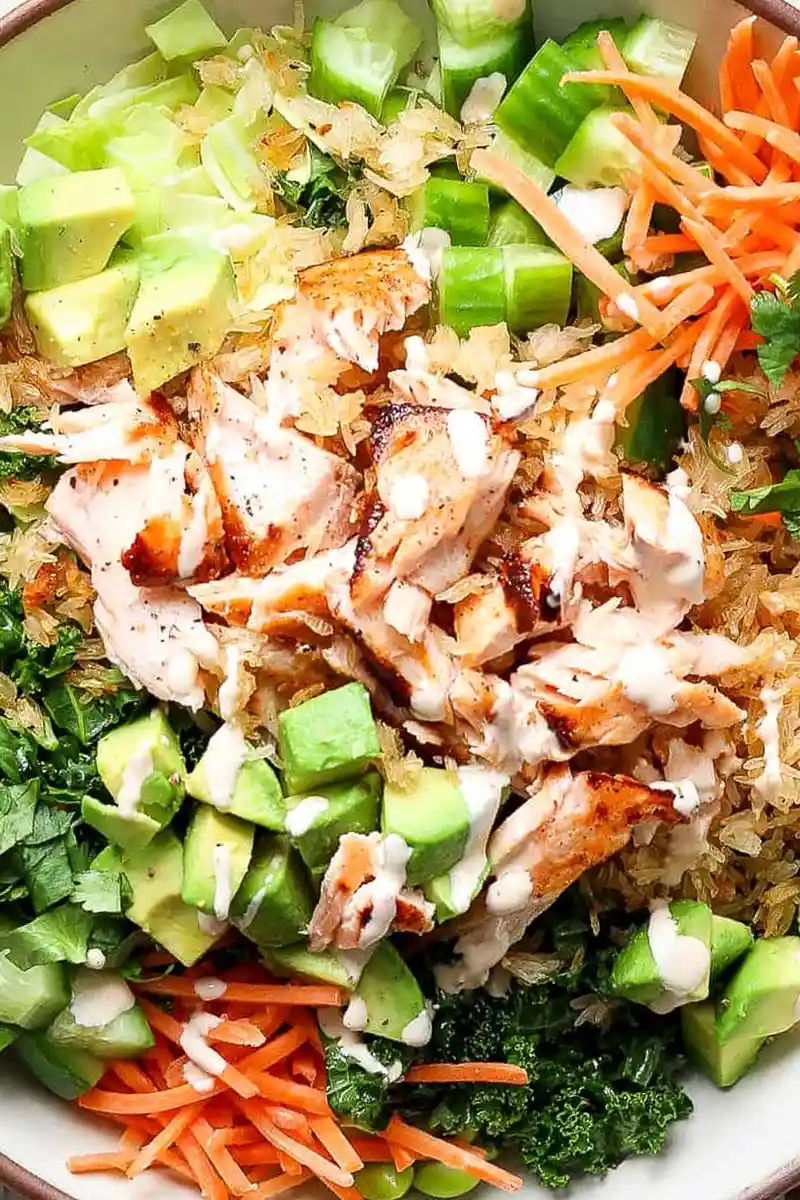
List of ingredients
- 4 cups cooked basmati rice (day old is best, but not required) – provides the crispy base.
- 1 tablespoon sesame oil – adds nuttiness to the rice.
- 2 teaspoons garlic chili sauce – adds heat and depth to the rice.
- 1/4 teaspoon kosher salt – enhances overall flavor.
- 1/8 teaspoon ground black pepper – adds a subtle spice.
- 1 cup mayonnaise – the base for the creamy dressing.
- 1/2 tablespoon sriracha (more, if desired) – provides the spicy kick.
- 2 tablespoons water (or until you have reached your desired consistency) – thins the dressing.
- 4 salmon fillets (fresh or thawed) – the primary protein.
- extra virgin olive oil – used for rubbing and searing salmon.
- kosher salt and ground black pepper – for seasoning the fish.
- 1 tablespoon soy sauce (sub tamari for gluten-free) – used for glazing the salmon.
- 2 cups green cabbage (chopped) – provides a crunchy base.
- 2 cups kale (chopped, massage with olive oil and salt) – adds earthy nutrients.
- 2 cups English cucumber (sliced and quartered) – adds freshness and hydration.
- 1 cup edamame (thawed) – adds plant-based protein.
- 2 avocados (diced) – provides creamy healthy fats.
- 1/2 cup matchstix carrots – adds color and crunch.
- 1/2 cup fresh cilantro (chopped) – adds a bright, herbaceous note.
- 1/2 cup green onions (sliced) – adds a mild onion flavor.
- 1/2 cup sesame ginger vinaigrette – used to coat the vegetables.
step-by-step instructions
- Preheat Oven: Set your oven to 425°F to ensure it is fully hot before adding the rice.
- Make Crispy Rice: On a large, rimmed baking sheet, combine 4 cups cooked basmati rice, 1 tablespoon sesame oil, 2 teaspoons garlic chili sauce, 1/4 teaspoon kosher salt, and 1/8 teaspoon ground black pepper. Toss the mixture to coat and spread it out evenly. Bake for about 15 minutes, tossing halfway through. Continue cooking and tossing in 5-minute increments until the rice reaches your desired crispness, which typically takes 25-30 minutes total. Set aside.
- Make Dressing: In a small bowl, mix together 1 cup mayonnaise, 1/2 tablespoon sriracha, and 2 tablespoons water. Adjust the water amount until the consistency is smooth and pourable.
- Prep Salmon: Reduce the oven temperature to 400°F. Place 4 salmon fillets on a large plate or cutting board. Rub each fillet with extra virgin olive oil and season with kosher salt and ground black pepper.
- Cook Salmon: Heat a large cast iron skillet over medium-high heat and drizzle with a small amount of olive oil. Sear the salmon skin side up for 2-3 minutes. Add 1 tablespoon of soy sauce to the pan while searing. Flip the salmon and transfer the entire skillet to the oven to bake for 12-14 minutes, or until the fish is fully cooked and flakes easily with a fork.
- Assemble Salads: Divide the chopped cabbage, kale, cucumber, edamame, diced avocado, matchstix carrots, cilantro, and green onions evenly among serving bowls. Drizzle each bowl with some sesame ginger vinaigrette and toss to coat the vegetables. Place a cooked salmon fillet and a portion of crispy rice on top.
- Serve: Drizzle the desired amount of sriracha dressing over the salmon and rice and serve immediately.
Optimizing the Crispy Rice
Use Long Grain Basmati for Better Texture
Basmati rice is ideal because its long grains stay separate rather than clumping together. This separation allows the oil and heat to reach more surface area, resulting in a more uniform crunch. Jasmine rice is an acceptable alternative if basmati is unavailable.
Utilize Day-Old Chilled Rice
Rice that has been refrigerated overnight loses excess surface moisture. This dryness allows the rice to crisp up faster in the oven without becoming mushy. If using fresh rice, spread it on a tray and let it cool completely in the fridge for at least two hours.
Prepare Microwaveable Rice for Speed
Pre-cooked microwaveable rice pouches work well because they often have a lower moisture content than home-cooked rice. Simply empty the pouches and proceed with the seasoning and baking steps. This is a useful time-saver for weekday meal preparation.
Salmon Cooking Techniques
Searing in Cast Iron for Heat Retention
A cast iron skillet is recommended because it holds heat more consistently than stainless steel or non-stick pans. This ensures a deep, golden-brown sear on the salmon without the temperature dropping when the fish hits the pan. Make sure the pan is shimmering hot before adding the oil.
Using Soy Sauce as a Pan Glaze
Adding soy sauce directly to the pan during the searing process creates a savory glaze that caramelizes on the fish. This adds an umami layer that complements the spicy sriracha dressing. Be careful not to add it too early, as the sugars in the soy sauce can burn if overheated.
Checking Salmon for Proper Doneness
Salmon is perfectly cooked when it reaches an internal temperature of 145°F or when the flesh transitions from translucent to opaque. The easiest test is to press the top of the fillet with a fork; if the flakes separate easily, it is done. Avoid overcooking to prevent the fish from becoming dry.
Preparing the Vegetable Base
Massage Kale to Improve Texture
Raw kale can be tough and bitter if served plain. Rubbing the chopped leaves with a small amount of olive oil and salt breaks down the fibrous cell walls. This makes the kale softer, easier to chew, and more receptive to the vinaigrette.
Slicing Cucumber for Maximum Crunch
English cucumbers are preferred because they have thinner skins and fewer seeds, which prevents the salad from becoming watery. Slicing them into quarters provides a substantial bite that contrasts with the creamy avocado. Keep them chilled until the moment of assembly for peak freshness.
Incorporating Edamame for Protein
Ensure that frozen edamame is fully thawed and patted dry before adding it to the bowl. Excess water from thawing can dilute the sesame ginger vinaigrette. Edamame adds a buttery texture and a boost of plant-based protein to the meal.
Dressing and Flavor Adjustments
Balancing the Sriracha Heat Level
The amount of sriracha can be adjusted based on individual spice tolerances. For those who prefer a milder taste, start with 1/2 tablespoon and taste before adding more. If you want a more intense heat, adding a pinch of cayenne pepper or extra chili garlic sauce can enhance the profile.
Thinning the Dressing with Water
The addition of water is critical for transforming thick mayonnaise into a drizzle-able sauce. Add water one tablespoon at a time while whisking to reach the desired consistency. A thinner dressing distributes more evenly across the salmon and crispy rice.
Using Tamari for Gluten-Free Needs
For those avoiding gluten, replace the soy sauce in the salmon sear with tamari. Tamari provides the same saltiness and color as traditional soy sauce but is fermented without wheat. Ensure the sesame ginger vinaigrette used is also certified gluten-free.
Storage and Meal Prep Advice
Storing Components Separately
To maintain the integrity of the textures, store the crispy rice, cooked salmon, and raw vegetables in separate airtight containers. Mixing them too early will cause the rice to lose its crunch and the vegetables to wilt. This method keeps the ingredients fresh for up to three days.
Preventing Avocado Oxidation
Diced avocado tends to brown quickly once exposed to air. Store the avocado in a separate container with a squeeze of lime or lemon juice to slow oxidation. Add the avocado to the salad immediately before serving for the best appearance.
Prepping the Vegetable Mix
The cabbage, carrots, and cucumber can be chopped and stored together in a large container. However, do not add the sesame ginger vinaigrette until you are ready to eat. Dressing the greens too early will cause them to release water and lose their crispness.
Reheating and Refreshing
Reviving Crispy Rice in the Air Fryer
If the rice has lost its crunch in the fridge, an air fryer is the best way to restore it. Heat the rice at 350°F for 3-5 minutes, shaking the basket halfway through. This removes moisture and brings back the oven-baked texture without overcooking the grains.
Gently Warming the Salmon
Salmon can easily overcook during reheating, leading to a rubbery texture. The best method is to warm it in a low-heat oven or a toaster oven for a few minutes. Avoid the microwave if possible, as it can cause the fish to smell stronger and dry out quickly.
Refreshing the Greens
If the salad base has been stored for a day, toss it with a fresh squeeze of lime juice. This brightens the flavors and wakes up the greens before adding the warmed protein and rice. It adds a layer of acidity that cuts through the richness of the mayonnaise dressing.
Troubleshooting Common Issues
Rice Remaining Too Soft After Baking
If the rice is not crisping, it is likely due to overcrowding the baking sheet. Ensure the rice is spread in a thin, even layer so that air can circulate around each grain. If the pan is too full, the rice will steam rather than roast.
Salmon Sticking to the Pan
Salmon sticking usually happens when the pan is not hot enough or not enough oil was used. Wait until the oil is shimmering before adding the fish. Avoid moving the fillet too early; once a crust forms, the salmon will naturally release from the surface of the pan.
Dressing Separating or Clumping
If the sriracha mayonnaise dressing appears separated, whisk it vigorously with a fork or a small whisk. Ensure the mayonnaise is at room temperature before mixing to achieve a smoother emulsion. If it remains too thick, add a teaspoon of water at a time.
Frequently Asked Questions
Can I use brown rice instead of basmati?
Yes, brown rice can be used, although it may take slightly longer in the oven to reach the same level of crispness. Because brown rice is denser, ensure it is well-coated in sesame oil to prevent it from becoming too hard.
Is there a substitute for mayonnaise in the dressing?
Greek yogurt is a practical substitute for a tangier, lower-calorie option. If using yogurt, you may need to add a pinch of sugar or honey to balance the acidity and a small amount of oil to mimic the richness of mayonnaise.
How do I keep the kale from being too tough?
The key is the massage process. Use your hands to firmly rub the olive oil and salt into the leaves for 2-3 minutes until the kale looks darker and feels softer. This process is essential for raw kale salads.
Can I cook the salmon in the oven without searing?
You can bake the salmon entirely in the oven at 400°F for 15-20 minutes. However, you will miss the caramelized crust and depth of flavor provided by the pan-sear and the soy sauce glaze.
Print
Crispy Rice Salmon Salad with Creamy Sriracha Dressing
- Total Time: 65 minutes
- Yield: 6 servings 1x
- Diet: Dairy-Free
Description
Our ultimate Spicy Salmon Crispy Rice Salad recipe is so fresh and it packs a real flavor punch! A delicious summer salad!
Ingredients
- 4 cups cooked basmati rice
- 1 tablespoon sesame oil
- 2 teaspoons garlic chili sauce
- ¼ teaspoon kosher salt
- ⅛ teaspoon ground black pepper
- 1 cup mayonnaise
- ½ tablespoon sriracha
- 2 tablespoons water
- 4 salmon fillets
- extra virgin olive oil
- kosher salt and ground black pepper
- 1 tablespoon soy sauce
- 2 cups green cabbage, chopped
- 2 cups kale, chopped
- 2 cups English cucumber, sliced and quartered
- 1 cup edamame, thawed
- 2 avocados, diced
- ½ cup matchstix carrots
- ½ cup fresh cilantro, chopped
- ½ cup green onions, sliced
- ½ cup sesame ginger vinaigrette
Instructions
- Prep: Preheat oven to 425℉.
- Make Crispy Rice: On a large, rimmed baking sheet, put 4 cups cooked basmati rice, 1 tablespoon sesame oil, 2 teaspoons garlic chili sauce, ¼ teaspoon kosher salt, and ⅛ teaspoon ground black pepper. Toss to coat and spread out evenly. Bake in preheated oven for about 15 minutes, tossing halfway. Keep cooking and tossing in 5 minute increments until it reaches your desired crispness (for us this took a total of 25-30 minutes). Set aside, while you cook and prep the rest of the salad.
- Make Dressing: While the rice bakes, in a small bowl and mix together 1 cup mayonnaise, ½ tablespoon sriracha, and 2 tablespoons water. Set aside.
- Prep Salmon: After making the crispy rice, drop the oven temperature to 400℉. Place 4 salmon fillets on a large plate or cutting board. Rub fillets with extra virgin olive oil and season with kosher salt and ground black pepper.
- Cook Salmon: Bring a large cast iron skillet to a medium-high heat and drizzle a little bit of olive oil on the bottom of the pan. Sear salmon (skin side up) for 2-3 minutes. Add 1 tablespoon soy sauce to the pan as they sear. Flip Salmon and move the entire pan to the oven to bake for 12-14 minutes or until salmon is fully cooked and flakes easily with a fork.
- Assemble Salads: Divide the cabbage, kale, cucumber, edamame, diced avocado, carrots, cilantro, and green onions evenly between bowls. Drizzle with some sesame ginger vinaigrette and toss to coat. Add cooked salmon fillet and crispy rice on top.
- Serve: Drizzle your desired amount of sriracha dressing on top of the salad and enjoy!
Notes
For best results use day-old rice or cooled rice. You can also use microwaveable rice. Adjust garlic chili sauce and sriracha to your preferred spice level.
- Prep Time: 15 minutes
- Cook Time: 50 minutes
- Category: Dinner/Entree, Lunch, Salad
- Method: Oven, Stove Top
- Cuisine: American
Nutrition
- Serving Size: 1 serving
- Calories: 587 kcal
- Sugar: 9 g
- Sodium: 931 mg
- Fat: 29 g
- Saturated Fat: 4 g
- Unsaturated Fat: 22 g
- Trans Fat: 0.02 g
- Carbohydrates: 52 g
- Fiber: 8 g
- Protein: 30 g
- Cholesterol: 68 mg