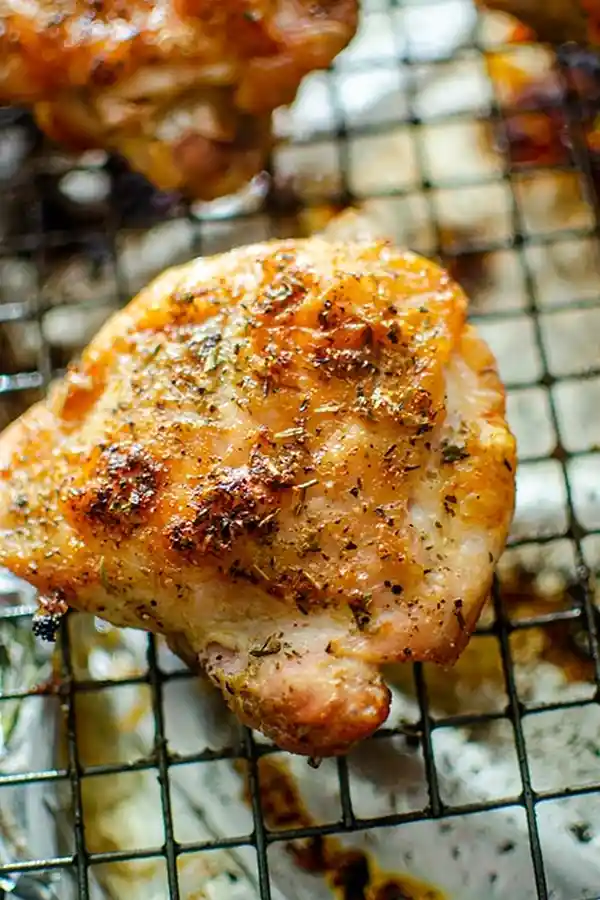
This method delivers succulent chicken thighs with exceptionally crispy skin using a high-heat roasting technique. By utilizing a wire rack, you ensure air circulates evenly for professional results in a home oven.
List of ingredients
- 8 bone-in, skin-on chicken thighs – trim excess fat for better crisping.
- 2 tbsp olive oil – used to bind spices and conduct heat.
- 2 tsp dried oregano – provides a robust, earthy flavor.
- 1 tsp garlic powder – adds savory depth without burning.
- 1/2 tsp salt – enhances overall flavor profile.
- Freshly ground black pepper – provides a subtle spicy kick.
step-by-step instructions
- Preheat: Set your oven to 450F to ensure an immediate sear upon entry.
- Season: Brush both sides of each chicken thigh with olive oil. Sprinkle the oregano, garlic powder, salt, and pepper evenly on both sides.
- First Roast: Place the chicken skin side down on a wire rack set over a rimmed sheet pan. Roast for 18 minutes.
- Flip and Finish: Flip the thighs over to skin side up. Roast for an additional 20 minutes or until the chicken is fully cooked through.
Pro Tips for Maximum Crispiness
Use a Wire Cooling Rack
Placing the chicken on a wire rack lifts the meat away from the bottom of the baking sheet. This prevents the thighs from sitting in their own rendered fat, which would otherwise steam the bottom. It allows hot air to circulate 360 degrees around the meat for an air-fryer effect.
Pat the Skin Completely Dry
Surface moisture is the enemy of crispiness because it turns into steam during the cooking process. Use paper towels to thoroughly pat the skin dry before applying the olive oil. Dry skin allows the heat to penetrate and crisp the proteins more efficiently.
Trim Excess Overhanging Fat
While some fat is necessary for flavor, large flaps of excess skin or fat can burn or prevent the meat from making contact with the heat. Trim any loose pieces of skin around the edges of the thigh. This ensures the skin tightens and crisps evenly across the entire surface.
Avoid Crowding the Baking Sheet
Leave at least an inch of space between each chicken thigh on the wire rack. If the pieces are too close together, they will release moisture that traps steam between them. Proper spacing ensures the dry heat of the oven can reach every side of the chicken.
Seasoning Customizations and Substitutions
Replacing Dried Oregano
If you do not have oregano, dried thyme or rosemary are excellent woodier alternatives that withstand high heat. Basil can also be used, though it is more delicate and may brown faster. For a more floral note, a mix of dried marjoram and savory works well.
Substituting Garlic Powder
Onion powder is the closest substitute for garlic powder and provides a similar savory base. If using fresh minced garlic, be aware that it can burn at 450F. To avoid this, mix the fresh garlic into the oil as a paste and apply it primarily to the meat side rather than the skin.
Alternative Cooking Oils
While olive oil is standard, avocado oil or grapeseed oil are superior for high-heat roasting due to their higher smoke points. These oils remain stable at 450F and beyond without breaking down or smoking. This keeps the flavor clean and prevents the kitchen from filling with smoke.
Adding Heat with Spicy Elements
For a spicy version, add 1/2 teaspoon of crushed red pepper flakes or cayenne pepper to the spice mix. Smoked paprika is another great addition that adds a deep red color and a subtle charred flavor. These additions complement the savory notes of the garlic and oregano.
Optimal Serving Suggestions
Pairing with Roasted Root Vegetables
Carrots, parsnips, and Brussels sprouts can be roasted on a separate tray at the same temperature. The sweetness of roasted root vegetables balances the savory saltiness of the chicken. Toss them in olive oil and salt to match the flavor profile of the main dish.
Serving with a Fresh Green Salad
A crisp salad with a lemon-based vinaigrette cuts through the richness of the chicken skin. Use baby spinach, arugula, or mixed greens topped with thinly sliced cucumbers. The acidity in the dressing cleanses the palate between bites of juicy meat.
Adding a Bright Citrus Finish
Squeeze fresh lemon juice over the chicken immediately after removing it from the oven. The acid brightens the flavors of the dried herbs and cuts through the rendered fat. A few lemon wedges served on the side allow guests to customize the acidity level.
Complementing with Ancient Grains
Serve the thighs over a bed of quinoa, farro, or wild rice to soak up the natural juices. These grains provide a hearty texture and a nutty flavor that pairs well with roasted poultry. Stirring in some fresh parsley can add a pop of color and freshness.
Storage and Reheating Guidelines
Safe Refrigeration Duration
Store leftover roasted chicken thighs in an airtight container in the refrigerator for up to 3 to 4 days. Ensure the chicken has cooled slightly before sealing to prevent excess condensation. Keeping the meat in a single layer helps maintain quality during storage.
Freezing Roasted Chicken
You can freeze cooked thighs for up to 3 months by wrapping them tightly in foil and placing them in a freezer bag. Thaw them slowly in the refrigerator overnight before reheating. This prevents the meat from becoming toughened by rapid temperature changes.
Restoring Crispiness in the Oven
Avoid the microwave for reheating as it makes the skin rubbery and tough. Instead, place the chicken on a baking sheet at 375F for about 10 minutes. This allows the fats in the skin to render again, restoring much of the original crunch.
Using an Air Fryer for Fast Reheating
An air fryer is the most effective tool for reheating roasted chicken. Set the appliance to 350F and heat the thighs for 3 to 5 minutes. This method quickly dries the skin’s surface while keeping the interior moist and tender.
Common Cooking Troubleshooting
What to do if Skin is Not Crispy
If the chicken is cooked through but the skin is still pale, turn on the broiler for 2 to 3 minutes. Keep a very close eye on the meat to prevent burning. This intense top-down heat will quickly blister and brown the skin.
Preventing the Meat from Drying Out
Use a digital meat thermometer to check the internal temperature of the thickest part of the thigh. Chicken thighs are safe at 165F, but they often taste better and more tender at 175F. Avoid overcooking beyond 185F to prevent the meat from becoming stringy.
Managing Smoke in the Oven
If your oven begins to smoke, it is likely due to fat dripping from the wire rack onto the pan. Place a piece of parchment paper or a thin layer of salt on the bottom of the sheet pan to absorb the grease. This prevents the fat from burning and smoking.
Dealing with Under-cooked Centers
If the skin is perfectly brown but the center is under-cooked, lower the oven temperature to 400F. Cover the chicken loosely with foil to prevent further browning and cook for another 5 to 10 minutes. This allows the heat to penetrate the bone without burning the exterior.
Frequently Asked Questions
Can I use boneless chicken thighs?
Yes, but you must reduce the roasting time significantly. Boneless thighs cook faster and can dry out quickly at 450F. Check them at 15 minutes and likely finish them by 20 to 25 minutes total.
Should I bring the chicken to room temperature?
Allowing the chicken to sit out for 20 to 30 minutes before roasting helps it cook more evenly. Cold meat can cause the exterior to overcook before the center reaches the safe temperature. This is especially important for thicker cuts.
Can I use a different roasting temperature?
You can roast at 375F, but the skin will not be as crispy and the cook time will increase. High heat is the key to the specific texture achieved in this recipe. Lower temperatures result in a more traditional, softer roast.
What is the safe internal temperature for thighs?
The USDA recommends a minimum internal temperature of 165F for poultry. However, dark meat like thighs contains more connective tissue that breaks down better at higher temperatures. Aiming for 175F ensures the meat is tender and fully cooked.
Do I need to soak the chicken first?
Soaking is not necessary for this roasting method. Patting the chicken dry is much more important for the final result. If you prefer to brine, do so for several hours and ensure the skin is completely dry before seasoning.
Selecting the Best Chicken Thighs
Choosing Bone-In vs. Boneless
Bone-in thighs are preferred for roasting because the bone protects the meat from overcooking. This results in a juicier final product with more depth of flavor. The bone also helps the meat hold its shape during the high-heat process.
Identifying Quality Skin
Look for thighs with skin that is intact and not torn. Skin that is pale and plump generally renders better than skin that looks dry or shriveled in the package. Ensure there are no large bruises or discolorations on the skin surface.
Understanding the Fat Cap
Some thighs come with a thick layer of fat on one side. While some fat is good for basting the meat, an excessive amount can lead to flare-ups or a greasy texture. Trim the most prominent fat deposits with kitchen shears for a cleaner roast.
Oven and Equipment Guide
The Importance of Rimmed Baking Sheets
Always use a baking sheet with a rim to contain the rendered chicken fat. Without a rim, oil can leak into the bottom of your oven, causing smoke and potential fire hazards. A heavy-duty aluminum sheet is best for even heat distribution.
Selecting the Right Wire Rack
Use a stainless steel cooling rack that fits inside your baking sheet without touching the edges. This ensures the air can flow freely underneath and around the sides of the chicken. Avoid non-stick coated racks if they are not rated for 450F.
Using Digital Thermometers
A probe thermometer is the only way to guarantee precision and safety. Insert the probe into the thickest part of the thigh, avoiding the bone, to get an accurate reading. This eliminates the guesswork and prevents the meat from drying out.
Print
Crispy Oven-Roasted Chicken Thighs
- Total Time: 43 minutes
- Yield: 4 servings 1x
- Diet: Gluten Free
Description
Make perfectly roasted chicken thighs in the oven every single time! These chicken thighs are crispy on the outside while being tender and juicy on the inside.
Ingredients
- 8 bone-in skin-on chicken thighs, excess fat trimmed
- 2 tbsp olive oil
- 2 tsp dried oregano
- 1 tsp garlic powder
- 1/2 tsp salt
- Freshly ground black pepper
Instructions
- Step 1: Preheat oven to 450F.
- Step 2: Brush both sides of chicken with olive oil and sprinkle both sides of chicken evenly with oregano, garlic powder, salt and pepper.
- Step 3: Roast, skin side down, on a wire rack on a sheet pan for 18 minutes.
- Step 4: Flip chicken over and roast for another 20 minutes or until cooked through.
Notes
Using a wire rack on a rimmed baking sheet allows air to circulate around the chicken, ensuring crispiness. Dried herbs are recommended over fresh for this recipe because they withstand the high roasting temperature better.
- Prep Time: 5 minutes
- Cook Time: 38 minutes
- Category: Main Course
- Method: Roasting
- Cuisine: American, Mediterranean
Nutrition
- Serving Size: 2 chicken thighs
- Calories: 562 kcal
- Sugar: 1 g
- Sodium: 466 mg
- Fat: 45 g
- Saturated Fat: 11 g
- Unsaturated Fat: 34 g
- Trans Fat: 0 g
- Carbohydrates: 2 g
- Fiber: 1 g
- Protein: 37 g
- Cholesterol: 221 mg