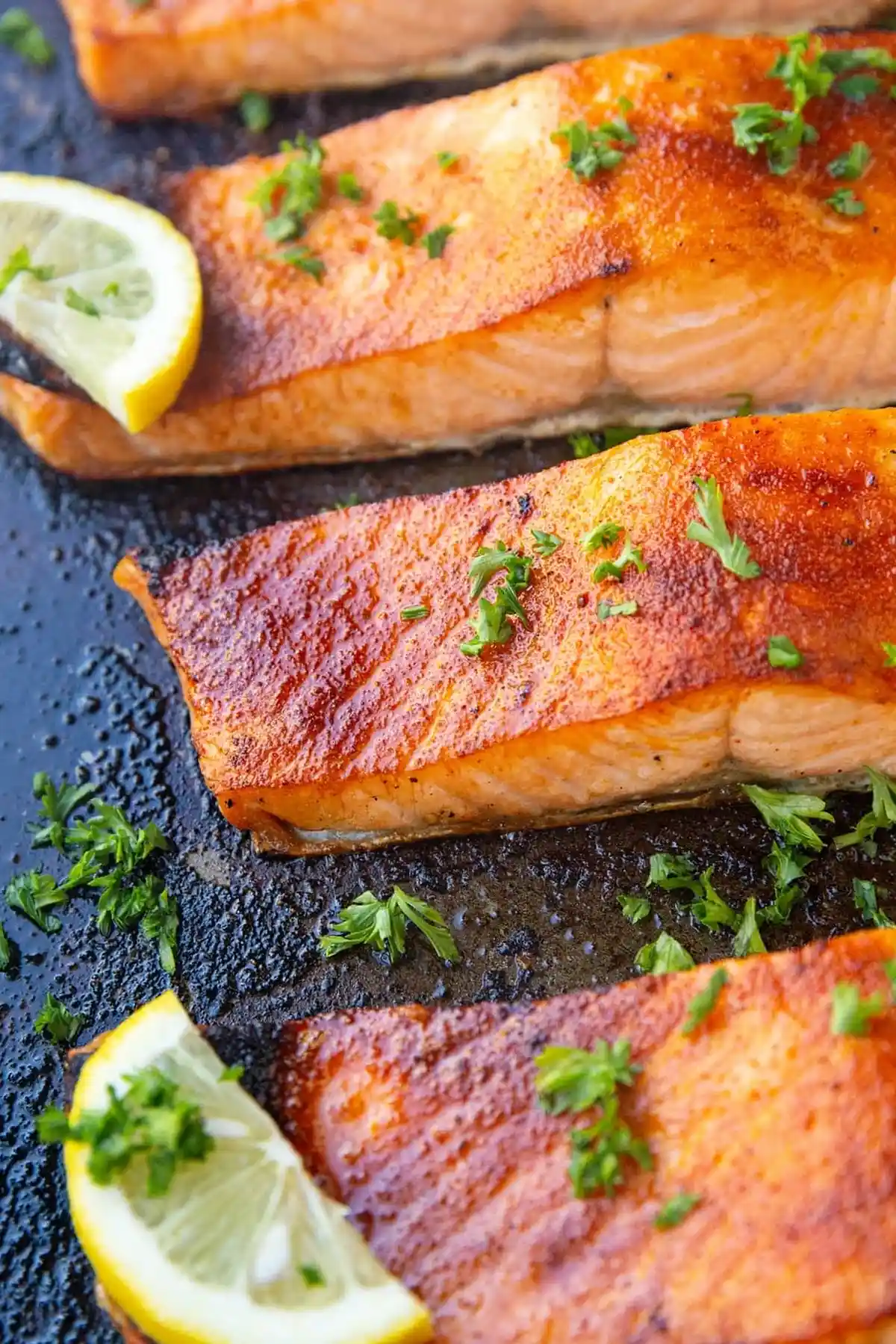
This cooking method combines baking and broiling to create a perfectly crisp exterior while keeping the inside tender. It is a fast, reliable way to achieve restaurant-quality seafood in your own kitchen.
List of ingredients
- 1 to 2 pounds salmon, cut into individual filets – use skin-on for the best texture.
- 1 Tbsp avocado oil – used for coating and preventing sticking.
- 1/2 tsp sea salt, to taste – enhances the natural flavors of the fish.
- 1 tsp garlic powder – adds a savory, bold punch.
- 1 tsp paprika – provides a hint of smokiness and color.
step-by-step instructions
- Prepare the oven: Preheat your oven to 420 degrees Fahrenheit. Move one of the oven racks to a position near the bottom, such as the second shelf up.
- Prep the pan: Coat a rimmed baking sheet or a casserole dish with a thin layer of avocado oil to ensure the fish does not stick.
- Oil the fish: Place the salmon filets in the dish skin side down. Drizzle avocado oil over the flesh and coat it thoroughly to ensure even baking.
- Season: Sprinkle the sea salt, garlic powder, and paprika evenly over the top of each filet.
- Bake: Place the pan on the lower shelf and bake for 8 to 10 minutes. The salmon is ready for the next step when it is fully pink and the white fat begins to appear.
- Switch to broil: Remove the salmon from the oven and change the setting to High Broil. Move the oven rack to the second or third position from the top.
- Broil for crispness: Place the salmon under the broiler for 4 to 8 minutes. Cook until the top reaches your preferred level of crispness. Avoid the very top rack to prevent fat from hitting the heating element.
- Check temperature: Use a meat thermometer in the thickest part of the fish. Aim for 125 degrees Fahrenheit for medium or 145 degrees Fahrenheit for fully cooked.
- Finish and serve: Serve immediately with your choice of sides and fresh lemon wedges or a drizzle of soy sauce.
Optimal Salmon Selection
Using Atlantic Salmon for Richness
Atlantic salmon is highly recommended for this recipe due to its high fat content. The extra fat helps the fish remain juicy during the high-heat broiling process. This variety typically results in a more buttery texture.
Choosing King Salmon for Nutrition
King salmon is an excellent choice for those prioritizing omega-3 fatty acids. It has a rich flavor and a firm texture that holds up well under the broiler. It is often considered one of the most premium options for baking.
Adjusting for Sockeye or Coho Salmon
Sockeye and Coho salmon are leaner and usually have thinner filets. Because they have less fat, they cook faster and can dry out quickly. Reduce the baking and broiling times slightly to prevent overcooking.
Using Fresh vs. Frozen Fillets
Fresh filets from the seafood counter provide the best texture and flavor. If using frozen salmon, ensure it is completely thawed in the refrigerator before seasoning. Cooking frozen fish directly can lead to uneven doneness and excess moisture.
High-Heat Oil Preferences
Why Avocado Oil is the Best Choice
Avocado oil has a very high smoke point, making it ideal for ovens set to 420 degrees and high broilers. It does not break down or smoke at these temperatures. It also has a neutral flavor that does not overpower the fish.
Using Extra Virgin Olive Oil
Olive oil is a suitable substitute if avocado oil is unavailable. While it has a slightly lower smoke point, it works well for most home ovens. Be mindful that the flavor is more distinct, which may slightly alter the taste of the crust.
Flavor and Seasoning Customization
Integrating Onion Powder
Adding onion powder alongside garlic powder creates a more complex, savory base. It complements the sweetness of the salmon and the smokiness of the paprika. Use equal parts of both for a balanced flavor profile.
Substituting with Lemon Pepper
For a brighter, more acidic taste, replace the salt and garlic powder with lemon pepper seasoning. This pairs naturally with seafood and reduces the need for extra lemon wedges at the end. Adjust the salt amount based on the seasoning brand.
Applying Custom Dry Rubs
Any favorite seafood rub can be used in place of the paprika and garlic powder. Ensure the rub does not contain too much sugar, as sugar can burn quickly under the high broiler. Apply the rub firmly to the flesh for a thicker crust.
Temperature and Doneness Guide
Targeting Medium Doneness
For a medium result, pull the salmon when the internal temperature hits 125 degrees Fahrenheit. The fish will be tender and slightly translucent in the very center. This is often preferred in restaurants for its juicy texture.
Achieving Fully Cooked Salmon
Following USDA guidelines, fully cooked salmon should reach an internal temperature of 145 degrees Fahrenheit. The flesh will be opaque and flake easily with a fork. This is the safest option for those who prefer no translucency.
Managing Thinner Fillet Sections
The tapered edges of a salmon filet cook much faster than the center. Keep a close eye on these areas during the broiling phase. Remove the fish if the edges begin to look too dark, even if the center needs more time.
Using a Meat Thermometer
Relying on a digital meat thermometer is the only way to ensure precision. Insert the probe into the thickest part of the filet without touching the pan. This prevents overcooking and ensures the fish remains moist.
Suggested Side Dish Pairings
Roasting Asparagus Simultaneously
Asparagus can be cooked on the same baking sheet as the salmon. Trim the ends, toss them in avocado oil and salt, and place them on the middle shelf. They will roast perfectly during the 8-10 minute baking phase.
Serving with Mixed Roasted Vegetables
A medley of carrots, zucchini, and bell peppers provides a colorful and nutritious balance. Roast these at 420 degrees before starting the salmon, as they take longer to cook. Serve them warm alongside the crisp fish.
Adding a Citrus Finish
Fresh lemon wedges are essential for cutting through the richness of the salmon fat. Squeeze the juice over the fish immediately after removing it from the oven. The acidity brightens the flavors of the garlic and paprika.
Using Soy Sauce for Umami
A light drizzle of soy sauce adds a savory, salty dimension to the dish. This is especially effective if you used a simpler seasoning blend. It pairs well with steamed rice or sautéed greens.
Storage and Meal Prep
Tempering Salmon Before Cooking
Let the salmon sit at room temperature for a few minutes before putting it in the oven. This helps the fish cook more evenly from the edge to the center. Avoid leaving it out for more than 30 minutes for food safety.
Refrigerating Leftovers
Store cooked salmon in an airtight container in the refrigerator for up to 5 days. To maintain quality, ensure the fish is completely cooled before sealing the lid. This prevents steam from making the crispy skin soggy.
Best Reheating Methods
To reheat salmon without drying it out, use a low-temperature oven or an air fryer. Avoid the microwave, as it can make the fish rubbery. A quick toast in a pan over medium heat can also restore some crispness to the skin.
Planning Portion Sizes
Plan for approximately 1/2 pound of salmon per person for average eaters. For those with larger appetites, increase the portion to 3/4 or 1 pound. This ensures everyone is satisfied with the nutrient-dense meal.
Troubleshooting and Safety
Preventing Salmon from Sticking
Always oil both the pan and the fish itself to create a dual barrier. If the salmon still sticks, ensure you are using a high-quality non-stick sheet or parchment paper. Allow the fish to rest for a minute before flipping or lifting.
Avoiding Broiler Oven Fires
Never place the salmon on the highest rack during the broiling phase. If the fat drips directly onto the heating element, it can cause flare-ups or a fire. The second or third rack from the top is the safest position.
Fixing Overcooked Fish
If the salmon becomes too dry, serve it flaked into a salad or a rice bowl. Adding a creamy sauce, such as a dill or yogurt-based dressing, can add moisture back into the dish. This transforms a mistake into a new meal.
Frequently Asked Questions
Can I use salmon steaks?
Yes, salmon steaks work well with this method. Because they are often thicker than filets, you may need to increase the initial baking time by a few minutes.
How do I know when the salmon is done?
The fish is done when the flesh changes from translucent to opaque and the white albumin (fat/protein) appears on the surface. A thermometer is the most accurate tool.
Can I cook this without the skin?
Yes, you can use skinless filets. However, the skin acts as a protective layer that keeps the bottom of the fish moist during the high-heat process.
What is the best oven rack position?
Use the lower shelf (second from bottom) for baking to cook the interior, and the upper-middle shelf (second or third from top) for broiling to crisp the top.
Print
Crispy Broiled Salmon
- Total Time: 20 minutes
- Yield: 4 servings 1x
- Diet: Pescatarian
Description
The absolute best baked salmon recipe! By first baking and then broiling salmon, we’re left with the most amazing crispy texture on the outside yet tender juicy salmon on the inside!
Ingredients
- 1 to 2 pounds salmon, cut into individual filets
- 1 Tbsp avocado oil
- 1/2 tsp sea salt
- 1 tsp garlic powder
- 1 tsp paprika
Instructions
- Step: Preheat the oven to 420 degrees Fahrenheit and move one of the oven racks to a shelf near the bottom.
- Step: Coat a casserole dish or rimmed baking sheet with a thin layer of avocado oil.
- Step: Place the salmon filets in the baking dish skin side down and drizzle with avocado oil.
- Step: Sprinkle the salmon with sea salt, garlic powder, and paprika.
- Step: Bake on the lower shelf of the oven for 8 to 10 minutes, or until the salmon is fully pink and the fat appears white.
- Step: Change the oven to the High Broil setting and move one of the oven racks to the shelf that’s either 2nd or 3rd from the top.
- Step: Broil salmon for 4 to 8 minutes, or until it has reached your desired level of crisp and doneness.
- Step: Serve salmon with your choice of side dishes and fresh lemon wedges or soy sauce.
Notes
Use a meat thermometer for accuracy: aim for 125°F for medium or 145°F for fully cooked. Be careful with thinner filets as they burn faster under the broiler. Store leftovers in an airtight container in the refrigerator for up to 5 days.
- Prep Time: 5 minutes
- Cook Time: 15 minutes
- Category: Seafood Main Dishes
- Method: Baking and Broiling
- Cuisine: American
Nutrition
- Serving Size: 1 filet (8 oz)
- Calories: 316 kcal
- Sugar: 0 g
- Sodium: 300 mg
- Fat: 14 g
- Saturated Fat: 3 g
- Unsaturated Fat: 11 g
- Trans Fat: 0 g
- Carbohydrates: 2 g
- Fiber: 0 g
- Protein: 46 g
- Cholesterol: 65 mg