This plant-based pasta features a velvety sauce made from blended zucchini and cashews for a nutrient-dense meal. It perfectly balances the richness of nuts with the bright, acidic notes of fresh lemon and basil.
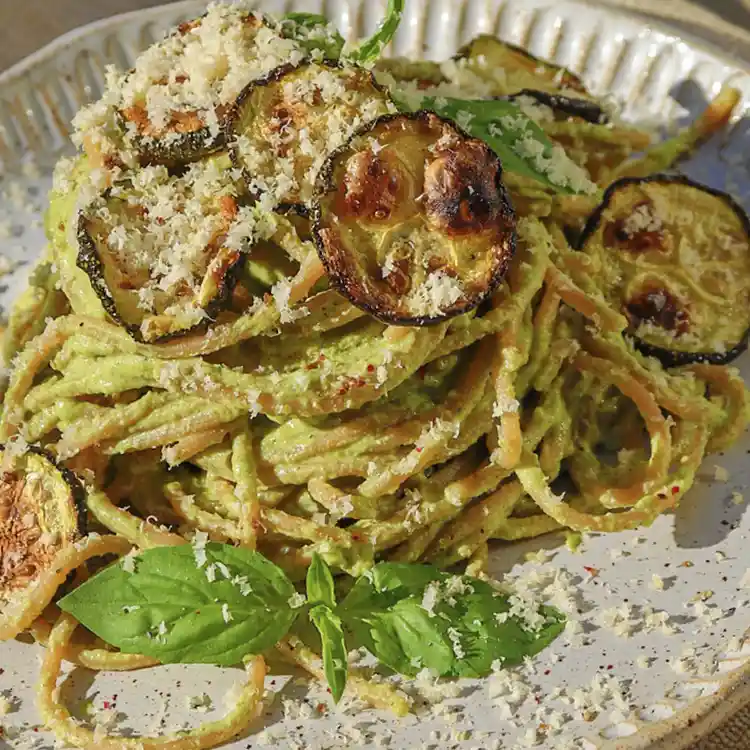
List of ingredients
- 2 zucchinis, chopped (small-medium in size) – used for the creamy sauce base.
- 1 zucchini, thinly sliced – specifically for roasting and used as a topping.
- 1 cup cashews – soak in hot water for 20 minutes if not using a high-speed blender.
- 1 tbsp avocado oil or olive oil – used for sautéing, with extra needed for roasting.
- 3 garlic cloves, minced – provides a savory aromatic base.
- 2 cups fresh basil – adds a peppery, herbal brightness to the blend.
- 1 small lemon, juiced and zested – use half the zest first if you prefer a milder lemon flavor.
- 1/2 tsp sea salt – enhances all natural flavors.
- 1/4 tsp pepper – adds a subtle warmth.
- 1/4 cup reserved pasta water – essential for thinning the sauce to the right consistency.
- 1 12 oz. package spaghetti of choice – gluten-free options work well here.
- 4-6 Brazil nuts, grated – serves as a creamy, nutty parmesan alternative.
- Fresh basil, torn – for fresh garnish.
- Fresh cracked pepper – to taste for final seasoning.
- Roasted zucchini slices – prepared during the roasting step.
- Red chili flakes – for a touch of heat.
step-by-step instructions
- Prepare the Oven: Preheat your oven to 450F to ensure a high-heat environment for roasting.
- Season Zucchini Slices: Thinly slice one zucchini into approximately 1/3 inch pieces. Place them in a bowl with 2 tsp of avocado oil and a pinch of sea salt and black pepper, mixing until well coated.
- Roast the Zucchini: Spread the slices evenly on a baking sheet and roast for about 30 minutes or until they are golden brown.
- Boil Water: Bring a large pot of salted water to a boil for the spaghetti.
- Sauté Aromatics: Heat 1 tbsp of avocado oil in a sauté pan over medium heat. Add the two chopped zucchinis, sea salt, pepper, and minced garlic, sautéing for about 15 minutes before setting them aside.
- Cook Pasta: Cook the spaghetti according to the package instructions. Crucially, reserve 1/4 cup of the starchy pasta water before draining.
- Blend the Sauce: In a blender, combine the sautéed zucchini, cashews (soaked if necessary), lemon juice, lemon zest, fresh basil, and the reserved pasta water. Blend until the mixture is completely smooth.
- Combine: Add the cooked pasta and the blended sauce back into the pan. Mix on low-medium heat for several minutes to ensure the pasta is well coated.
- Final Assembly: Remove the roasted zucchini from the oven and place them on top of the pasta.
- Garnish: Top the dish with torn fresh basil, grated Brazil nuts, fresh cracked pepper, and red chili flakes.
Maximizing Sauce Creaminess
Soaking Cashews for Smoother Textures
If you are using a standard blender, soaking cashews in boiling hot water for 20 to 30 minutes is essential. This process softens the nut’s cellular structure, allowing the blades to pulverize them into a seamless cream. Without soaking, you may find small, gritty particles in your sauce.
Utilizing High-Speed Blenders
High-speed blenders, such as a Vitamix, generate enough friction and mechanical force to break down raw cashews without prior soaking. This saves time and maintains a very clean flavor profile. Ensure you blend on the highest setting for at least 60 seconds to achieve maximum silkiness.
Adjusting Consistency with Pasta Water
Pasta water contains released starches that act as an emulsifier between the fats in the cashews and the water-based lemon juice. If the sauce feels too thick after blending, add more pasta water one tablespoon at a time. This ensures the sauce clings to the noodles without becoming a thick paste.
Optimal Zucchini Roasting Techniques
Achieving Golden Brown Zucchini Chips
The key to roasted zucchini that tastes like a chip is the high oven temperature of 450F. This triggers the Maillard reaction, browning the natural sugars in the squash. Avoid lowering the temperature, as this will lead to steaming rather than roasting, resulting in a soft texture.
Consistent Slicing for Even Cooking
Aim for a uniform thickness of about 1/3 inch for every slice. Using a mandoline or a sharp chef’s knife ensures that all pieces cook at the same rate. If slices vary in size, the thinner ones will burn before the thicker ones are golden.
Avoiding Soggy Roasted Vegetables
Do not overcrowd the baking sheet when roasting the zucchini. If the slices are touching or overlapping, they will release steam and boil in their own juices. Leave at least a half-inch of space between each slice to allow hot air to circulate freely.
Flavor Balance and Seasoning
Managing Lemon Intensity
Lemon acidity varies significantly between individual fruits. Start by zesting only half the lemon and adding a small amount of juice, then taste the sauce before adding more. This prevents the citrus from overpowering the delicate flavor of the fresh basil.
Preserving Fresh Basil Aroma
While most of the basil is blended into the sauce for depth, adding torn fresh leaves at the end is vital. Heat can dull the volatile oils in basil, so the raw garnish provides a punchy, aromatic contrast to the cooked sauce.
Sautéing Garlic Without Burning
Maintain a steady medium heat when sautéing the garlic and chopped zucchini. If the pan is too hot, the garlic will brown too quickly and become bitter. Stir frequently for the 15-minute duration to ensure a sweet, mellow garlic flavor.
Pasta Selection and Preparation
Choosing the Best Spaghetti
This sauce pairs well with traditional wheat spaghetti, but gluten-free options like brown rice or chickpea pasta are excellent alternatives. Note that some gluten-free pastas release more starch, which can make the sauce even thicker than usual.
The Role of Salted Pasta Water
Generously salt your pasta water to season the noodles from the inside out. Since the sauce is blended, the pasta itself needs a baseline of salt to ensure the final dish doesn’t taste flat. The water should taste like the sea before the pasta is added.
Cooking for the Perfect Al Dente Texture
Cook your pasta for one minute less than the package instructions suggest. Since the pasta will spend several minutes simmering in the sauce on low-medium heat, undercooking it slightly prevents the noodles from becoming mushy.
Plant-Based Topping Alternatives
Creating Brazil Nut Parmesan
Use a microplane or a fine grater to process the Brazil nuts. This creates a light, fluffy texture that mimics the appearance and mouthfeel of grated parmesan cheese. The high fat content of Brazil nuts provides a rich, salty flavor when melted slightly into the hot pasta.
Substituting Cashews with Other Nuts
If cashews are unavailable, raw almonds or blanched hazelnuts can be used as a base for the cream. While the flavor will be slightly more robust and less neutral, the texture remains similar. Sunflower seeds are a good nut-free alternative, though they may add a slight bitterness.
Adding Extra Protein to the Dish
To make the meal more filling, stir in cooked chickpeas or sautéed tofu cubes during the final mixing stage. These additions complement the creamy lemon sauce without altering the primary flavor profile of the zucchini.
Storage and Reheating Methods
Refrigerating Leftover Pasta
Store leftover pasta in an airtight glass container in the refrigerator for up to three to five days. The sauce may thicken significantly as it cools because the cashew fats solidify. Do not be alarmed by this change in texture.
Reheating for Best Results
When reheating on a stovetop, add a splash of water or unsweetened plant milk to the pan. Heat slowly on medium-low, stirring constantly to re-emulsify the sauce. Avoid microwaving on high heat for long periods, as this can cause the sauce to separate.
Freezing the Blended Sauce
You can freeze the blended sauce separately in silicone molds for future use. Thaw the sauce in the refrigerator overnight before heating it in a pan. Avoid freezing the pasta and sauce together, as the noodles often lose their structure upon thawing.
Common Cooking Challenges
Correcting a Sauce That Is Too Thick
If your sauce is too dense after blending, it is likely due to a high cashew-to-water ratio. Add reserved pasta water or a tablespoon of lemon juice to thin it out. Blend again on low speed until the desired consistency is achieved.
Preventing Sauce Separation
Keep the heat on low-medium when mixing the pasta into the sauce. Excessive heat can break the emulsion of the cashew cream, causing the oil to separate from the solids. Constant stirring helps maintain a smooth, cohesive texture.
Using Different Varieties of Squash
If you don’t have zucchini, yellow summer squash is a perfect one-to-one substitute. The flavor is slightly milder and sweeter, which pairs exceptionally well with the lemon and basil. The cooking times and methods remain exactly the same.
Frequently Asked Questions
Can I make this recipe without a blender?
A blender is required to achieve the creamy consistency of the sauce by pulverizing the cashews and zucchini. If you don’t have one, a food processor can work, though you may need to add more pasta water to help the blades move.
What is the best oil for roasting zucchini?
Avocado oil is recommended because it has a very high smoke point, meaning it won’t burn at 450F. Olive oil is also a suitable option, though it may smoke more in the oven depending on its purity.
How do I stop the zucchini from releasing too much water?
Sautéing the chopped zucchini for 15 minutes before blending helps evaporate excess moisture. This concentrates the flavor and prevents the final sauce from becoming watery or thin.
Do I have to peel the zucchini?
No, the skin of the zucchini provides essential nutrients and a vibrant green color to the sauce. The skin blends completely and does not affect the texture of the final dish.
Print
Creamy Zucchini and Lemon Vegan Pasta
- Total Time: 50 minutes
- Yield: 3 servings 1x
- Diet: Vegan
Description
This creamy zucchini pasta is a rich vibrant and healthy dish! A rich sauce made completely vegan and dairy with bright notes of lemon and basil.
Ingredients
- 2 zucchinis, chopped (small-medium in size)
- 1 zucchini, thinly sliced
- 1 cup cashews
- 1 tbsp avocado oil or olive oil
- 3 garlic cloves, minced
- 2 cups fresh basil
- 1 small lemon, juiced and zested
- 1/2 tsp sea salt
- 1/4 tsp pepper
- 1/4 cup reserved pasta water
- 1 12 oz. package spaghetti
- 4–6 Brazil nuts, grated
- fresh basil, torn
- fresh cracked pepper to taste
- red chili flakes
Instructions
- Step: Preheat oven to 450F.
- Step: Thinly slice 1 zucchini into about 1/3 inch pieces and add to a bowl with 2 tsp avocado oil and a pinch of sea salt and black and mix until well coasted.
- Step: Place evenly spread out onto a baking sheet and roast for about 30 minutes or until golden brown.
- Step: Start to bring a pot of salted water to a boil for your pasta.
- Step: Add 1 tbsp of avocado oil to a sauté pan and heat on medium heat. Add 2 chopped zucchinis, sea salt, pepper, and garlic.
- Step: Sauté for about 15 minutes and set aside.
- Step: Cook spaghetti or pasta of choice according to package instructions and set aside 1/4 cup of the pasta water before draining.
- Step: To a blender add sautéed zucchini, cashews (pre soaked if needed), lemon juice and zest, basil, reserved pasta water and blend until smooth.
- Step: Add the pasta and sauce back into the pan and mix on a low-medium heat for a several mintues.
- Step: Remove the zucchini from the oven when done and top onto the pasta.
- Step: Also top with extra torn basil, grated Brazil nuts, pepper and chili flakes. Enjoy!
Notes
If not using a high speed blender, soak cashews in hot water for 20-30 minutes prior to blending. Grated Brazil nuts serve as a vegan parmesan substitute.
- Prep Time: 20 minutes
- Cook Time: 30 minutes
- Category: Main Course
- Method: Blending and Sautéing
- Cuisine: Italian
Nutrition
- Serving Size: 1 serving
- Calories: 650 kcal
- Sugar: 8 g
- Sodium: 700 mg
- Fat: 22 g
- Saturated Fat: 4 g
- Unsaturated Fat: 18 g
- Trans Fat: 0 g
- Carbohydrates: 85 g
- Fiber: 11 g
- Protein: 21 g
- Cholesterol: 0 mg