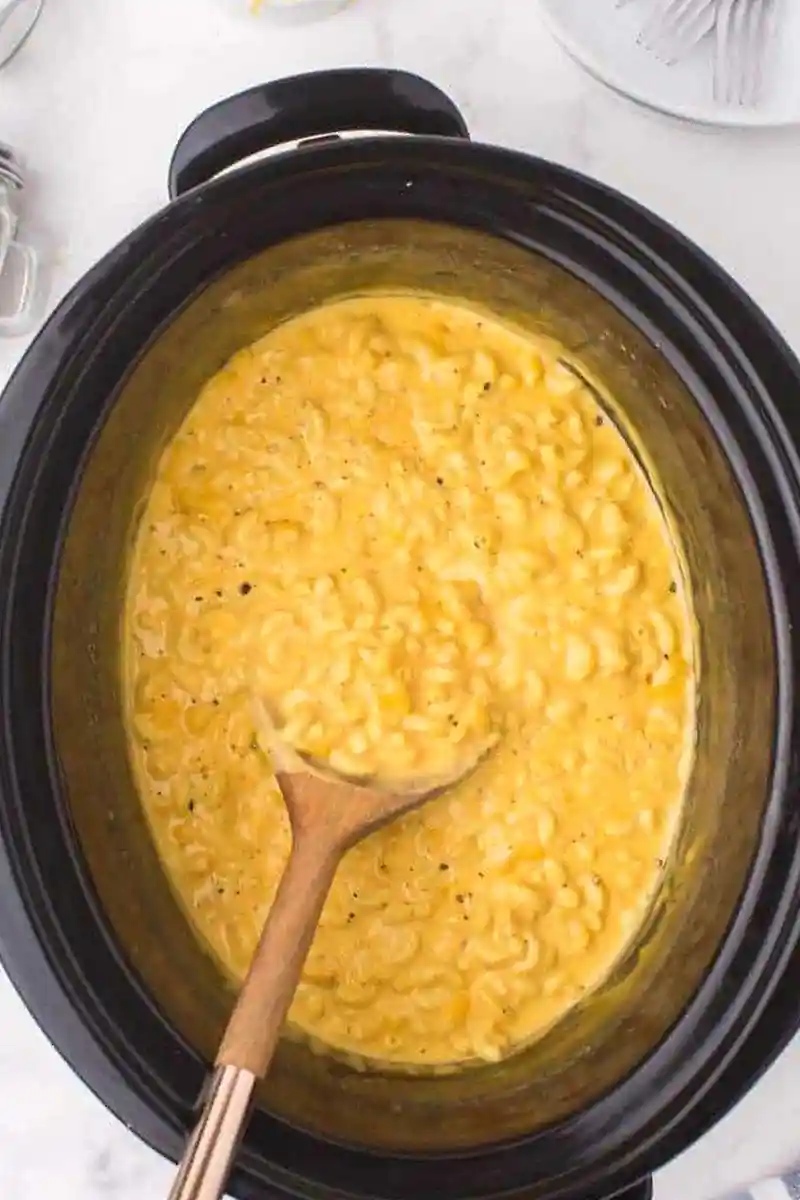
This slow cooker recipe creates a rich and creamy macaroni and cheese without the need to boil pasta separately. It is a convenient one-pot meal perfect for busy weeknights or party gatherings.
List of ingredients
- 16 ounces elbow macaroni (rotini, penne, or bowtie also work) – provides the base structure
- 2 cups whole milk – creates a rich and creamy sauce
- 1 stick butter, cubed – adds depth and smoothness
- 6 ounces evaporated milk – prevents the sauce from curdling
- 16 ounces Velveeta cheese, cubed – ensures a perfectly smooth melt
- 1 cup sharp cheddar cheese, shredded – adds a bold, tangy flavor
- 1 teaspoon salt – enhances all the cheese notes
- 1 teaspoon pepper – adds a subtle seasoning
- 1/2 teaspoon dry mustard – brightens the overall flavor profile
- Cooking spray – prevents the pasta from sticking to the sides
step-by-step instructions
- Prepare the pot: Spray the interior of the slow cooker with nonstick cooking spray to ensure easy cleanup.
- Combine ingredients: Add the pasta, milk, butter, evaporated milk, Velveeta, cheddar, salt, pepper, and dry mustard to the crock pot. Stir thoroughly to incorporate all ingredients and ensure every noodle is damp for even cooking.
- Slow cook: Cover the slow cooker and cook on the low setting for 1.5 to 2 hours. Stir the mixture a few times during this window to keep the butter and Velveeta distributed as they melt.
- Check doneness: Test the noodles at the 90-minute mark. If they are not yet al dente, continue cooking and check again in another 30 minutes.
- Finish and serve: Turn off the crock pot as soon as the pasta is tender and serve immediately.
Expert Tips for Optimal Texture
Choose Small Pasta Shapes
Small pasta shapes like elbow macaroni, rotini, or small shells are ideal for this slow cooker method. These shapes allow the cheese sauce to coat every surface efficiently while cooking evenly in the liquid. Larger pasta shapes may not absorb the milk and butter at the same rate, potentially leaving the centers undercooked while the exterior becomes too soft.
Cube Cheese and Butter Uniformly
When preparing your Velveeta and butter, cut them into small, uniform cubes approximately half an inch in size. This increase in surface area allows the fats to melt more rapidly and integrate smoothly into the milk. Uniform sizes prevent some pieces from remaining solid while others overcook, ensuring a consistent creamy texture throughout the dish.
Stir Regularly to Avoid Clumping
Occasional stirring is necessary to keep the cheese and butter from settling at the bottom of the pot. By stirring every 30 to 45 minutes, you ensure the sauce remains homogeneous and the noodles stay separated. This prevents the pasta from clumping together in a dense mass and helps the cheese emulsify perfectly.
Use a Slow Cooker Liner for Easy Cleaning
While cooking spray is effective, using a dedicated slow cooker liner makes the cleanup process nearly effortless. Liners prevent the thick cheese sauce from baking onto the sides of the ceramic pot. This is especially useful when serving large crowds where you want to minimize post-meal dishwashing.
Avoid Overcooking the Pasta
Pasta can quickly transition from al dente to mushy in a slow cooker. Start checking the texture at the 90-minute mark to ensure you do not overcook the noodles. Once the desired tenderness is reached, immediately switch the setting to ‘keep warm’ or turn the unit off to stop the cooking process.
Ingredient Substitutions
Alternative Milk Options
While whole milk provides the richest results, you can substitute it with low-fat or skim milk for a slightly lighter sauce. Heavy cream can be used for an even more decadent texture, though you may need to slightly reduce the butter. Ensure the milk is at room temperature to help the cheese melt more consistently.
Using Different Cheese Varieties
Sharp cheddar is recommended for its tang, but Monterey Jack or Gruyere are excellent alternatives for a different flavor profile. If you prefer a saltier finish, a small amount of Parmesan can be stirred in at the end. Avoid using extra-sharp cheddar in large quantities, as it can overpower the delicate balance of the Velveeta.
Pasta Shape Variations
If you prefer penne or bowtie pasta, be aware that these larger shapes may require pre-boiling. Because they are thicker, they might not cook through completely in the slow cooker using the standard liquid ratio. For these shapes, boil them until they are just under-done before adding them to the slow cooker.
Replacing Dry Mustard
Dry mustard powder is used to cut through the richness of the cheese, but you can use a small amount of Dijon mustard as a substitute. If you do not have mustard, a pinch of paprika or a dash of garlic powder can provide a different but complementary flavor boost. The goal is to add a layer of acidity or spice to balance the heavy cream.
Flavor Enhancements and Variations
Adding Fresh Vegetables
Adding steamed broccoli, fresh spinach, or diced cauliflower can turn this side dish into a more complete meal. Stir in the vegetables during the last 30 minutes of cooking so they maintain their color and texture. Carrots and mushrooms also pair well with the creamy cheese sauce if sautéed beforehand.
Incorporating Proteins
For a heartier dish, stir in cooked chicken, ground beef, or turkey. Smoked turkey or turkey bacon bits add a savory, salty element that complements the sharpness of the cheddar. Ensure the meat is already cooked and warmed through before adding it to the slow cooker to avoid undercooking.
Spicing Up the Sauce
To add a kick of heat, stir in cayenne pepper, diced jalapeños, or a tablespoon of buffalo sauce. These additions contrast well with the creaminess of the Velveeta. For a milder spice, a pinch of crushed red pepper flakes provides a gentle warmth without overwhelming the cheese.
Adding Savory Spices
You can elevate the flavor by mixing in garlic powder, onion powder, and Italian seasoning. These spices add an aromatic quality that makes the dish taste more complex. For the best results, whisk these spices into the milk before pouring it into the slow cooker.
Serving Suggestions
Pairing with Vegetable Side Dishes
Balance the richness of the mac and cheese with light, fresh vegetables. Oven-roasted asparagus, steamed green beans, or a crisp garden salad provide a necessary contrast in texture and flavor. A side of sautéed kale or spinach also works well to add nutritional value to the meal.
Serving as a Holiday Side
This dish is a crowd-pleaser for Thanksgiving or Christmas gatherings. It pairs perfectly with roast chicken, boneless turkey breast, or a glazed turkey ham. Because it stays warm in the slow cooker, it is an ideal option for buffet-style serving during large celebrations.
Making it a Main Course
Transform this recipe into a full dinner by adding protein and serving it with a side of corn on the cob. Adding shredded rotisserie chicken directly into the pot makes it a filling one-pot meal. Serve it with a drizzle of fresh parsley on top for a professional presentation.
Storage and Preservation
Refrigerator Storage Guidelines
Store any leftover macaroni and cheese in an airtight container in the refrigerator. It will remain fresh and safe to eat for up to two days. Ensure the container is completely sealed to prevent the pasta from absorbing odors from other foods in the fridge.
Freezer Storage Methods
This recipe can be frozen for up to two months if stored correctly. Place the cooled mac and cheese in a freezer-safe bag or container, removing as much air as possible. Thaw the dish in the refrigerator overnight before reheating to maintain the best possible texture.
Reheating Instructions
Stovetop Reheating for Best Texture
The best way to restore the creaminess of leftover mac and cheese is on the stove over low to medium heat. Stir in a tablespoon or two of milk as the dish warms to loosen the sauce. This prevents the pasta from becoming dry and restores the original silky consistency.
Microwave Reheating Method
For a quicker option, use the microwave in 30-second intervals. Stir the pasta between each interval to ensure the heat is distributed evenly. Adding a splash of milk or cream before microwaving helps prevent the cheese from separating or becoming oily.
Common Troubleshooting
Sauce is Too Thick
If the sauce becomes too thick after cooking or reheating, simply stir in small amounts of whole milk or heavy cream. Continue adding liquid one tablespoon at a time until the desired consistency is reached. Stir gently to avoid breaking the pasta noodles.
Pasta is Too Mushy
Mushy pasta usually occurs if the dish is cooked for too long or on a setting that is too high. To prevent this, always check the noodles starting at 90 minutes. If you find your pasta consistently overcooks, reduce the total cooking time by 15 to 30 minutes.
Cheese Not Melting Smoothly
If you notice lumps of cheese in the sauce, it is likely because the pieces were too large or the pot wasn’t stirred enough. Use a whisk to stir the sauce vigorously while the pot is still hot. For future batches, ensure the Velveeta is cut into very small, uniform cubes.
Frequently Asked Questions
Can I use pre-shredded cheese?
While pre-shredded cheese is convenient, it is coated in potato starch or cellulose to prevent clumping, which can make the sauce grainy. Shredding a fresh block of sharp cheddar ensures a smoother, more professional melt.
Do I really not need to boil the pasta?
Yes, the moisture from the milk and evaporated milk, combined with the slow heat of the crockpot, is sufficient to cook the pasta. This method simplifies the process by eliminating the need for a separate pot of boiling water.
Can I make this on high heat?
It is not recommended to cook this recipe on high, as dairy-based sauces can easily scorch or separate at higher temperatures. The low setting ensures the cheese melts slowly and the pasta cooks evenly without burning.
} Print
Creamy Slow Cooker Velveeta Macaroni and Cheese
- Total Time: 2 hours 5 minutes
- Yield: 6 servings 1x
- Diet: General
Description
My Velveeta mac and cheese is made all in the crock pot to create a rich and creamy dinner. You don’t even need to pre-boil the noodles!
Ingredients
- 16 ounces elbow macaroni (or rotini, penne, bowtie pasta)
- 2 cups whole milk
- 1 stick butter, cubed
- 6 ounces evaporated milk
- 16 ounces Velveeta cheese, cubed
- 1 cup sharp cheddar cheese, shredded
- 1 teaspoon salt
- 1 teaspoon pepper
- 1/2 teaspoon dry mustard
- cooking spray
Instructions
- Step 1: Spray the slow cooker with nonstick cooking spray.
- Step 2: Add the pasta, milk, butter, evaporated milk, Velveeta cheese, cheddar cheese, salt, pepper, and dry mustard to the crock pot. Stir to incorporate all the ingredients, making sure all of the noodles are damp.
- Step 3: Cover the slow cooker and cook it on low for 1.5 to 2 hours. Stir it a few times throughout the cooking time to keep the Velveeta and butter distributed as it melts.
- Step 4: Test the noodles at 90 minutes, and if they are not al dente, continue to check on them in another 30 minutes.
- Step 5: Turn the crock pot off and serve.
Notes
Use a small pasta that will cook well in the slow cooker, like elbows, rotini, or shells. Cut the Velveeta and butter into small, evenly sized cubes so they melt faster and more evenly. Store leftovers in an airtight container in the fridge for up to 2 days.
- Prep Time: 5 minutes
- Cook Time: 2 hours
- Category: Slow Cooker
- Method: Slow Cooking
- Cuisine: American
Nutrition
- Serving Size: 1 serving
- Calories: 615 kcal
- Sugar: 15 g
- Sodium: 1776 mg
- Fat: 21 g
- Saturated Fat: 12 g
- Unsaturated Fat: 4 g
- Trans Fat: 0.02 g
- Carbohydrates: 73 g
- Fiber: 3 g
- Protein: 34 g
- Cholesterol: 69 mg