This one-pan meal combines pan-seared salmon fillets with a rich, creamy orzo and artichoke base. It is a satisfying dinner that minimizes kitchen cleanup by using a single skillet for both the protein and the pasta.
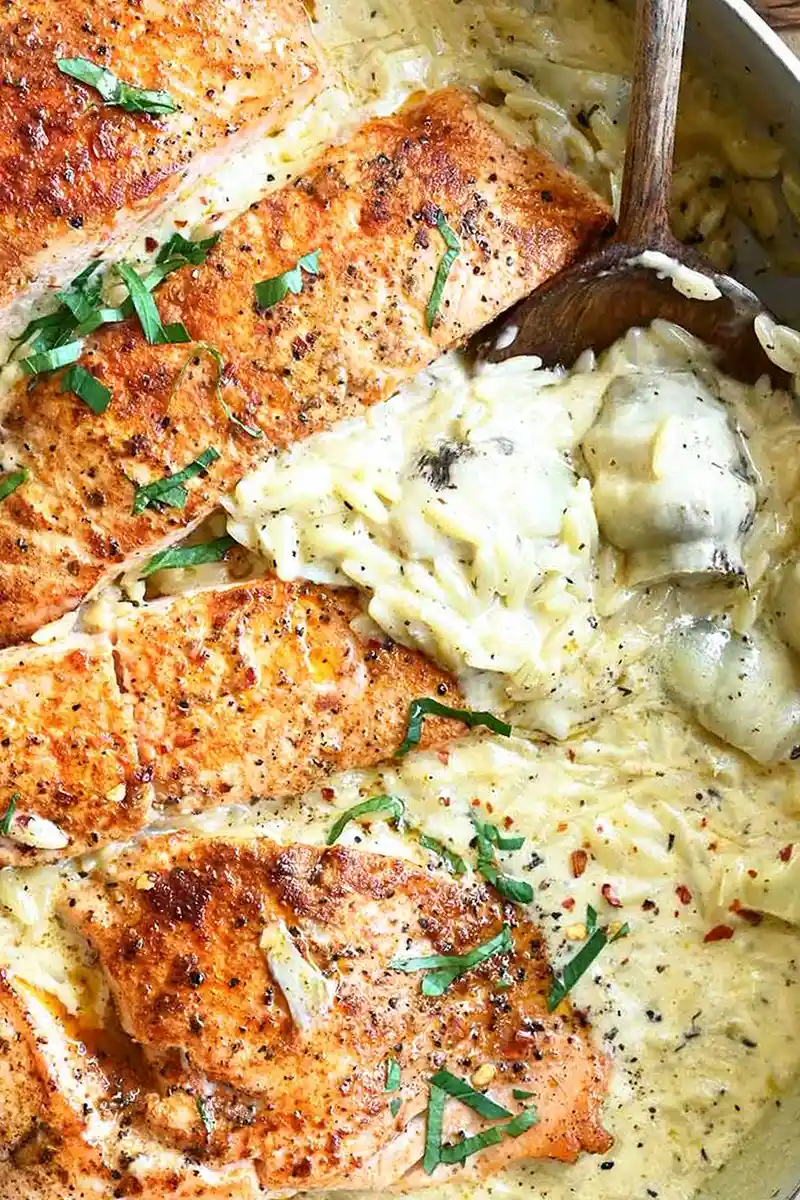
List of ingredients
- 1 tbsp olive oil – used for searing the fish.
- 1 tbsp unsalted butter – adds richness and prevents sticking.
- 4 skinless salmon fillets – main protein source.
- 1 tsp salt (divided) – for seasoning salmon and the sauce.
- 1 tsp black pepper (divided) – for seasoning salmon and the sauce.
- ½ tsp garlic powder – provides a savory base for the fish.
- ½ tsp sweet paprika – adds color and a mild flavor.
- 4 garlic cloves (minced) – fresh aromatic for the sauce.
- 1 small yellow onion (finely chopped) – creates a flavor foundation.
- 1 tsp dried thyme – adds an earthy herbal note.
- 1 cup orzo – small rice-shaped pasta.
- 2 ½ cups chicken broth – liquid for cooking the orzo.
- 10 ounce artichoke hearts packed in oil (drained) – adds a nutty, tangy flavor.
- ¾ cup grated Parmesan – thickens and salts the sauce.
- 2 tbsp lemon juice – provides acidity to cut through the cream.
- 1 cup heavy cream – creates the smooth, creamy texture.
- chopped parsley (for serving) – fresh garnish for brightness.
- chili flakes (for serving) – optional heat for the final touch.
step-by-step instructions
- Prepare the ingredients: Pat the salmon fillets dry with a paper towel. Season both sides with garlic powder, paprika, and ½ teaspoon each of salt and pepper. Finely chop the onion, mince the garlic, and halve the artichokes.
- Sear the salmon: Heat olive oil and butter over medium-high in a large nonstick pan. Add the salmon fillets and cook for 3 minutes per side. Remove the fish from the skillet and set them aside on a clean plate.
- Sauté aromatics: Reduce the heat to medium. Add the minced garlic and chopped onion, cooking until they are soft and fragrant for about 2 minutes. Stir in the dried thyme along with the remaining salt and pepper.
- Toast the orzo: Add the orzo to the pan. Stir and cook for 1 minute to lightly toast the pasta.
- Cook the pasta: Pour in the chicken broth and bring the mixture to a boil. Reduce the heat to medium-low to maintain a simmer. Cook uncovered for about 10 minutes, stirring frequently to prevent sticking and to release the natural starches.
- Finish the sauce: Stir in the grated Parmesan, artichoke hearts, and lemon juice. Pour in the heavy cream and simmer for 2 minutes until the sauce thickens.
- Combine and heat: Return the seared salmon fillets to the skillet. Simmer everything for another 3 minutes or until the salmon is heated through.
- Garnish and serve: Top the dish with chili flakes, freshly ground black pepper, and chopped parsley. Serve immediately.
Salmon Preparation and Searing Tips
Choose Uniform Fillet Thickness
Select salmon fillets that are similar in size and thickness. This ensures that every piece cooks at the same rate, preventing some from overcooking while others remain raw in the center.
Dry the Fish Thoroughly
Always pat the salmon fillets dry with paper towels before seasoning. Excess moisture on the surface of the fish creates steam, which prevents the formation of a golden-brown crust during the searing process.
Manage the Pan Temperature
Use a combination of olive oil and butter to increase the smoke point while adding flavor. Ensure the pan is hot before adding the fish to achieve a proper sear without the salmon sticking to the surface.
Orzo and Sauce Optimization
Preventing Orzo from Sticking
Stir the orzo frequently while it simmers in the broth. This prevents the pasta from clumping at the bottom of the pan and helps release starches that naturally thicken the final sauce.
Selecting the Right Artichokes
Use artichoke hearts packed in oil for a deeper, nuttier flavor profile. If using water-packed artichokes, drain them well to avoid adding excess water to the creamy sauce.
Using Freshly Grated Parmesan
Grate the Parmesan cheese fresh from a block rather than using pre-shredded options. Freshly grated cheese melts more smoothly into the cream and broth without forming clumps.
Balancing with Lemon Juice
Add the lemon juice at the end of the cooking process. The acidity balances the richness of the heavy cream and Parmesan, brightening the overall flavor of the dish.
Ingredient Substitutions
Vegetable Broth Alternative
If you prefer a meat-free base for the pasta, substitute the chicken broth with vegetable broth. This change maintains the savory profile while making the sauce more versatile for different diets.
Creamy Texture Variations
You can substitute heavy cream with 20% fat cream for a slightly lighter sauce. Avoid using milk, as it lacks the fat content necessary to thicken the sauce and may result in a watery consistency.
Alternative Protein Options
While salmon is the primary choice, this recipe works well with shrimp or firm white fish. Adjust the searing time based on the protein; shrimp, for example, will cook much faster than salmon fillets.
Herb Swaps for Thyme
If you do not have dried thyme, you can use Italian seasoning, dried oregano, or dried basil. Each provides a different aromatic profile but complements the lemon and cream effectively.
Serving and Pairing Ideas
Pairing with Leafy Greens
Serve this dish alongside a fresh leafy salad. A simple balsamic vinaigrette dressing provides a sharp contrast to the creamy orzo and rich salmon.
Adding Extra Vegetables
Incorporate fresh spinach or kale into the sauce during the final simmer. These greens wilt quickly and add color and nutritional value to the meal without altering the flavor profile.
Complementary Side Dishes
Consider serving a side of roasted asparagus or steamed broccoli. These vegetables pair well with the lemon-butter notes found in the salmon and sauce.
Storage and Reheating
Refrigeration Guidelines
Store leftover salmon and orzo in an airtight container in the refrigerator for up to one day. Because of the dairy and fish, the quality degrades quickly after 24 hours.
Avoiding the Freezer
Do not freeze the cooked orzo. Freezing and thawing pasta often changes the texture, causing the orzo to become mushy and the sauce to separate.
Reheating for Best Texture
When reheating in a skillet or microwave, add a small splash of broth or water. This restores the moisture to the creamy sauce and prevents the orzo from becoming too dry.
Troubleshooting Common Issues
Fixing a Thick Sauce
If the sauce becomes too thick after simmering, stir in a tablespoon of broth or water at a time. This will loosen the consistency without diluting the flavor too much.
Preventing Overcooked Salmon
Watch the internal temperature of the salmon carefully during the final simmer. Since the fish was already seared, the final three minutes are only intended to heat the center through.
Handling Undercooked Orzo
If the orzo is still too firm after 10 minutes, continue simmering on low heat with a small amount of additional broth. Ensure you keep stirring to prevent the bottom from burning.
Frequently Asked Questions
Can I use skin-on salmon?
Yes, you can use skin-on fillets. Sear them skin-side down first to get the skin crispy before flipping them to cook the other side.
What is the best substitute for orzo?
If orzo is unavailable, use the smallest pasta variety you can find, such as acini di pepe or very small shells. Note that cooking times may vary depending on the pasta shape.
How do I know when the salmon is done?
The salmon is ready when it flakes easily with a fork and the internal temperature reaches 145 degrees Fahrenheit.
Can I use a different type of onion?
Yes, shallots are a great substitute for yellow onion and offer a milder, more refined flavor that pairs well with seafood.
Is the sauce too salty with Parmesan?
Parmesan is naturally salty, so start with a smaller amount of added salt in the sauce. You can always stir in more cheese at the end to adjust the seasoning.
Print
Creamy Salmon with Artichoke Orzo
- Total Time: 25 minutes
- Yield: 4 servings 1x
- Diet: General
Description
This simple, hearty dish features pan-seared salmon with buttery artichokes and smooth orzo swirled in a rich creamy sauce.
Ingredients
- 1 tbsp olive oil
- 1 tbsp unsalted butter
- 4 skinless salmon fillets
- 1 tsp salt, divided
- 1 tsp black pepper, divided
- ½ tsp garlic powder
- ½ tsp sweet paprika
- 4 garlic cloves, minced
- 1 small yellow onion, finely chopped
- 1 tsp dried thyme
- 1 cup orzo
- 2 ½ cups vegetable broth
- 10 oz artichoke hearts packed in oil, drained
- ¾ cup grated Parmesan
- 2 tbsp lemon juice
- 1 cup heavy cream
- chopped parsley, for serving
- chili flakes, for serving
Instructions
- Step: Pat the salmon fillets dry with a paper towel. Season both sides with garlic powder, paprika and ½ teaspoon salt and pepper. Finely chop the onion, mince the garlic and halve the artichokes.
- Step: Heat oil and butter over medium high in a large nonstick pan or skillet. Add salmon fillets and cook 3 minutes per side. Remove from skillet onto a clean plate and set aside.
- Step: Reduce heat to medium, add garlic and onion. Cook until soft and fragrant for about 2 minutes. Stir in thyme, and the remaining salt and pepper. Next add orzo and cook for 1 minute.
- Step: Pour in broth and bring to a boil. To maintain a simmer, reduce the heat to medium-low. Cook uncovered until almost al dente and most of the liquid is absorbed, about 10 minutes. Stir frequently.
- Step: Stir in Parmesan. Add artichokes and lemon juice. Pour in cream and simmer for 2 minutes or until the sauce starts to thicken. Return salmon to the skillet and simmer everything for 3 more minutes or until the salmon is heated through.
- Step: Top with chili flakes, freshly ground black pepper and parsley. Serve immediately.
Notes
Leftovers will keep in the refrigerator for 1 day. Freezing is not recommended for the orzo as it may change texture.
- Prep Time: 5 minutes
- Cook Time: 20 minutes
- Category: Dinner, Lunch, Main Course
- Method: Pan-Searing
- Cuisine: American, Mediterranean
Nutrition
- Serving Size: 1 serving
- Calories: 690 kcal
- Sugar: 4 g
- Sodium: 1549 mg
- Fat: 45 g
- Saturated Fat: 21 g
- Unsaturated Fat: 20 g
- Trans Fat: 0.1 g
- Carbohydrates: 35 g
- Fiber: 2 g
- Protein: 47 g
- Cholesterol: 188 mg