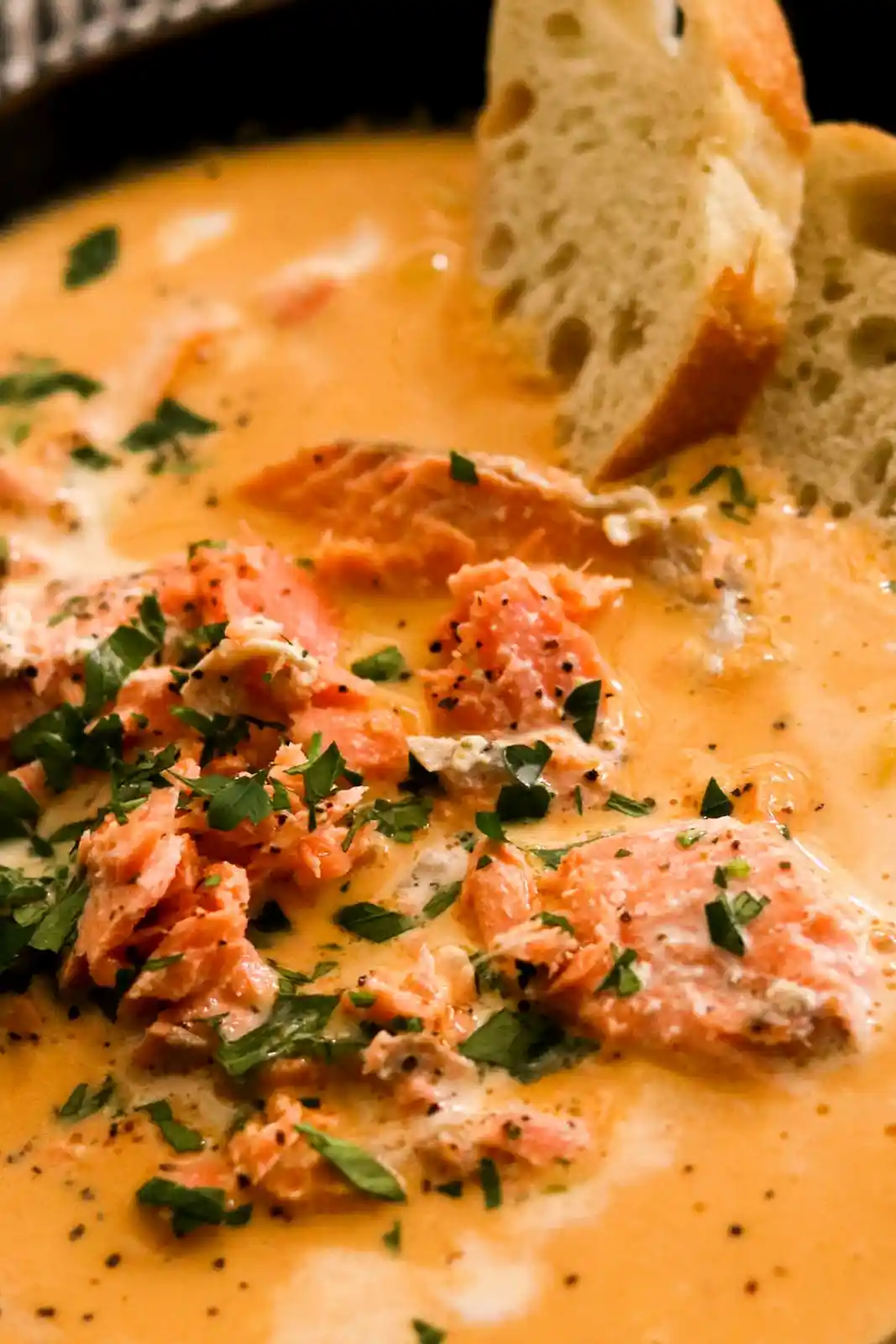
This rich and velvety salmon bisque is a comforting meal that brings gourmet flavor to your home kitchen. It combines tender flaked salmon with a smooth, blended vegetable base and sweet corn for a hearty finish.
List of ingredients
- 1 lb salmon filets – wild caught recommended.
- 2 tbsp extra virgin olive oil – for roasting the fish.
- Salt and pepper – used to season the salmon to taste.
- 2 tbsp butter – for sautéing the aromatics.
- 1/2 onion – finely chopped.
- 1 celery stalk – finely chopped.
- 1 large carrot – finely chopped.
- 2 tsp smoked paprika – adds a deep, woody flavor.
- 1 tsp sea salt – for seasoning the base.
- 1/2 tsp ground black pepper – for a hint of spice.
- 3 garlic cloves – minced.
- 1/2 cup water – used as a non-alcoholic substitute for white wine.
- 1 tbsp tomato paste – provides a rich umami depth.
- 3 cups water – the main liquid for the broth.
- 1 tbsp cornstarch mixed with 3 tbsp water – the thickening slurry (arrowroot starch is a good alternative).
- 2 cups corn kernels – fresh or frozen.
- 1 cup full fat coconut milk – or heavy cream for richness.
- Parsley, cilantro, or chopped green onions – for final garnish.
step-by-step instructions
- Prepare the Oven: Preheat your oven to 400 degrees Fahrenheit and line a baking sheet with parchment paper for easy cleanup.
- Bake the Salmon: If using frozen salmon, rinse the filets under cold water to remove the ice layer and pat dry. Place the filets skin-side down on the parchment, drizzle with olive oil, season with salt and pepper, and bake for 12-15 minutes for fresh fish or 20-25 minutes for frozen.
- Sauté Aromatics: While the salmon bakes, melt butter in a large saucepan or Dutch oven over medium heat. Add the chopped onion, celery, carrot, smoked paprika, salt, and pepper, cooking for 4-5 minutes until lightly browned.
- Add Garlic: Stir in the minced garlic and cook for an additional minute until fragrant.
- Deglaze the Pan: Pour in the 1/2 cup of water and stir in the tomato paste, scraping the bottom of the pot to release the browned bits for 1-2 minutes.
- Simmer the Base: Add 3 cups of water and bring the mixture to a boil, then immediately reduce the heat to a simmer.
- Thicken the Soup: Whisk together the cornstarch and water, stir the slurry into the pot, and simmer for 5 minutes to thicken.
- Prepare Salmon for Soup: Once the salmon is finished baking, remove the skin and flake the meat with a fork. Stir about one-fourth of the flaked salmon into the simmering soup.
- Blend Until Smooth: Use an immersion blender to process the soup until completely smooth, or carefully transfer it to a countertop blender.
- Final Simmer: Stir in the corn kernels and coconut milk or heavy cream, simmering for 4-5 minutes until the soup reaches your desired thickness.
- Serve: Divide the bisque into bowls and top with the remaining flaked salmon and fresh chopped herbs.
Pro Tips for Perfect Bisque
Properly Thawing Frozen Salmon
If you are using frozen filets, it is essential to remove the icy glaze by rinsing them under cold water. Always pat the fish completely dry with a paper towel before oiling to ensure the salmon roasts rather than steams.
Avoiding Overcooked Fish
Salmon can dry out quickly if left in the oven too long. Check the internal temperature or ensure the fish flakes easily with a fork to maintain a moist texture before removing it from the heat.
Blending Safely and Smoothly
When using a countertop blender, never fill the pitcher to the top with hot liquid. Fill it halfway and leave the lid slightly vented to allow steam to escape, preventing the lid from popping off under pressure.
Developing Depth Through Sautéing
Do not rush the process of browning the onions, carrots, and celery. Allowing the vegetables to lightly caramelize in the butter creates a foundation of flavor that enhances the final taste of the bisque.
Ingredient Substitutions and Alternatives
Dairy-Free Creamy Options
Full-fat coconut milk is an excellent plant-based substitute for heavy cream, offering a similar richness. If you prefer a more neutral flavor, you can use cashew cream or a high-quality soy-based cooking cream.
Alternative Thickening Agents
If you do not have cornstarch, arrowroot powder works as a direct 1:1 replacement. For a grain-free option, you can blend in a small amount of cooked cauliflower to naturally thicken the base.
Swapping the Salmon Variety
While Atlantic or Sockeye salmon are traditional, you can use Steelhead trout or Arctic char for a similar flavor profile. These fish have similar fat contents and will flake beautifully in the soup.
Changing the Vegetable Mix
You can add mushrooms or red bell peppers to the sauté phase to increase the nutrient density. Ensure these are chopped small so they blend seamlessly into the smooth bisque base.
Customizing Your Soup Flavor
Adding a Spicy Kick
To increase the heat, stir in a pinch of cayenne pepper or red pepper flakes during the sauté step. This balances the richness of the coconut milk and adds a warm glow to the finish.
Using Different Herb Profiles
While parsley is classic, adding a bay leaf during the simmering stage provides a deeper herbal note. Fresh dill is another fantastic addition that pairs naturally with the flavor of salmon.
Enhancing the Umami Profile
For a deeper taste, you can replace the water in the base with a low-sodium vegetable broth. This adds more complexity to the liquid without overpowering the delicate taste of the fish.
Adding Citrus Brightness
A squeeze of fresh lemon juice added right before serving can cut through the richness of the cream. This acidity brightens the overall flavor and highlights the freshness of the salmon.
Serving and Pairing Suggestions
Choosing the Right Dipping Bread
Serve this bisque with toasted sourdough or a crusty French baguette. The crunch and tang of the bread provide a perfect textural contrast to the smooth, creamy soup.
Best Garnish Combinations
Freshly chopped green onions and cilantro add a pop of color and a mild bite. A sprinkle of smoked paprika on top of the final bowl also enhances the visual presentation.
Complementary Side Dishes
A light, acidic side salad with lemon vinaigrette works well to balance the heartiness of the bisque. Avoid heavy sides like mashed potatoes, as the soup is already quite filling.
Plating for Special Occasions
For a more formal presentation, use wide-rimmed shallow bowls. Place the flaked salmon in a neat pile in the center and drizzle a small amount of olive oil around the edges.
Storage and Reheating Advice
Refrigerating the Bisque Base
Store leftovers in an airtight container in the refrigerator for 3-4 days. The soup will naturally thicken as it cools, which is normal for cornstarch-thickened liquids.
Maintaining Salmon Texture
To prevent the fish from becoming rubbery, store the flaked salmon in a separate container from the soup base. Stir the fish back in only when you are ready to heat and serve.
Reheating for Best Consistency
Heat the bisque slowly over medium-low heat on the stove. If the soup has become too thick in the fridge, stir in a tablespoon of water or broth to restore the original creamy consistency.
Avoiding the Freezer
It is generally not recommended to freeze cream or coconut milk-based soups. The fats can separate during the freezing and thawing process, leading to a grainy or broken texture.
Troubleshooting Common Issues
Fixing a Soup That is Too Thick
If the cornstarch slurry makes the bisque too dense, simply stir in a small amount of water or vegetable broth. Do this gradually while simmering until the desired pouring consistency is reached.
Resolving a Grainy Texture
A grainy texture usually happens if the vegetables weren’t blended long enough. Pass the blended base through a fine-mesh sieve before adding the cream and corn to ensure absolute smoothness.
Balancing Overpowering Paprika
If the smoked paprika flavor is too strong, increase the amount of coconut milk or heavy cream. The fats in the cream help neutralize the intensity of the smoke and salt.
Preventing Coconut Milk Separation
To prevent the coconut milk from curdling, ensure it is stirred in at the end and simmered gently. Avoid bringing the soup to a rolling boil once the cream has been added.
Frequently Asked Questions
Can I use canned salmon for this recipe?
Yes, you can use canned salmon, but ensure it is well-drained and flaked. Since canned salmon is already cooked, skip the baking step and add it directly to the soup at the end.
Is this salmon bisque gluten-free?
This recipe is naturally gluten-free as it uses cornstarch for thickening. Always check your tomato paste and broth labels to ensure no hidden gluten thickeners are added.
Can I make this in a slow cooker?
You can slow cook the vegetable base, but the salmon must be cooked separately to avoid overcooking. Blend the base and stir in the baked salmon and cream during the last 30 minutes.
What can I use instead of cornstarch?
Arrowroot starch is the best alternative for a similar thickness. Alternatively, you can blend in a piece of potato or extra carrot to create a natural, starch-based thickening effect.
Print
Creamy Salmon Bisque
- Total Time: 50 minutes
- Yield: 4 servings 1x
- Diet: General
Description
Delicious, comforting, and flavorful creamy salmon bisque that’s easy to make for special occasions or weeknights. A thick and hearty soup with vegetables, corn, and spices, perfect for a chilly day.
Ingredients
- 1 lb salmon filets
- 2 tbsp extra virgin olive oil
- Salt and pepper, to taste
- 2 tbsp butter
- 1/2 onion, chopped
- 1 celery stalk, chopped
- 1 large carrot, chopped
- 2 tsp smoked paprika
- 1 tsp sea salt
- 1/2 tsp ground black pepper
- 3 garlic cloves, minced
- 1/2 cup water
- 1 tbsp tomato paste
- 3 cups water
- 1 tbsp cornstarch + 3 tbsp water
- 2 cups corn kernels, fresh or frozen
- 1 cup full fat coconut milk or heavy cream
- Parsley, cilantro and/or chopped green onions, for garnish
Instructions
- Step 1: Preheat oven to 400 degrees and line a baking sheet with parchment paper.
- Step 2: Drizzle a tablespoon of olive oil on parchment paper, place salmon filets on top skin side down, drizzle with remaining oil, season with salt and pepper, and bake for 12-15 minutes for fresh salmon or 20-25 minutes for frozen salmon.
- Step 3: Heat butter in a large saucepan or Dutch oven over medium heat; add onion, celery, carrot, smoked paprika, salt, and pepper, cooking for 4-5 minutes until veggies are lightly browned.
- Step 4: Add garlic and stir for 1 minute.
- Step 5: Add water and tomato paste, scraping the bottom for 1-2 minutes.
- Step 6: Add 3 cups of water and bring to a boil, then reduce heat to simmer.
- Step 7: Whisk together cornstarch and water, add to the pot, and simmer for 5 minutes.
- Step 8: Remove skin from the baked salmon, flake with a fork, and add about 1/4 of the flaked salmon to the soup.
- Step 9: Use an immersion blender to blend the soup until smooth.
- Step 10: Stir in corn and coconut milk or heavy cream, then simmer for 4-5 minutes until thickened to your liking.
- Step 11: Divide the soup into bowls and top with remaining flaked salmon and chopped herbs.
Notes
Store leftovers in an airtight container in the fridge for 3-4 days. For best results, store the flaked salmon separately and add it to the heated bisque just before serving to avoid overcooking.
- Prep Time: 10 minutes
- Cook Time: 40 minutes
- Category: Soup
- Method: Baking and Simmering
- Cuisine: American
Nutrition
- Serving Size: 1 serving
- Calories: 501 kcal
- Sugar: 8 g
- Sodium: 910 mg
- Fat: 35 g
- Saturated Fat: 19 g
- Unsaturated Fat: 15 g
- Trans Fat: 0.2 g
- Carbohydrates: 22 g
- Fiber: 4 g
- Protein: 27 g
- Cholesterol: 77 mg