This creamy salmon pasta is a fast and efficient one-pan meal perfect for busy weeknights. By using refrigerated fresh pasta, you can minimize cleanup and have a restaurant-quality dinner on the table in minutes.
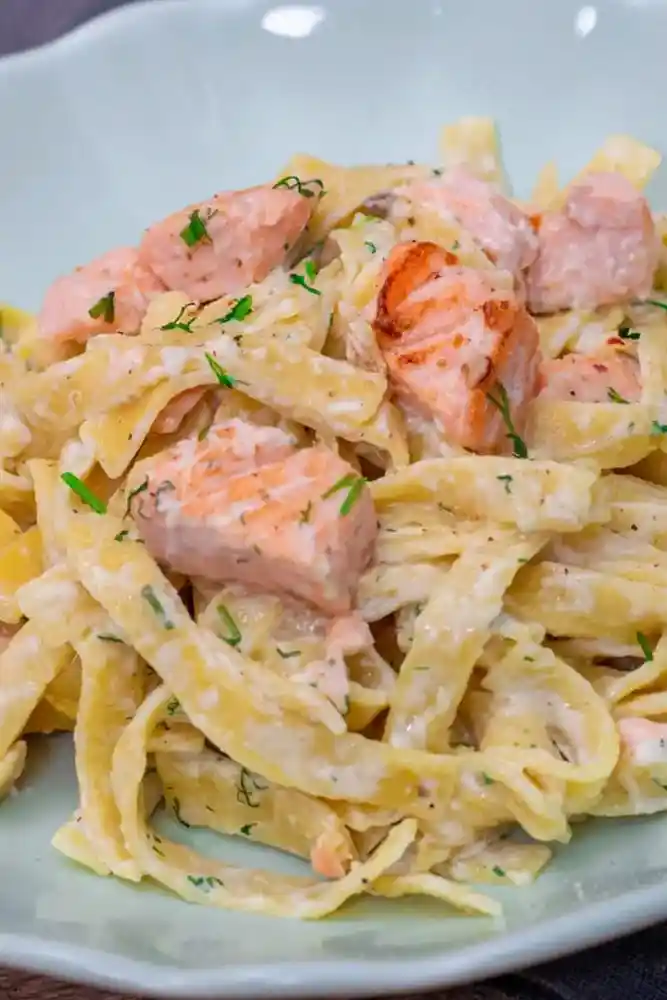
List of ingredients
- 400 g fresh pasta – sourced from the refrigerated section for rapid cooking.
- 250 g salmon – fresh or thawed and cut into equal cubes.
- 1 clove garlic – finely chopped or pressed.
- 250 ml cooking cream – for a rich and velvety sauce consistency.
- 2 tbsp oil – used for searing the salmon on high heat.
- Lemon juice – a small amount to brighten the flavors.
- Fresh dill – finely chopped for a classic herbal finish.
- Salt and pepper – for seasoning to taste.
step-by-step instructions
- Prepare the components: Finely chop the garlic and the fresh dill. Cut the lemon in half and cube the salmon into bite-sized pieces.
- Sear the fish: Heat the oil in a large pan over high heat. Fry the salmon cubes until they are crispy and brown on all sides, then stir in the garlic and sauté for a short moment.
- Season and simmer: Season the salmon with a splash of lemon juice, salt, and fresh pepper. Pour in the cooking cream and allow the mixture to simmer and reduce for about one minute.
- Cook the pasta: Stir the fresh pasta directly into the cream sauce. Cover the pan with a lid and cook on medium heat for 2 to 3 minutes until the pasta is tender and the sauce has thickened.
- Final seasoning: Remove the lid and stir in the fresh dill. Taste the dish and add final adjustments of salt and pepper.
Expert Cooking Tips for Perfect Salmon Pasta
Choosing the Right Fresh Pasta
Using refrigerated pasta is the secret to the one-pan method because it cooks much faster than dried varieties. Look for egg-based noodles like fettuccine or tagliatelle for the best sauce adherence. If you cannot find fresh pasta, you must boil dried pasta separately before adding it to the sauce.
Searing Salmon for Optimal Texture
To get a golden-brown crust without overcooking the center, ensure the pan is very hot before adding the oil. Sear the cubes quickly on each side and remove them from the heat as soon as they are browned. This keeps the fish moist and tender throughout the final simmering process.
Balancing the Cream Sauce
The richness of the cooking cream can be heavy, which is why lemon juice is essential. The acidity cuts through the fat and enhances the natural flavor of the salmon. Add the lemon juice just before adding the cream to prevent the sauce from curdling.
Precise Garlic Preparation
Whether you choose to mince the garlic finely or use a garlic press, ensure it is added only after the salmon is browned. Garlic burns quickly on high heat and can become bitter. A short sauté of 30 seconds is enough to release the aroma without scorching the clove.
Ingredient Substitutions and Variations
Using Dried Pasta Instead of Fresh
If you prefer dried pasta, boil it in salted water until it is slightly under al dente. Drain the noodles and add them to the pan during the step where the cream is simmering. Let them cook for an additional minute or two without a lid to allow the sauce to thicken naturally.
Alternative Creamy Bases
For a lighter version, you can replace the cooking cream with a mixture of Greek yogurt and a splash of pasta water. For a dairy-free option, use full-fat coconut cream or a cashew-based cream. These alternatives provide a similar thickness while changing the flavor profile slightly.
Substituting the Fresh Herbs
While dill is the traditional pairing for salmon, fresh parsley or chives are excellent substitutes. Parsley offers a cleaner, grassier taste, while chives add a mild onion-like depth. Always add fresh herbs at the very end to preserve their bright color and volatile oils.
Experimenting with Salmon Types
Fresh Atlantic salmon fillets are standard, but you can use wild-caught sockeye for a more intense flavor. If using frozen salmon, ensure it is completely thawed and patted dry with paper towels. Excess moisture on the fish will prevent it from searing and may cause the oil to splatter.
Serving Suggestions and Pairing Ideas
Adding Fresh Vegetables
To make the meal more nutritious, stir in a handful of baby spinach or frozen peas during the last two minutes of cooking. Asparagus tips are also a great addition; sauté them along with the salmon. These greens add color and a fresh contrast to the rich cream sauce.
Recommended Side Dishes
A crisp side salad with a light vinaigrette balances the creaminess of the pasta perfectly. Garlic bread or a toasted baguette is also ideal for soaking up any remaining sauce on the plate. Avoid heavy sides like potatoes to keep the meal focused on the seafood.
Professional Garnish Options
Finish the dish with a sprinkle of freshly grated Parmesan cheese for an extra salty kick. A thin slice of lemon placed on the rim of the bowl allows guests to add more acidity if desired. A final crack of black pepper provides a visual and flavor contrast.
Storage and Reheating Guidelines
Storing Leftovers Safely
Place any remaining pasta in an airtight container and refrigerate immediately. This dish is best consumed within two days to ensure the salmon remains tender. Keep the container sealed to prevent the pasta from drying out in the fridge.
Reheating Without Overcooking
Avoid reheating the pasta in the microwave on high power, as this can make the salmon rubbery. Instead, warm it in a pan over low heat with a tablespoon of water or milk. This restores the creaminess of the sauce without overheating the fish.
Freezing Considerations
This recipe is not suitable for freezing due to the high cream content. Cream-based sauces often separate and become grainy when thawed and reheated. For the best quality, prepare only the amount you intend to eat within 48 hours.
Make-Ahead Preparation
Prepping Ingredients in Advance
You can save time by cubing the salmon and chopping the garlic and dill several hours before cooking. Store the cubed salmon in a sealed container with a squeeze of lemon juice to keep it fresh. Keep the chopped herbs in a damp paper towel inside a small container.
Preparing the Sauce Base
While the pasta must be cooked fresh, you can pre-mix the cream with salt and pepper. This ensures a smooth blend of seasonings before it hits the heat. However, do not add the lemon juice to the cream until the moment it enters the pan to maintain stability.
Troubleshooting Common Issues
Fixing a Thin Sauce
If the sauce is too liquid after cooking the pasta, simmer it for another minute without the lid. The evaporation will naturally thicken the cream. Alternatively, a small pinch of cornstarch mixed with water can be stirred in to achieve a thicker consistency.
Preventing Rubbery Salmon
Rubbery fish is usually the result of overcooking or cooking at too low a temperature. Use high heat for the initial sear and avoid stirring the salmon too frequently. Once the cream is added, the fish only needs a few minutes to finish cooking through.
Stopping Pasta from Overcooking
Fresh pasta cooks extremely fast, and it can turn mushy if left too long. Start the timer the moment you put the lid on the pan. If the pasta looks done before the 2-minute mark, remove it from the heat immediately as it will continue to cook in the residual heat.
Frequently Asked Questions
Can I use frozen salmon for this recipe?
Yes, frozen salmon works perfectly as long as it is fully thawed. Thaw it in the refrigerator overnight or use a cold-water bath before cubing and searing.
Which pasta shape is the best choice?
Long, flat noodles like fettuccine, linguine, or tagliatelle are best because they hold onto the cream sauce efficiently. However, short pastas like penne or fusilli also work well if you prefer bite-sized pieces.
How do I prevent the cream from curdling?
Curdling usually happens when the sauce is boiled too violently or if the acid is added too early. Keep the heat at a medium simmer once the cream is added and ensure your cream is at room temperature before pouring.
Is it possible to make this dish without garlic?
Yes, you can omit the garlic entirely or replace it with a small amount of onion powder. The lemon and dill provide enough flavor to make the dish delicious even without the garlic.
Can I use a different type of cream?
You can use heavy cream for a thicker result or half-and-half for a lighter sauce. If using a lower-fat cream, you may need to simmer the sauce slightly longer to achieve the desired thickness.
Print
Creamy One-Pan Salmon Pasta
- Total Time: 15 minutes
- Yield: 2 servings 1x
- Diet: General
Description
This creamy salmon pasta is not only delicious but also prepared in a single pan, saving time and keeping the kitchen clean.
Ingredients
- 400 g fresh pasta (refrigerated)
- 250 g salmon
- 1 clove garlic
- 250 ml cooking cream
- 2 tbsp oil
- lemon juice
- dill
- salt and pepper
Instructions
- Step: Chop the garlic and dill, halve the lemon, and cube the salmon.
- Step: Heat oil in a pan over high heat and fry the salmon cubes until crispy. Briefly sauté the garlic and season the salmon with lemon juice, salt, and fresh pepper.
- Step: Add the cooking cream, let it simmer for one minute, and then stir in the fresh pasta. Cover and simmer for 2-3 minutes. (Alternatively, use pre-cooked pasta).
- Step: Season with dill, salt, and pepper to taste.
Notes
Using fresh refrigerated pasta allows for a one-pot method. If using dried pasta, please boil it separately before adding it to the sauce.
- Prep Time: 5 minutes
- Cook Time: 10 minutes
- Category: Main Course
- Method: Pan-frying
- Cuisine: German
Nutrition
- Serving Size: 1 serving
- Calories: 1050 kcal
- Sugar: 7 g
- Sodium: 750 mg
- Fat: 65 g
- Saturated Fat: 32 g
- Unsaturated Fat: 33 g
- Trans Fat: 0 g
- Carbohydrates: 52 g
- Fiber: 4 g
- Protein: 42 g
- Cholesterol: 130 mg