This one-pan meal combines citrus brightness with a rich, savory cream sauce. It is a fast and satisfying dinner option that requires minimal cleanup.
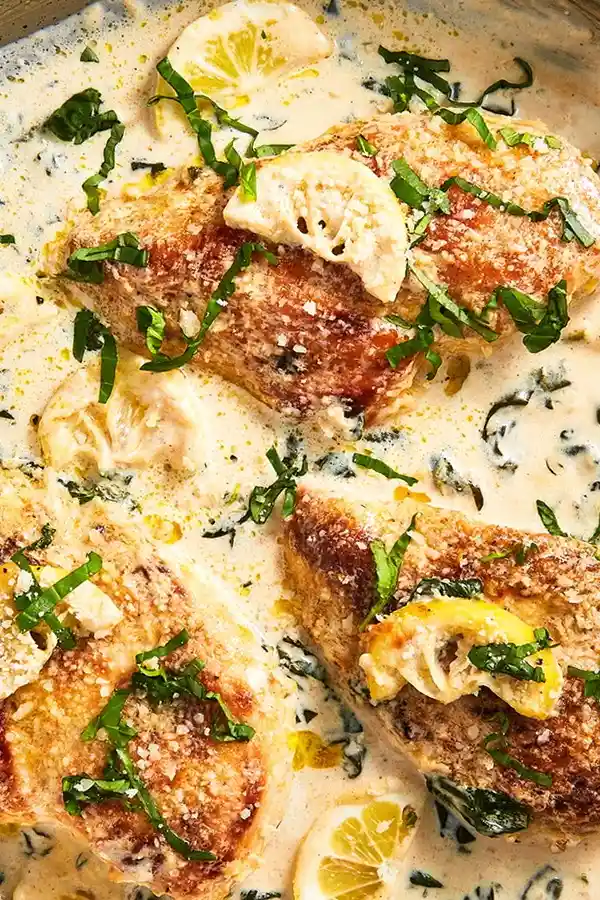
List of ingredients
- 1/2 c. all-purpose flour – used for dredging.
- 3/4 c. freshly grated Parmesan, divided – adds saltiness and thickness.
- 1 tsp. garlic powder – for concentrated savory flavor.
- 1/2 lemon, zested – provides aromatic citrus notes.
- Kosher salt – to taste.
- Freshly ground black pepper – to taste.
- 3 boneless skinless chicken breasts – the main protein.
- 2 tbsp. extra-virgin olive oil – for searing.
- 1 tbsp. butter – adds richness to the sauce.
- 2 cloves garlic, minced – for fresh pungent flavor.
- 2 c. baby spinach – adds color and nutrients.
- 1 c. heavy cream – creates the creamy base.
- 2/3 c. low-sodium chicken broth – balances the sauce consistency.
- 1 lemon, sliced in rounds and halved – for visual appeal and acidity.
- 1/4 c. thinly sliced fresh basil – used as a fresh garnish.
step-by-step instructions
- Prepare the Coating: On a large plate, combine flour with 1/4 cup Parmesan, garlic powder, and lemon zest. Season generously with salt and pepper and mix thoroughly with a fork. Dredge each chicken breast on all sides with flour mixture. Set aside.
- Sear the Chicken: In a large skillet over medium-high heat, heat oil until shimmering but not smoking. Add chicken and sear until golden, 6 minutes. Flip and cook until opposite side is golden, around 6 minutes more. Remove from pan and set aside.
- Build the Sauce: Turn heat down to medium and add butter to pan. When butter is melted add garlic and cook until fragrant, about 1 minute. Add spinach and cook until wilted, 1 to 2 minutes.
- Simmer and Thicken: Add chicken broth, cream, and remaining 1/2 cup Parmesan and season with more salt and pepper. Stir to combine. Add lemon slices and bring to a simmer and cook until thickened slightly, 3 to 4 minutes.
- Finish the Dish: Return chicken to skillet and simmer until chicken is cooked through, 5 to 6 minutes more.
- Garnish: When chicken is cooked, remove skillet from heat and garnish with basil before serving.
Professional Cooking Tips
Maintain Medium-High Heat for Searing
Ensure your skillet is properly heated before adding the chicken. If the oil is not shimmering, the chicken may stick to the pan or steam instead of searing. This step is crucial for creating a golden-brown crust that locks in moisture.
Avoid Overcrowding the Skillet
If the chicken breasts are too large, sear them in batches rather than all at once. Overcrowding the pan lowers the temperature and prevents a proper sear. This can lead to the chicken releasing too much liquid and boiling in its own juices.
Zest Only the Yellow Peel
When zesting the lemon, use a microplane to remove only the bright yellow outer layer. Avoid the white pith underneath, as it contains a bitter flavor that can overpower the sauce. Zesting just before dredging ensures the oils are fresh and potent.
Pat Dry the Chicken Breasts
Use paper towels to pat the chicken breasts dry before applying the flour mixture. Excess moisture on the surface of the meat can cause the flour to clump and prevent a crisp sear. A dry surface allows the coating to adhere evenly.
Control the Simmer Temperature
When adding the cream and Parmesan, keep the heat at a medium level. Boiling the sauce too aggressively can cause the cream to separate or the cheese to become grainy. A gentle simmer ensures a smooth, emulsified texture.
Use a Heavy-Bottomed Pan
A stainless steel or cast iron skillet is ideal for this recipe. These pans distribute heat evenly and create a flavorful fond, which are the browned bits left after searing the chicken. This fond adds deep complexity to the final sauce.
Ingredient Substitutions
Use Heavy Cream Substitutes
If you do not have heavy cream, you can use half-and-half, though the sauce will be thinner. To thicken a half-and-half sauce, allow it to simmer for a few extra minutes. Alternatively, a mixture of whole milk and a small amount of cornstarch slurry can work.
Swap Parmesan for Pecorino Romano
Pecorino Romano is a great alternative to Parmesan if you prefer a saltier, sharper taste. Since Pecorino is generally saltier than Parmesan, reduce the amount of added kosher salt in the recipe. This keeps the flavor balanced and prevents the dish from becoming too salty.
Substitute Chicken Broth with Vegetable Broth
Vegetable broth is a suitable replacement for chicken broth and will not significantly alter the taste. Ensure the vegetable broth is low-sodium to maintain control over the salt levels. This is a practical way to use up pantry staples.
Use Chicken Thighs for More Moisture
Boneless, skinless chicken thighs can be used instead of breasts for a juicier result. Thighs are more forgiving and less likely to overcook during the final simmer. Adjust the searing time slightly as thighs may take a minute longer to brown.
Alternative Greens to Spinach
If you do not have baby spinach, kale or Swiss chard are excellent alternatives. Kale requires a few extra minutes of cooking to soften compared to spinach. Chop the leaves into smaller pieces for more consistent distribution in the sauce.
Meal Variations
Incorporate Sliced Mushrooms
Add sliced cremini or button mushrooms after searing the chicken and before adding the garlic. Sauté them in the butter until browned to add an earthy depth to the dish. Mushrooms pair exceptionally well with the creamy lemon profile.
Add Halved Cherry Tomatoes
Toss in a handful of halved cherry tomatoes during the final simmer. The tomatoes will burst and release their juices, adding a sweet and acidic contrast. This variation adds a pop of color and a fresher taste to the sauce.
Swap Spinach for Fresh Kale
For a heartier texture, use chopped Lacinato kale instead of spinach. Sauté the kale for 3 to 5 minutes until tender before adding the broth and cream. This gives the dish a more rustic feel and added nutritional value.
Add a Pinch of Red Pepper Flakes
To introduce a subtle heat, stir in a pinch of crushed red pepper flakes when sautéing the garlic. This spicy element cuts through the richness of the heavy cream and Parmesan. It provides a balanced flavor profile that enhances the lemon.
Serving Suggestions
Pair with Angel Hair Pasta
Angel hair pasta is a light choice that allows the creamy sauce to be the star of the meal. Toss the cooked pasta directly into the skillet with the sauce before serving. This ensures every strand is evenly coated in the lemon parmesan mixture.
Serve Over Steamed Basmati Rice
Basmati or jasmine rice is excellent for absorbing the excess sauce. The fluffy texture of the rice complements the tenderness of the chicken. Serve the chicken and sauce directly over a bed of warm rice for a filling meal.
Accompanied by Grilled Asparagus
Grilled asparagus provides a crisp, charred contrast to the rich cream sauce. Season the asparagus with olive oil, salt, and pepper before grilling. The natural bitterness of the asparagus balances the acidity of the lemon.
Serve with Crusty Garlic Bread
Warm, crusty garlic bread is perfect for dipping into the remaining sauce on the plate. Use a French baguette sliced lengthwise and toasted with garlic butter. This adds a satisfying crunch to the overall dining experience.
Storage and Reheating
Refrigerate in Airtight Containers
Store leftovers in an airtight container in the refrigerator for up to three days. Ensure the chicken and sauce are cooled slightly before sealing to prevent excess condensation. This helps maintain the quality of the cream sauce.
Freeze the Cooked Chicken Carefully
While the sauce may change texture upon freezing, the chicken can be frozen for up to two months. Freeze the chicken and sauce together in a freezer-safe bag or container. Thaw completely in the refrigerator before reheating.
Avoid High Heat When Reheating
Reheat the dish slowly on the stovetop over low to medium heat. Adding a splash of chicken broth or water helps loosen the sauce and prevents it from breaking. Avoid using high heat, as this can cause the cream to separate.
Microwave Reheating Tips
If using a microwave, heat the chicken in short intervals, stirring occasionally. Covering the dish with a damp paper towel helps retain moisture. Low power settings are recommended to avoid overcooking the chicken breasts.
Common Questions
How to stop the cream sauce from separating?
Prevent separation by avoiding a rapid boil and using room-temperature cream. If the sauce does separate, whisk in a small amount of warm broth or a knob of cold butter to bring it back together. Keeping the heat moderate is the most effective prevention.
Can I use frozen chicken breasts?
Yes, but they must be fully thawed before cooking. Cooking frozen chicken breasts will lead to uneven cooking and a lack of a proper sear. Thaw them in the refrigerator overnight for the best results.
How do I ensure the chicken is cooked through?
Use a meat thermometer to check that the internal temperature has reached 165 degrees Fahrenheit. If you do not have a thermometer, slice into the thickest part of the breast to ensure the juices run clear. The final simmer step in the sauce is designed to finish the cooking.
What is the best pan for this recipe?
A wide, deep stainless steel skillet is best because it allows for efficient searing and provides enough room for the sauce to reduce. Cast iron is also a great choice for heat retention. Avoid non-stick pans if you want to maximize the flavor of the browned bits (fond).
Can I make this recipe lower in calories?
Replace heavy cream with evaporated milk or a mixture of Greek yogurt and broth. Use skinless chicken breasts and reduce the amount of butter. However, be aware that these substitutions will change the richness and thickness of the sauce.
Do I need to peel the lemon before zesting?
No, you zest the skin of the unpeeled lemon. Use a zester or grater to remove only the colored part of the rind. The peel contains the essential oils that provide the citrus flavor.
Print
Creamy Lemon Parmesan Chicken
- Total Time: 40 minutes
- Yield: 3 servings 1x
- Diet: Nut-free
Description
This Lemon Parmesan chicken recipe is not only perfectly creamy and satisfying, but all comes together in under an hour in one pan.
Ingredients
- 1/2 c. all-purpose flour
- 3/4 c. freshly grated Parmesan, divided
- 1 tsp. garlic powder
- 1/2 lemon, zested
- Kosher salt
- Freshly ground black pepper
- 3 boneless skinless chicken breasts
- 2 tbsp. extra-virgin olive oil
- 1 tbsp. butter
- 2 cloves garlic, minced
- 2 c. baby spinach
- 1 c. heavy cream
- 2/3 c. low-sodium chicken broth
- 1 lemon, sliced in rounds and halved
- 1/4 c. thinly sliced fresh basil
Instructions
- Step: On a large plate, combine flour with 1/4 cup Parmesan, garlic powder, and lemon zest. Season generously with salt and pepper and mix thoroughly with a fork. Dredge each chicken breast on all sides with flour mixture. Set aside.
- Step: In a large skillet over medium-high heat, heat oil until shimmering but not smoking. Add chicken and sear until golden, 6 minutes. Flip and cook until opposite side is golden, around 6 minutes more. Remove from pan and set aside.
- Step: Turn heat down to medium and add butter to pan. When butter is melted add garlic and cook until fragrant, about 1 minute. Add spinach and cook until wilted, 1 to 2 minutes. Add chicken broth, cream, and remaining 1/2 cup Parmesan and season with more salt and pepper. Stir to combine. Add lemon slices and bring to a simmer and cook until thickened slightly, 3 to 4 minutes. Return chicken to skillet and simmer until chicken is cooked through, 5 to 6 minutes more.
- Step: When chicken is cooked, remove skillet from heat and garnish with basil before serving.
Notes
Serve this dish with angel hair pasta, over rice, or alongside grilled veggies for a complete dinner.
- Prep Time: 10 minutes
- Cook Time: 30 minutes
- Category: Main Dish
- Method: Searing
- Cuisine: American
Nutrition
- Serving Size: 1 serving
- Calories: 975 kcal
- Sugar: 6 g
- Sodium: 1150 mg
- Fat: 62 g
- Saturated Fat: 32 g
- Unsaturated Fat: 30 g
- Trans Fat: 0 g
- Carbohydrates: 24 g
- Fiber: 3 g
- Protein: 52 g
- Cholesterol: 280 mg