This quick salmon pasta combines zesty lemon and fresh tomatoes in a rich parmesan cream sauce. It is an efficient meal that takes only 20 minutes to prepare while delivering a high-end dining experience. Perfect for weeknight dinners, it balances decadence with fresh citrus notes.
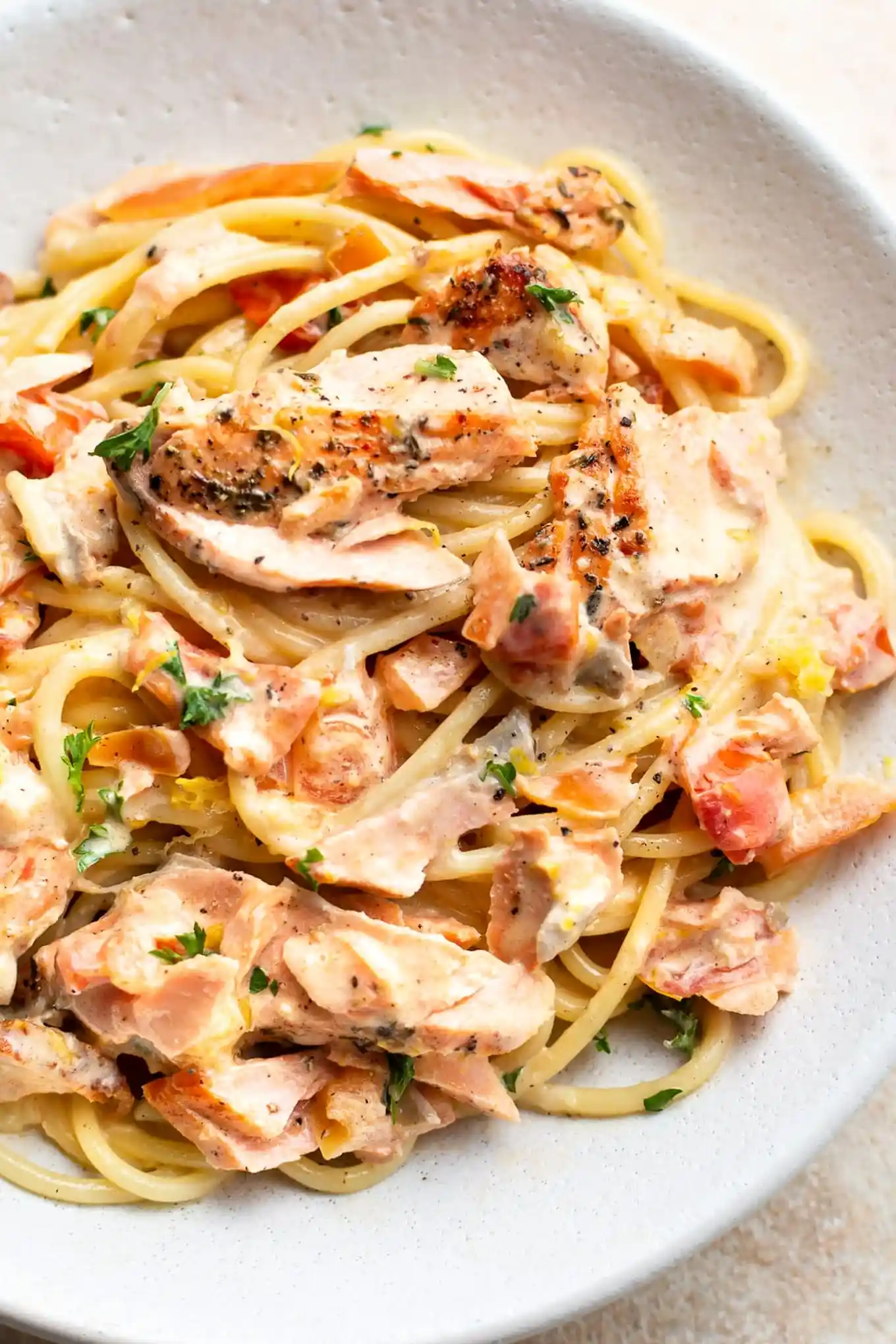
List of ingredients
- 4 ounces uncooked spaghetti (or other pasta) – provides the base for the dish.
- 1/2 pound fresh salmon – use skinless filets for easier preparation.
- 1/4 teaspoon Italian seasoning – or adjust to your personal taste.
- Salt & pepper – for seasoning the fish and sauce.
- 1 tablespoon olive oil – used for high-heat searing.
- 1 tablespoon butter – adds richness and prevents sticking.
- 1/2 cup freshly grated parmesan cheese – ensures a smooth, melted consistency.
- 2 medium tomatoes (chopped) – adds freshness and acidity.
- 3/4 cup heavy/whipping cream – creates the luxurious sauce texture.
- Juice and zest of 1/2 medium lemon (about 1 tbsp juice) – provides brightness.
- 3 cloves garlic (minced) – for a savory aromatic base.
- 1 teaspoon Dijon mustard – acts as a flavor enhancer and emulsifier.
- Chopped parsley (optional) – for a fresh garnish.
step-by-step instructions
- Cook the Pasta: Boil a salted pot of water and cook the pasta al dente according to package directions. Drain and set aside for later.
- Season the Fish: Sprinkle both sides of the salmon filets with Italian seasoning, salt, and pepper to taste. Ensure the seasoning is evenly distributed for a consistent flavor.
- Sear the Salmon: Add oil and butter to a skillet over medium heat. Sear the salmon for 3 minutes per side, then remove the fish from the pan and set it aside on a plate.
- Prepare the Sauce Base: Add the chopped tomatoes, cream, lemon juice, lemon zest, minced garlic, and Dijon mustard to the same skillet. Stir until the mixture is smooth and cook for 2 minutes.
- Incorporate the Cheese: Stir the grated parmesan cheese into the simmering sauce. Continue stirring until the cheese is fully melted and the sauce is homogeneous.
- Finish the Salmon: Add the seared salmon back into the pan and use a spoon to break it into smaller pieces. Reduce the heat to medium-low, cover the pan, and cook for another 4-5 minutes until the salmon is cooked through. Season with additional salt and pepper if needed.
- Combine and Serve: Once the pasta is cooked and drained, toss it directly into the skillet with the sauce. Serve immediately, garnished with chopped parsley and extra grated parmesan cheese if desired.
Optimal Cooking Techniques
Use Freshly Grated Parmesan for a Smoother Texture
Store-bought shredded cheese often contains cornstarch or cellulose to prevent clumping in the bag. These additives can hinder the melting process, leading to a grainy or lumpy sauce. Grating a block of Parmesan by hand ensures a silky, homogeneous emulsion that blends perfectly into the cream.
Pat Salmon Dry Before Searing
Moisture on the surface of the fish creates steam when it hits the hot pan. This prevents the salmon from developing a golden-brown crust through the Maillard reaction, which is essential for deep flavor. Use a paper towel to pat the filets dry on all sides before adding your seasonings.
Maintain Medium Heat to Avoid Burning
Using heat that is too high can burn the butter and the delicate garlic before the salmon is properly seared. Medium heat allows the fish to cook evenly and the fats to brown without smoking. This ensures the salmon remains juicy inside while developing a caramelized exterior.
Avoid Overcooking the Salmon
Salmon can become dry and chalky if left on the heat for too long. The process of searing and then simmering in the sauce cooks the fish in two stages. Ensure you remove the fish after the initial sear and only return it to the pan for the final few minutes of cooking.
Save a Small Amount of Pasta Water
Before draining your pasta, reserve about a quarter cup of the starchy cooking water. If the cream sauce becomes too thick after adding the parmesan, a splash of this water can loosen it. The starch helps the sauce bind to the noodles more effectively.
Ingredient Alternatives
Selecting the Ideal Pasta Shape
While spaghetti is traditional for this dish, linguine or fettuccine are excellent alternatives due to their wider surface area. If you prefer a shorter pasta, penne or fusilli work well as they can trap the creamy sauce inside their ridges. Always cook the pasta slightly under the package directions as it will finish cooking in the sauce.
Using Cherry Tomatoes Instead of Medium Tomatoes
Cherry or grape tomatoes can be used as a substitute for medium tomatoes. Simply halve them or leave them whole for bursts of concentrated flavor. They tend to be sweeter and may release less water, which can result in a slightly thicker sauce.
Substituting Salmon with Other Fish
Trout or Arctic char are very similar to salmon in texture and flavor and can be used interchangeably. For a firmer fish, you can use cod or halibut, though these may require slightly less time in the final simmering stage to avoid drying out.
The Importance of Heavy Cream
Heavy cream is used here because its high fat content prevents the sauce from curdling when exposed to acidic ingredients like lemon and tomatoes. Substituting it with milk or half-and-half may result in a broken sauce. If a lighter option is needed, a thick cashew cream or coconut cream can be used as a dairy-free alternative.
Creative Recipe Variations
Adding Fresh Spinach for Extra Nutrition
Adding two cups of fresh baby spinach during the final simmering stage adds a vibrant color and a boost of vitamins. The heat from the sauce will wilt the spinach in about one minute. This addition pairs exceptionally well with the lemon and parmesan flavors.
Incorporating Sliced Mushrooms
Sautéing sliced cremini or button mushrooms in the skillet before adding the sauce adds a savory, earthy depth. Cook the mushrooms until they are browned and their moisture has evaporated. This adds a meatier texture to the overall dish.
Adding Red Pepper Flakes for a Spicy Kick
If you prefer a bit of heat, add a pinch of crushed red pepper flakes when sautéing the garlic. This introduces a subtle warmth that cuts through the richness of the heavy cream. Adjust the amount based on your tolerance for spice.
Using Different Dried Herb Blends
While Italian seasoning is a great all-purpose choice, you can customize the profile by using dried dill or oregano. Dill is a classic pairing for salmon and adds a fresh, herbal note. Oregano provides a more Mediterranean feel that complements the tomatoes.
Serving and Pairing Suggestions
Pairing with Crusty Garlic Bread
A side of toasted sourdough or a French baguette topped with garlic butter is ideal for this meal. The bread is perfect for soaking up the remaining creamy lemon sauce from the plate. Ensure the bread is toasted until golden brown for a satisfying contrast in texture.
Serving with a Peppery Arugula Salad
A light salad of baby arugula tossed with lemon juice and olive oil provides a necessary acidic balance. The peppery notes of the greens cut through the decadence of the parmesan cream. This keeps the meal feeling fresh rather than overly heavy.
Choosing Refreshing Non-Alcoholic Beverages
A chilled glass of sparkling water with a slice of fresh lemon or a lime wedge complements the citrus notes of the pasta. For a more complex flavor, an iced herbal tea like peppermint or chamomile can cleanse the palate between bites.
Garnishing for Professional Presentation
Freshly chopped parsley adds a pop of green that makes the dish visually appealing. An extra sprinkle of parmesan cheese and a thin slice of lemon on the side of the plate enhance the presentation. These small touches make a simple weeknight meal feel like a restaurant dish.
Storage and Preservation
Refrigerating Leftovers Safely
Store any remaining pasta in an airtight container and place it in the refrigerator immediately after cooling. The dish will remain fresh and safe to eat for 2 to 3 days. Ensure the container is sealed tightly to prevent the cream sauce from absorbing fridge odors.
The Best Method for Reheating Cream Sauces
Reheat the pasta slowly over low heat on the stovetop rather than in the microwave. Add a tablespoon of water or milk to the pan to help re-emulsify the sauce. This prevents the cream from separating and keeps the salmon from becoming rubbery.
Managing Texture After Storage
Cream sauces naturally thicken as they cool, which may leave the pasta feeling dry upon reheating. Gently stirring in a small amount of butter or a splash of cream can restore the original silkiness. Do not over-stir, or you may break the salmon pieces too far.
Why Freezing is Not Recommended
Freezing this dish is discouraged because the heavy cream and parmesan cheese often separate during the thawing process. Additionally, the texture of the cooked salmon changes significantly when frozen and reheated. For the best quality, enjoy the meal fresh or within a few days of cooking.
Troubleshooting Common Cooking Problems
Fixing a Sauce That Separates
If the sauce looks grainy or split, it is usually due to extreme temperature changes or too much acidity. To fix this, whisk in a teaspoon of warm water or a small knob of cold butter over very low heat. Constant stirring helps the fat and liquid bind back together.
Adjusting the Sauce Thickness
If the sauce is too thin, allow it to simmer for an additional minute or two without the lid to reduce the liquid. Conversely, if it is too thick, add a small amount of pasta water or milk. Stir gently until the desired consistency is achieved.
Balancing Excessive Lemon Acidity
If the lemon flavor is too overpowering, you can balance it by adding a tiny pinch of granulated sugar. The sugar neutralizes the sharpness of the citric acid without making the dish taste sweet. Always add sugar in very small increments and taste as you go.
Preventing Salmon from Sticking to the Pan
If the salmon sticks, it is likely because it was added to the pan before the oil and butter reached the correct temperature. Wait until the butter is bubbling and the oil is shimmering before placing the fish in the pan. Avoid moving the fish too early; it will naturally release from the pan once a crust has formed.
Frequently Asked Questions
Can I use frozen salmon for this recipe?
Yes, you can use frozen salmon, but it must be completely thawed and patted dry before cooking. Thawing the fish in the refrigerator overnight is the best method. If you sear frozen fish, it will release too much water and steam rather than brown.
How do I know when the salmon is fully cooked?
The salmon is done when the flesh is opaque and flakes easily with a fork. The internal temperature should reach 145 degrees Fahrenheit. Be careful not to overcook it, as it will continue to cook slightly after being removed from the heat.
What is the best way to zest a lemon?
Use a microplane or a fine grater to remove only the bright yellow outer layer of the peel. Avoid grating into the white pith, as the pith is bitter and can ruin the flavor of the sauce. Zest the lemon before juicing it for easier handling.
Can I make this recipe dairy-free?
To make this dairy-free, replace the heavy cream with full-fat coconut milk or a cashew-based cream. Substitute the parmesan cheese with nutritional yeast or a vegan parmesan alternative. Note that the texture may vary slightly, but the lemon and tomato flavors will remain strong.
Print
Creamy Lemon and Fresh Tomato Salmon Pasta
- Total Time: 20 minutes
- Yield: 2 servings 1x
- Diet: General
Description
This easy creamy lemon and tomato salmon pasta recipe is a fresh yet decadent meal featuring a rich tomato and parmesan cream sauce.
Ingredients
- 4 ounces uncooked spaghetti (or other pasta)
- 1/2 pound fresh salmon
- 1/4 teaspoon Italian seasoning
- Salt & pepper
- 1 tablespoon olive oil
- 1 tablespoon butter
- 1/2 cup freshly grated parmesan cheese
- 2 medium tomatoes, chopped
- 3/4 cup heavy/whipping cream
- Juice and zest of 1/2 medium lemon (about 1 tbsp juice)
- 3 cloves garlic, minced
- 1 teaspoon Dijon mustard
- Chopped parsley (optional)
Instructions
- Cook Pasta: Boil a salted pot of water and cook the pasta al dente according to package directions.
- Season Salmon: Sprinkle both sides of the salmon with Italian seasoning and salt & pepper, to taste.
- Sear Salmon: Add oil and butter to a skillet on medium heat. Sear salmon for 3 minutes/side. Remove the salmon from the pan and set aside.
- Make Sauce: Add the tomato, cream, lemon juice and zest, garlic, and Dijon mustard. Stir until smooth and cook for 2 minutes, then stir in the parmesan.
- Finish Salmon: Add the salmon back into the pan, and use a spoon to break it up into smaller pieces. Reduce heat to medium-low and cover. Cook for another 4-5 minutes, or until the salmon is cooked through. Season with more salt and pepper if needed.
- Combine: Once the pasta is cooked, toss it with the sauce. Serve with parsley and some extra grated parmesan cheese if desired.
Notes
I don’t recommend subbing the cream with half-and-half or milk because the sauce is likely to curdle due to the amount of citrus in this recipe.
- Prep Time: 5 minutes
- Cook Time: 15 minutes
- Category: Main Course
- Method: Pan-searing
- Cuisine: American
Nutrition
- Serving Size: 1 serving
- Calories: 925 kcal
- Sugar: 8 g
- Sodium: 595 mg
- Fat: 60 g
- Saturated Fat: 30 g
- Unsaturated Fat: 25 g
- Trans Fat: 0.2 g
- Carbohydrates: 55 g
- Fiber: 4 g
- Protein: 41 g
- Cholesterol: 200 mg