This healthy salmon salad uses Greek yogurt for a creamy texture without the need for mayonnaise. It is a fast, nutrient-dense option that works well for lunch meal prep or quick appetizers.
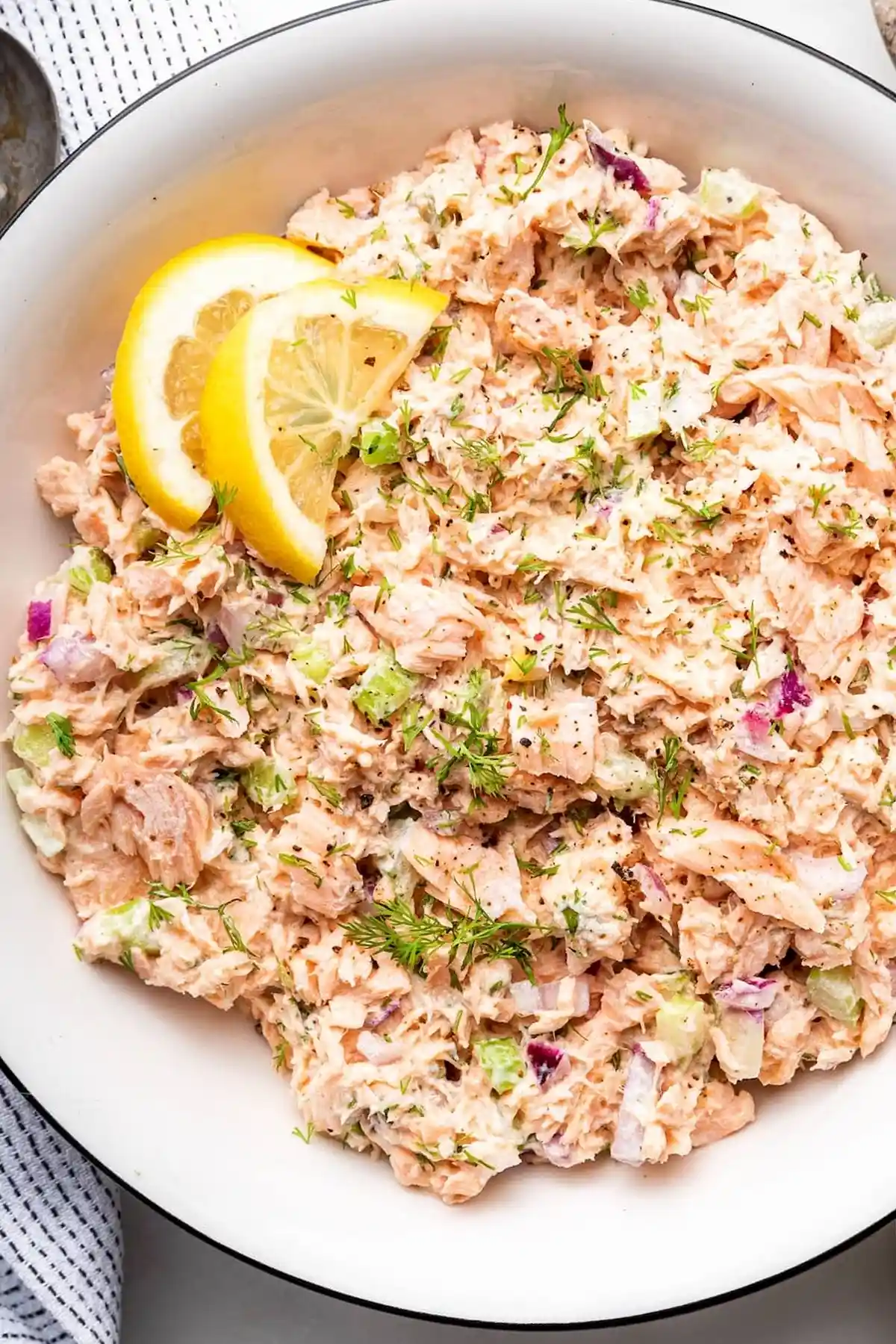
List of ingredients
- 2 6 oz cans of salmon, drained – use wild-caught for best quality.
- 1/3 cup plain Greek yogurt – provides a creamy, tangy base.
- 1 stalk diced celery (about 1/4 cup) – adds necessary crunch.
- 1/4 cup diced red onion – provides a sharp, zesty flavor.
- 1 Tablespoon fresh dill – offers a bright, herbal note.
- 1 Tablespoon Dijon mustard – adds depth and a slight tang.
- 1 Tablespoon fresh lemon juice – cuts through the richness of the fish.
- 1/2 teaspoon ground pepper – for basic seasoning.
- 1/4 teaspoon sea salt – enhances all the flavors.
step-by-step instructions
- Combine Base: Add the drained salmon, Greek yogurt, chopped celery, diced onion, fresh dill, Dijon mustard, lemon juice, pepper, and salt into a large mixing bowl.
- Mix and Mash: Toss all ingredients together using a fork or spatula, making sure to break up any large chunks of salmon meat for a uniform consistency.
- Finish and Serve: Enjoy the salad immediately or place it in the refrigerator to chill. Serve it with crackers, inside a wrap, on toasted bread, or over a bed of fresh greens.
Optimal Ingredient Selection
Choose Low-Sodium Canned Salmon
Selecting cans with no salt added allows you to control the sodium levels precisely. This prevents the salad from becoming overly salty when combined with the Dijon mustard and sea salt.
Use Full-Fat Greek Yogurt
Full-fat plain Greek yogurt offers a richer mouthfeel and better stability than fat-free versions. It mimics the texture of mayonnaise more closely while adding a boost of protein.
Prioritize Fresh Dill
Fresh dill provides a vibrant, citrusy flavor that dried herbs cannot replicate. Finely chop the leaves and stems to distribute the herb evenly throughout the mixture.
Select Firm Celery Stalks
Use the crispest stalks available to ensure a satisfying crunch in every bite. Avoid limp celery, as it can release too much moisture and make the salad watery.
Use Freshly Squeezed Lemon Juice
Fresh lemon juice is more potent and bright than bottled alternatives. It provides the essential acidity needed to balance the richness of the salmon and yogurt.
Customization and Flavor Swaps
Substitute Red Onion with Green Onions
If red onion is too pungent, swap it for thinly sliced scallions. This provides a milder onion flavor and a pop of green color to the presentation.
Replace Lemon Juice with Apple Cider Vinegar
Apple cider vinegar is an excellent alternative if you lack fresh lemons. It offers a slightly different tang that still complements the salmon and dill effectively.
Swap Fresh Dill for Fresh Parsley
For those who prefer a cleaner, more neutral herbal taste, flat-leaf parsley is a great substitute. It maintains the freshness of the dish without the strong anise-like flavor of dill.
Integrate Capers for Brininess
Adding a tablespoon of drained capers introduces a salty, pickled element. This works particularly well if you are aiming for a more Mediterranean-style flavor profile.
Use Avocado Oil Mayonnaise
If Greek yogurt is not available, avocado oil mayonnaise is a healthy alternative. It provides a similar creamy consistency and heart-healthy fats.
Diverse Serving Suggestions
Create an Open-Faced Sourdough Toast
Spread a thick layer of salmon salad onto toasted sourdough bread. Top with a thin slice of cucumber or a sprinkle of paprika for added visual appeal and flavor.
Prepare Low-Carb Lettuce Wraps
Spoon the mixture into sturdy Romaine lettuce leaves or butter lettuce cups. This is an ideal way to enjoy the salad while keeping the meal light and grain-free.
Pair with Seeded Crackers
Serve the salad in a bowl surrounded by almond flour or multigrain crackers. This makes the recipe an excellent high-protein appetizer for guests.
Build a Hearty Salmon Sandwich
Place the salad between two slices of whole-grain bread with fresh lettuce and tomato slices. Toasted bread helps prevent the sandwich from becoming soggy from the yogurt.
Serve Over a Bed of Mixed Greens
Scoop the salmon salad onto a pile of baby spinach or arugula. Drizzle a small amount of olive oil and balsamic glaze over the greens for a complete meal.
Storage and Freshness Guidelines
Use Airtight Glass Containers
Store the salmon salad in a glass container with a tight-sealing lid to prevent odors from escaping. Glass is preferable to plastic as it does not absorb flavors or stains.
Observe the Three to Five Day Window
This salad remains fresh in the refrigerator for three to five days. Consume it within this timeframe to ensure the vegetables remain crisp and the yogurt doesn’t separate.
Avoid Freezing the Prepared Salad
Do not freeze the salmon salad once the yogurt and fresh vegetables have been added. Freezing alters the texture of the Greek yogurt and makes the celery mushy upon thawing.
Chill Before Serving
Allowing the salad to chill for at least 30 minutes before serving lets the flavors meld. The cold temperature enhances the crispness of the celery and onion.
Texture and Taste Troubleshooting
Fixing a Watery Consistency
If the salad seems too thin, add another tablespoon of Greek yogurt or a pinch of Xanthan gum. Ensure the canned salmon is drained thoroughly before mixing to prevent excess liquid.
Balancing Overly Tangy Flavors
If the lemon juice or yogurt makes the salad too tart, add a tiny pinch of sugar or honey. This neutralizes the acidity without making the salad taste sweet.
Reducing the Pungency of Raw Onions
If the red onion flavor is too strong, soak the diced pieces in cold water for ten minutes. Drain and pat them dry before adding them to the salmon mixture.
Managing Large Salmon Chunks
Use a fork to mash the salmon more thoroughly if you prefer a spread-like consistency. For a chunkier salad, stir gently with a spoon to keep the flakes intact.
Frequently Asked Questions
Can I use cooked salmon fillets instead of canned?
Yes, you can use chilled, flaked cooked salmon. Simply ensure the fish is cooled completely before mixing it with the yogurt to avoid melting the creamy base.
How do I handle salmon bones in canned salmon?
Many canned salmon brands include soft, edible bones. If you prefer a smoother texture, simply remove them by hand during the draining process before adding the fish to the bowl.
Is it possible to make this recipe vegan?
You can replace the salmon with mashed chickpeas and the Greek yogurt with a vegan almond or soy-based yogurt. Keep the other seasonings the same for a similar flavor profile.
Why does my salmon salad separate after a day?
Separation can occur if the yogurt has a high water content. Stir the salad vigorously before serving to reintegrate the dressing and the fish.
Can I add dried dill instead of fresh?
You can use dried dill, but use only one-third of the amount called for in the recipe. Dried herbs are more concentrated and lack the brightness of fresh dill.
What is the best way to drain canned salmon?
Use a fine-mesh strainer or a dedicated can colander. Press down gently with a spoon to remove as much liquid as possible without crushing the fish flakes.
Can I add apple pieces for sweetness?
Diced Granny Smith apples add a wonderful sweetness and extra crunch. This variation pairs very well with the savory notes of the Dijon mustard.
How can I increase the protein content further?
Add a hard-boiled egg, chopped finely, into the mixture. This increases the protein and adds another layer of creaminess to the final result.
} Print
Creamy Greek Yogurt Salmon Salad
- Total Time: 15 minutes
- Yield: 2 servings 1x
- Diet: Gluten-Free, Paleo, Low Carb, High Protein
Description
This easy salmon salad is made with canned salmon, red onion, celery, fresh dill and Greek yogurt instead of mayo. It’s loaded with flavor and perfect for meal prep.
Ingredients
- 2 6 oz cans of salmon, drained
- 1/3 cup plain Greek yogurt
- 1 stalk diced celery (about 1/4 cup)
- 1/4 cup diced red onion
- 1 Tablespoon fresh dill
- 1 Tablespoon Dijon mustard
- 1 Tablespoon fresh lemon juice
- 1/2 teaspoon ground pepper
- 1/4 teaspoon sea salt
Instructions
- Combine: Add drained salmon, yogurt, chopped celery, diced onion, dill, mustard, lemon juice, pepper and salt into a large bowl. Mix to combine, breaking up any large chunks of salmon meat.
- Serve: Enjoy right away or chill before serving. Serve with crackers for a snack or appetizer, on bread or a wrap for a sandwich or over a bed of greens.
Notes
Store leftovers in an airtight container in the fridge for 3-5 days.
- Prep Time: 15 minutes
- Cook Time: 0 minutes
- Category: Salad
- Method: Mixing
- Cuisine: American
Nutrition
- Serving Size: 1 serving
- Calories: 241 kcal
- Sugar: 3 g
- Sodium: 685 mg
- Fat: 6 g
- Saturated Fat: 1 g
- Unsaturated Fat: 5 g
- Trans Fat: 0 g
- Carbohydrates: 7 g
- Fiber: 1 g
- Protein: 40 g
- Cholesterol: 64 mg