This elegant dish features tender, golden-fried chicken fillets smothered in a rich, velvety lemon-garlic cream sauce. It is a sophisticated meal that is surprisingly simple to prepare in a single skillet.
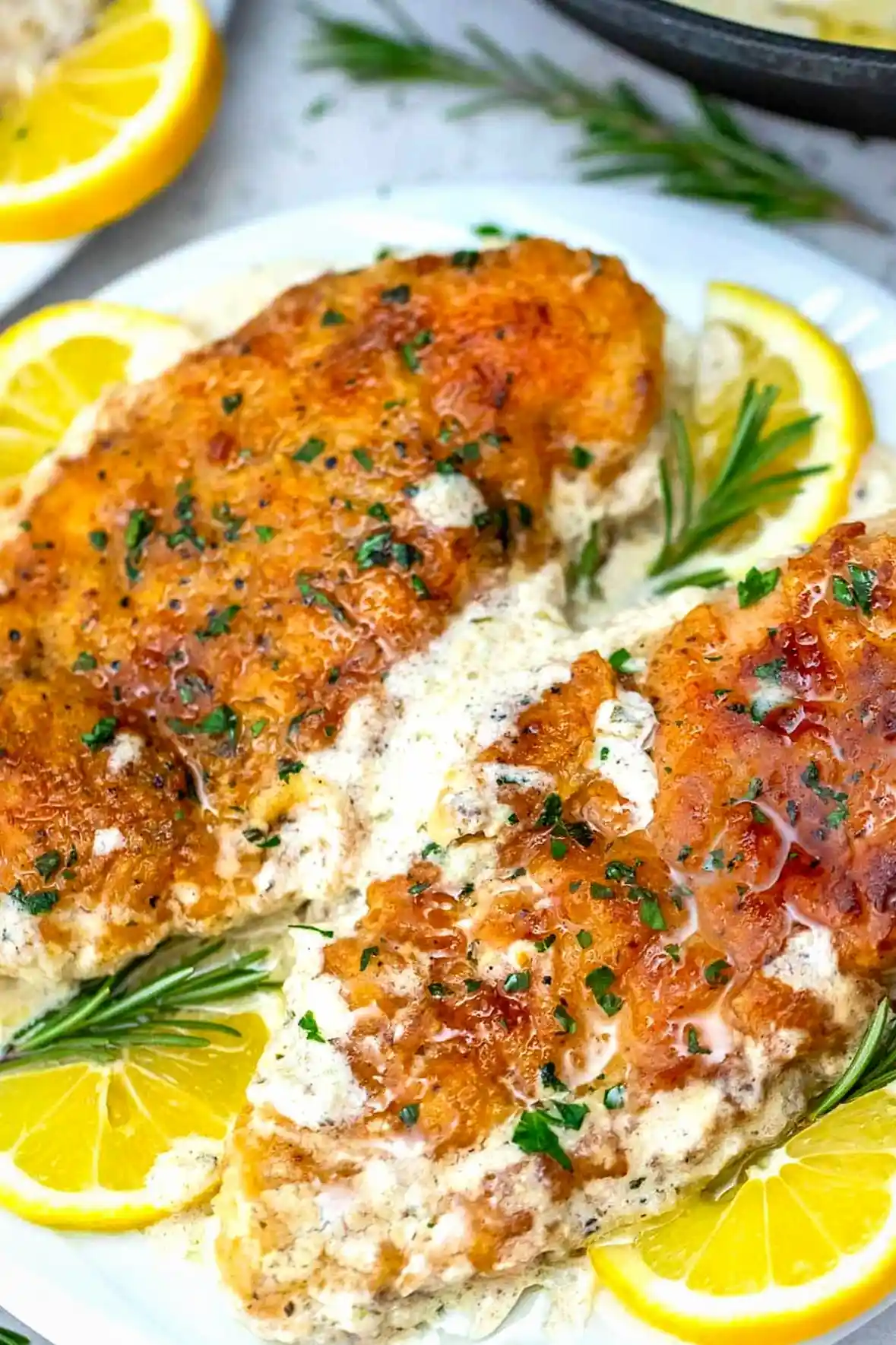
List of ingredients
- 2 large boneless/skinless chicken breasts – cut horizontally into 4 fillets.
- 2 large eggs – beaten until smooth.
- 1/3 cup parmesan cheese – finely grated for the breading.
- 1/3 cup all-purpose flour – used for dredging.
- 4 tablespoons olive oil – for frying the fillets.
- 2 tablespoons unsalted butter – for sautéing the garlic.
- 6 cloves garlic – minced finely.
- 1/2 cup chicken broth – used as a substitute for white wine.
- 3/4 cup chicken broth – for the base of the sauce.
- 1/8 teaspoon ground black pepper – for seasoning.
- 1/2 teaspoon salt – or adjust according to taste.
- 1 teaspoon lemon zest – for bright citrus aroma.
- 1 tablespoon fresh parsley – finely chopped.
- 1/2 teaspoon fresh rosemary – finely chopped.
- 1 cup heavy cream – to create the velvety texture.
- 1/2 lemon – juiced.
- 1 teaspoon parsley – for garnish.
- 2 rosemary sprigs – for garnish.
- Lemon slices – for garnish.
step-by-step instructions
- Prepare the chicken: Cut each chicken breast in half horizontally to create 4 fillets. If the meat remains too thick, pound each fillet with a meat mallet to a uniform 1/2-inch thickness for even cooking.
- Set up egg wash: Whisk together the beaten eggs, a pinch of salt, and some black pepper in a shallow bowl.
- Prepare dredging mix: In a second shallow bowl, combine the all-purpose flour, finely grated parmesan cheese, salt, and pepper, stirring until well mixed.
- Bread the chicken: Dip each fillet into the egg mixture, letting the excess drip off. Toss it in the flour mixture, dip it back into the egg mixture, and finish with a final coating of the flour mixture.
- Fry the fillets: Heat olive oil in a large skillet over medium-high heat. Once the oil is shimmering, fry the chicken in batches of two for 4-5 minutes per side until golden brown.
- Rest the meat: Transfer the cooked fillets to a plate lined with paper towels to remove excess oil.
- Sauté aromatics: In the same skillet, melt the butter. Add minced garlic and cook for 30 seconds while stirring constantly to avoid burning.
- Deglaze and reduce: Stir in the chicken broth (both portions), salt, pepper, lemon zest, parsley, and rosemary. Use a spoon to scrape up any browned bits from the bottom of the pan and boil on high heat for 5 minutes to reduce.
- Finish the sauce: Lower the heat to medium-low and stir in the heavy cream. Simmer gently until the sauce slightly thickens.
- Final seasoning: Taste the sauce and adjust salt and pepper. Stir in the fresh lemon juice.
- Combine and serve: Return the fried chicken fillets to the pan and cook for 2-3 more minutes on low heat to ensure they are heated through. Garnish with parsley, rosemary sprigs, and lemon slices.
Advanced Breading Techniques
The Importance of Even Thickness
Pounding the chicken to a consistent 1/2-inch thickness ensures that every piece cooks at the same rate. This prevents the edges from drying out while the center remains undercooked. Use a meat mallet or a heavy rolling pin between two sheets of plastic wrap to avoid tearing the meat.
Mastering the Double Dredge
The process of dipping in egg, then flour, then egg, and flour again creates a thicker, more resilient crust. This double layer acts as a barrier that protects the chicken from overcooking while providing more surface area for the sauce to cling to. It results in a restaurant-style texture that is both crispy and tender.
Managing Oil Temperature
Wait until the olive oil is shimmering but not smoking before adding the chicken. If the oil is too cold, the breading will absorb the fat and become greasy. If it is too hot, the parmesan in the flour mixture will burn before the chicken is cooked through.
Preventing Crust Separation
To ensure the breading does not peel off in the pan, avoid overcrowding the skillet. Frying in batches allows the temperature to remain stable and gives each fillet enough space to sear. Let the chicken rest undisturbed for the first few minutes of frying to allow the crust to set.
Sauce Customization and Substitutions
Substituting for White Wine
To keep the recipe alcohol-free, chicken broth is the best substitute for maintaining a savory profile. For a touch more acidity and sweetness similar to wine, you can use a mixture of chicken broth and a small amount of white grape juice. This provides the necessary depth without changing the core flavor of the dish.
Alternative Cream Options
If heavy cream is unavailable, you can use half-and-half, though the sauce will be slightly thinner. To thicken a lighter cream substitute, you can whisk in a small cornstarch slurry (equal parts cornstarch and water) during the simmering process. Avoid using milk alone, as it may curdle when combined with the lemon juice.
Parmesan Cheese Alternatives
While parmesan provides a salty, nutty depth, Pecorino Romano is a great alternative for a sharper taste. For a milder flavor, a finely grated Gruyere or white cheddar can be used. Ensure the cheese is finely grated so it incorporates evenly into the flour dredging mixture.
Adjusting the Citrus Balance
The lemon juice should be added at the very end of the cooking process to maintain its brightness. If the sauce tastes too tart, add a tiny pinch of sugar to balance the acidity. If it lacks zest, increase the amount of lemon zest added during the reduction phase.
Protein Alternatives
Using Chicken Thighs
Boneless, skinless chicken thighs are a juicy alternative to breasts. Because thigh meat has a higher fat content, it is more forgiving and less likely to dry out. Note that thighs may shrink slightly more during cooking, so adjust your portioning accordingly.
Adapting for White Fish
This sauce works exceptionally well with firm white fish like cod, halibut, or tilapia. Follow the same breading procedure but reduce the frying time to 2-3 minutes per side. Fish is more delicate, so carefully slide the fillets back into the sauce to avoid breaking them.
Utilizing Salmon Fillets
Salmon provides a rich flavor that complements the lemon and cream sauce. Sear the salmon fillets with the same double-dredge method. Since salmon is oilier than chicken, you can reduce the amount of olive oil used in the pan.
Serving and Pairing Suggestions
Optimal Pasta Pairings
Linguine or fettuccine are the best choices because their wide surface area captures the creamy sauce. Toss the pasta in a small amount of the pan sauce before plating to ensure every strand is coated. Alternatively, angel hair pasta provides a lighter contrast to the richness of the cream.
Rice and Grain Bases
Serve the chicken over a bed of fluffy jasmine rice or creamy risotto to soak up the extra sauce. Quinoa or farro can be used for a heartier, nuttier base that adds a contrasting texture to the soft fillets. Ensure the grains are cooked and drained well to avoid watering down the sauce.
Vegetable Side Dish Ideas
Steamed broccoli or sautéed asparagus provide a fresh, bitter contrast to the creamy sauce. Roasted carrots or glazed parsnips also pair well with the lemon and garlic notes. For a low-carb option, serve the dish over a bed of sautéed spinach or zoodles.
Balanced Salad Pairings
A simple arugula salad with a light vinaigrette helps cut through the richness of the heavy cream. Use a dressing made of olive oil, lemon juice, and a touch of Dijon mustard. This acidity cleanses the palate between bites of the savory chicken.
Storage and Reheating Guidelines
Refrigerator Storage
Place the cooled chicken and sauce in an airtight container and store it in the refrigerator for up to three days. Ensure the dish is completely cooled before sealing to prevent condensation, which can make the breading soggy.
Freezing Instructions
While you can freeze this dish for up to a week, the texture of the breading will change. To freeze, place the chicken and sauce in a freezer-safe container. Thaw overnight in the refrigerator before reheating to maintain the best possible quality.
Best Reheating Methods
Avoid the microwave if possible, as it can make the chicken rubbery and the sauce separate. Instead, reheat the dish in a skillet over low heat. Add a tablespoon of water or broth to loosen the sauce as it warms through.
Maintaining Sauce Texture
If the sauce breaks or separates during reheating, whisk in a teaspoon of heavy cream or a small knob of butter. This helps re-emulsify the fats and liquids, restoring the velvety consistency of the original sauce.
Troubleshooting Common Issues
Sauce is Too Thin
If the sauce hasn’t thickened enough, continue simmering on medium-low heat for another few minutes. You can also whisk in a small amount of cornstarch slurry or a pinch of parmesan cheese to increase the viscosity without altering the flavor significantly.
Chicken is Too Dry
Dry chicken usually results from overcooking or using breasts that were too thick. To fix this, ensure you pound the meat to a uniform thickness. If the meat is already dry, simmer it in the sauce for a slightly longer period to allow the moisture from the cream to penetrate the crust.
Breading is Too Thick
If the breading feels like a heavy shell, you may have applied too much flour during the double-dredge process. Shake off excess flour and egg before each dip. A light, even coating is preferable to a thick layer for a more balanced bite.
Sauce is Too Sour
An over-abundance of lemon juice can make the sauce overly tart. To neutralize this, stir in an extra tablespoon of heavy cream or a small amount of unsalted butter. This adds fat, which coats the tongue and mellows the perception of acidity.
Frequently Asked Questions
Can I use dried herbs instead of fresh?
Yes, you can use dried parsley and rosemary, but use only one-third of the amount specified. Dried herbs are more concentrated in flavor, but they lack the bright, fresh aromatic quality of fresh herbs.
How do I prevent the butter from burning?
Keep the heat at a medium level when adding the butter. As soon as the butter melts and begins to foam, add the minced garlic immediately. Stir the garlic constantly for 30 seconds so it softens without browning.
Which type of lemon is best for this recipe?
Fresh Eureka or Lisbon lemons are ideal for their balanced acidity and high juice content. Organic lemons are preferred if you are using the zest, as you are incorporating the outermost layer of the peel into the sauce.
Can I make this dish in a Crockpot?
This specific recipe is not suitable for a Crockpot because it relies on frying for texture and reduction for sauce thickness. However, you can slow-cook the chicken in the sauce ingredients and then sear the fillets separately before combining them.
} Print
Creamy Chicken Francese
- Total Time: 45 minutes
- Yield: 4 fillets 1x
- Diet: General
Description
Chicken Francese features golden-fried chicken fillets nestled in a bright and velvety sauce made of lemons, garlic, cream, and savory broth.
Ingredients
- 2 large boneless/skinless chicken breasts (cut in half horizontally to make 4 fillets)
- 2 large eggs (beaten)
- 1/3 cup parmesan cheese (finely grated)
- 1/3 cup all-purpose flour
- 4 tablespoons olive oil
- 2 tablespoons unsalted butter
- 6 cloves garlic (minced)
- 1/2 cup chicken broth
- 3/4 cup chicken broth
- 1/8 teaspoon ground black pepper
- 1/2 teaspoon salt
- 1 teaspoon lemon zest
- 1 tablespoon fresh parsley
- 1/2 teaspoon fresh rosemary (finely chopped)
- 1 cup heavy cream
- 1/2 lemon (juiced)
- 1 teaspoon parsley (for garnish)
- 2 rosemary sprigs (for garnish)
- Lemon slices (for garnish)
Instructions
- Prepare Chicken: Cut each chicken breast in half horizontally to make 4 fillets and pound to 1/2-inch thickness if necessary.
- Egg Wash: Whisk beaten eggs, a pinch of salt, and black pepper in a shallow bowl.
- Flour Mix: Combine flour, finely grated parmesan, salt, and pepper in another shallow bowl.
- Breading: Dredge chicken fillets in egg mixture, then flour mixture, then egg again, and finally flour once more.
- Fry: Heat oil in a large skillet over medium-high heat and fry fillets in batches for 4-5 minutes per side until golden brown.
- Rest: Transfer fried fillets to a paper towel lined plate.
- Sauté: Melt butter in the same pan, add garlic, and cook for 30 seconds.
- Deglaze: Stir in 1 1/4 cups chicken broth (total), salt, pepper, lemon zest, parsley, and rosemary; cook for 5 minutes on high heat to reduce.
- Cream: Reduce heat to medium-low, add heavy cream, and simmer until slightly thickened.
- Finish: Stir in lemon juice, return chicken fillets to the sauce, and cook for 2-3 more minutes on low to heat through.
- Serve: Serve over pasta, rice, or vegetables and garnish with parsley and lemon slices.
Notes
Pound the fillets into thinner cutlets for better browning and faster cooking. For a more beautiful presentation, grill some lemon slices and use them as a garnish.
- Prep Time: 15 minutes
- Cook Time: 30 minutes
- Category: Main Course
- Method: Pan-frying
- Cuisine: American, Italian
Nutrition
- Serving Size: 1 fillet
- Calories: 484 kcal
- Sugar: 4 g
- Sodium: 827 mg
- Fat: 31 g
- Saturated Fat: 10 g
- Unsaturated Fat: 21 g
- Trans Fat: 0 g
- Carbohydrates: 13 g
- Fiber: 1 g
- Protein: 33 g
- Cholesterol: 181 mg