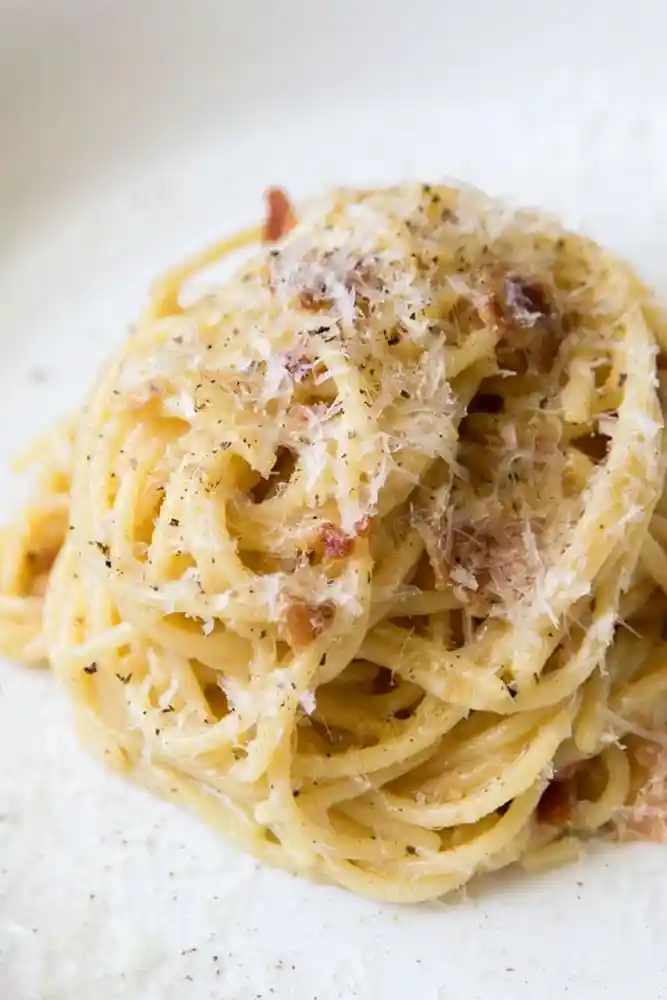
This quick pasta dish comes together in less than 20 minutes using simple pantry staples. It provides a rich, creamy texture without needing heavy cream by utilizing an egg and cheese emulsion.
List of ingredients
- 8 oz dried spaghetti – use a high-quality bronze-cut variety for better sauce adhesion.
- 4 oz beef bacon – chopped into small pieces for even rendering.
- 1 minced garlic clove – provides a subtle aromatic base.
- 2 large eggs – ensures a creamy and rich sauce consistency.
- ½ cup grated Parmesan cheese – ensure it is made with microbial rennet.
- &frac1}{4} teaspoon kosher salt – adjust based on the saltiness of the beef bacon.
- &frac1}{4} teaspoon black pepper – freshly cracked for the best flavor profile.
- 2 Tablespoons reserved pasta water – essential for emulsifying the sauce.
step-by-step instructions
- Boil the Pasta: Cook spaghetti to al dente according to the package directions. Reserve about &frac1}{4} cup of the cooking water before draining. Set the drained pasta aside.
- Render the Fat: Place the chopped beef bacon in a large cold pan. Set the heat to low and slowly cook to render the fat. Once the grease is released, increase the heat to medium.
- Crisp the Meat: Flip the beef bacon pieces as needed to ensure even cooking. Cook until they reach your preferred level of crispiness. Remove the pieces with a slotted spoon and drain them on a paper towel, but keep the rendered fat in the skillet.
- Prepare the Egg Mixture: In a medium bowl, whisk together the eggs, grated Parmesan cheese, salt, pepper, and 2 tablespoons of the reserved pasta water until the mixture is smooth.
- Sauté the Garlic: Reheat the skillet with the beef bacon fat over medium heat. Once hot, add the minced garlic and stir for 45-60 seconds until fragrant and lightly browned.
- Combine Pasta and Meat: Add the cooked spaghetti and the crisped beef bacon back into the skillet. Toss well to ensure the pasta is evenly coated in the fat.
- Create the Sauce: Pour the egg and cheese mixture into the skillet. Quickly toss the pasta over the heat for 30-40 seconds until the sauce thickens. Remove from the heat immediately to prevent the eggs from scrambling.
- Final Adjustments: If the sauce appears too thick, stir in a small splash of the remaining reserved pasta water. Season with extra cheese or black pepper if desired and serve immediately.
Expert Cooking Techniques for Better Results
Preventing Egg Curdling with Residual Heat
The key to a silky carbonara is controlling the temperature so the eggs thicken without scrambling. Always remove the pan from the direct heat source as soon as the sauce reaches a creamy consistency. If the pan is too hot, the eggs will cook into clumps rather than a smooth sauce.
Using Starchy Pasta Water for Emulsion
Pasta water contains released starches that act as a natural binding agent between the fat and the egg mixture. Adding a small amount of this water to the egg whisk helps stabilize the sauce and prevents it from separating. It creates a glossy finish that clings to each strand of spaghetti.
Achieving the Perfect Al Dente Texture
Cook your spaghetti for one minute less than the package suggests for al dente. Since the pasta finishes cooking in the skillet with the sauce, undercooking it slightly prevents it from becoming mushy. This ensures the pasta maintains a firm bite and structural integrity.
Properly Rendering Beef Bacon Fat
Starting the beef bacon in a cold pan allows the fat to melt slowly before the meat browns. This process results in crispier meat and more rendered fat for sautéing the garlic. Higher initial heat often sears the outside too quickly, leaving the fat trapped inside the meat.
Sautéing Garlic Without Burning
Garlic burns quickly at medium-high temperatures, which can introduce a bitter taste to the dish. Keep the garlic moving constantly in the pan for no more than 60 seconds. It should be golden and fragrant, not dark brown or black.
Integrating the Cheese for Smoothness
Grate your Parmesan cheese using the finest side of the grater to ensure it melts instantly into the egg mixture. Large clumps of cheese may not dissolve quickly enough during the short cooking window. Fine granules ensure a homogeneous sauce throughout the pasta.
Ingredient Substitutions and Alternatives
Alternative Smoked Meats
If beef bacon is unavailable, you can use smoked turkey strips or diced beef salami. Ensure the alternative has a high fat content to help sauté the garlic and coat the pasta. If using a leaner meat, add a tablespoon of olive oil to the pan.
Using Pecorino Romano Cheese
You can replace the Parmesan with Pecorino Romano for a saltier and sharper flavor profile. Pecorino is a traditional choice for Roman carbonara and adds a bold punch to the dish. If using Pecorino, reduce the added kosher salt to avoid over-seasoning.
Gluten-Free Pasta Options
Brown rice pasta or chickpea pasta work well as substitutes for dried spaghetti. Keep in mind that gluten-free pastas release different amounts of starch, so you may need more pasta water to reach the desired creaminess. Be careful not to overcook these varieties, as they can disintegrate quickly.
Low-Sodium Seasoning Adjustments
To reduce salt, use a low-sodium beef bacon and replace kosher salt with a pinch of ground nutmeg. Nutmeg enhances the creaminess of the eggs and cheese without needing extra sodium. This maintains the depth of flavor while being more heart-healthy.
Adding Vegetable Variations
For a more balanced meal, stir in a handful of frozen peas or sautéed mushrooms before adding the pasta. These additions add texture and nutrients without disrupting the creaminess of the egg sauce. Ensure the vegetables are fully cooked before the egg mixture is added.
Replacing Eggs for Dietary Needs
A blend of silken tofu and nutritional yeast can mimic the creamy texture of eggs for a plant-based version. However, this requires a different cooking method as tofu does not thicken with heat like eggs do. Use a small amount of cornstarch slurry to thicken the sauce instead.
Serving and Plating Suggestions
Pairing with Fresh Arugula
Serving this rich pasta over a bed of fresh arugula provides a peppery contrast to the creamy sauce. The bitterness of the greens cuts through the richness of the beef bacon and cheese. Toss the arugula with a light lemon vinaigrette for a refreshing side.
Garnishing with Fresh Herbs
Finely chopped flat-leaf parsley adds a burst of color and a clean, herbal note to the final plate. A sprinkle of fresh chives also complements the garlic and beef bacon flavors. Avoid using heavy herbs like rosemary, which can overpower the delicate egg sauce.
Ideal Side Dish Pairings
Warm garlic bread or a toasted baguette is perfect for scooping up any remaining sauce on the plate. A light side salad with cucumbers and cherry tomatoes also balances the meal. Avoid other heavy starch sides to keep the focus on the pasta.
Plating for Visual Appeal
Use a carving fork to twirl the spaghetti into a high nest in the center of a wide bowl. Top the nest with the remaining crisped beef bacon pieces and an extra dusting of Parmesan. This professional presentation keeps the pasta warm and looks appetizing.
Temperature Management for Serving
Warm your serving bowls in the oven or with hot water before plating the pasta. Carbonara cools down very quickly because of the egg-based sauce. Warm plates ensure the sauce stays creamy and doesn’t solidify before the first bite.
Wine-Free Beverage Pairings
A sparkling water with a squeeze of fresh lemon or a chilled iced tea complements the saltiness of the dish. The acidity in lemon water helps cleanse the palate between bites of the rich sauce. For a non-alcoholic treat, try a sparkling grape juice.
Storage and Reheating Instructions
Refrigerating Leftover Carbonara
Place leftovers in an airtight container and store them in the refrigerator for up to two days. Be aware that the sauce will thicken and separate as it cools. This is normal and can be corrected during the reheating process.
Gentle Reheating on the Stove
Reheat the pasta in a skillet over low heat with a tablespoon of water or beef broth. Stir gently and constantly to re-emulsify the sauce without overcooking the eggs. Avoid high heat, which will cause the sauce to break and become oily.
Using the Microwave Carefully
If using a microwave, heat the pasta in 30-second intervals on medium power. Stir thoroughly between each interval to distribute the heat evenly. Adding a splash of water before heating helps prevent the pasta from drying out.
Why Freezing is Not Recommended
Carbonara does not freeze well because the egg-based emulsion breaks during the freezing and thawing process. The texture becomes grainy and the sauce separates into oil and clumps. It is best to make only what you can eat within 48 hours.
Reviving a Dried-Out Sauce
If the reheated pasta seems too dry, whisk in a teaspoon of warm water or a small amount of melted butter. This restores the silkiness and helps the sauce coat the noodles again. Avoid adding more cheese during reheating as it can make the sauce gummy.
Storing the Components Separately
If you plan to eat the dish later, store the cooked pasta and the beef bacon separately from the egg mixture. Combine and cook the sauce just before serving for the freshest result. This prevents the eggs from overcooking during the reheating phase.
Troubleshooting Common Issues
Fixing a Sauce That Is Too Thin
If the sauce is too liquid, return the pan to low heat for an additional 20-30 seconds while tossing constantly. The heat will further reduce the water and thicken the egg proteins. Do not overdo this, or you risk scrambling the eggs.
Dealing with Clumped or Scrambled Eggs
If the eggs scramble, it is usually due to the pan being too hot. While you cannot un-scramble them, you can blend the sauce with an immersion blender to smooth it out. Next time, ensure you remove the pan from the heat before adding the egg mixture.
Correcting Overly Salty Pasta
If the beef bacon and cheese make the dish too salty, add a squeeze of fresh lemon juice. The acidity helps neutralize the perception of salt on the tongue. You can also stir in some unsalted sautéed spinach to dilute the saltiness.
Resolving a Greasy Texture
If there is too much rendered fat in the pan, spoon out the excess before adding the garlic. Too much oil prevents the egg sauce from emulsifying properly. A balanced amount of fat is necessary for flavor, but excess oil will make the dish feel heavy.
Handling Pasta That Sticks Together
Sticking usually happens if the pasta is not tossed immediately after draining. To fix this, add a splash of pasta water and toss vigorously over medium heat. The movement and the starch will help separate the strands.
Addressing a Lack of Flavor
If the dish tastes bland, increase the amount of freshly cracked black pepper. Pepper is a primary flavor driver in carbonara and provides a necessary bite. Adding a small pinch of garlic powder can also boost the savory profile.
Frequently Asked Questions
Can I use heavy cream in this recipe?
While some versions use cream, this recipe relies on eggs and cheese for a more authentic, lighter creaminess. Cream can mask the flavor of the beef bacon and cheese. If you prefer a creamier texture, simply add an extra tablespoon of pasta water.
How do I know when the pasta is al dente?
Al dente means ‘to the tooth,’ meaning the pasta should be tender but still have a slight firmness in the center. Test a piece by biting into it; it should not be mushy or have a raw flour taste. It should offer a slight resistance.
What is the best way to grate Parmesan cheese?
Use a microplane or the smallest holes on a box grater to get a fluffy, snow-like consistency. This allows the cheese to melt instantly into the sauce. Pre-grated cheeses often contain anti-clumping agents that can prevent a smooth emulsion.
Can I use different types of pasta?
Yes, fettuccine or linguine are excellent alternatives to spaghetti. These wider noodles provide more surface area for the sauce to cling to. Avoid using very small pasta shapes, as they may not integrate as well with the beef bacon pieces.
Is the raw egg safe to eat in this dish?
The eggs are not raw; they are cooked by the residual heat of the pasta and the pan. The tossing process brings the eggs to a safe temperature without fully scrambling them. For extra safety, ensure the pan is warm when the mixture is added.
How do I store the beef bacon for the best flavor?
Store beef bacon in a vacuum-sealed bag or tightly wrapped in foil in the freezer. This prevents the fats from oxidizing and becoming rancid. Thaw it in the refrigerator overnight before using it in the recipe.
Print
Creamy Beef Bacon Spaghetti Carbonara
- Total Time: 25 minutes
- Yield: 3 servings 1x
- Diet: General
Description
This isn’t your traditional carbonara. This version is made with beef bacon! I refer to spaghetti carbonara as “breakfast spaghetti.”
Ingredients
- 8 oz dried spaghetti
- 4 oz beef bacon, chopped into small pieces
- 1 minced garlic
- 2 large eggs
- ½ cup grated Parmesan cheese (microbial-rennet)
- ¼ teaspoon kosher salt
- ¼ teaspoon black pepper
- 2 Tablespoons reserved pasta water
Instructions
- Step 1: Cook spaghetti to al dente according to pasta package instructions. Reserve about ¼ cup of pasta cooking water. Drain pasta and set aside.
- Step 2: Place beef bacon in a single layer in a large cold pan. Set over low heat and slowly cook beef bacon to render fat. Once beef bacon has released some grease, increase to medium heat.
- Step 3: Flip beef bacon pieces as needed for even cooking. Continue to cook based on your desired of crispiness. Remove from heat and remove beef bacon pieces and allow to drain on a paper towel lined plate. Keep rendered beef bacon fat in skillet.
- Step 4: In a medium bowl, whisk eggs, grated cheese, salt, pepper, and 2 tablespoons of reserved pasta water until smooth. Set aside.
- Step 5: Heat skillet with beef bacon fat over medium heat. Once hot, add minced garlic. Stir and cook until fragrant and lightly browned, about 45-60 seconds. Add cooked pasta and beef bacon. Toss to combine.
- Step 6: Pour in egg mixture. Quickly toss to coat pasta in sauce while the heat is still on, about 30-40 seconds. At this point, the “sauce” should have thickened. Remove from heat.
- Step 7: If sauce is too thick, add in splash of reserved pasta water. Season with additional cheese and black pepper, as desired. Serve immediately.
Notes
The residual heat from the pasta is enough to bring the eggs to a safe temperature. If the temperature of the stove is too high, the eggs may curdle and scramble. If the pan is too hot, remove pan from heat when adding the whisked egg mixture.
- Prep Time: 15 minutes
- Cook Time: 10 minutes
- Category: Main Course
- Method: Stovetop
- Cuisine: Italian-American
Nutrition
- Serving Size: 1 serving
- Calories: 558 kcal
- Sugar: 2 g
- Sodium: 788 mg
- Fat: 24 g
- Saturated Fat: 9 g
- Unsaturated Fat: 13 g
- Trans Fat: 0.1 g
- Carbohydrates: 60 g
- Fiber: 2 g
- Protein: 24 g
- Cholesterol: 163 mg