Experience the comforting warmth of a restaurant-style chicken noodle soup right in your own kitchen. This simple, wholesome recipe features succulent chicken, tender egg noodles, and a fragrant vegetable broth that is perfect for any chilly day. It offers a clean, soul-warming flavor profile that surpasses any store-bought alternative you might find in a can.
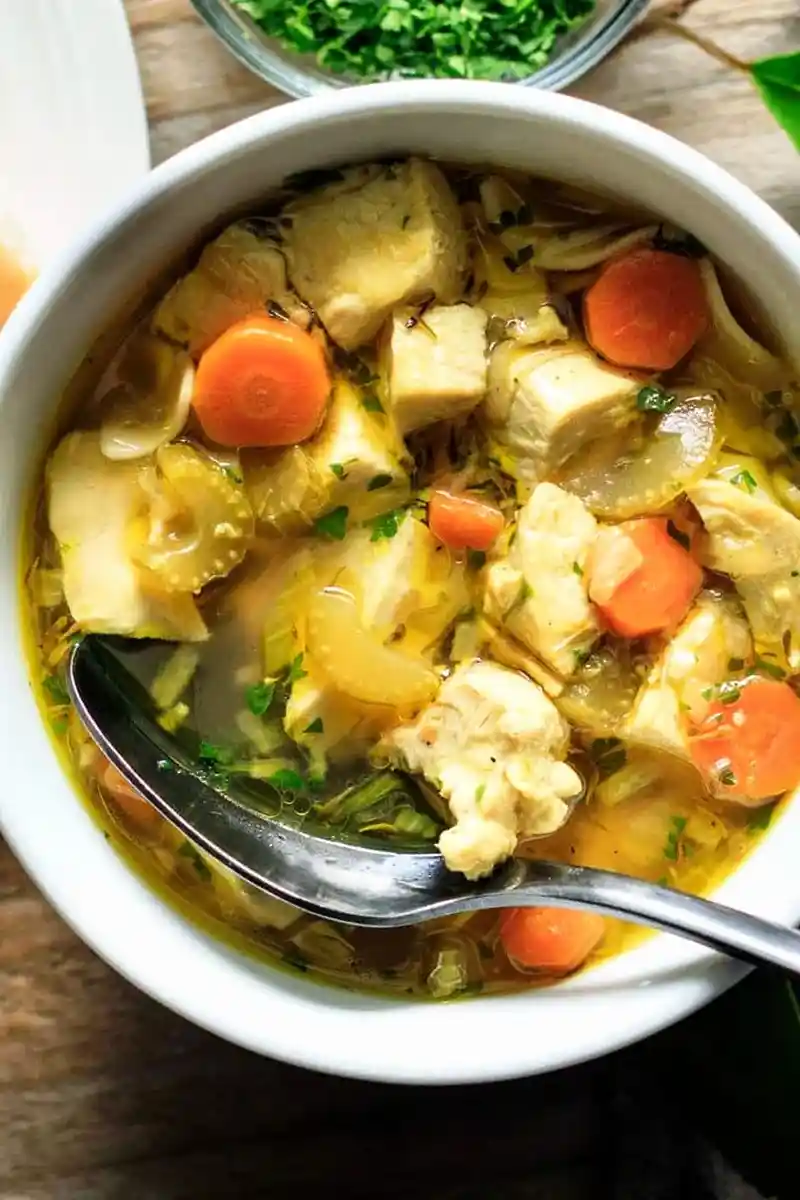
List of ingredients
- 2 tablespoons unsalted butter
- 1 cup onion, diced
- 3/4 cup carrots, chopped
- 1/2 cup celery, thinly sliced
- 1 tablespoon garlic, minced
- 1/2 teaspoon dried thyme leaves
- 2 bay leaves
- 8 cups chicken broth, reduced sodium
- 1 teaspoon sea salt
- 3/4 teaspoon black pepper
- 1/2 teaspoon onion powder
- 1/8 teaspoon turmeric
- 1.3 pounds boneless skinless chicken breast
- 4 cups dried wide egg noodles or gluten free noodles
- 1 teaspoon olive oil
- 3 tablespoons fresh Italian flat leaf parsley, chopped
step-by-step instructions
- Step: In a large, heavy bottomed pot set over medium high heat, melt the butter until foamy. Add the mirepoix (onions, carrots, celery), stirring frequently until the onions are soft and a light golden brown, roughly 6 minutes.
- Step: Add the minced garlic and cook until fragrant then add the dried thyme and the 2 bay leaves. Bloom the spices while constantly stirring for a minute.
- Step: Pour 1/4 cup of broth into the pot and use a wooden turner to scrape the browned fond off the bottom of the pot. This will create additional flavor.
- Step: Pour in the rest of the broth and stir with a wooden spoon. Cover and bring to a boil, roughly 5 minutes, then reduce to a simmer. Taste the broth, then stir in the salt, black pepper, onion powder, and turmeric.
- Step: Submerge the two chicken breasts, making sure they are covered with the broth, then cover the pot and simmer for 20 minutes.
- Step: Remove the chicken and place on a plate. Using a meat thermometer, ensure that the internal temperature is at a minimum of 165°F. Allow the chicken to cool enough to handle, roughly 10 minutes.
- Step: Cook the egg noodles in a separate pot in salted water according to the package directions. Drain the noodles then toss with 1 teaspoon olive oil to prevent sticking. Set aside.
- Step: Cut the cooked chicken into bite-sized pieces, then stir the meat back into the pot. Taste and adjust any spices, if desired, then remove the 2 bay leaves. Stir in the fresh parsley.
- Step: Add 1/2 cup of noodles to the bottom of each bowl and ladle the hot chicken soup on top. Serve with fresh bread, a salad, and fruit to round out the meal.
Maintaining the Perfect Soup Consistency
One of the most important aspects of professional-quality chicken noodle soup is the texture of the pasta. If you boil the noodles directly in the soup, they tend to soak up too much liquid and turn mushy during storage. Keeping them separate until serving ensures that every bowl remains fresh, with perfectly firm pasta and a clear, flavorful broth.
Preventing Starchy Build-up
When you cook your noodles in a separate pot of water, you ensure that the starch from the pasta does not cloud your broth. This technique keeps your soup looking clear and professional while preventing the liquid from becoming overly thick or gummy. Simply drain the noodles well and add a tiny bit of olive oil or butter to keep them from sticking while they wait for the soup.
Managing Broth Reduction
Because this soup involves simmering chicken, the broth level might decrease slightly over time. If you prefer a thinner consistency, simply keep an extra cup of warm broth or water nearby to adjust the volume. Always taste the soup after adding any extra liquid, as you may need to add a pinch more salt to maintain the proper balance.
Selecting and Preparing Your Ingredients
Choosing high-quality fresh produce significantly impacts the depth of your finished soup. Fresh herbs and crisp vegetables release their oils and sugars more effectively than their frozen or dried counterparts, providing a cleaner, more vibrant taste profile. When preparing your mirepoix, keep the pieces uniform in size so they cook evenly, which creates a better mouthfeel in every spoonful.
Optimizing Garlic and Herb Aromatics
Blooming your garlic and herbs in the melted butter before adding the liquid releases essential oils that might otherwise be lost. By stirring them constantly for that first minute, you maximize the impact of the thyme and bay leaves. This simple step creates a much more complex base that makes the soup taste like it has been simmering for hours.
Choosing the Right Chicken
Boneless skinless chicken breasts remain the standard choice for this recipe because they are lean and easy to shred or chop into bite-sized pieces. If you have access to high-quality pasture-raised chicken, the flavor of the broth will be even more pronounced. Always ensure the chicken is completely submerged during the simmering process to lock in the moisture and prevent the outer edges from drying out.
Storage and Reheating Advice
Proper storage is essential to enjoy this meal throughout the week. If you plan to store your soup, it is best to keep the cooked noodles in a separate airtight container from the soup base. This allows you to reheat the broth and chicken without risking the texture of the pasta, which remains fresh and firm when stored independently.
Maximizing Refrigerated Shelf Life
When stored in an airtight container in the refrigerator, this soup base remains safe and delicious for up to four days. Ensure the soup has cooled to room temperature before placing it in the fridge to help maintain its quality. When you are ready to enjoy it again, reheat only the amount of soup you intend to serve to avoid over-processing the ingredients.
Guidelines for Freezing
You can successfully freeze the soup base for up to three months. To do this, let the soup cool completely, then ladle it into freezer-safe containers, leaving a little room at the top for expansion. When you are ready to eat, simply thaw the soup overnight in the refrigerator and prepare a fresh batch of noodles, as pasta generally does not retain its texture well after being frozen and thawed.
Frequently Asked Questions
Can I make this soup in a slow cooker?
Yes, you can adapt this to a slow cooker by sauteing the vegetables on the stove first, then adding everything to the slow cooker except the noodles. Cook on low for 4 to 6 hours or until the chicken is tender and fully cooked. Add the fresh parsley and pre-cooked noodles right before you are ready to serve the meal.
How do I adjust the sodium content?
To reduce the sodium, you can substitute the standard reduced-sodium broth with a homemade stock or a certified low-sodium variety. You can also reduce the added salt in the recipe and supplement the flavor with extra fresh herbs, a squeeze of lemon juice, or a dash of acid like apple cider vinegar to brighten the taste without using more salt.
Is this soup suitable for those avoiding gluten?
Absolutely, this soup is naturally gluten-free if you choose a high-quality gluten-free noodle variety made from corn, brown rice, or quinoa. Most gluten-free pastas work well, but be sure to follow the package directions carefully, as some varieties cook faster than traditional wheat-based egg noodles and can break down quickly if overboiled.
What are the best bread pairings?
A crusty sourdough baguette or soft dinner rolls are the most classic companions for this meal. The bread is perfect for soaking up the savory broth at the end of the bowl, making the experience even more satisfying. For a lighter option, a side of fresh sourdough croutons also adds a pleasant crunch without overwhelming the delicate flavors of the soup.
How can I make the soup more filling?
If you want to increase the heartiness of the meal, consider adding hearty greens like chopped kale or baby spinach during the last two minutes of cooking. Adding extra carrots or even some diced parsnips can also increase the fiber content. For additional protein, you can stir in cooked white beans, which absorb the soup flavors and add a creamy, satisfying texture.
What is the benefit of using turmeric?
Turmeric is primarily used in this recipe to provide a rich, golden color that makes the broth look inviting and classic. It also offers a very mild, earthy undertone that complements the sweetness of the carrots and the savory notes of the chicken. It is a subtle inclusion, so it does not overpower the dish but rather enhances the visual and aromatic quality of the broth.
Should I use rotisserie chicken as a shortcut?
Using pre-cooked rotisserie chicken is an excellent time-saving strategy. If you choose this method, simply skip the step where you poach the chicken breasts in the broth. Instead, add the shredded rotisserie meat toward the end of the cooking process just long enough to warm it through, which ensures the meat stays tender rather than becoming stringy from over-simmering.
How can I achieve a thicker broth?
If you prefer a heartier, thicker texture, you can whisk a tablespoon of cornstarch with two tablespoons of cold broth and stir it into the soup while it is simmering. Allow it to cook for an additional two or three minutes, and the soup will thicken noticeably. This is a simple, flavor-neutral way to adjust the mouthfeel to your personal preference without changing the seasoning balance.
Why is it necessary to bloom the spices?
Blooming spices in fat, such as the butter used in this recipe, allows the heat to extract the essential oils trapped within the dried herbs and spices. This process significantly amplifies their aroma and flavor profile compared to just adding them to the liquid broth. It is a foundational technique that distinguishes a basic soup from one with complex, multi-layered flavors.
Print
Classic Homemade Chicken Noodle Soup
- Total Time: PT60M
- Yield: 11 cups 1x
- Diet: Gluten Free Friendly
Description
Take one bite of our copycat Panera chicken noodle soup, and you won’t want canned soup anymore! It’s so warm and cozy that it’s perfect for sick days, cold nights, and weeknight meals. You’ll love the chunks of chicken, tender egg noodles, and warm veggies. Gluten free friendly.
Ingredients
- 2 tablespoons unsalted butter
- 1 cup onion, diced
- 3/4 cup carrots, chopped
- 1/2 cup celery, thinly sliced
- 1 tablespoon garlic, minced
- 1/2 teaspoon dried thyme leaves
- 2 bay leaves
- 8 cups chicken broth, reduced sodium
- 1 teaspoon sea salt
- 3/4 teaspoon black pepper
- 1/2 teaspoon onion powder
- 1/8 teaspoon turmeric
- 1.3 pounds boneless skinless chicken breast
- 4 cups dried wide egg noodles or gluten free noodles
- 1 teaspoon olive oil
- 3 tablespoons fresh Italian flat leaf parsley, chopped
Instructions
- Step: In a large, heavy bottomed pot set over medium high heat, melt the butter until foamy. Add the mirepoix (onions, carrots, celery), stirring frequently until the onions are soft and a light golden brown, roughly 6 minutes.
- Step: Add the minced garlic and cook until fragrant then add the dried thyme and the 2 bay leaves. Bloom the spices while constantly stirring for a minute.
- Step: Pour 1/4 cup of broth into the pot and use a wooden turner to scrape the browned fond off the bottom of the pot. This will create additional flavor.
- Step: Pour in the rest of the broth and stir with a wooden spoon. Cover and bring to a boil, roughly 5 minutes, then reduce to a simmer. Taste the broth, then stir in the salt, black pepper, onion powder, and turmeric.
- Step: Submerge the two chicken breasts, making sure they are covered with the broth, then cover the pot and simmer for 20 minutes.
- Step: Remove the chicken and place on a plate. Using a meat thermometer, ensure that the internal temperature is at a minimum of 165°F. Allow the chicken to cool enough to handle, roughly 10 minutes.
- Step: Cook the egg noodles in a separate pot in salted water according to the package directions. Drain the noodles then toss with 1 teaspoon olive oil to prevent sticking. Set aside.
- Step: Cut the cooked chicken into bite-sized pieces, then stir the meat back into the pot. Taste and adjust any spices, if desired, then remove the 2 bay leaves. Stir in the fresh parsley.
- Step: Add 1/2 cup of noodles to the bottom of each bowl and ladle the hot chicken soup on top. Serve with fresh bread, a salad, and fruit to round out the meal.
Notes
For the best flavor, use fresh ingredients, not frozen. Cook the onion until it’s soft and golden brown. Deglaze the pot with chicken broth. Taste before adding the uncooked chicken and then again at the end, and adjust seasonings to your preference. Don’t cook the noodles in the soup; they will absorb the liquid and will get soggy.
- Prep Time: PT25M
- Cook Time: PT35M
- Category: Soups
- Method: Stovetop
- Cuisine: American
Nutrition
- Serving Size: 1 cup
- Calories: 168 kcal
- Sugar: 2 g
- Sodium: 922 mg
- Fat: 5 g
- Saturated Fat: 2 g
- Unsaturated Fat: 3 g
- Trans Fat: 0 g
- Carbohydrates: 15 g
- Fiber: 1 g
- Protein: 16 g
- Cholesterol: 61 mg