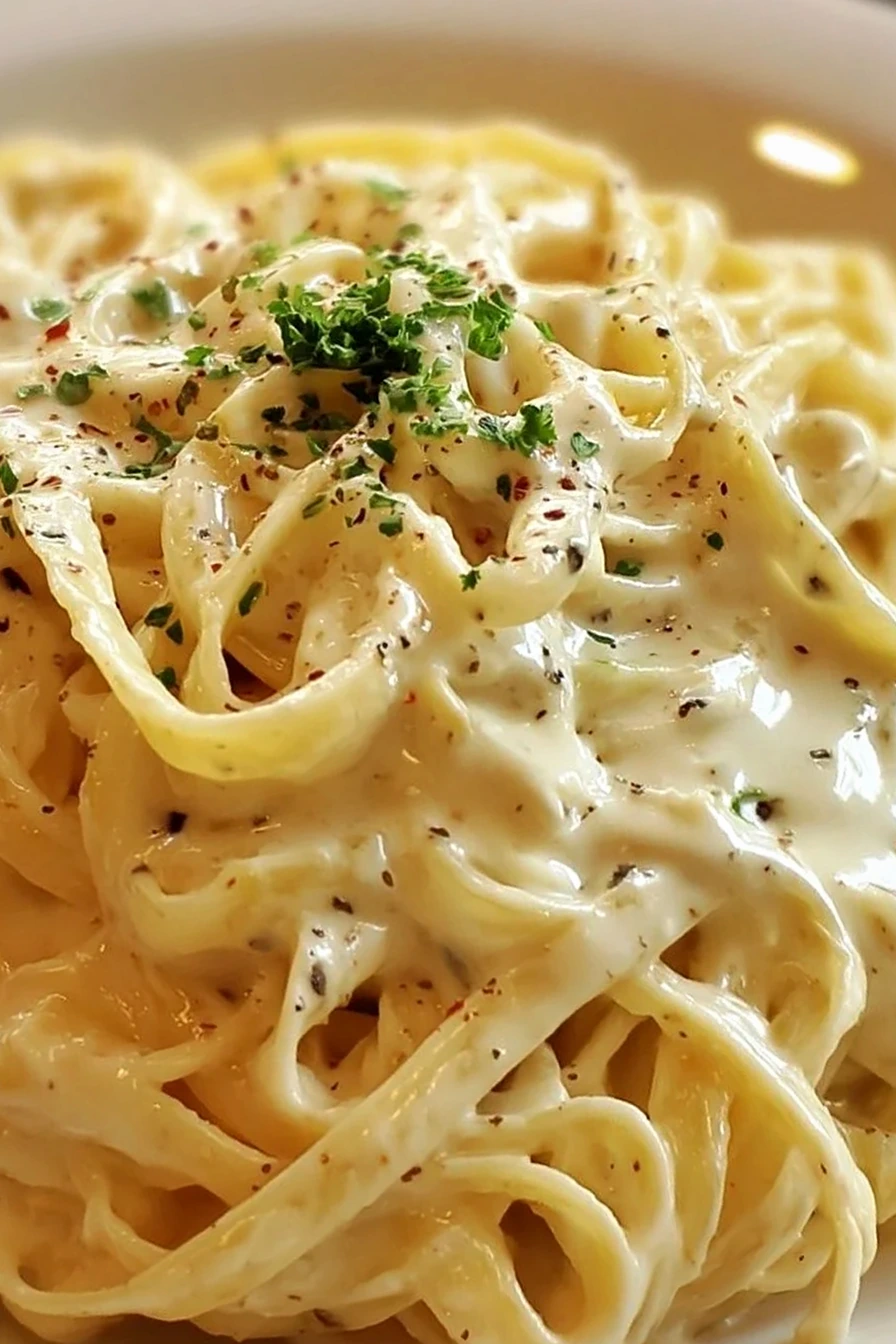
Creating a restaurant-style Alfredo sauce in your own kitchen is a rewarding experience that requires only a few high-quality dairy ingredients. This simple stovetop method delivers a rich, velvety result that clings perfectly to your favorite pasta shapes for a comforting meal. By mastering these precise heating techniques, you can achieve a professional consistency that tastes fresh and indulgent every time.
List of ingredients
- 1/2 cup unsalted butter
- 1 cup heavy cream
- 1 1/2 cups freshly grated Parmesan cheese
- 2 cloves garlic, minced (optional)
- Salt and black pepper to taste
step-by-step instructions
- Step: In a medium saucepan over medium heat, melt the unsalted butter. Allow it to foam slightly, wanting it to be just melted, not browned.
- Step: Pour in the heavy cream, whisking continuously until combined. Let the mixture heat through for about 1-2 minutes, making sure it doesn’t boil.
- Step: If you like a garlicky kick, add the minced garlic and stir. Let it cook for another 30 seconds.
- Step: Gradually add the freshly grated Parmesan cheese, whisking continuously. The sauce will thicken as the cheese melts.
- Step: Taste your sauce and add a pinch of salt and black pepper. Mix it well and let it simmer for another minute or so to meld the flavors.
- Step: Remove from heat, and your Alfredo sauce is ready to be poured over your favorite pasta!
Refining Your Technique
Maintaining Consistent Heat Control
The most important factor in preventing the sauce from breaking or curdling is constant heat management. If the cream or butter mixture gets too hot before the cheese is added, the protein strands in the dairy can become stressed. Always maintain a gentle simmer rather than a rolling boil to ensure the integrity of the emulsion remains intact throughout the cooking process.
Achieving Smooth Cheese Incorporation
The secret to a velvety sauce is the particle size of the Parmesan cheese. Using a microplane or the finest setting on a box grater is highly recommended for this recipe. Because finely grated cheese has a larger surface area, it melts nearly instantly upon contact with the warm cream, creating a uniform, silky texture rather than stringy or clumped pockets of dairy.
Customizing Your Sauce
Balancing Garlic Intensity
While the recipe calls for two cloves, you can manipulate the depth of the flavor by altering how you prepare the garlic. Crushing the garlic into a paste using the flat side of a knife creates a more pervasive, subtle flavor that blends seamlessly into the cream. If you prefer a more pronounced garlic profile, finely mincing the cloves allows for distinct, savory bites that stand out against the richness of the parmesan.
Adding Fresh Herb Notes
While classic Alfredo is often kept simple, introducing fresh herbs can brighten the overall profile of the dish. Stirring in finely chopped Italian flat-leaf parsley or fresh basil at the very end of the cooking process provides a vibrant contrast to the heavy cream. Add the herbs right after removing the pan from the heat to preserve their color and delicate volatile oils.
Common Kitchen Questions
How can I thicken the sauce if it appears too thin?
If your sauce remains thin after adding all the cheese, avoid increasing the heat, which can cause separation. Instead, continue to simmer the sauce at a very low, gentle heat while whisking, which allows the water content in the cream to evaporate. You can also whisk in an extra tablespoon of finely grated Parmesan to help build body and stability.
Why did my sauce turn grainy or oily?
A grainy or oily texture usually indicates that the sauce reached a temperature that was too high during the cheese-melting phase. When cheese proteins overheat, they lose their moisture and separate from the butterfat, resulting in an oily sheen on the surface. Always use fresh, room-temperature cheese and add it gradually while whisking to keep the emulsion stable and the texture smooth.
Is it possible to use pre-grated cheese for convenience?
It is strongly advised to avoid pre-shredded cheese due to the addition of potato starch or cellulose, which are included in the packaging to keep the shreds from clumping. These additives create a gritty texture and prevent the cheese from emulsifying properly into the heavy cream. Taking the extra two minutes to grate a block of authentic Parmesan makes a significant difference in the final quality of the sauce.
How should I properly reheat leftovers?
Leftover sauce should be reheated using the gentlest method possible, preferably in a small saucepan over low heat. Add a tiny splash of heavy cream or vegetable broth before heating to help re-liquefy the sauce as the starches and proteins re-hydrate. Stir constantly and remove from the heat as soon as it is warmed through to prevent the dairy from breaking down during the second round of heating.
Can I store this sauce for meal prep?
This sauce holds up remarkably well in an airtight glass container in the refrigerator for up to four days. As it chills, the sauce will firm up considerably due to the butterfat content, which is perfectly normal. Simply follow the gentle reheating instructions with a splash of extra cream to return the sauce to its original, pourable consistency for your meal.
Optimal Serving Pairings
Choosing the Best Pasta Shape
The texture of your pasta plays a crucial role in how the sauce adheres to your meal. Long, wide noodles like fettuccine or pappardelle are traditional for a reason, as they offer ample surface area for the sauce to coat. Alternatively, tubular shapes like penne or rigatoni are excellent if you want to capture pockets of sauce inside the pasta, providing a burst of creaminess in every single bite.
Pairing With Fresh Vegetables
Incorporating vegetables is an excellent way to balance the richness of the dairy-based sauce. Steamed broccoli florets, sautéed asparagus, or roasted cauliflower add a necessary textural contrast and earthiness that cuts through the fat of the Parmesan. You can toss these vegetables directly into the sauce along with the pasta to create a well-rounded dinner that feels both satisfying and nutritionally diverse.
Adding Texture with Toppings
Enhancing the visual and textural appeal of your bowl is easy with the right garnishes. A final dusting of freshly cracked black pepper provides a necessary bite, while a light sprinkle of toasted breadcrumbs can add a pleasant crunch that contrasts with the softness of the cream. You might also consider finishing the dish with a zest of lemon to provide a bright, acidic edge that cleanses the palate between each rich, creamy forkful.
Print
Classic Creamy Alfredo Sauce at Home
- Total Time: 15 minutes
- Yield: 4 servings 1x
- Diet: Vegetarian
Description
A delicious copycat recipe for Olive Garden’s famous Alfredo sauce that you can easily make at home.
Ingredients
- 1/2 cup unsalted butter
- 1 cup heavy cream
- 1 1/2 cups freshly grated Parmesan cheese
- 2 cloves garlic, minced (optional)
- Salt and black pepper to taste
Instructions
- Step: In a medium saucepan over medium heat, melt the unsalted butter. Allow it to foam slightly, wanting it to be just melted, not browned.
- Step: Pour in the heavy cream, whisking continuously until combined. Let the mixture heat through for about 1-2 minutes, making sure it doesn’t boil.
- Step: If you like a garlicky kick, add the minced garlic and stir. Let it cook for another 30 seconds.
- Step: Gradually add the freshly grated Parmesan cheese, whisking continuously. The sauce will thicken as the cheese melts.
- Step: Taste your sauce and add a pinch of salt and black pepper. Mix it well and let it simmer for another minute or so to meld the flavors.
- Step: Remove from heat, and your Alfredo sauce is ready to be poured over your favorite pasta!
Notes
Use fresh Parmesan cheese for the best flavor. Adjust the garlic according to your taste preference. This sauce can be stored in the refrigerator for a few days.
- Prep Time: 5 minutes
- Cook Time: 10 minutes
- Category: Sauce
- Method: Stovetop
- Cuisine: Italian
Nutrition
- Serving Size: 1/4 cup
- Calories: 300 kcal
- Sugar: 1 g
- Sodium: 400 mg
- Fat: 30 g
- Saturated Fat: 18 g
- Unsaturated Fat: 8 g
- Trans Fat: 0 g
- Carbohydrates: 3 g
- Fiber: 0 g
- Protein: 6 g
- Cholesterol: 80 mg