This lemon chicken piccata features tender breasts with a savory parmesan crust. The light, tangy sauce adds a bright finish to this Italian-inspired meal.
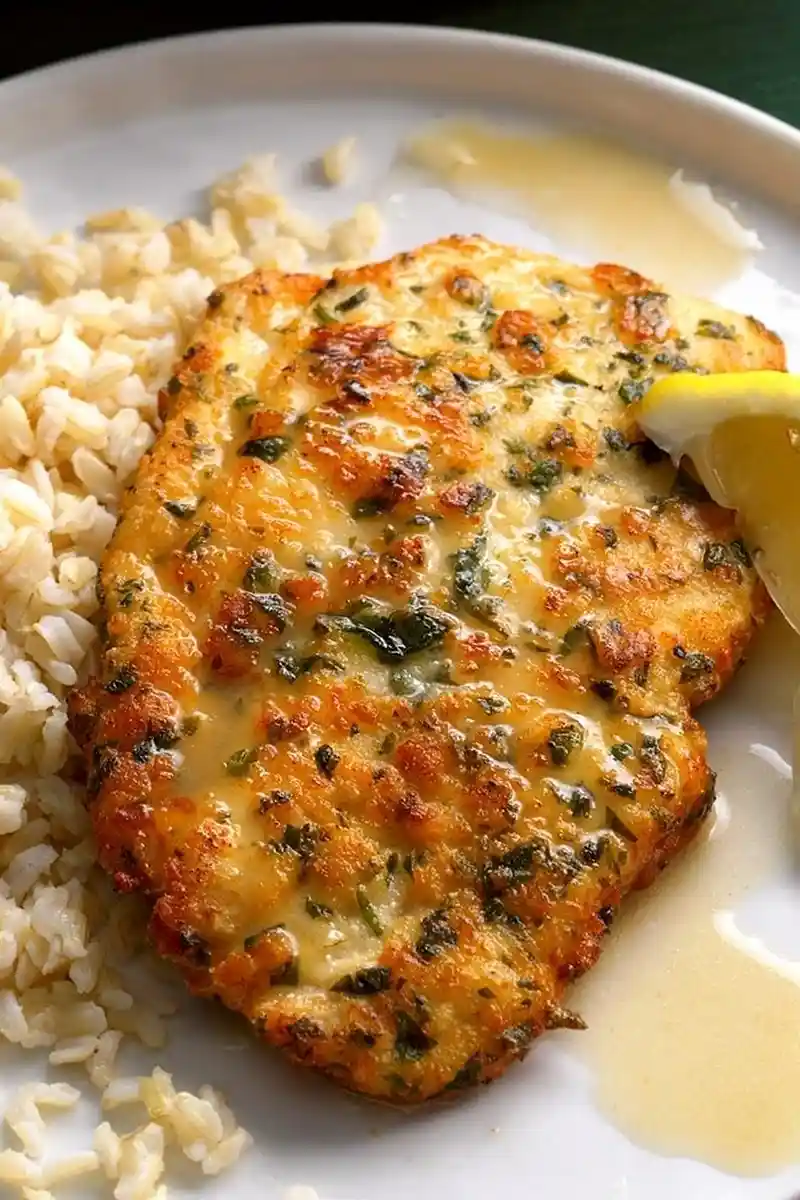
List of ingredients
- 8 boneless skinless chicken breast halves (4 ounces each) – pounded to even thickness.
- 1/2 cup egg substitute – used for the dredging liquid.
- 2 tablespoons plus 1/4 cup chicken broth, divided – used for both the dip and the pan sauce.
- 5 tablespoons lemon juice, divided – provides the signature citrus tang.
- 3 garlic cloves, minced – adds aromatic depth.
- 1/8 teaspoon hot pepper sauce – adds a subtle hint of heat.
- 1/2 cup all-purpose flour – for the outer coating.
- 1/2 cup grated Parmesan cheese – adds saltiness and texture to the crust.
- 1/4 cup minced fresh parsley – adds color and a fresh herbal note.
- 1/2 teaspoon salt – for basic seasoning.
- 3 teaspoons olive oil, divided – for searing the chicken.
- 2 tablespoons butter – used to emulsify and thicken the sauce.
step-by-step instructions
- Prepare the Chicken and Bread Station: Flatten chicken to 1/4-in. thickness using a meat mallet. In a shallow dish, combine the egg substitute, 2 tablespoons chicken broth, 2 tablespoons lemon juice, garlic, and hot pepper sauce. In another shallow dish, combine the flour, Parmesan cheese, parsley, and salt. Coat each chicken piece with the flour mixture, dip it in the egg substitute mixture, and then coat it again with the flour mixture for a thicker crust.
- Brown the Chicken: Heat 1-1/2 teaspoons of olive oil in a large nonstick skillet over medium-high heat. Brown 4 chicken breast halves for 3-5 minutes on each side, or until the juices run clear. Remove the chicken and keep it warm on a plate. Drain the pan drippings. Repeat this process with the remaining chicken and oil.
- Create the Lemon Sauce: In the same skillet, melt the butter. Stir in the remaining 1/4 cup of chicken broth and the remaining 3 tablespoons of lemon juice. Bring the mixture to a boil. Boil uncovered until the sauce has reduced by about one-fourth. Drizzle the finished sauce over the warm chicken before serving.
Pro Techniques for Better Piccata
Pounding Chicken for Even Cooking
Using a meat mallet to flatten the chicken to a consistent 1/4-inch thickness is critical. This ensures that the thinner edges do not overcook before the center is done. For the best results, place the chicken between two sheets of plastic wrap to prevent the meat from tearing or splattering.
Achieving a Golden Brown Crust
The double-dredging technique creates a sturdy crust that holds onto the sauce. Ensure you shake off any excess flour before dipping into the egg mixture to avoid clumps. A medium-high heat is necessary to sear the Parmesan cheese, creating a golden-brown, savory exterior.
Managing Pan Temperature
If the oil is not hot enough, the flour coating will absorb too much fat and become greasy. Wait until the olive oil shimmers or a small piece of bread sizzles immediately upon contact. If the pan becomes too hot and the butter browns too quickly during the sauce stage, lower the heat slightly.
Ingredient Alternatives and Substitutions
Replacing Egg Substitutes
If you do not have a commercial egg substitute, you can use beaten whole eggs or an egg white mixture. For a vegan option, a mixture of flaxseed meal and water or a commercial plant-based egg replacer works well. Ensure the liquid consistency is similar to whisked eggs to maintain the breading adhesion.
Alternative Cheese Options
While Parmesan is traditional, you can use Pecorino Romano for a saltier, sharper flavor profile. Grana Padano is another excellent choice that offers a slightly milder taste. Always use finely grated cheese to ensure it integrates smoothly into the flour mixture without forming large lumps.
Changing the Flour for Gluten-Free Needs
For a gluten-free version, substitute the all-purpose flour with a 1:1 gluten-free flour blend or almond flour. If using almond flour, be mindful that it browns faster than wheat flour, so you may need to reduce the heat slightly during the searing process. Cornstarch can also be added to the flour for a crispier finish.
Serving Suggestions
Pairing with Pasta
Angel hair pasta or linguine are the classic choices for chicken piccata. Toss the cooked pasta in a small amount of olive oil and garlic before topping it with the chicken and lemon sauce. The thin noodles absorb the citrusy pan sauce effectively.
Serving with Fresh Vegetables
Steamed asparagus or sautéed spinach provide a healthy contrast to the rich butter sauce. Roasted Brussels sprouts with a hint of balsamic glaze also complement the acidity of the lemon. For a lighter option, a crisp arugula salad with a light vinaigrette cleanses the palate.
Selecting the Best Side Grains
Wild rice or a buttery quinoa pilaf can add heartiness to the meal. Basmati rice is another great option as its fragrance complements the garlic and lemon. Ensure the grains are fluffy and not overcooked to provide a textural contrast to the tender chicken.
Storage and Reheating Guide
Refrigeration Best Practices
Place leftovers in an airtight container and refrigerate them for up to three to four days. It is best to store the chicken and the sauce separately if possible to prevent the breading from becoming too soggy. Ensure the food is cooled slightly before sealing the container to avoid excessive condensation.
Preventing Dryness During Reheating
Avoid using a microwave on high power, as this can make the chicken rubbery. Instead, reheat the chicken in a skillet over medium heat with a small knob of butter. Warm the sauce in a separate small saucepan and pour it over the chicken just before serving to restore the moisture.
Freezing Options
This dish is not ideal for freezing because the breaded crust often loses its texture and becomes mushy upon thawing. However, if you must freeze it, freeze the chicken and sauce in separate vacuum-sealed bags. Thaw completely in the refrigerator before reheating in an oven at 350 degrees Fahrenheit.
Troubleshooting Common Issues
Dealing with Broken Sauce
A broken sauce occurs when the butter separates from the liquid, creating oil droplets. To fix this, whisk in a teaspoon of cold water or a small piece of cold butter over low heat. Constant whisking helps emulsify the fats and liquids back into a smooth, cohesive sauce.
Preventing the Breaded Coating from Peeling
If the flour coating slides off the chicken, it is often because the meat was too damp before dredging. Pat the chicken breasts dry with paper towels before applying the first layer of flour. Press the flour firmly into the meat to create a strong bond.
Adjusting Sauce Acidity
If the sauce tastes too sour, add a pinch of sugar or a small amount of additional butter to balance the acidity. If the flavor is too bland, add an extra squeeze of fresh lemon juice or a pinch of salt. Taste the sauce frequently during the reduction process to find the perfect balance.
Frequently Asked Questions
Can I use chicken thighs instead of breasts?
Yes, you can use boneless skinless chicken thighs. Thighs are more forgiving and remain juicy, though you may need to cook them slightly longer than the flattened breasts to ensure they are cooked through.
Should I use fresh or bottled lemon juice?
Freshly squeezed lemon juice is highly recommended for this recipe. Bottled juice often contains preservatives and lacks the bright, aromatic quality of fresh citrus, which is central to the piccata flavor.
How do I stop the butter from burning?
Keep the heat at a medium level when melting the butter for the sauce. Once the butter is melted, immediately add the chicken broth and lemon juice to lower the temperature of the pan and prevent the butter solids from scorching.
Is it necessary to drain the pan drippings?
Draining the drippings helps remove excess browned flour and oil, which can make the final sauce cloudy or overly greasy. This ensures the lemon sauce remains light, clear, and bright in flavor.
Can I add capers to this recipe?
While this specific version focuses on the lemon sauce, adding a tablespoon of drained capers during the sauce reduction phase is a traditional addition. Capers provide a salty, briny pop that complements the lemon and parmesan perfectly.
Print
Chicken Piccata with Lemon Sauce
- Total Time: 50 minutes
- Yield: 8 servings 1x
- Diet: General
Description
Once you’ve tried this tangy, yet delicate lemon chicken piccata, you won’t hesitate to make it for company. Seasoned with parmesan and parsley, the chicken cooks up golden brown, then is drizzled with a light lemon sauce.
Ingredients
- 8 boneless skinless chicken breast halves (4 ounces each)
- 1/2 cup egg substitute
- 2 tablespoons plus 1/4 cup chicken broth, divided
- 5 tablespoons lemon juice, divided
- 3 garlic cloves, minced
- 1/8 teaspoon hot pepper sauce
- 1/2 cup all-purpose flour
- 1/2 cup grated Parmesan cheese
- 1/4 cup minced fresh parsley
- 1/2 teaspoon salt
- 3 teaspoons olive oil, divided
- 2 tablespoons butter
Instructions
- Step: Flatten chicken to 1/4-in. thickness. In a shallow dish, combine the egg substitute, 2 tablespoons chicken broth, 2 tablespoons lemon juice, garlic and hot pepper sauce. In another shallow dish, combine the flour, Parmesan cheese, parsley and salt. Coat chicken with flour mixture, dip in egg substitute mixture, then coat again with flour mixture.
- Step: In a large nonstick skillet, brown 4 chicken breast halves in 1-1/2 teaspoons oil for 3-5 minutes on each side or until juices run clear. Remove and keep warm. Drain drippings. Repeat with remaining chicken and oil. Remove and keep warm.
- Step: In the same pan, melt butter. Add the remaining chicken broth and lemon juice. Bring to a boil. Boil, uncovered, until sauce is reduced by a fourth. Drizzle over chicken.
Notes
For the best bright, fresh flavor, use freshly squeezed lemon juice rather than bottled concentrate.
- Prep Time: 25 minutes
- Cook Time: 25 minutes
- Category: Dinner
- Method: Pan-frying
- Cuisine: Italian
Nutrition
- Serving Size: 1 chicken breast half
- Calories: 232 kcal
- Sugar: 1 g
- Sodium: 346 mg
- Fat: 9 g
- Saturated Fat: 4 g
- Unsaturated Fat: 5 g
- Trans Fat: 0 g
- Carbohydrates: 8 g
- Fiber: 0 g
- Protein: 27 g
- Cholesterol: 75 mg