This chicken caprese pasta salad brings together the classic Italian flavors of fresh basil, creamy mozzarella, and sun-ripened tomatoes in one satisfying bowl. It serves as a perfect main course for warm summer evenings or a reliable protein-packed lunch that travels easily for busy workdays. With simple preparation steps and a focus on quality ingredients, this dish provides a balanced meal that everyone will enjoy.
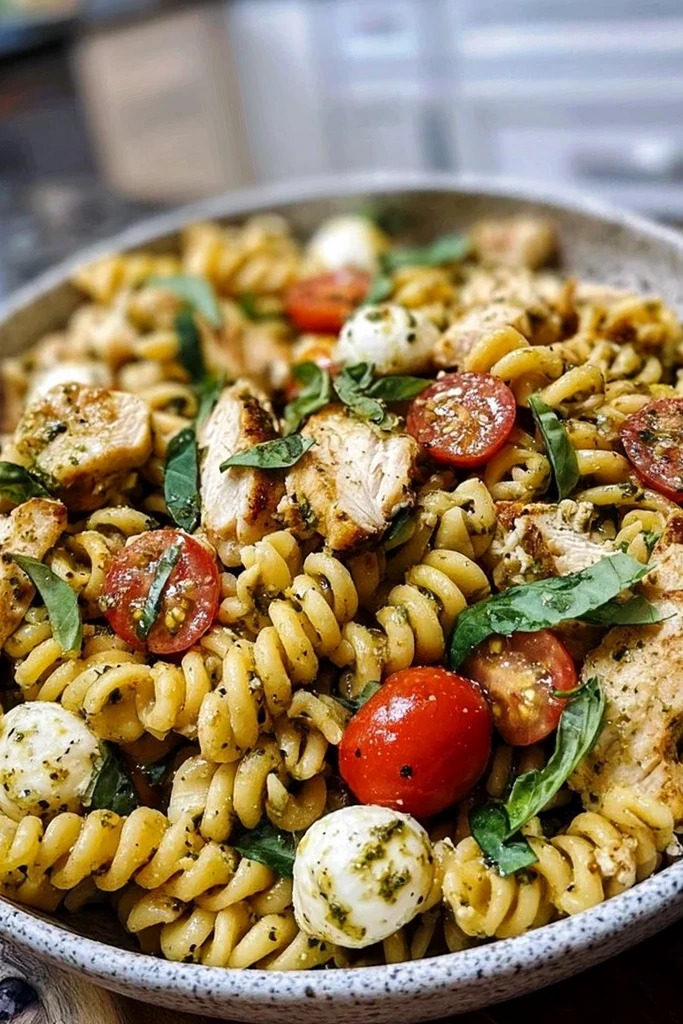
List of ingredients
- 8 oz rotini pasta
- 3 boneless, skinless chicken breasts (about 1 lb)
- 1 cup cherry tomatoes, halved
- 8 oz fresh mozzarella balls
- 1 cup fresh basil leaves, chopped
- 2 tbsp balsamic vinegar
- 3 tbsp olive oil
- Salt and pepper to taste
step-by-step instructions
- Step: Cook the rotini pasta in salted boiling water until al dente (8-10 minutes). Drain and set aside.
- Step: Heat olive oil in a skillet over medium heat. Season chicken breasts with salt and pepper; sauté for about 6-7 minutes per side until cooked through. Let cool slightly before dicing.
- Step: Combine cooked pasta, diced chicken, cherry tomatoes, mozzarella balls, and basil in a large bowl.
- Step: Drizzle with balsamic vinegar and olive oil; toss gently to combine. Season with salt and pepper to taste.
- Step: Serve immediately or chill in the refrigerator for at least 30 minutes for best flavor.
Refining your preparation
Choosing the right pasta shape
While rotini is the classic choice for this salad due to its ability to catch dressing in its grooves, you can experiment with other shapes. Fusilli or penne also work exceptionally well for maintaining the structural integrity of the salad. Avoid long noodles like spaghetti, as they are difficult to toss and serve in a cold salad format.
Achieving the perfect chicken texture
The secret to moist chicken in a cold salad is the resting period after cooking. Allowing the meat to sit for five minutes before cutting prevents the juices from running out onto the cutting board. If the chicken is too thick, use a meat mallet to pound it to an even thickness before cooking to ensure it does not dry out.
Selecting the best mozzarella
Fresh mozzarella pearls, often called bocconcini, are the gold standard for this recipe because they require no slicing and provide a consistent creamy mouthfeel. If you only have larger balls of fresh mozzarella, be sure to cut them into pieces approximately the same size as your cherry tomatoes to ensure each forkful contains a perfect balance of ingredients.
Effective flavor management
Balancing the balsamic tang
Balsamic vinegar provides the backbone of this dish, but the intensity can vary between brands. Start with two tablespoons, then taste the salad before deciding if more is necessary. If the dressing feels too sharp, a tiny drizzle of honey or additional olive oil can help soften the acidity while adding a pleasant sheen to the noodles.
Timing your fresh herb additions
Basil is a delicate herb that can oxidize and darken if prepared too far in advance. Chop your basil leaves just before the final assembly to keep them vibrant green and fragrant. If you are preparing the meal for later, keep the basil separate and stir it in immediately before serving to maintain the best visual and aromatic impact.
Managing salt levels
Remember that the cheese and the chicken have their own natural salinity, and the pasta water was also salted. Always taste your assembled salad before reaching for the salt shaker. Layering your seasoning during the cooking process is better than trying to adjust everything at the very end when the flavors have already begun to meld.
Common cooking inquiries
How long will the salad keep in the fridge?
This salad remains delicious for up to three days when stored in an airtight container. Because it lacks a heavy mayonnaise-based dressing, it does not spoil as quickly as other pasta salads. Keep the salad in the coldest part of your refrigerator and stir in a fresh splash of olive oil if the pasta absorbs too much moisture.
Can I grill the chicken instead of using a skillet?
Grilling the chicken adds a wonderful smoky depth that elevates the entire dish. Use a medium-high grill heat to get nice char marks, which add flavor contrast to the fresh tomatoes and soft cheese. Just be mindful not to overcook the breast meat, as it can quickly become dry when grilled.
Is it okay to use dried basil if fresh is unavailable?
While fresh basil is highly recommended for its unique sweet and peppery profile, dried herbs can be used in an absolute emergency. Use only a half teaspoon, as dried herbs are significantly more concentrated. Keep in mind that you will lose the bright, fresh color that defines this specific dish.
Why does the cheese become hard in the refrigerator?
Fresh mozzarella is best served at room temperature to maintain its signature soft, milky texture. If you store the salad in the fridge, take it out about 15-20 minutes before serving. This simple step allows the cheese to soften back to its ideal consistency after being chilled.
Can I serve this at a summer picnic or potluck?
This dish is an excellent choice for outdoor gatherings because it doesn’t require constant refrigeration like dairy-heavy salads. However, if the day is particularly hot, keep the serving bowl in a larger container filled with ice. This keeps the salad refreshing and ensures the mozzarella stays firm and appealing throughout the event.
Expanding your recipe variations
Creating a protein-rich vegetarian version
If you prefer to omit the chicken, you can easily turn this into a vegetarian centerpiece. Marinated chickpeas or firm, herb-crusted tofu cubes provide a fantastic textural alternative that absorbs the dressing effectively. Adding a handful of toasted pine nuts or sunflower seeds can also add the healthy fats and crunch that usually comes from the protein.
Adding garden-fresh vegetable additions
You can bulk up the salad with seasonal vegetables to make it even more substantial. Diced cucumber adds a crisp, cooling element, while roasted red peppers can introduce a deeper, savory sweetness. Blanched snap peas or baby spinach are also great ways to incorporate more greens without distracting from the main ingredients.
Experimenting with dressing enhancements
While the classic balsamic and olive oil combination is standard, you can infuse your oil with garlic or shallots before tossing. A small teaspoon of high-quality Dijon mustard can also help emulsify the oil and vinegar, creating a creamier coating that clings to the pasta more effectively. Always whisk your dressing ingredients separately before pouring them over the salad for the most uniform distribution of flavor.
Print
Chicken Caprese Pasta Salad
- Total Time: 30 minutes
- Yield: 4 servings 1x
- Diet: Non-Vegetarian
Description
A refreshing summer pasta salad with rotini, chicken, cherry tomatoes, mozzarella, and basil, drizzled with balsamic and olive oil.
Ingredients
- 8 oz rotini pasta
- 3 boneless, skinless chicken breasts (about 1 lb)
- 1 cup cherry tomatoes, halved
- 8 oz fresh mozzarella balls
- 1 cup fresh basil leaves, chopped
- 2 tbsp balsamic vinegar
- 3 tbsp olive oil
- Salt and pepper to taste
Instructions
- Step: Cook the rotini pasta in salted boiling water until al dente (8-10 minutes). Drain and set aside.
- Step: Heat olive oil in a skillet over medium heat. Season chicken breasts with salt and pepper; sauté for about 6-7 minutes per side until cooked through. Let cool slightly before dicing.
- Step: Combine cooked pasta, diced chicken, cherry tomatoes, mozzarella balls, and basil in a large bowl.
- Step: Drizzle with balsamic vinegar and olive oil; toss gently to combine. Season with salt and pepper to taste.
- Step: Serve immediately or chill in the refrigerator for at least 30 minutes for best flavor.
Notes
For even cooking, let the chicken come to room temperature before cooking. For a lighter version, substitute chicken with grilled marinated tofu.
- Prep Time: 10 minutes
- Cook Time: 20 minutes
- Category: Main Course
- Method: Mixing
- Cuisine: Italian-American
Nutrition
- Serving Size: 1 serving
- Calories: 420 kcal
- Sugar: 4g
- Sodium: 400mg
- Fat: 18g
- Saturated Fat: 6g
- Unsaturated Fat: 10g
- Trans Fat: 0g
- Carbohydrates: 35g
- Fiber: 2g
- Protein: 32g
- Cholesterol: 75mg