This oven-baked casserole combines creamy grits and seasoned shrimp for a hearty and comforting meal. It is an excellent choice for brunch or dinner parties due to its rich flavor and straightforward preparation.
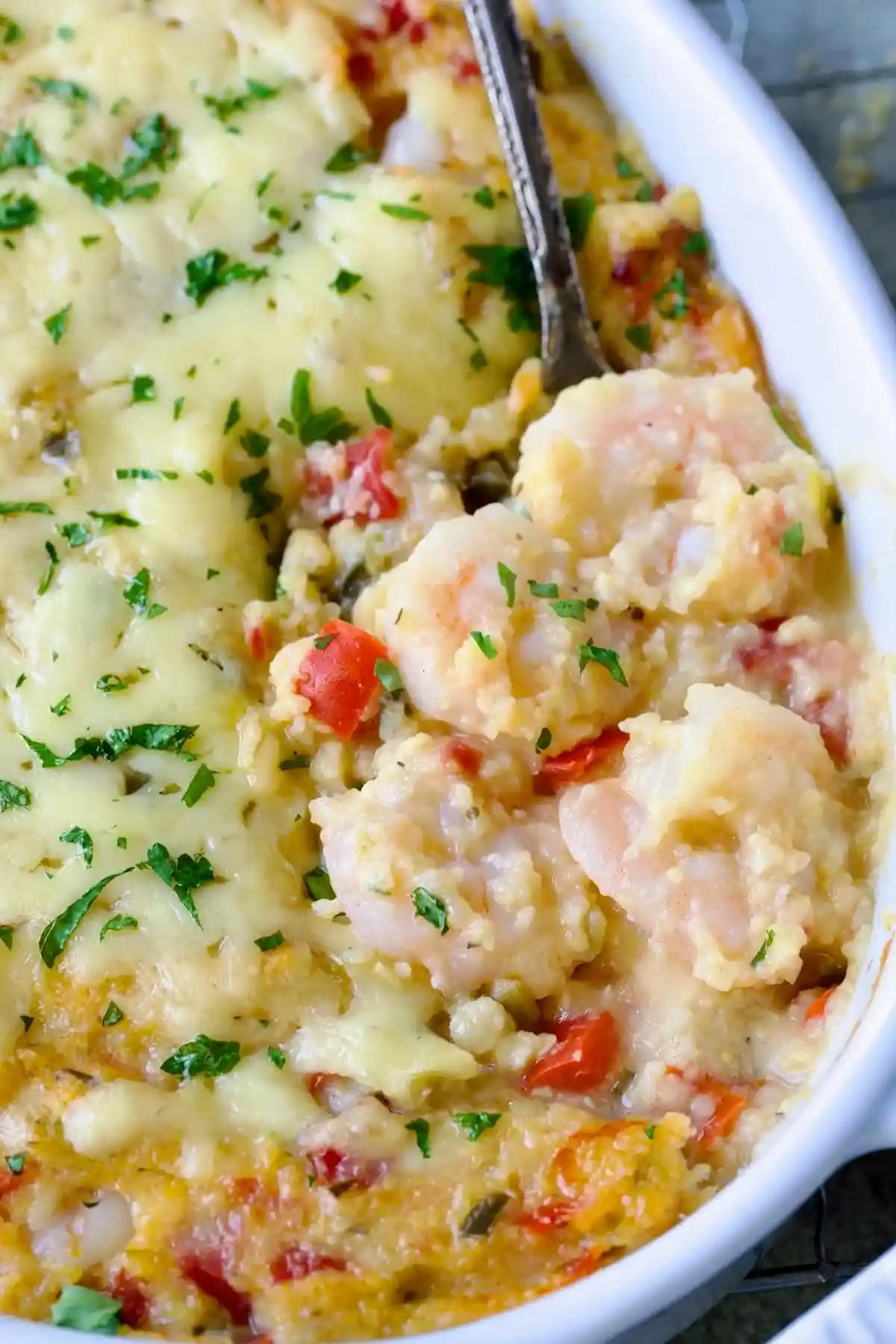
List of ingredients
- Cooking spray, butter, or oil – for greasing the baking dish.
- 1 pound medium-large uncooked shrimp (31-40 count) – peeled, deveined, and tails removed.
- Salt and freshly ground black pepper – for seasoning.
- 2 slices beef bacon – finely chopped for a smoky flavor.
- 3 tablespoons butter – for sautéing vegetables.
- 1 bunch scallions – white and light-green parts only, chopped (scant 1 cup).
- 1 small red bell pepper – chopped (scant 1 cup).
- 1 medium jalapeño pepper – finely chopped; remove seeds for less heat.
- 3 cloves garlic – minced.
- 1 can (10-ounce) diced tomatoes with green chiles – well-drained.
- 2 cups chicken broth or fish stock – for cooking the grits.
- 3/4 cup quick-cooking grits – do not use instant grits.
- 1 large egg – beaten.
- 1 tablespoon cornstarch – to help stabilize the casserole structure.
- 1 1/2 cups shredded Gouda cheese – divided into 1 cup and 1/2 cup.
- Chopped fresh parsley – optional for garnish.
step-by-step instructions
- Prepare the oven: Preheat your oven to 375 degrees Fahrenheit. Lightly grease a 1 1/2 to 2-quart baking dish with cooking spray, butter, or oil and set it aside.
- Parboil the shrimp: Place a colander in the sink. Bring a large saucepan of salted water (about 2 teaspoons of salt) to a boil, then turn off the heat. Add the shrimp and cook for 10-15 seconds until they just turn pink. Drain immediately and cool quickly under cold tap water or in an ice bath, then pat dry.
- Cook the beef bacon: In a heavy saucepan over medium heat, cook the chopped beef bacon until browned and crispy. Use a slotted spoon to transfer the bacon to a paper towel-lined plate, keeping the rendered drippings in the pan.
- Sauté the vegetables: Keep the heat on medium and add the butter to the beef bacon drippings. Once melted, stir in the chopped scallions, red bell pepper, and jalapeño, cooking for 4-5 minutes until they soften.
- Simmer the liquid: Stir in the minced garlic, drained diced tomatoes with chiles, and the chicken broth or fish stock. Bring the mixture to a boil.
- Cook the grits: Slowly stir in the quick-cooking grits and bring the mixture back to a boil.
- Thicken the mixture: Reduce the heat to low and simmer, stirring occasionally, for 5-7 minutes until the grits have thickened. Remove from heat and let the mixture cool for 15 minutes.
- Season: Taste the grits and add salt and freshly ground black pepper as needed.
- Bind the mixture: Whisk the cornstarch into the beaten egg, then stir this mixture into the cooled grits until fully incorporated.
- Assemble the casserole: Gently fold in the parboiled shrimp, cooked beef bacon, and 1 cup of shredded Gouda cheese. Transfer the mixture to the baking dish, ensuring more grits are on top than shrimp. Sprinkle the remaining 1/2 cup of cheese over the top.
- Bake and set: Bake for 30-35 minutes or until the casserole is bubbling and heated through. The perimeter should be set and the internal temperature should reach at least 165 degrees. Let it stand for 5-10 minutes before serving.
Selecting High-Quality Components
Choosing the Best Shrimp
Use wild-caught shrimp for the best results in a baked dish. Wild-caught varieties are generally more resilient to reheating and are less likely to become rubbery than farmed shrimp. The 31-40 count size provides a substantial bite while remaining easy to manage on the plate.
Selecting the Ideal Grit Texture
Quick-cooking grits are the preferred choice here because they balance cooking time with structural integrity. Avoid instant grits, as they tend to become too mushy and lose their texture during the baking process. If using stone-ground grits, you must cook them separately according to package directions before adding the other ingredients.
Matching the Best Cheeses
Gouda is recommended for its superior melting properties and mild flavor that complements the shrimp. For a bolder taste, you can substitute Smoked Gouda for extra depth or Pepperjack to increase the spice level. Ensure the cheese is shredded finely to ensure it incorporates evenly throughout the grits.
Expert Cooking Techniques
Avoiding Overcooked Shrimp
The key to tender shrimp is the parboiling method. By turning off the heat before adding the shrimp, you prevent the proteins from tightening too quickly. Immediately cooling the shrimp in an ice bath stops the cooking process and prevents the shrimp from becoming tough during the final bake.
Mastering Grit Thickness
The grits should be thick and “spoon-standing” before you add the shrimp and cheese. If the grits are too thin at this stage, the final casserole may turn out soupy. This thickness is achieved by simmering on low heat and allowing the starches to fully hydrate and bind.
Integrating the Binding Agent
It is critical to let the grits cool for 15 minutes before stirring in the egg mixture. If the grits are too hot, the egg will scramble upon contact rather than acting as a binder. Whisking the cornstarch into the egg first ensures the stabilizer is evenly distributed throughout the dish.
Selecting the Right Bakeware
A shallow 1 1/2 to 2-quart baking dish is ideal for this recipe. Shallow dishes allow for better heat distribution and more surface area for the cheese to brown. Deeper dishes can lead to uneven cooking where the edges are overdone while the center remains too soft.
Customizations and Flavor Variations
Managing the Spice Profile
You can easily adjust the heat of this dish by modifying the jalapeño preparation. Removing the seeds and white ribs will significantly mellow the flavor. If you prefer a very mild casserole, substitute the canned tomatoes with green chiles for regular petite-diced tomatoes.
Enhancing the Smoky Flavor
Using beef bacon provides a savory, smoky base that mimics traditional Southern flavors without using pork. To further enhance this profile, incorporate a pinch of smoked paprika into the grit mixture. Smoked Gouda is another excellent way to add a wood-fired taste to the dish.
Adding Seafood Variations
While shrimp is the star, this casserole can be adapted to include other seafood. Diced crab meat or scallops can be folded in along with the shrimp. When adding these, ensure they are patted dry to prevent adding excess moisture to the grits.
Serving and Pairing Ideas
Complementary Side Pairings
Balance the richness of the cheesy grits with something bright and acidic. Sautéed garlic green beans or a side of braised southern greens provide a fresh contrast. Grilled corn succotash is another classic pairing that enhances the Southern theme of the meal.
Final Finishing Touches
Garnish the finished casserole with freshly chopped parsley to add a pop of color and a hint of freshness. A light sprinkle of paprika or a few extra scallion slices on top can also improve the visual presentation. Serve immediately while the cheese is still bubbling.
Storage and Reheating Guide
Safe Cold Storage Practices
Allow the casserole to cool completely before covering it with plastic wrap or a lid. Covering a hot casserole creates condensation, which can drip back into the grits and make the texture soupy. Store the dish in the refrigerator for up to three days.
Preserving the Casserole in the Freezer
This dish is freezer-friendly if wrapped securely in foil and plastic. Thaw the casserole in the refrigerator for at least 24 hours before reheating. This slow thaw helps maintain the structure of the grits and prevents the shrimp from releasing too much water.
Optimizing Reheating for Texture
Reheat the casserole in the oven at 325 degrees Fahrenheit until heated through. Avoid using a microwave if possible, as this can cause the cheese to separate and the shrimp to become rubbery. If the top browns too quickly, cover the dish loosely with aluminum foil.
Troubleshooting Common Issues
Fixing Watery Results
A soupy texture usually occurs if the grits were undercooked or if ingredients like tomatoes were not drained properly. Ensure the grits are thick before adding the egg and shrimp. Additionally, skipping the 5-10 minute resting period after baking can result in a less stable consistency.
Managing Surface Browning
If the cheese on top is browning too quickly before the center is heated to 165 degrees, use aluminum foil. Cover the dish loosely to protect the cheese from the direct heat of the oven. This allows the interior to finish cooking without burning the crust.
Frequently Asked Questions
Can I use stone-ground grits instead of quick-cooking?
Yes, but you must cook the stone-ground grits separately according to the package directions first. Stone-ground grits take much longer to soften and will not cook through in the timeframe specified for quick-cooking grits.
Do I have to cook the shrimp first?
Yes, parboiling the shrimp is highly recommended. Adding raw shrimp directly to the casserole releases excess liquid during baking, which can lead to a watery consistency. Parboiling also ensures the shrimp are cooked evenly without overcooking.
Do I have to add the egg?
Yes, the egg acts as a crucial binding agent. Without the egg and cornstarch, the casserole may lack structure and become too dense or separate upon slicing. The egg ensures the creamy interior holds its shape when served.
Print
Cheesy Shrimp and Grits Casserole
- Total Time: 65 minutes
- Yield: 4 servings 1x
- Diet: General
Description
This spicy Shrimp and Grits Casserole is a tried-and-true twist on a Southern comfort food classic. Creamy grits, tender shrimp, melted Gouda, and a little heat come together in an easy, oven-baked dish that’s perfect for weeknights or casual entertaining.
Ingredients
- Cooking spray, butter or oil (for the baking dish)
- 1 pound medium-large uncooked shrimp (peeled, deveined and tail removed)
- Salt and freshly ground black pepper
- 2 slices turkey bacon (chopped)
- 3 tablespoons butter
- 1 bunch scallions (chopped)
- 1 small red bell pepper (chopped)
- 1 medium jalapeño pepper (finely chopped)
- 3 cloves garlic (minced)
- 1 can (10-ounce) diced tomatoes with green chiles (drained)
- 2 cups chicken broth
- 3/4 cup quick-cooking grits (not instant)
- 1 large egg (beaten)
- 1 tablespoon cornstarch
- 1 1/2 cups shredded Gouda cheese (divided)
- Chopped fresh parsley (for garnish)
Instructions
- Step 1: Preheat oven to 375 degrees and lightly grease a 1 1/2 – 2-quart baking dish.
- Step 2: Bring a large saucepan of salted water to a boil, turn off heat, add shrimp for 10-15 seconds until pink, then drain and cool under cold water.
- Step 3: Cook turkey bacon over medium heat until browned and crispy; transfer bacon to a plate and reserve drippings.
- Step 4: Add butter to drippings, then sauté scallion, red bell pepper, and jalapeño for 4-5 minutes.
- Step 5: Stir in garlic, diced tomatoes, and chicken broth; bring to a boil.
- Step 6: Slowly stir in the grits and return to a boil.
- Step 7: Reduce heat to low and simmer, stirring occasionally, for 5-7 minutes until thickened; remove from heat and cool for 15 minutes.
- Step 8: Season with salt and black pepper to taste.
- Step 9: Whisk cornstarch into the egg, then stir into the grits and fully incorporate.
- Step 10: Fold in shrimp, turkey bacon, and 1 cup cheese; transfer to the baking dish and sprinkle with the remaining 1/2 cup cheese.
- Step 11: Bake for 30-35 minutes until bubbling and internal temperature reaches 165 degrees; let stand 5-10 minutes before serving.
Notes
Use wild-caught U.S. Gulf shrimp for the best texture when reheating. Ensure grits are thick and spoon-standing before adding the egg mixture to avoid a soupy casserole. Let the dish rest for 5-10 minutes before serving to allow it to firm up.
- Prep Time: 15 minutes
- Cook Time: 50 minutes
- Category: Fish and Seafood
- Method: Baking
- Cuisine: American
Nutrition
- Serving Size: 1 serving
- Calories: 556 kcal
- Sugar: 4 g
- Sodium: 1331 mg
- Fat: 28 g
- Saturated Fat: 17 g
- Unsaturated Fat: 9 g
- Trans Fat: 0.01 g
- Carbohydrates: 28 g
- Fiber: 2 g
- Protein: 50 g
- Cholesterol: 334 mg