This hearty baked spaghetti dish combines classic pasta with rich layers of ricotta and mozzarella cheese. It is a practical, kid-friendly meal that works well for large family gatherings or weeknight dinners.
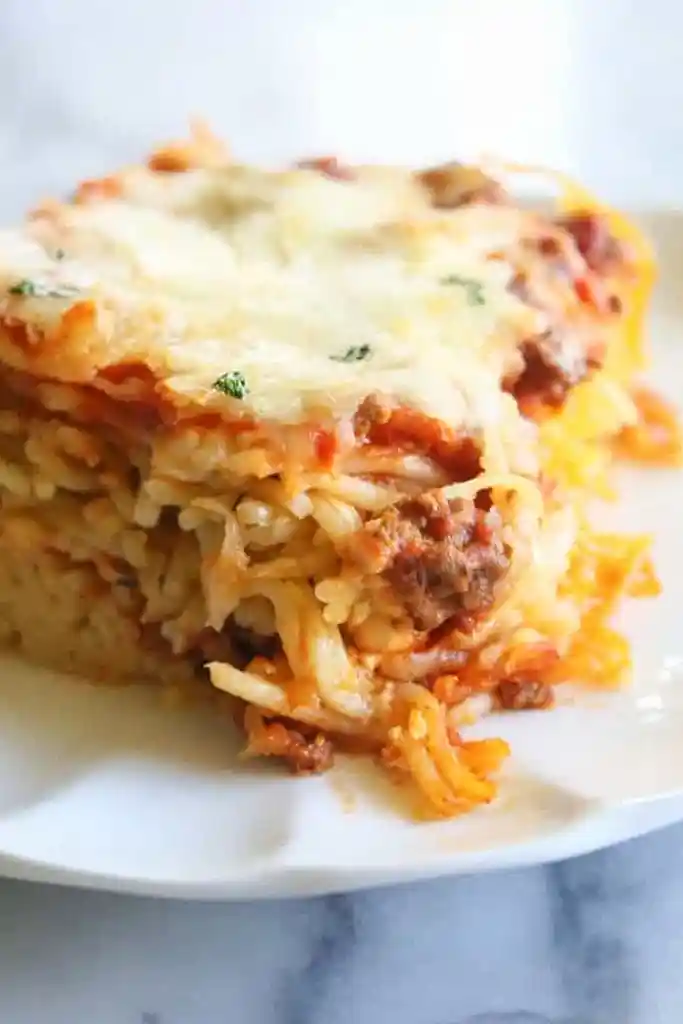
List of ingredients
- 1 lb spaghetti – use a standard durum wheat variety for best structure.
- 1 pound ground beef – lean ground beef is recommended to reduce excess grease.
- 1 medium yellow onion, chopped – finely dice for an even distribution of flavor.
- 2 cloves minced garlic – fresh garlic provides a sharper taste than powdered.
- 1 jar (32 ounces) meatless spaghetti sauce – ensure it is a smooth or chunky style based on preference.
- 1/2 teaspoon seasoned salt – adds a balanced saltiness and depth.
- 1 teaspoon Italian seasoning – a blend of dried herbs like oregano and basil.
- 2 eggs – used as a binder to hold the pasta and cheese together.
- 1/3 cup grated Parmesan cheese – adds a nutty, salty finish to the pasta coating.
- 5 tablespoons butter, melted and slightly cooled – helps the noodles slide and adds richness.
- 16 ounces whole milk ricotta cheese – creates creamy layers within the casserole.
- 3 cups shredded mozzarella cheese – provides the classic stretchy, melted topping.
step-by-step instructions
- Prepare the pasta: Boil a large pot of salted water and cook the spaghetti until it is al dente. Follow the package directions but stop cooking a minute early to prevent mushiness during baking.
- Brown the meat: In a large skillet over medium-high heat, cook the ground beef, chopped onion, and minced garlic. Sauté until the meat is no longer pink, then drain any excess fat from the pan.
- Simmer the sauce: Stir the meatless spaghetti sauce, seasoned salt, and Italian seasonings into the browned beef mixture. Let it simmer briefly to allow the flavors to meld.
- Create the pasta binder: In a separate large mixing bowl, whisk together the eggs, grated Parmesan cheese, and melted butter until well combined.
- Coat the noodles: Drain the cooked spaghetti and let it cool for a few minutes. Add the noodles to the egg and butter mixture, tossing them thoroughly to ensure every strand is coated.
- Assemble the first layer: Grease a 9×13 inch baking dish. Spread half of the egg-coated spaghetti mixture evenly across the bottom of the pan.
- Layer the fillings: Spread half of the ricotta cheese over the pasta, followed by half of the meat sauce and half of the shredded mozzarella.
- Complete the layering: Repeat the sequence by adding the remaining spaghetti, ricotta, meat sauce, and the final layer of mozzarella cheese on top.
- First bake: Cover the baking dish with foil and place it in an oven preheated to 350°F. Bake for 30 minutes.
- Final melt: Remove the foil and bake for an additional 10 minutes, or until the mozzarella cheese is melted and golden brown.
- Serve and store: Let the casserole rest for a few minutes before slicing. Serve with garlic bread and a side salad, and store any leftovers in an airtight container in the refrigerator.
Professional Preparation Tips
Cook Pasta Slightly Under Done
When preparing the spaghetti, it is critical to cook the noodles al dente. Since the pasta will spend an additional 40 minutes in the oven absorbing moisture from the sauce and ricotta, overcooking them at the start will result in a mushy texture. Aim for a firm bite before adding them to the baking dish.
Drain Meat Thoroughly
Excess fat from the ground beef can pool at the bottom of the casserole, creating an oily layer. After browning the beef, onions, and garlic, use a colander or a spoon to remove as much grease as possible. This ensures the sauce stays thick and the flavors remain concentrated.
Control the Pasta Temperature
Allow the drained spaghetti to cool slightly before tossing it with the egg and butter mixture. If the noodles are boiling hot, the eggs may scramble upon contact, creating small cooked bits rather than a smooth, binding coating. A few minutes of resting time prevents this reaction.
Grease the Baking Dish Carefully
Use a generous amount of butter or non-stick spray on the sides and bottom of your 9×13 dish. The cheese and pasta can stick to the edges during the baking process. Proper greasing allows for cleaner slices and easier serving when moving the casserole to a platter.
Ingredient Substitutions
Using Alternative Lean Proteins
If you prefer a leaner meat, ground turkey or ground chicken can be substituted for the beef. Because these meats are leaner, you may need to add a tablespoon of olive oil to the skillet to prevent sticking. The flavor profile will be milder, but the texture remains similar.
Replacing Ricotta Cheese
If ricotta is unavailable, you can use small-curd cottage cheese. For a smoother consistency similar to ricotta, pulse the cottage cheese in a food processor for a few seconds before layering. Mascarpone is another option, though it provides a much richer, creamier taste.
Switching Pasta Shapes
While spaghetti is traditional, you can use penne, rigatoni, or rotini. These shorter pasta shapes are often easier to scoop and hold more sauce in their ridges. The cooking and coating process remains exactly the same regardless of the noodle shape chosen.
Adjusting the Cheese Blend
For a sharper flavor, replace a portion of the mozzarella with provolone or monterey jack cheese. These cheeses melt well and add a different dimension of saltiness. Ensure the cheese is shredded finely to promote even melting across the top of the casserole.
Flavor Variations
Adding Fresh Vegetables
To increase the nutritional value, stir sautéed spinach, diced zucchini, or mushrooms into the meat sauce. Ensure the vegetables are cooked and drained of excess water before adding them to the sauce. This prevents the casserole from becoming too watery during the baking process.
Increasing the Heat
For a spicier version, add a teaspoon of crushed red pepper flakes to the meat sauce while it simmers. Alternatively, you can use a spicy variety of meatless spaghetti sauce. This provides a subtle kick that cuts through the richness of the ricotta and mozzarella.
Creating a Creamier Sauce
If you prefer a more decadent meat sauce, stir in two tablespoons of cream cheese or a splash of heavy cream. This creates a pink-sauce effect that blends well with the ricotta layers. This variation is particularly popular with children who prefer a milder, creamier taste.
Using Different Herbs
While Italian seasoning is a great all-purpose choice, you can customize the flavor by using fresh basil or chopped parsley. Add fresh herbs at the very end of the sauce-simmering process to preserve their bright color and aromatic oils.
Serving Recommendations
Pairing with Garlic Bread
Toasted garlic bread is the ideal accompaniment to this dish. The crunch of the bread provides a textural contrast to the soft pasta and melted cheese. Use a French baguette sliced lengthwise, brushed with garlic butter, and toasted until golden.
Selecting a Side Salad
A crisp, acidic salad helps balance the richness of the cheese and beef. An arugula salad with a lemon vinaigrette or a classic Caesar salad works best. The bitterness of the greens cleanses the palate between bites of the heavy casserole.
Garnishing for Presentation
Before serving, sprinkle freshly chopped parsley or basil over the top of the browned cheese. A light dusting of additional Parmesan cheese also adds a professional look. This adds a pop of color and a fresh herbal note to the finished meal.
Storage and Reheating
Refrigeration Guidelines
Store leftover baked spaghetti in an airtight container in the refrigerator for up to 3 to 4 days. Because of the dairy and meat content, ensure the casserole is cooled slightly before sealing to prevent excessive condensation, which can make the top layer soggy.
Freezing Instructions
This casserole freezes exceptionally well. You can freeze the assembled dish before baking, covering it tightly with a layer of plastic wrap followed by heavy-duty aluminum foil. For best results, thaw the dish in the refrigerator overnight before baking.
Best Reheating Methods
To reheat individual portions, use a microwave with a damp paper towel covering the slice to keep the pasta moist. For larger portions, reheat in the oven at 325°F covered with foil. Adding a tablespoon of water or extra sauce before reheating prevents the noodles from drying out.
Make-Ahead Advice
Assembling the Day Before
You can assemble the entire casserole a day in advance and keep it refrigerated. When you are ready to bake, allow the dish to sit at room temperature for 20 minutes to take the chill off. You may need to add 5 to 10 minutes to the covered baking time.
Baking from Frozen
If baking directly from a frozen state, do not thaw the dish. Increase the covered baking time by 30 to 45 minutes, ensuring the center reaches an internal temperature of 165°F. Remove the foil for the final 10 minutes to brown the cheese.
Troubleshooting Common Issues
Preventing Soggy Pasta
If your baked spaghetti turns out too soft, the most likely cause is overcooking the noodles during the initial boil. Always aim for under-done pasta. Additionally, ensure the meat sauce is simmered long enough to reduce excess liquid before layering.
Avoiding Burnt Cheese
If the mozzarella browns too quickly before the center is hot, keep the foil on for a longer period. You can also tent the foil loosely over the top during the final 10 minutes. This protects the cheese from direct heat while still allowing it to melt.
Fixing a Dry Casserole
If the dish seems dry upon reheating or baking, stir a small amount of beef broth or additional pasta sauce into the portions. This reinstates the moisture and prevents the pasta from feeling gummy or sticking together.
Frequently Asked Questions
Can I use low-fat ricotta?
Yes, low-fat ricotta can be used, but it has a higher water content than whole milk ricotta. To prevent the casserole from becoming watery, strain the low-fat ricotta through a cheesecloth for 30 minutes before using it in the recipe.
Do I have to grease the pan?
Yes, greasing the pan is highly recommended. The combination of melted cheese and pasta starches creates a strong bond with the pan surface. A greased dish ensures that the portions slide out easily without breaking the layers.
Can I make this vegetarian?
To make this recipe vegetarian, replace the ground beef with a plant-based meat substitute or a mixture of sautéed mushrooms and lentils. Use the same meatless spaghetti sauce and cheese layers to maintain the structure and flavor of the dish.
Print
Cheesy Baked Spaghetti Casserole
- Total Time: 45 minutes
- Yield: 10 servings 1x
- Diet: General
Description
This Baked Spaghetti casserole is a hearty great meal for a weeknight dinner. Spaghetti noodles tossed with a hearty meat sauce, lots of mozzarella cheese, baked with ricotta cheese in a casserole dish make for a great recipe!
Ingredients
- 1 lb spaghetti
- 1 pound ground beef
- 1 medium yellow onion, chopped
- 2 cloves minced garlic
- 1 jar (32 ounces meatless spaghetti sauce)
- 1/2 teaspoon seasoned salt
- 1 teaspoon Italian seasoning
- 2 eggs
- 1/3 cup grated Parmesan cheese
- 5 tablespoons butter, melted and slightly cooled
- 16 ounces whole milk ricotta cheese
- 3 cups shredded mozzarella cheese
Instructions
- Step 1: In a large pot of salted water, cook spaghetti al dente, according to package directions.
- Step 2: Meanwhile, in a large skillet, cook beef, onion, and garlic over medium-high heat until meat is no longer pink; drain. Stir in spaghetti sauce, seasoned salt, and Italian seasonings.
- Step 3: In a large bowl, whisk the eggs, Parmesan cheese and butter. Drain cooked noodles and cool slightly; add spaghetti to the egg mixture and toss to coat.
- Step 4: Place half of the spaghetti mixture in a greased 9×13 baking dish. Top with half of the ricotta cheese, meat sauce and mozzarella cheese. Repeat layers.
- Step 5: Cover and bake at 350° for 30 minutes. Uncover and bake for 10 minutes longer or until cheese is melted.
Notes
Serve with garlic bread and a simple salad. Store leftovers in the fridge in an airtight container.
- Prep Time: 15 minutes
- Cook Time: 30 minutes
- Category: Main Course
- Method: Baking
- Cuisine: Italian
Nutrition
- Serving Size: 1 serving
- Calories: 560 kcal
- Sugar: 8 g
- Sodium: 980 mg
- Fat: 30 g
- Saturated Fat: 15 g
- Unsaturated Fat: 15 g
- Trans Fat: 0 g
- Carbohydrates: 38 g
- Fiber: 4 g
- Protein: 35 g
- Cholesterol: 110 mg