This recipe provides a fast and effective method for preparing flavorful salmon using high-heat grilling. The combination of fresh citrus zest and rich butter enhances the natural oils of the fish for a restaurant-quality finish.
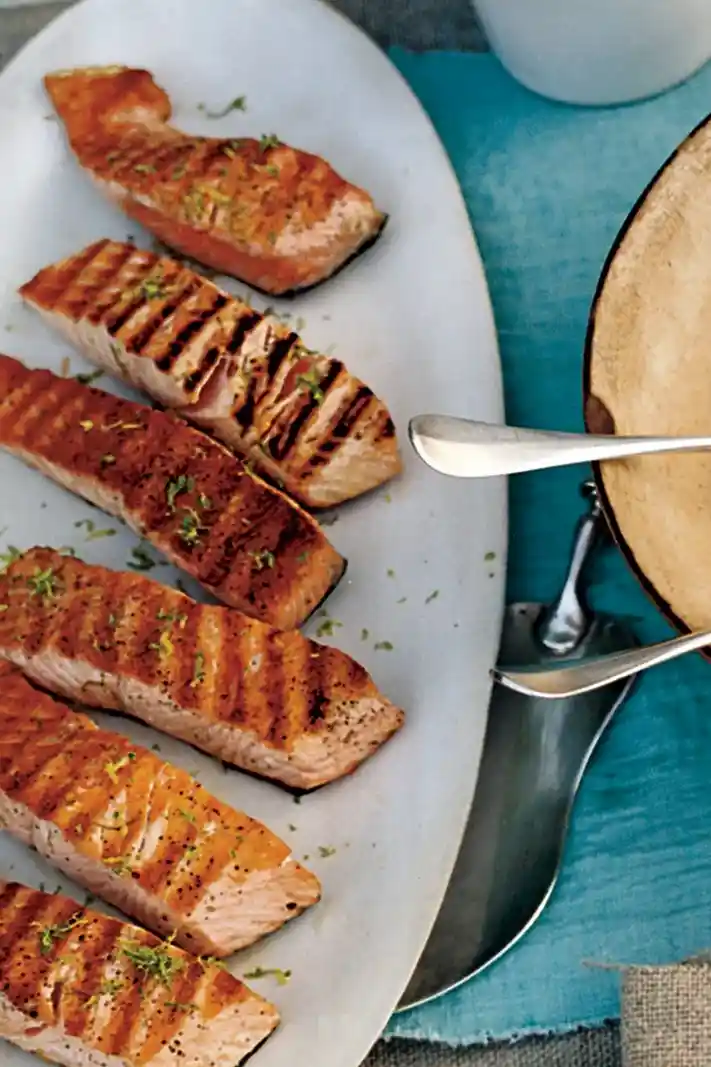
List of ingredients
- 6 (6-oz) pieces center-cut salmon fillet (about 1 inch thick) with skin – helps maintain moisture during grilling.
- 1 1/2 teaspoons finely grated fresh lime zest – provides an aromatic, bright citrus top note.
- 6 tablespoons lime butter sauce – adds a creamy and tangy glaze to the finished fillets.
step-by-step instructions
- Prepare the heat: Set up your grill for cooking over medium-hot charcoal or moderate heat if using a gas grill.
- Season the fish: Apply salt and pepper evenly over all sides of the salmon fillets.
- Initial sear: Place the fillets flesh-side down on a lightly oiled grill rack. Grill for 4 minutes, keeping the lid closed if using a gas grill.
- Flip and finish: Turn the fillets over and grill for another 4 to 6 minutes, or until the fish is just cooked through. Keep the lid closed for gas grills.
- Final touch: Remove the fillets from the grill, sprinkle immediately with fresh lime zest, and top each piece with 1 tablespoon of lime butter sauce.
Selecting the Best Salmon Cuts
Choosing Center-Cut Fillets
Center-cut fillets provide a uniform thickness across the piece of fish. This ensures that the salmon cooks evenly, preventing the thinner tail end from overcooking while the center remains raw.
The Role of the Skin
Keeping the skin on during the grilling process acts as a protective barrier. This prevents the delicate flesh from sticking to the grill grates and helps lock in natural juices.
Identifying Freshness
Fresh salmon should have a vibrant color and a firm texture that springs back when touched. Avoid fillets that have a strong fishy odor or a slimy surface film.
Comparing Salmon Varieties
King salmon offers a higher fat content, making it more forgiving on a hot grill. Sockeye is leaner and has a more intense flavor, while Atlantic salmon provides a mild taste and consistent texture.
Grill Management Techniques
Managing Charcoal Heat
For charcoal grills, create a two-zone fire by piling coals on one side. This allows you to move fillets to a cooler area if the exterior is browning too quickly before the interior is done.
Gas Grill Temperature Control
Maintain a moderate heat setting to avoid scorching the skin. Using a meat thermometer is the most reliable way to ensure the internal temperature reaches 145 degrees Fahrenheit.
Preventing Salmon from Sticking
Lightly oil the grill grates immediately before placing the fish down. Using a high-smoke point oil, such as grapeseed or avocado oil, prevents the oil from burning and creating acrid flavors.
Using the Grill Lid
Closing the lid on a gas grill mimics the convection effect of an oven. This helps the heat penetrate the thick center of the fillet without overcooking the outer layers.
Optimizing the Lime Butter Sauce
Preparing a Homemade Lime Butter
To make a basic lime butter, cream together softened unsalted butter with fresh lime juice and a pinch of salt. Ensure the butter is at room temperature for a smooth, emulsified consistency.
Temperature Application
Apply the lime butter sauce immediately after removing the salmon from the heat. The residual warmth of the fish will melt the butter, allowing it to seep into the grilled sear marks.
Balancing the Citrus Profile
If the lime juice is too acidic, a small pinch of sugar or honey can balance the tartness. Adjust the ratio of zest to juice based on your preference for aroma versus acidity.
Incorporating Fresh Herbs
Mixing chopped parsley or chives into the lime butter adds a fresh, herbaceous element. These herbs pair well with the brightness of the lime and the richness of the salmon.
Alternative Cooking Methods
Using a Ridged Grill Pan
If an outdoor grill is unavailable, a cast-iron ridged grill pan is a suitable substitute. Heat the pan over moderately high heat and oil the surface well before adding the fillets.
Oven Broiling Technique
Set your oven to the broiler setting and place the salmon on a lined baking sheet. Broil for 6 to 8 minutes, flipping halfway through, to achieve a similar charred effect.
Air Fryer Preparation
Cook the seasoned fillets at 400 degrees Fahrenheit for about 7 to 10 minutes. This method produces a crisp exterior while keeping the inside moist, though it lacks the smoky grill flavor.
Serving Suggestions and Pairings
Fresh Vegetable Accompaniments
Grilled asparagus or sautéed spinach provides a nutritional balance to the rich butter sauce. These vegetables can be cooked on the same grill as the salmon to save time.
Grain-Based Sides
Serve the salmon over a bed of wild rice or quinoa to absorb the melting lime butter. A light lemon-herb couscous is another excellent pairing that complements the citrus notes.
Salad Pairings
A crisp arugula salad with a light vinaigrette cuts through the richness of the butter. Adding sliced cucumbers and radishes adds a refreshing crunch to the meal.
Potato Side Options
Roasted baby potatoes with rosemary and garlic provide a hearty base. Alternatively, a chilled potato salad with a light yogurt dressing pairs well with the warm fish.
Storage and Reheating Advice
Refrigeration Guidelines
Store leftover grilled salmon in an airtight container in the refrigerator for up to three days. Keep the lime butter sauce in a separate container to prevent it from soaking completely into the fish.
Reheating in the Oven
Preheat the oven to 275 degrees Fahrenheit and place the salmon on a baking sheet. Heat for 10 to 15 minutes to avoid drying out the fish, then add a fresh dab of lime butter.
Microwave Reheating Tips
Use a low power setting and cover the fish with a damp paper towel. Heat in short 30-second intervals to prevent the salmon from becoming rubbery.
Freezing Instructions
While grilled salmon can be frozen, the texture may change upon thawing. Wrap the fillets tightly in foil and plastic wrap, and consume within two months.
Common Troubleshooting
Solving the Sticking Problem
If the salmon sticks to the grill, avoid forcing it off. Wait an extra minute; the fish naturally releases from the metal once a proper sear has formed.
Correcting Overcooked Salmon
If the salmon becomes too dry, increase the amount of lime butter sauce applied to the top. A side of creamy avocado or a dollop of Greek yogurt can also add needed moisture.
Handling Sauce Separation
If the lime butter sauce separates into oil and solids, gently whisk it over low heat. Adding a teaspoon of warm water can help re-emulsify the mixture.
Managing Uneven Cooking
If some fillets are thinner than others, remove them from the grill earlier. Always prioritize the internal temperature over the total cooking time listed in the recipe.
Frequently Asked Questions
Can I use lemon instead of lime?
Yes, lemon is a direct substitute and provides a similar citrus profile. Lemon butter is a classic pairing for salmon and will work perfectly with this grilling method.
How do I know when the salmon is perfectly done?
The fish is done when it flakes easily with a fork and the internal temperature reaches 145 degrees Fahrenheit. The center should be opaque but still moist.
Should I remove the skin before grilling?
No, keep the skin on during the cooking process. It protects the fish from the direct heat and makes it easier to flip the fillet without it breaking.
Can I grill salmon from frozen?
It is highly recommended to thaw the salmon completely before grilling. Grilling from frozen often results in an overcooked exterior and a raw, cold center.
What is the best oil for the grill rack?
Use an oil with a high smoke point like canola, grapeseed, or avocado oil. Avoid extra virgin olive oil for high-heat grilling as it can burn and taste bitter.
Can I use salted butter for the sauce?
You can use salted butter, but reduce the additional salt used to season the fish. Tasting the sauce first is the best way to ensure the seasoning is balanced.
} Print
Char-Grilled Salmon Fillets with Zesty Lime Butter
- Total Time: 45 minutes
- Yield: 6 servings 1x
- Diet: Pescatarian
Description
Just a sprinkle of zest and a dab of lime butter sauce beautifully highlight the flavor of grilled salmon.
Ingredients
- 6 (6-oz) pieces center-cut salmon fillet (about 1 inch thick) with skin
- 1 1/2 teaspoons finely grated fresh lime zest
- 6 tablespoons lime butter sauce
Instructions
- Step 1: Prepare grill for cooking over medium-hot charcoal (moderate heat for gas).
- Step 2: Season salmon all over with salt and pepper, then grill, flesh sides down, on lightly oiled grill rack (covered only if using gas grill) 4 minutes. Turn fillets over and grill (covered only if using gas grill) until just cooked through, 4 to 6 minutes more. Sprinkle fillets with zest and top each with 1 tablespoon lime butter sauce.
Notes
If you aren’t able to grill outdoors, salmon can be cooked in a hot lightly oiled well-seasoned large (2-burner) ridged grill pan over moderately high heat.
- Prep Time: 30 minutes
- Cook Time: 15 minutes
- Category: Dinner
- Method: Grilling
- Cuisine: American
Nutrition
- Serving Size: 1 fillet
- Calories: 450 kcal
- Sugar: 1 g
- Sodium: 400 mg
- Fat: 31 g
- Saturated Fat: 10 g
- Unsaturated Fat: 21 g
- Trans Fat: 0 g
- Carbohydrates: 2 g
- Fiber: 0 g
- Protein: 34 g
- Cholesterol: 100 mg