This dish combines a savory-sweet glaze with high-heat broiling to create a caramelized crust on tender fish. It is an efficient method for preparing a nutrient-dense meal in under thirty minutes.
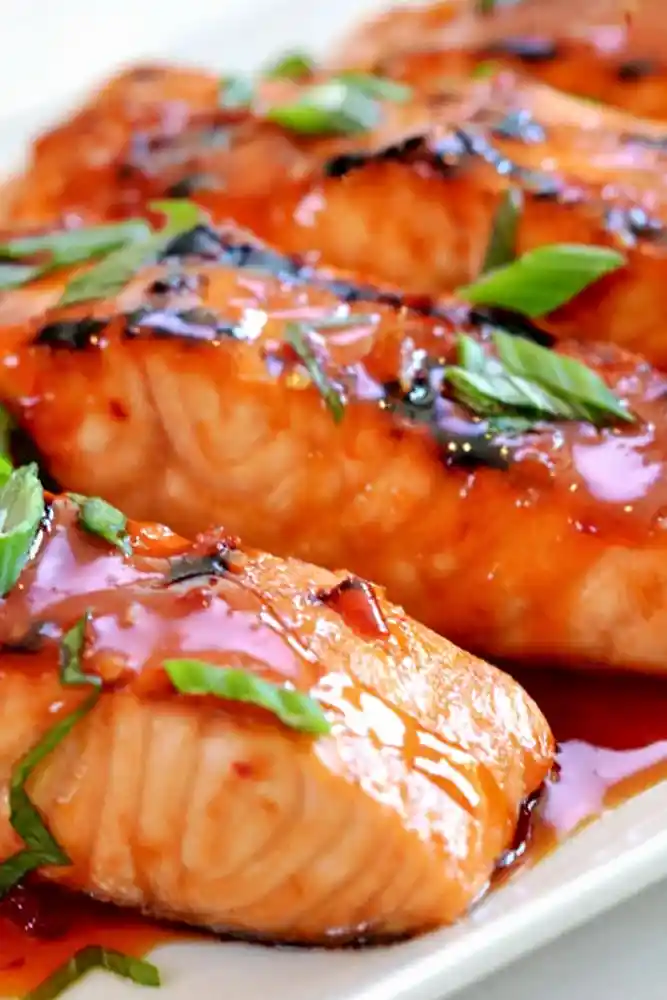
List of ingredients
- 1½ lbs (or four 6-oz pieces) salmon, skin on or off – choose fresh, sushi-grade fillets for best results.
- 6 tablespoons Thai sweet chili sauce – use a high-quality brand like Mae Ploy or Thai Kitchen.
- 3 tablespoons soy sauce – adds a salty, umami depth to the glaze.
- 1 tablespoon finely grated fresh ginger – provides a zesty, aromatic heat.
- 2 scallions, green parts only, thinly sliced – used as a fresh garnish for color and flavor.
step-by-step instructions
- Prepare the oven: Position the oven rack approximately 5 to 6 inches from the top heating element and preheat your broiler to high.
- Create the marinade: In a shallow baking dish, whisk together the Thai sweet chili sauce, soy sauce, and grated ginger.
- Reserve the sauce: Carefully spoon ¼ cup of the prepared marinade into a small separate dish and set it aside to use as a finishing sauce.
- Marinate the fish: Place the salmon fillets in the baking dish, skin side up, and coat them thoroughly. Refrigerate for 1 hour to allow flavors to penetrate.
- Ready the pan: Line a rimmed baking sheet with aluminum foil and coat the foil with nonstick cooking spray.
- Position the salmon: Transfer the fillets to the baking sheet with the skin side facing down.
- Glaze the top: Drizzle a small amount of the remaining marinade over the top of each fillet. Avoid using too much to prevent the sauce from pooling and burning.
- Broil: Place the pan under the broiler for 6 to 10 minutes. The fish is done when it is browned in spots and the center is almost opaque.
- Finish and serve: Move the salmon to a platter, pour the reserved sauce over the top, and garnish with sliced scallions.
Pro Tips for Perfect Broiled Salmon
Use a Meat Thermometer for Internal Temperature
The most accurate way to avoid overcooking is using an instant-read thermometer. Aim for an internal temperature of 135 to 145 degrees Fahrenheit depending on your preference. Remember that the fish continues to cook for a few minutes after being removed from the heat.
Pat Salmon Dry Before Marinating
Use paper towels to remove excess moisture from the surface of the salmon fillets before adding the marinade. Removing surface water helps the glaze adhere better to the fish. This results in a more consistent caramelization under the broiler.
Arrange Fillets with Space Between Them
Avoid crowding the salmon fillets on the baking sheet. Leaving an inch of space between each piece ensures that the hot air circulates evenly. This prevents the fish from steaming and helps the edges brown properly.
Adjust Broiler Rack Height for Heat Control
The distance from the heating element determines how quickly the glaze caramelizes. If the sauce burns before the fish is cooked through, move the rack one level lower. Conversely, if the fish is cooking too slowly, move the rack higher for a faster sear.
Alternative Ingredients and Substitutions
Use Tamari for a Gluten-Free Option
To make this recipe gluten-free, replace the standard soy sauce with tamari or coconut aminos. Tamari provides a similar salty profile without the wheat. Ensure your Thai sweet chili sauce is also certified gluten-free.
Substitute Ground Ginger for Fresh Root
If fresh ginger is unavailable, you can use ground ginger powder. Use approximately ¼ teaspoon of ground ginger for every tablespoon of fresh ginger. Note that the flavor will be more concentrated and less bright than fresh ginger.
Choose Sockeye for a Bolder Flavor
While Atlantic salmon is mild and fatty, Sockeye or King salmon offers a richer, more intense fish flavor. Sockeye fillets are leaner, so they may cook faster under the broiler. Reduce the cooking time by one or two minutes to prevent drying.
Create a DIY Sweet Chili Glaze
If you do not have store-bought Thai sweet chili sauce, mix honey, rice vinegar, red chili flakes, and minced garlic. Simmer the mixture in a small pan until slightly thickened. Use this homemade blend in the same quantities as the commercial sauce.
Serving Suggestions and Side Dishes
Pair with Steamed Jasmine Rice
Fragrant jasmine rice is a classic pairing that absorbs the extra sweet chili glaze. Cook the rice with a pinch of salt for a clean flavor profile. For added texture, stir in toasted sesame seeds before serving.
Serve with Sautéed Garlic Bok Choy
Bok choy provides a crisp, bitter contrast to the sweetness of the salmon. Sauté sliced bok choy in a pan with a small amount of oil, garlic, and a splash of soy sauce. Cook quickly over high heat to maintain a crunch.
Prepare a Chilled Cucumber Salad
A vinegar-based cucumber salad helps cut through the richness of the salmon. Slice cucumbers thinly and toss them with rice vinegar, a pinch of sugar, and salt. Let the salad sit in the refrigerator for 30 minutes before serving.
Use Brown Rice for More Fiber
For a heartier and more nutritious base, substitute jasmine rice with cooked brown rice. The nutty flavor of brown rice complements the ginger and soy notes in the glaze. This option increases the fiber content of the meal.
Storage and Reheating Guidance
Store Salmon in Glass Containers
Place leftover salmon in an airtight glass container to maintain freshness. Glass is preferable to plastic as it does not absorb odors from the fish. Keep the fish refrigerated and consume it within three days.
Reheat Gently in the Oven
Avoid the microwave, as it can make the salmon rubbery and dry. Preheat the oven to 275 degrees Fahrenheit and warm the fish for 10 to 15 minutes. Cover the fish with foil to lock in moisture during the reheating process.
Freeze Salmon for Up to Two Months
Cooked salmon can be frozen if wrapped tightly in plastic wrap and placed in a freezer bag. Ensure all air is removed to prevent freezer burn. Thaw the fish in the refrigerator overnight before reheating.
Identify Signs of Fish Spoilage
Always check the salmon for a strong, ammonia-like smell before eating leftovers. Look for a slimy texture or any discoloration on the surface of the meat. If these signs are present, discard the fish immediately for safety.
Common Troubleshooting Solutions
Reduce Sugar to Prevent Glaze Burning
If the glaze burns too quickly, it is likely due to the high sugar content in the sweet chili sauce. You can dilute the marinade with a tablespoon of water or extra soy sauce. This lowers the sugar concentration and allows the fish to cook longer before browning.
Prevent Salmon from Sticking to Foil
Ensure the aluminum foil is generously coated with nonstick cooking spray or use a silicone baking mat. If the fish sticks, let it rest for two minutes before attempting to lift it. This allows the proteins to relax and release from the surface.
Avoid Overcooking the Center
Salmon can transition from perfectly cooked to overdone in sixty seconds. Check the fish early and remove it when the center is still slightly translucent. The carry-over heat will finish the cooking process as the fish rests.
Manage Excess Marinade on the Pan
Too much marinade on the baking sheet can lead to smoking and burnt residue. Use a pastry brush to apply the glaze sparingly rather than pouring it over. This keeps the pan clean and prevents the sauce from burning.
Frequently Asked Questions
Is it safe to marinate salmon for 24 hours?
Marinating salmon for too long can break down the muscle fibers, making the fish mushy. The acid in the vinegar and the salt in the soy sauce act as curing agents. Stick to the recommended one-hour window for the best texture.
Does the skin protect the fish from burning?
Cooking the salmon skin-side down creates a protective barrier between the flesh and the hot pan. This helps the fish cook evenly and prevents the delicate meat from scorching. It also allows the skin to crisp up if desired.
Can I use a convection oven instead of a broiler?
You can use a convection oven, but you will not achieve the same caramelized crust. Set the oven to 400 degrees Fahrenheit and bake for 12 to 15 minutes. You may need to turn the broiler on for the last two minutes to brown the top.
How do I know when the salmon is medium-rare?
Medium-rare salmon should be opaque on the outside and warm, translucent pink in the center. The fish should flake easily with a fork but still feel moist. Use a thermometer to ensure it has reached 125 to 130 degrees Fahrenheit.
Print
Broiled Salmon with Thai Sweet Chili Glaze
- Total Time: 80 minutes
- Yield: 4 servings 1x
- Diet: Gluten-Free Adaptable
Description
Marinated in sweet chili sauce, soy sauce and ginger, this broiled salmon makes a super-easy weeknight dinner.
Ingredients
- 1½ lbs salmon, skin on or off
- 6 tablespoons Thai sweet chili sauce
- 3 tablespoons soy sauce
- 1 tablespoon finely grated fresh ginger
- 2 scallions, green parts only, thinly sliced
Instructions
- Step: Set the oven rack 5 to 6 inches from the top and preheat the broiler.
- Step: Combine the sweet chili sauce, soy sauce, and ginger in a shallow baking dish.
- Step: Spoon ¼ cup of the marinade into a small dish and set aside.
- Step: Add the salmon fillets, skin side up, to the remaining marinade and marinate for 1 hour in the refrigerator.
- Step: Line a rimmed baking sheet with aluminum foil and spray with nonstick cooking spray.
- Step: Transfer the salmon fillets to the prepared baking sheet, skin side down, and drizzle a bit of the marinade over top.
- Step: Broil the salmon for 6 to 10 minutes, or until browned in spots and almost opaque in the center.
- Step: Transfer the salmon to a serving platter and pour the reserved sauce over top.
- Step: Garnish with scallions and serve.
Notes
Pair with Perfect Jasmine Rice. This recipe is gluten-free adaptable.
- Prep Time: 70 minutes
- Cook Time: 10 minutes
- Category: Main Course
- Method: Broiling
- Cuisine: Asian
Nutrition
- Serving Size: 1 piece
- Calories: 391 kcal
- Sugar: 3 g
- Sodium: 1108 mg
- Fat: 23 g
- Saturated Fat: 5 g
- Unsaturated Fat: 18 g
- Trans Fat: 0 g
- Carbohydrates: 7 g
- Fiber: 2 g
- Protein: 37 g
- Cholesterol: 94 mg