This one-pot meal combines seared chicken thighs with tender root vegetables in a savory sauce. It is a practical and healthy dinner option that minimizes cleanup by using a single pan.
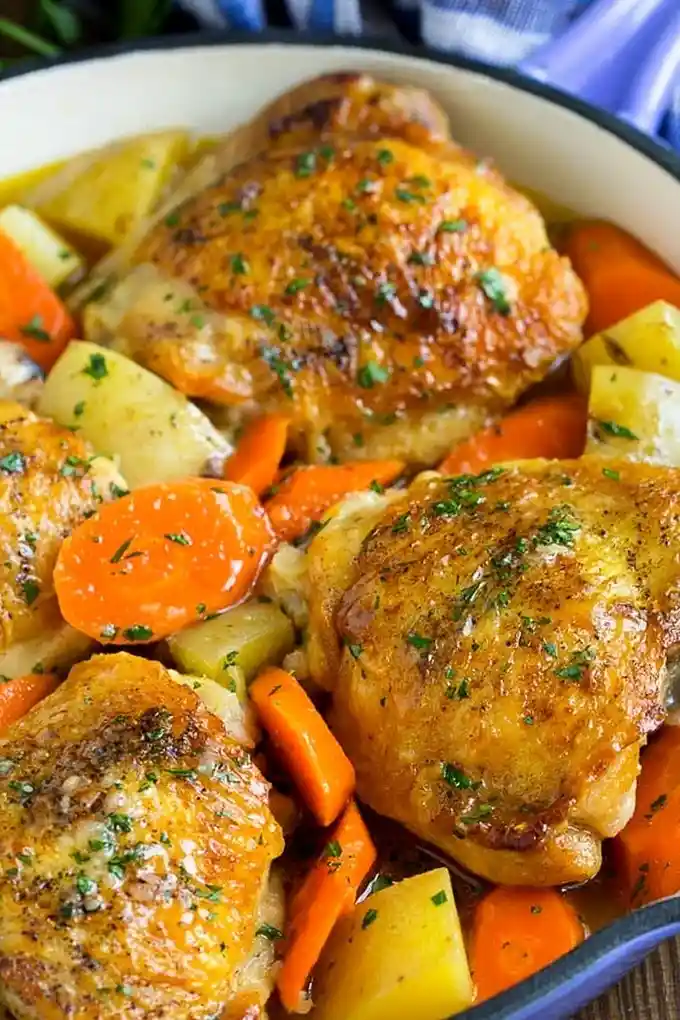
List of ingredients
- 4 large bone in skin on chicken thighs (fat trimmed) – provides maximum flavor.
- Kosher salt and freshly ground pepper (to taste) – for seasoning.
- 1 tablespoon olive oil – for searing.
- 1 onion (finely chopped) – adds aromatic base.
- 4 Yukon gold potatoes (cut into 2 inch pieces) – creates a creamy texture.
- 6 carrots (peeled and cut into 1 1/2 inch slices) – adds sweetness and color.
- 1 teaspoon smoked paprika – adds a subtle smoky depth.
- 1 tablespoon all purpose flour (can substitute whole wheat flour or gluten free flour) – thickens the braising liquid.
- 1 1/2 cups chicken stock – the primary braising liquid.
- 1/4 cup chicken stock mixed with 1 teaspoon lemon juice – replaces white wine for acidity.
- 2 teaspoons minced fresh thyme – adds earthy notes.
- 2 tablespoons minced fresh parsley – used for fresh garnish.
step-by-step instructions
- Prepare Oven: Preheat your oven to 350 degrees F.
- Season: Generously season the chicken thighs with kosher salt and freshly ground pepper.
- Sear Chicken: Warm the olive oil in a heavy large frying pan over medium-high heat. Add the chicken and cook until brown, about 4-6 minutes per side, then transfer to a plate.
- Saute Vegetables: Add the chopped onion to the pan and stir. Add potatoes and carrots, season with salt and pepper, and saute for about 5 minutes until they begin to brown.
- Thicken and Deglaze: Sprinkle in the flour and stir to coat the vegetables. Pour in the chicken stock and lemon juice mixture, simmering until the liquid reduces.
- Combine: Stir in the remaining chicken stock and smoked paprika. Return the browned chicken thighs to the pan and bring the liquid to a boil.
- Bake: Cover the pan with a lid and place it in the oven. Bake for 40 minutes or until the chicken and vegetables are fully cooked through.
- Finish: Stir in the minced fresh thyme. Taste the sauce and adjust seasoning if necessary. Sprinkle with chopped parsley before serving.
Practical Cooking Tips
Searing for Deep Flavor
Browning the chicken thighs creates a Maillard reaction, which develops a rich, savory crust. Ensure the oil is shimmering before adding the meat to prevent sticking. This step is essential for the depth of the final sauce.
Ensuring Uniform Vegetable Sizes
Cutting potatoes into 2-inch pieces and carrots into 1.5-inch slices helps them cook at the same rate. If pieces are too small, they may disintegrate before the chicken is done. Uniformity ensures every bite is perfectly tender.
Selecting an Oven-Safe Skillet
Use a heavy-bottomed pan, such as cast iron or stainless steel, that can transition from the stove to the oven. These materials distribute heat evenly and prevent hot spots. A tight-fitting lid is necessary to trap steam during the braising process.
Proper Heat Management
Maintain medium-high heat when searing the chicken to avoid steaming the meat. If the pan is too cool, the chicken will release moisture and fail to brown. Lower the heat slightly when sautéing onions to prevent them from burning.
Deglazing for Sauce Depth
Adding the stock and lemon juice mixture helps lift the browned bits, known as fond, from the bottom of the pan. These caramelized remnants contain concentrated flavor. Stirring constantly during this phase ensures a smooth, integrated sauce.
Ingredient Substitutions
Using Red or Purple Potatoes
While Yukon Gold potatoes are creamy, red or purple potatoes offer a firmer texture. These varieties hold their shape better during long cooking times. Adjust the cutting size slightly if using smaller new potatoes.
Substituting with Sweet Potatoes
Sweet potatoes can be used for a sweeter flavor profile and additional nutrients. They cook slightly faster than Yukon Golds, so cut them into slightly larger chunks. This variation pairs exceptionally well with the smoked paprika.
Working with Chicken Drumsticks
Drumsticks are a budget-friendly alternative to thighs and work well for braising. They may require an additional 10-15 minutes of oven time depending on their size. Ensure they are seared thoroughly on all sides first.
Using Boneless Chicken Thighs
Boneless thighs cook faster and are easier to serve, though they provide less flavor than bone-in versions. Reduce the oven baking time to approximately 25-30 minutes. Be careful not to overcook them, as they can become dry.
Using Chicken Breasts
Bone-in, skin-on breasts can be used but require careful monitoring to avoid drying out. Since breasts cook faster than thighs, check the internal temperature early. Consider cutting the baking time by 10 minutes.
Gluten-Free Flour Options
Use a 1:1 gluten-free flour blend or cornstarch to thicken the sauce. If using cornstarch, mix it with a small amount of cold water first to create a slurry. Stir the slurry into the boiling liquid before adding the chicken back to the pan.
Whole Wheat Flour Substitution
Whole wheat flour adds a nuttier flavor and more fiber to the gravy. It thickens similarly to all-purpose flour but may result in a slightly grainier texture. Use the same measurement as specified in the recipe.
Adding Parsnips or Turnips
Parsnips or turnips can be added alongside the carrots for a more complex root vegetable mix. Cut them to the same size as the carrots to ensure even cooking. These vegetables add a peppery or earthy note to the dish.
Flavor Variations
Adding Cream for Richness
Stir in two tablespoons of heavy cream or a dollop of sour cream after removing the pan from the oven. This creates a creamy, velvety gravy. It is best to stir this in right before serving to prevent the cream from separating.
Incorporating Fresh Spinach
Stir in a few handfuls of fresh baby spinach during the final two minutes of cooking. The residual heat will wilt the leaves without overcooking them. This adds color and a boost of iron to the meal.
Adding Kale for Texture
Chopped kale can be added during the last 10 minutes of baking. Kale is heartier than spinach and benefits from a bit more heat to soften. This variation provides a nice textural contrast to the tender potatoes.
Incorporating Sliced Mushrooms
Add sliced cremini or button mushrooms when sautéing the carrots and potatoes. Mushrooms absorb the braising liquid and add a savory umami depth. They brown well in the chicken fat left over from searing.
Adding Pearl Onions
Replace the chopped onion with whole peeled pearl onions for a more elegant presentation. Brown them along with the other vegetables for a caramelized taste. These onions remain whole and provide bursts of flavor.
Enhancing with Fresh Garlic
Add three cloves of minced garlic during the last minute of sautéing the onions. Garlic burns quickly, so it must be added just before the liquid is poured in. This adds a sharp, aromatic quality to the braise.
Modifying with Different Paprika Types
Use Hungarian paprika for a sweeter taste or chipotle powder for a spicier kick. Smoked paprika is recommended for the original flavor, but these alternatives change the profile significantly. Adjust the quantity based on the potency of the spice.
Serving Suggestions
Pairing with Crusty French Bread
Serve the braised chicken with warm, toasted French bread or a baguette. The bread is ideal for soaking up the thickened gravy from the pan. Brush the bread with garlic butter for extra flavor.
Pairing with a Bitter Green Salad
A side salad of arugula or mixed greens with a lemon vinaigrette cuts through the richness of the chicken. The acidity of the dressing balances the savory notes of the smoked paprika. Use a light dressing to keep the meal healthy.
Serving Over Steamed Rice
Although the dish includes potatoes, serving it over steamed basmati or jasmine rice is an option. The rice absorbs the sauce effectively. This is a great way to stretch the meal for larger groups.
Garnish with Extra Fresh Herbs
In addition to parsley, garnish the dish with fresh chives or sliced green onions. Fresh herbs add a bright, clean finish to the heavy braising sauce. Always add fresh herbs at the very end to preserve their color.
Storage and Reheating
Proper Refrigeration
Store leftovers in an airtight container in the refrigerator for up to three to four days. Ensure the chicken and vegetables are completely cooled before sealing the lid. This prevents condensation from making the chicken skin soggy.
Freezing for Future Meals
This dish freezes well for up to two months. Place portions in freezer-safe containers and leave a small gap at the top for expansion. Note that potatoes may change texture slightly upon thawing.
Stovetop Reheating Method
Place the chicken and vegetables in a skillet over low to medium heat. Add a splash of chicken stock or water to loosen the sauce. Cover the pan and heat until the center of the chicken is hot.
Oven Reheating Technique
Transfer leftovers to an oven-safe dish and cover with foil. Heat at 325 degrees F for 15-20 minutes. This method helps maintain the integrity of the vegetables better than the microwave.
Microwave Reheating Tips
Heat in short intervals, stirring the sauce gently between bursts. Use a microwave-safe cover to trap steam and keep the meat moist. Be aware that the chicken skin will lose any remaining crispness.
Make-Ahead Advice
Preparing Vegetables in Advance
Chop the onions, peel the carrots, and cube the potatoes up to 24 hours in advance. Store them in separate containers or bags in the refrigerator. This significantly reduces the active prep time on cooking day.
Pre-searing the Protein
Sear the chicken thighs a few hours before you plan to braise them. Store the browned chicken on a plate in the fridge. When ready, proceed with the vegetable sauté and return the pre-seared chicken to the pan.
Storing the Braising Liquid
Mix the chicken stock, lemon juice, and paprika in a jar and keep it chilled. This allows you to simply pour the liquid into the pan once the vegetables are ready. It ensures all measurements are accurate and ready to go.
Troubleshooting
Correcting a Thin Sauce
If the sauce is too thin after baking, remove the chicken and vegetables. Simmer the liquid on the stovetop over medium-high heat until it reduces and thickens. Alternatively, whisk in a small amount of additional cornstarch slurry.
Fixing Underdone Vegetables
If the potatoes or carrots are still firm, return the pan to the oven for another 10-15 minutes. Add a tablespoon of stock if the liquid has evaporated too much. Keep the pan covered to ensure the vegetables steam through.
Achieving Crispier Chicken Skin
Braising naturally softens the skin. To regain some crispness, place the cooked chicken under a broiler for 2-3 minutes. Watch closely to prevent burning while the skin bubbles and browns.
Preventing Onion Burning
If the onions start to brown too quickly, add a tablespoon of water or stock. Lower the heat to medium. Sautéing should be a gentle process to build flavor without scorching the aromatics.
Frequently Asked Questions
Can I use frozen vegetables?
Fresh vegetables are recommended for the best texture. If using frozen, add them after the searing process and reduce the baking time, as frozen vegetables release more water and cook faster.
What is the best braising pan?
A cast iron skillet or a Dutch oven is ideal. These pans distribute heat evenly and can withstand the high temperature of the oven while maintaining a consistent simmer.
How to avoid mushy potatoes?
Avoid overstirring the vegetables once they are in the pan. Use waxy potatoes like Yukon Gold rather than starchy russets, as they hold their shape much better during the braising process.
Can I make this in a slow cooker?
Yes, but the process changes. Brown the chicken and sauté vegetables first, then transfer everything to the slow cooker. Cook on low for 6-8 hours or high for 3-4 hours.
Print
Braised Chicken with Carrots and Potatoes
- Total Time: 55 minutes
- Yield: 4 servings 1x
- Diet: General
Description
This recipe for braised chicken with carrots and potatoes combines seared chicken thighs and tender vegetables in a single dish that makes for an easy and healthy dinner.
Ingredients
- 4 large bone in skin on chicken thighs (fat trimmed)
- Kosher salt and freshly ground pepper (to taste)
- 1 tablespoon olive oil
- 1 onion (finely chopped)
- 4 Yukon gold potatoes (cut into 2 inch pieces)
- 6 carrots (peeled and cut into 1 1/2 inch slices)
- 1 teaspoon smoked paprika
- 1 tablespoon all purpose flour
- 1 3/4 cups chicken stock
- 2 teaspoons minced fresh thyme
- 2 tablespoons minced fresh parsley
Instructions
- Step: Preheat the oven to 350 degrees F.
- Step: Season the chicken generously with salt and pepper.
- Step: In a heavy large frying pan over medium-high heat, warm the oil. Add the chicken and cook until brown, about 4-6 minutes on each side. Transfer the chicken to a plate.
- Step: Add the onion to the frying pan and stir. Add the potatoes and carrots. Sprinkle with salt and pepper and saute until the vegetables are beginning to brown, about 5 minutes.
- Step: Add the flour and stir to coat. Add 1/4 cup of the chicken stock, simmer until cooked off. Add the remaining chicken stock and smoked paprika. Return the chicken to the pan and bring to a boil.
- Step: Cover the pan, place in the oven and bake for 40 minutes, or until the chicken and vegetables are cooked through.
- Step: Mix in the thyme. Taste and adjust the seasoning. Sprinkle with chopped parsley, then serve.
Notes
Tips: Choose bone-in skin-on chicken thighs for maximum flavor. Cut potatoes and carrots into similar sized pieces for even cooking. This dish can be made in advance and reheated over low heat. Kids can help by peeling carrots with supervision.
- Prep Time: 15 minutes
- Cook Time: 40 minutes
- Category: Dinner
- Method: Braising
- Cuisine: American
Nutrition
- Serving Size: 1 serving
- Calories: 573 kcal
- Sugar: 7 g
- Sodium: 326 mg
- Fat: 29 g
- Saturated Fat: 7 g
- Unsaturated Fat: 22 g
- Trans Fat: 0 g
- Carbohydrates: 43 g
- Fiber: 8 g
- Protein: 32 g
- Cholesterol: 144 mg