This vibrant rice bowl combines savory seared salmon with a creamy, spicy sauce for a fast weeknight dinner. It is a nutrient-dense meal that balances fresh vegetables with protein and healthy fats.
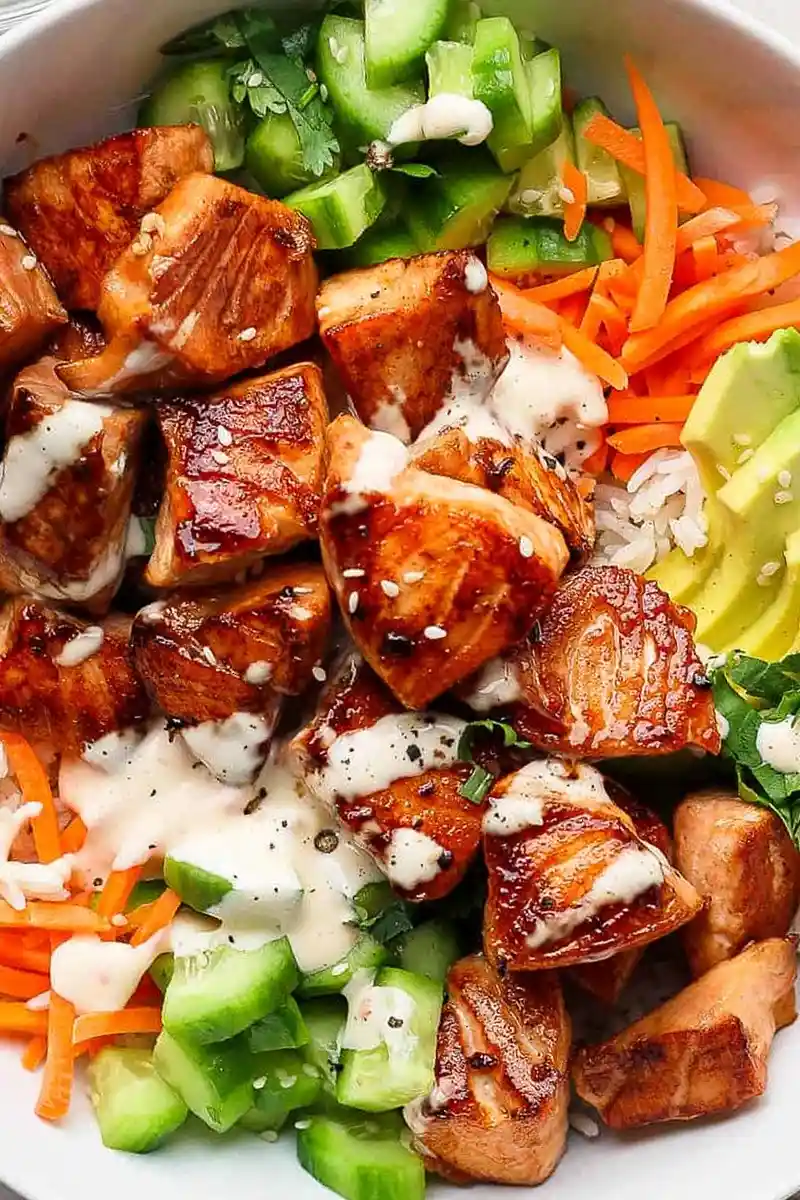
List of ingredients
- 1/2 cup mayonnaise – provides the creamy base for the sauce.
- 1 tablespoon thai sweet chili sauce – adds sweetness and a mild tang.
- 1 teaspoon chili garlic sauce – brings a spicy kick; sriracha can be used as a substitute.
- 1 pound salmon fillets – the main protein source.
- 1 teaspoon kosher salt – enhances the natural flavors of the fish.
- 1/4 teaspoon ground black pepper – adds a subtle spicy depth.
- 1/4 cup soy sauce – used for marinating the salmon; use tamari for a gluten-free version.
- 1 tablespoon olive oil – used for searing the salmon in the skillet.
- 4 cups long grain white rice, cooked – serves as the hearty base for the bowl.
- 1 avocado, sliced – contributes creamy texture and healthy fats.
- 1 english cucumber, quartered – adds a refreshing crunch.
- 1 cup carrots, julienned – provides sweetness and a crisp texture.
- 1/2 cup green onions, chopped – used for a fresh, oniony garnish.
- fresh cilantro – adds a bright, herbal finish.
step-by-step instructions
- Prepare the Sauce: Combine the mayonnaise, thai sweet chili sauce, and chili garlic sauce in a small mixing bowl. Stir until the mixture is smooth and set it aside for later use.
- Prepare the Salmon: Use a sharp knife to remove the skin from the salmon fillets. Cut the flesh into approximately 1-inch cubes, place them in a bowl, and season with salt and pepper. Pour in the soy sauce and toss the salmon pieces until they are evenly coated.
- Sear the Salmon: Place a large cast iron skillet over medium-high heat and add the olive oil, swirling to coat the surface. Cook the salmon in batches to avoid overcrowding the pan, searing each piece for 2-3 minutes per side until fully cooked. Transfer the salmon to a plate and let it rest for 5 minutes before serving.
- Assemble the Bowls: Divide the cooked white rice evenly among four bowls. Arrange the sliced avocado, quartered cucumbers, julienned carrots, and seared salmon on top of the rice. Drizzle with the spicy bang bang sauce, then garnish with chopped green onions and fresh cilantro.
Secrets to Perfect Salmon Searing
Use a Cast Iron Skillet for Maximum Crust
Cast iron is the best choice for searing salmon because it retains heat more effectively than non-stick pans. This allows the salmon to develop a golden-brown crust quickly without overcooking the center. Make sure the pan is shimmering hot before adding the fish to ensure a proper sear.
Avoid Overcrowding the Pan
Cooking the salmon in batches prevents the pan temperature from dropping too rapidly. If too many pieces are added at once, the salmon will release moisture and steam instead of searing, resulting in a pale color. Leave space between the cubes to allow moisture to evaporate instantly.
Allow the Protein to Rest
Letting the salmon rest for five minutes after cooking allows the internal juices to redistribute. This ensures that the fish remains moist and tender when you bite into it. Cutting into the fish immediately after removing it from the heat can cause the juices to leak out, making the meat drier.
Maintain High Heat Throughout
Keeping the skillet at medium-high heat is crucial for achieving the desired texture. If the heat is too low, the salmon will take longer to cook, which often leads to a rubbery consistency. Use an oil with a high smoke point, like olive oil or avocado oil, to withstand the temperature.
Ingredient Alternatives and Substitutions
Substituting Soy Sauce for Gluten-Free Needs
To make this dish gluten-free, replace the soy sauce with tamari or coconut aminos. Tamari is a Japanese soy sauce that is brewed without wheat, providing the same salty, umami profile. Coconut aminos offer a slightly sweeter taste and are a soy-free alternative.
Varying the Grain Base
While long grain white rice is traditional, you can use brown rice for extra fiber and a nuttier flavor. Quinoa is another excellent substitute that adds more protein and a different texture to the bowl. Cauliflower rice can be used for those seeking a low-carb or grain-free option.
Adjusting the Sauce Spice Level
The heat of the bang bang sauce can be easily customized by changing the amount of chili garlic sauce. For a milder version, increase the amount of mayonnaise or sweet chili sauce. For those who prefer more heat, adding a pinch of cayenne pepper or extra sriracha will increase the intensity.
Switching Up the Fresh Vegetables
If cucumbers or carrots are unavailable, shredded red cabbage or snap peas provide a similar crunch. Sliced radishes add a peppery bite that complements the richness of the salmon. Edamame is another great addition for extra protein and a pop of green color.
Optimizing Your Meal Prep
Using Separate Storage Containers
When prepping for the week, store the cooked salmon and rice in separate airtight containers. This prevents the rice from absorbing too much moisture from the fish, which can make it mushy. Keep the fresh vegetables in a separate container to maintain their crispness.
Preventing Avocado Oxidation
Avocados brown quickly once sliced, so it is best to add them to the bowl immediately before eating. If you must prep them in advance, toss the slices in a small amount of lime or lemon juice. The acidity slows down the oxidation process and keeps the avocado green.
Managing the Sauce Storage
Keep the bang bang sauce in a small glass jar or a condiment container with a tight seal. It will stay fresh in the refrigerator for up to five days. Shake the jar well before drizzling it over the bowl to ensure the ingredients are fully emulsified.
Timing the Assembly
For the best experience, assemble the bowl by warming the rice and salmon slightly before adding the cold vegetables. This contrast in temperature creates a more professional dining experience. Add the sauce and garnishes last to keep the flavors distinct and fresh.
Storage and Reheating Methods
Refrigeration Guidelines
Stored in airtight containers, the cooked salmon and rice will last 3 to 4 days in the refrigerator. Ensure the food has cooled completely before sealing the lids to prevent condensation from building up. This helps maintain the texture of the salmon and prevents the rice from spoiling.
Safe Reheating of Salmon
To reheat the salmon without overcooking it, use a microwave on medium power in 30-second intervals. Alternatively, place the salmon in a pan over low heat with a teaspoon of water and cover with a lid to steam it gently. This method preserves the moisture and prevents the fish from becoming tough.
Warming the Rice Properly
When reheating white rice, add a splash of water or a damp paper towel over the top before microwaving. This creates steam that re-hydrates the grains, making them fluffy again. Heat for 1 to 2 minutes until the rice is steaming and soft.
Freezing Considerations
While the cooked salmon and rice can be frozen, the fresh vegetables and sauce cannot. If you choose to freeze the protein and grain, thaw them in the refrigerator overnight before reheating. Note that the texture of the salmon may change slightly after freezing and thawing.
Solving Common Cooking Problems
Preventing Salmon from Sticking
If the salmon sticks to the pan, it usually means the pan wasn’t hot enough or the oil hadn’t reached the correct temperature. Wait until the oil shimmers or just begins to smoke before adding the fish. Avoid moving the salmon pieces too early; they will naturally release from the pan once a crust has formed.
Correcting Sauce Consistency
If the bang bang sauce is too thick, stir in a teaspoon of water or lime juice to thin it out. If it is too runny, add another tablespoon of mayonnaise and whisk until it reaches a creamy consistency. The sauce should be thick enough to coat the salmon without running off completely.
Handling Over-Salted Salmon
If the salmon tastes too salty due to the soy sauce, you can balance the flavor by adding a squeeze of fresh lime juice. The acidity cuts through the saltiness and brightens the overall taste. You can also serve the salmon with unsalted avocado to dilute the salt perception.
Managing Excess Moisture in the Pan
If you notice water pooling in the skillet, you are likely overcrowding the pan or the salmon was too wet when it went in. Pat the salmon cubes dry with a paper towel after marinating but before searing. If moisture builds up, increase the heat slightly to evaporate the liquid quickly.
Flavor Enhancements and Variations
Adding Umami Elements
To deepen the savory flavor of the bowl, sprinkle a small amount of furikake or toasted sesame seeds over the top. A drizzle of toasted sesame oil over the rice before adding the toppings also adds a rich, nutty aroma. These additions enhance the Japanese-inspired profile of the dish.
Brightening the Dish with Acidity
Adding a squeeze of fresh lime or lemon juice over the salmon just before serving cuts through the richness of the mayonnaise. You can also add pickled ginger or pickled carrots to the bowl for a sharp, vinegary contrast. This acidity helps balance the sweetness of the chili sauce.
Introducing Texture Variations
For extra crunch, add toasted panko breadcrumbs or crushed peanuts to the top of the bowl. Sliced scallions provide a mild bite, while fresh cilantro adds a light, citrusy note. These layers of texture make the meal more satisfying and complex.
Trying Different Proteins
While salmon is the star, this bowl works well with shrimp or tofu. For shrimp, sear them for only 1-2 minutes per side to avoid toughness. For tofu, press the block to remove moisture, cube it, and sear until crispy before tossing in the soy sauce marinade.
Recipe Frequently Asked Questions
Can I use frozen salmon?
Yes, you can use frozen salmon fillets, but they must be fully thawed before cooking. Thaw them slowly in the refrigerator overnight to maintain the best texture. Pat the thawed fillets very dry with paper towels to ensure they sear properly in the skillet.
How long does the bang bang sauce last?
The homemade sauce can be stored in an airtight container in the refrigerator for 3 to 5 days. Because it contains mayonnaise, it must be kept chilled at all times. If you notice any separation, simply stir or shake it to recombine the ingredients.
Are there dairy-free options?
This recipe is naturally dairy-free as long as you use a dairy-free mayonnaise brand. Most standard mayonnaises are made from oil and eggs, but always check the label for milk derivatives. The rest of the ingredients are plant-based or seafood.
Can I use a different oil?
Any oil with a high smoke point will work, such as avocado oil, grapeseed oil, or canola oil. Avoid using extra virgin olive oil if you are cooking at extremely high temperatures, as it may smoke too early. A neutral-flavored oil ensures the taste of the salmon and sauce remains primary.
Print
Bang Bang Salmon Rice Bowl
- Total Time: 30 minutes
- Yield: 4 servings 1x
- Diet: Dairy-Free
Description
Our delicious Bang Bang Salmon Rice Bowl is the best flavor-packed rice bowl that is perfect for an easy weeknight dinner!
Ingredients
- 1/2 cup mayonnaise
- 1 tablespoon thai sweet chili sauce
- 1 teaspoon chili garlic sauce
- 1 pound salmon fillets
- 1 teaspoon kosher salt
- 1/4 teaspoon ground black pepper
- 1/4 cup soy sauce
- 1 tablespoon olive oil
- 4 cups long grain white rice, cooked
- 1 avocado, sliced
- 1 english cucumber, quartered
- 1 cup carrots, julienned
- 1/2 cup green onions, chopped
- fresh cilantro
Instructions
- Make Sauce: Put all of the bang bang sauce ingredients in a small bowl and mix to combine. Set aside.
- Prep Salmon: Remove skin from salmon and cut into approx. 1 inch sized pieces. Place in a bowl and season with salt and pepper. Add 1/4 cup soy sauce and toss to coat.
- Cook Salmon: Bring a large cast iron skillet to medium-high heat. Add 1 tablespoon olive oil; swirl to coat the pan. Working in batches so you don’t crowd the pan, add the salmon pieces to the skillet and let cook approx. 2-3 minutes per side or until fully cooked. Remove and set on a plate to rest 5 minutes.
- Build Bowl: Divide rice between bowls, top with avocado, cucumbers, carrots, salmon and add as much spicy mayo as you want. Garnish with chopped green onions and fresh cilantro. Enjoy!
Notes
Gluten Free: simply swap out the soy sauce for tamari. Spice Level: option to adjust the spice level of the sauce depending on your personal preferences. Meal Prep: Option to prep all the pieces of this rice bowl ahead of time and store each in a separate airtight container in the fridge for 3-4 days. Air Fryer Salmon Bites: option to use air fryer salmon bites, if you want!
- Prep Time: 15 minutes
- Cook Time: 15 minutes
- Category: Dinner/Entree
- Method: Stovetop
- Cuisine: American
Nutrition
- Serving Size: 1 bowl
- Calories: 587 kcal
- Sugar: 5 g
- Sodium: 1815 mg
- Fat: 25 g
- Saturated Fat: 4 g
- Unsaturated Fat: 19 g
- Trans Fat: 0.01 g
- Carbohydrates: 60 g
- Fiber: 6 g
- Protein: 31 g
- Cholesterol: 67 mg